Grilled asparagus
Today, we are making Grilled Asparagus. If you grew up eating boiled or steamed asparagus, then you’ve been missing out. Many people are unaware of the incredible flavor of grilled asparagus.
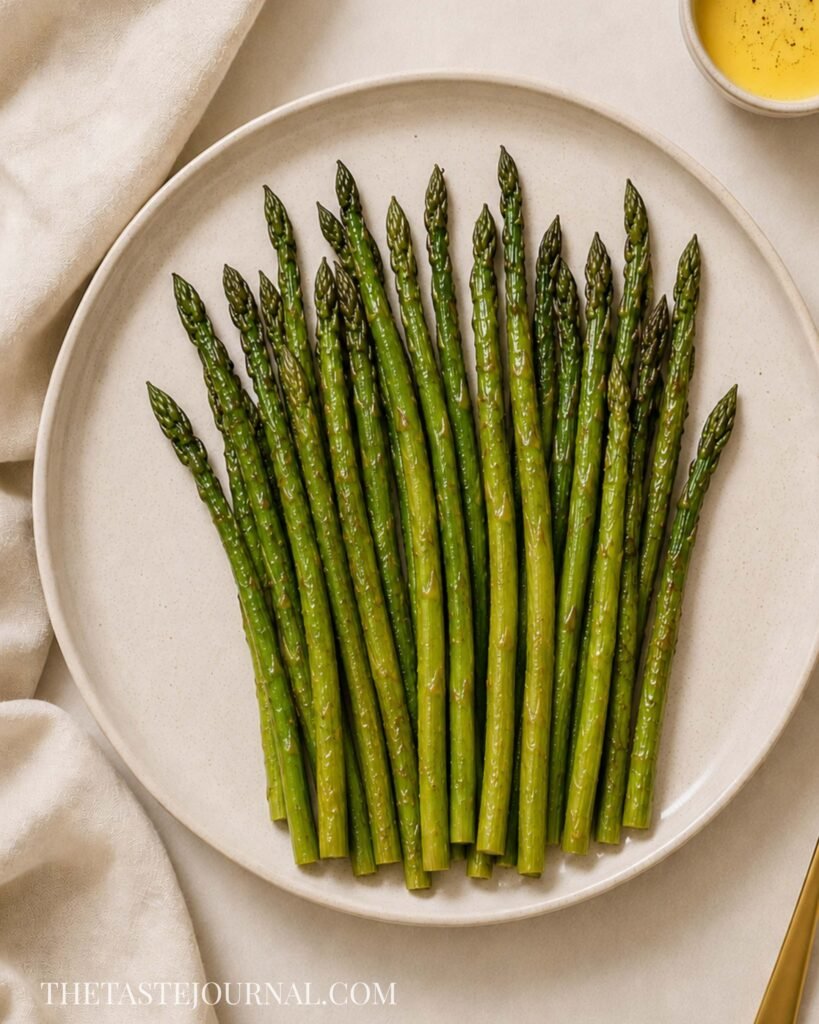
This interesting vegetable has a mild, earthy taste that changes when cooked. When asparagus is grilled, the high heat caramelizes its natural sugars, enhancing its flavor. In Greece, “Asparagos” means “to spring up.” The vegetable originated in Europe, Asia, and North Africa and grows abundantly along riverbanks and seashores. During the 18th century in Europe, there was even an “Asparagus War,” as wealthy aristocrats regarded asparagus as a crop of great value.
Ingredients
Asparagus, Salt, and Pepper.
Fresh asparagus is necessary. It is advisable to use asparagus within 2 to 3 days of purchase to ensure it retains its crisp texture. Salt and Pepper were used as light seasoning.
Instructions
Select fresh, bright green spears. Trim the woody parts of the asparagus and toss them into a bit of butter in a grill pan set at medium-low, along with salt and pepper.
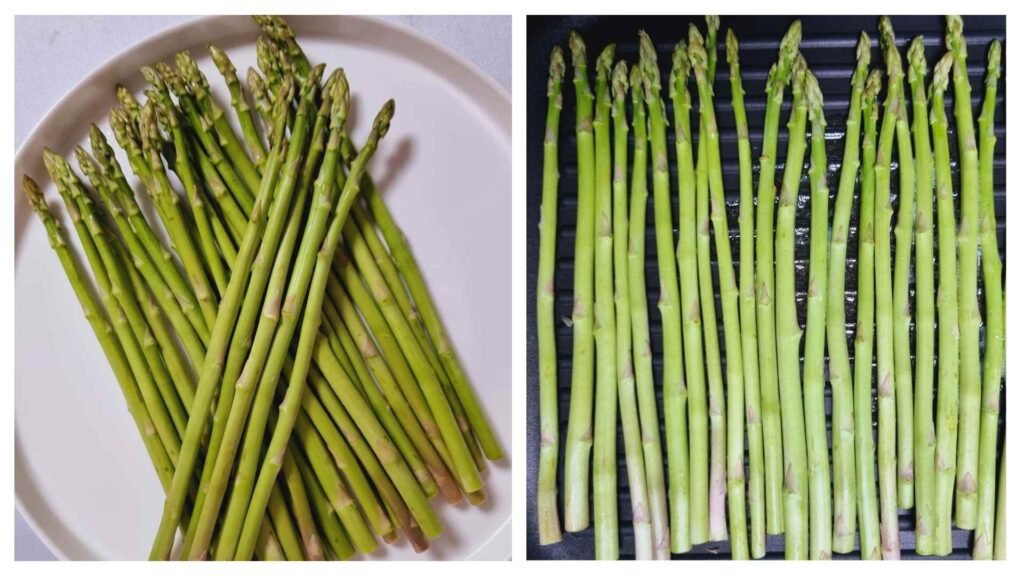
Once the asparagus has begun to caramelize. Cook on medium-low heat for two minutes, thereafter the asparagus is ready to serve. It is simple and easy to prepare. It offers a ton of flavor and makes a perfect accompaniment to your main meals.
What to Serve with Grilled asparagus?
For a complete meal, consider serving the asparagus with a juicy Grilled steak and Creamy Garlic Mashed Potatoes. The combination of these dishes will create a memorable dining experience. Grilled Asparagus can be served alongside fish, grilled chicken, and various salads, such as a Simple green salad or a Greek salad.
How to Store Grilled Asparagus?
Store the grilled asparagus in an airtight container for three to five days in the fridge. To reheat, gently warm it in the oven or in the skillet. You can also enjoy this dish in salads or in wraps. Avoid using the microwave as it will make the asparagus soggy.
Expert tips
Blanching asparagus is easy. Start by boiling water in a deep pan and adding salt. Then, put the asparagus in the boiling water and cook for 2 to 3 minutes. After that, cool it by transferring it to a bowl of cold water.
To steam asparagus, place a steamer basket over boiling water and steam it for 4 to 7 minutes until tender. For roasting, coat the asparagus with olive oil and season it with salt and pepper. If you like spice, sprinkle some paprika on it. Roast in an oven preheated to 400°F for 10 to 15 minutes or until it caramelizes.
Ingredients
- 100 grams Asparagus
- 2 tbsp Butter
Spices
- 1 Salt
- 1/4 tsp Black Pepper Powder
Instructions
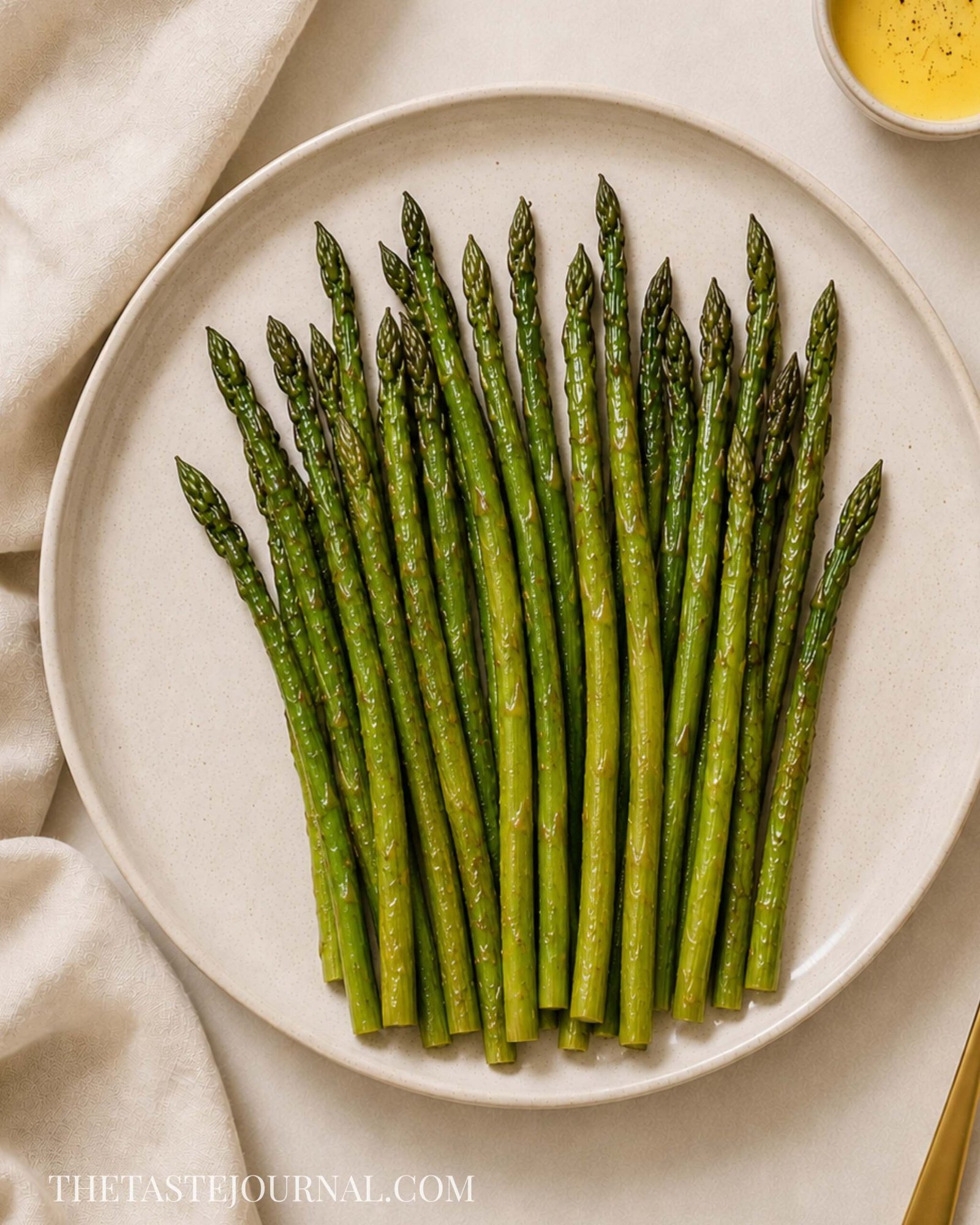
- Sauté the Asparagus: Preheat your pan on medium-low heat. Add butter to your pan. Add the asparagus and grill for six to eight minutes.
- Add the Spices: Add the finely grated garlic. Lightly season with salt and black pepper. Garnish with red pepper flakes.
Nutrition
Calories: 67kcal | Carbohydrates: 15g | Protein: 2g | Fat: 1g | Saturated Fat: 0.3g | Polyunsaturated Fat: 0.1g | Monounsaturated Fat: 0.1g | Trans Fat: 0.04g | Sodium: 117mg | Potassium: 121mg | Fiber: 1g | Sugar: 7g | Vitamin A: 526IU | Vitamin C: 3mg | Calcium: 46mg | Iron: 1mg
Did you make this recipe?Pin to Save this Recipe