Musaengchae
Musaengchae is a popular Korean banchan made with fresh white radish, gochugaru, garlic, ginger, and sesame oil. Unlike fermented kimchi, this Korean radish banchan (side dish) is prepared fresh, giving it a crisp texture and bright, tangy flavor.
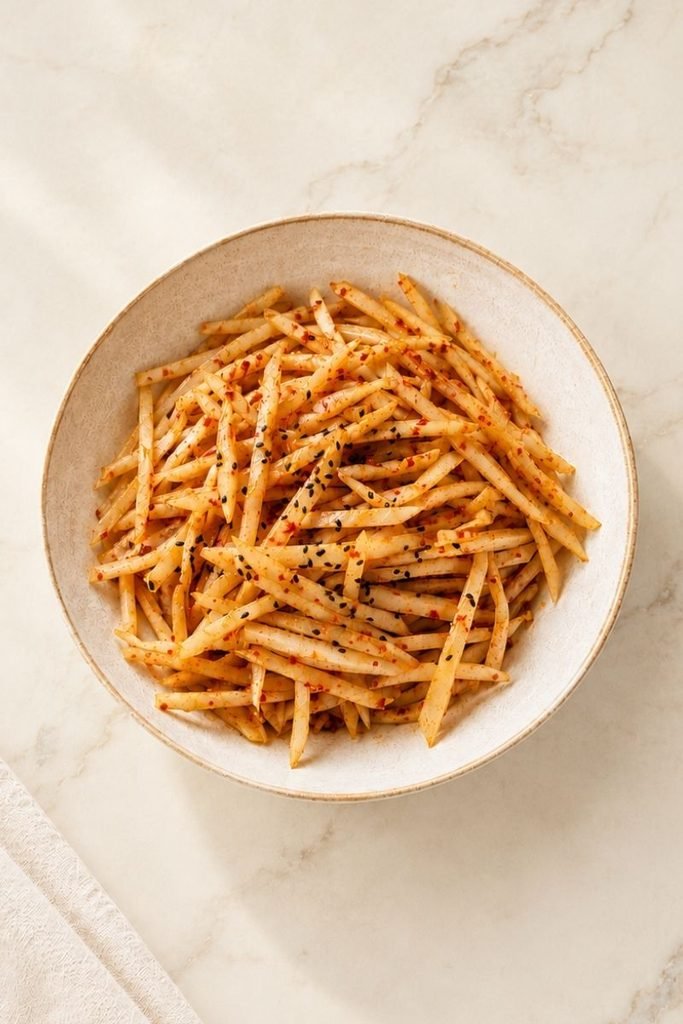
The combination of crunchy radish, Korean red pepper flakes, and aromatic seasonings creates a refreshing side dish that works especially well with rich, savory Korean meals.
It is commonly served alongside bibimbap, japchae, bulgogi, and other meat-based dishes. If you enjoy fresh salads with a little heat and plenty of crunch, musaengchae is an easy Korean side dish to add to your table.
It produces a lightly spicy, tangy, crunchy side dish that pairs well with bibimbap, japchae, and meat-based dishes like bulgogi. You can increase the spiciness of this dish by adding more gochugaru. If you are making an Asian feast at home, this dish is not only aesthetically pleasing; it also has many health benefits.
What Is Musaengchae?
Musaengchae (무생채) is a Korean spicy radish salad made by cutting white radish into thin strips and seasoning it with gochugaru, garlic, vinegar, salt, sugar, and sesame oil.
The name combines mu, meaning radish, and saengchae, which refers to a fresh vegetable dish. Unlike kkakdugi, which uses cubed radish and undergoes fermentation, musaengchae is generally eaten fresh. The radish has a naturally mild and slightly peppery taste. When combined with vinegar and gochugaru, it develops a pleasant balance of sourness, sweetness, and gentle heat.
The History of Musaengchae
Musaengchae has long been part of Korean food culture and is associated with traditional Korean vegetable dishes. Radishes have been an important ingredient in Korean cooking for centuries because they are affordable and well-suited to both fresh and preserved preparations.
Today, musaengchae is a Korean side dish served at home and in restaurants. Its fresh texture makes it particularly useful alongside rich dishes, where the acidity and crunch provide contrast. Rather than being limited to special occasions, musaengchae can easily be prepared as an everyday side dish.
Ingredients
White Radish, Garlic, Ginger, Gochugaru, Fish sauce, Rice vinegar, Sesame seed oil, Salt, Sugar, Black Sesame seeds.
White radish, or daikon, is a nutritious root vegetable popular in Asian cuisine, especially Korean, Japanese, and Chinese dishes. It has a mild, slightly peppery flavor, ideal for salads, pickles, and cooked meals. When selecting radishes, choose firm ones with smooth skin and even color; smaller ones tend to be sweeter.
Gochugaru, a Korean red pepper flake made from sun-dried peppers, adds vibrant color and subtle heat to dishes like kimchi and stews. If you can’t find gochugaru, regular chili flakes can be used, but consider adding sugar to balance the heat. Fish sauce, rice vinegar, and sesame oil enhance the flavor. These ingredients are available online or at Korean supermarkets.
Instructions
Rinse radish and the peel it, thereafter julienne it into 2-inch lengths. Peel the garlic and ginger, and finely mince them. Prepare a mixing bowl and transfer the white radish to it. Also, add the minced garlic and ginger, gochugaru (Korean chili flakes), fish sauce, rice vinegar, salt, sugar, sesame seed oil, and black sesame seeds.
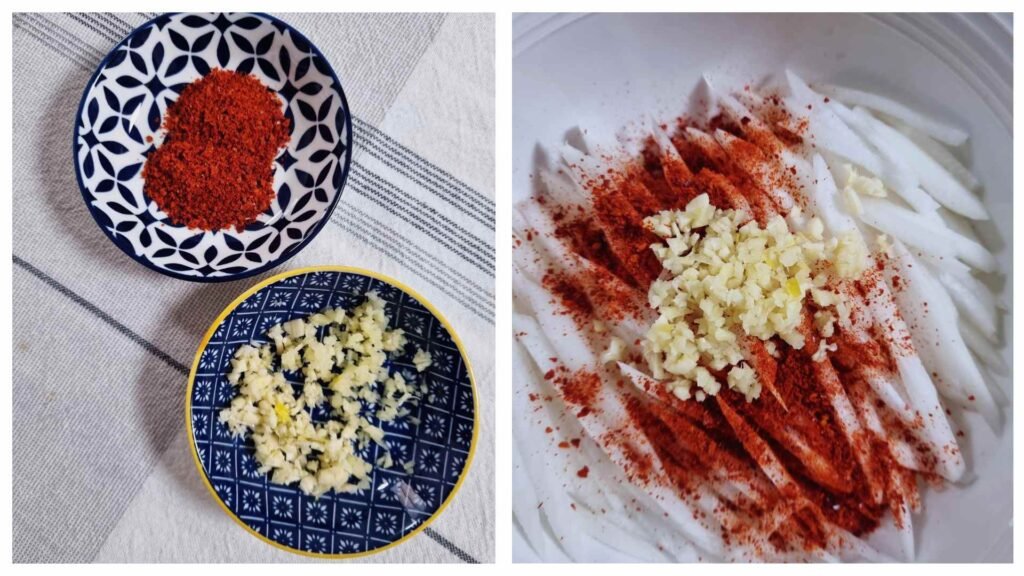
Use a spoon or your hand to toss the musaengchae. Evenly coat the radish with all the ingredients. Garnish with extra sesame seeds and scallions. Serve immediately and enjoy.
How to Keep Musaengchae Crunchy
The texture is one of the best things about fresh musaengchae. Start with a firm, fresh radish and avoid leaving the seasoned salad at room temperature for too long.
The amount of moisture the radish releases can also affect the final texture. For a particularly crisp salad, prepare it shortly before serving and avoid overworking the radish when mixing. For a stronger flavor, you can let the seasoned radish rest briefly before serving. However, musaengchae is best enjoyed while the radish still has plenty of its natural crunch.
Can You Make Musaengchae Less Spicy?
Yes. Musaengchae is easy to adjust according to your preferred level of heat. Use less gochugaru for a milder version, or increase it for a stronger chili flavor. If the seasoning becomes too spicy, a little additional sugar can help soften the heat and restore balance.
You can also adjust the vinegar depending on how tangy you want the salad. Ideal musaengchae has a balanced mix of spicy, sour, sweet, and savory flavors.
What to Serve Musaengchae with?
Musaengchae (무생채) is often enjoyed with bulgogi, a savoury, slightly sweet dish. Musaengchae also pairs well with Japchae & Bibimbap. Some restaurants serve radish with cold noodles or black noodles to add a crunchy texture and tangy flavour to the dish.
How to Store Musaengchae?
Storing musaengchae is as simple as making it. Simply add the radish to an airtight container and store it in the fridge. It lasts up to five days. Refrigerate the leftovers as soon as possible to keep the radish fresh. When serving refrigerated musaengchae, it is best to serve it while it is still cool.
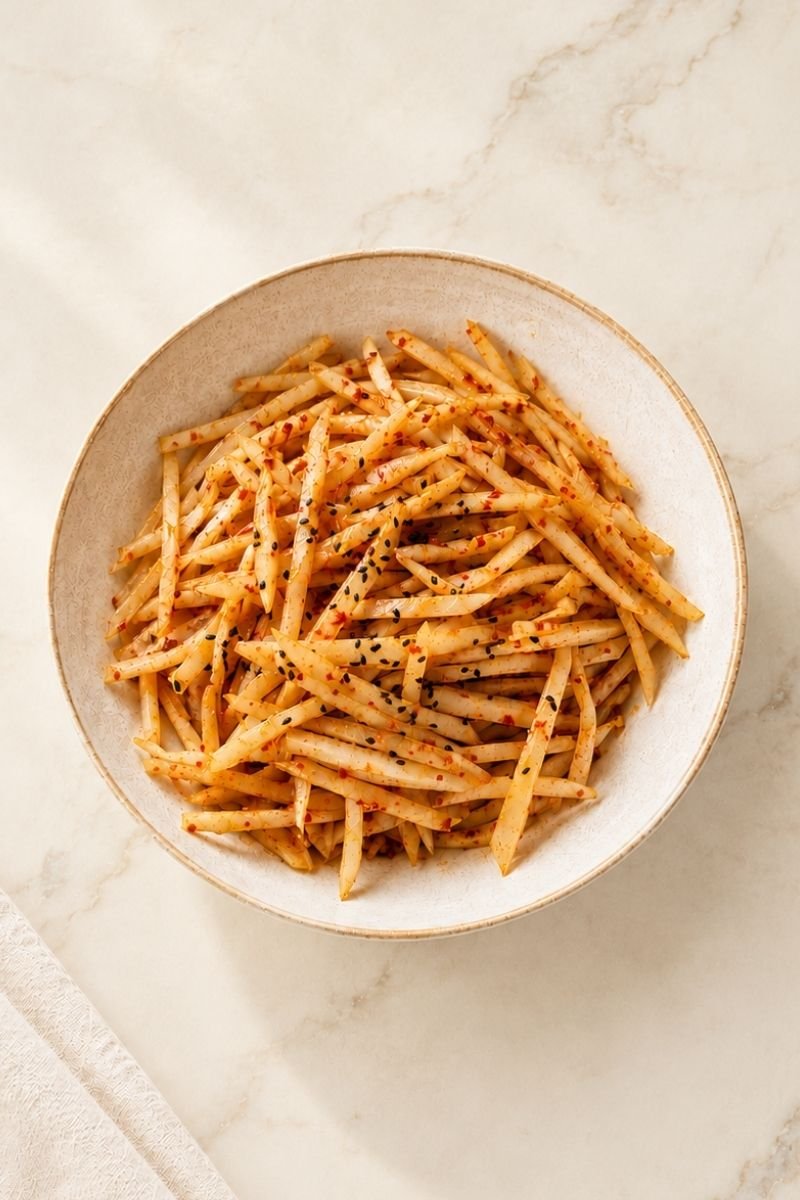
Musaengchae is a fresh Korean radish salad made with crisp daikon, Korean chili flakes, garlic, vinegar, and sesame. It is spicy, tangy, crunchy, and incredibly easy to make.
Ingredients
- 300 grams White Radish – julienned.
- 1 tsp Garlic – finely minced.
- ½ tsp Ginger – finely minced.
- 1 tbsp Gochugaru
Seasonings
- ½ tbsp Fish sauce
- 2 tbsp Rice vinegar
- 1 tbsp Sesame seed oil
- ¼ tsp Salt
- ½ tsp Sugar
- Black Sesame seeds – garnish.
- 1 Scallion – chopped, optional.
Instructions
- Prepare the ingredients: Peel the radish, garlic, and ginger. Julienne the radish into two-inch lengths, and finely mince the garlic and ginger.
- Season the radish: In a mixing bowl, add white radish, garlic, ginger, gochugaru, fish sauce, rice vinegar, salt, sugar, sesame seed oil, and black sesame seeds.
- Toss to mix: Use your gloved hand or a spoon to mix the musaengchae until the red colour is uniform. Garnish with extra sesame seeds.
Nutrition
Calories: 29kcal | Carbohydrates: 1g | Protein: 0.5g | Fat: 3g | Saturated Fat: 0.4g | Polyunsaturated Fat: 1g | Monounsaturated Fat: 1g | Cholesterol: 0.3mg | Sodium: 155mg | Potassium: 42mg | Fiber: 1g | Sugar: 1g | Vitamin A: 416IU | Vitamin C: 1mg | Calcium: 8mg | Iron: 0.3mg
Did you make this recipe?Pin to Save this Recipe