Kimchi Bokkeumbap
If there’s one dish I would highly recommend trying soon, it’s Kimchi Bokkeumbap. This delightful Korean dish features a wonderful combination of punchy, umami-rich, and flavorful ingredients.

I’ve tried fried Kimchi in the past, and I really enjoyed it. The Fried Kimchi came in a small can that I bought from a supermarket that specializes in Korean food. However, I have to admit that I’ve been quite hesitant to try Kimchi Bokkeumbap.
I’m not entirely sure why, but the strong smell of aged Kimchi can intimidate many people. Nevertheless, this recipe is so delicious that any hesitations you may have will quickly fade away.
What Is Kimchi Bokkeumbap?
Kimchi Bokkeumbap, sometimes written as kimchi bokkeumbap or kimchi fried rice, is a popular Korean rice dish made by stir-frying cooked rice with fermented kimchi and a variety of seasonings and ingredients.
The word bokkeumbap essentially refers to fried rice, while kimchi is the fermented Korean side dish that gives this recipe its distinctive spicy, sour, and savory flavor.
What makes this dish particularly appealing is its flexibility. You can make a simple vegetarian version with kimchi, rice, garlic, and onions, or add beef, processed meat, or a fried egg. It is also an excellent way to transform leftover cooked rice into something exciting.
What Is the Key to Kimchi Bokkeumbap?
The key ingredient for perfect Kimchi Bokkeumbap is well-fermented kimchi, which can be incredibly sour on its own but, when added to fried rice, adds a mouthwatering tang that makes Korean kimchi fried rice so addictive.
To make the best Kimchi Bokkeumbap, you need a mix of finely chopped and chunky pieces of kimchi. When you stir-fry the kimchi, the smaller pieces develop a caramelized taste, which is where much of this recipe’s flavor comes from.
This is a fundamental step for maximum flavor. Another important factor is high heat and a non-stick pan or wok. The right tools will help ensure your fried kimchi becomes caramelized and slightly crispy rather than soggy.
In Korea, Bokkeumbap is typically cooked in cast iron pots or stainless steel pans and pots. You can place these pots over an open flame with the rice, which helps create the crispy bits known in English as scorched rice, or nurungji in Korean. Cooking over an open fire or in earthenware pots also imparts a slightly smoky flavor to the dish.
One key element of delicious Kimchi Bokkeumbap is using day-old rice. This rice should be dried out and not too fluffy, as a firmer texture is essential for making good Bokkeumbap. Freshly cooked rice contains more moisture and can easily turn your fried rice into a sticky, soft mixture.
If you enjoy spicy food, add 1 tablespoon of gochugaru (Korean chili powder) or half a tablespoon of gochujang (Korean chili paste) when stir-frying the kimchi.
Traditionally, Koreans will often add gochugaru to make Kimchi Bokkeumbap spicier rather than using gochujang. Gochugaru mainly increases the heat without changing the rice’s consistency much. Gochujang, on the other hand, can make the rice stick together, increase the salt content, and add a hint of sweetness to the fried rice.
Ingredients
Kimchi, Butter, Grapeseed Oil, Brown Sugar, Onion, Oyster Sauce, Rice, Sesame Seed oil, Garlic Cloves, Shredded Kim, Sesame seeds.
Kimchi is the key ingredient in this recipe. The best kimchi is the kind that has been fermenting in your fridge for a few weeks, developing a deep, tangy, sour aroma. Butter adds richness to the dish and helps balance these intense flavors.
Caramelized onions and thinly sliced garlic will add a mild sweetness and crunch to this dish. Oyster sauce, used instead of soy sauce, adds an unusual seafood flavor to the recipe. It has a strong umami flavour with subtle sweetness, whereas soy sauce has a sharp, salty taste. When Kimchi is deeply fermented, the salt content increases; therefore, use as little salt as possible during cooking and adjust accordingly.
The kimchi juice will condense, creating a deeply intense spiciness. Adding a little brown sugar can make a big difference, enhancing the contrast with those tangy, spicy flavours. Shredded Kim is sold at most Korean supermarkets. It is a type of roasted seaweed cut into tiny ribbon strips. Shredded Kim complements the rice’s flavor.
However, regular roasted seaweed from Korea will also work for this recipe. You can make your own Kim by cutting ribbons from the regular roasted Kim and tossing a few sesame seeds. Sesame seed oil adds a nutty flavor, while grapeseed oil is used as a neutral oil to sauté the onions and garlic. Sesame seed oil is essential for this recipe, especially for an authentic experience. Additionally, sesame seeds provide crunch and enhance the dish’s presentation.
Instructions
To prepare the dish, begin by chopping the onions and garlic cloves. Slice the aged kimchi into both small and large chunks. The larger pieces of kimchi will provide a crunch, while the smaller bits will become caramelized and crispy.
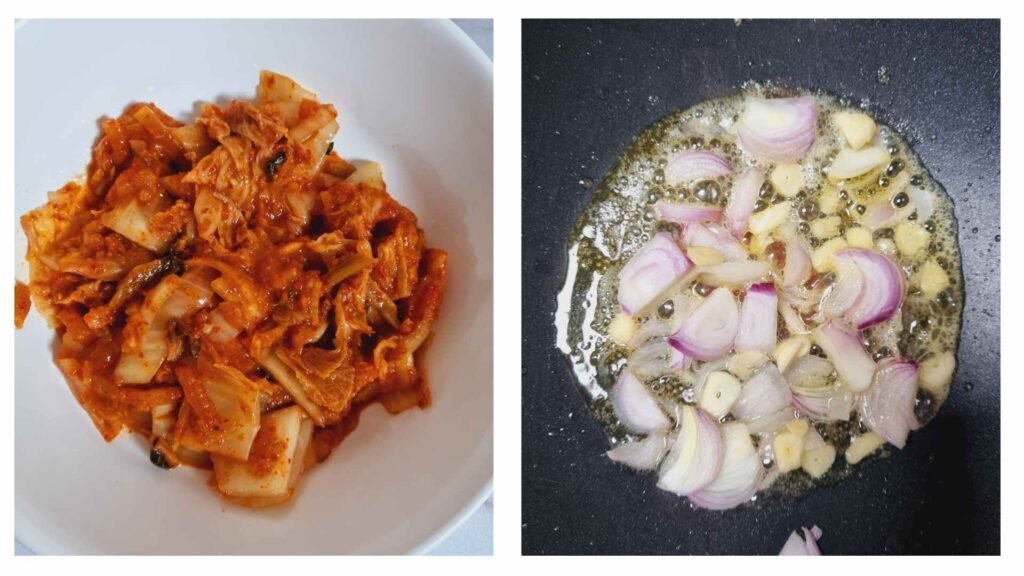
Next, heat a wok over medium-low heat and add butter and grapeseed oil. Once the butter begins to melt and blend with the grapeseed oil, add the chopped onions and garlic. Allow the ingredients to caramelize for four to five minutes. After this, add the sliced kimchi into the wok. Add the oyster sauce and brown sugar. Mix well. The oyster sauce and brown sugar will create a syrupy texture.
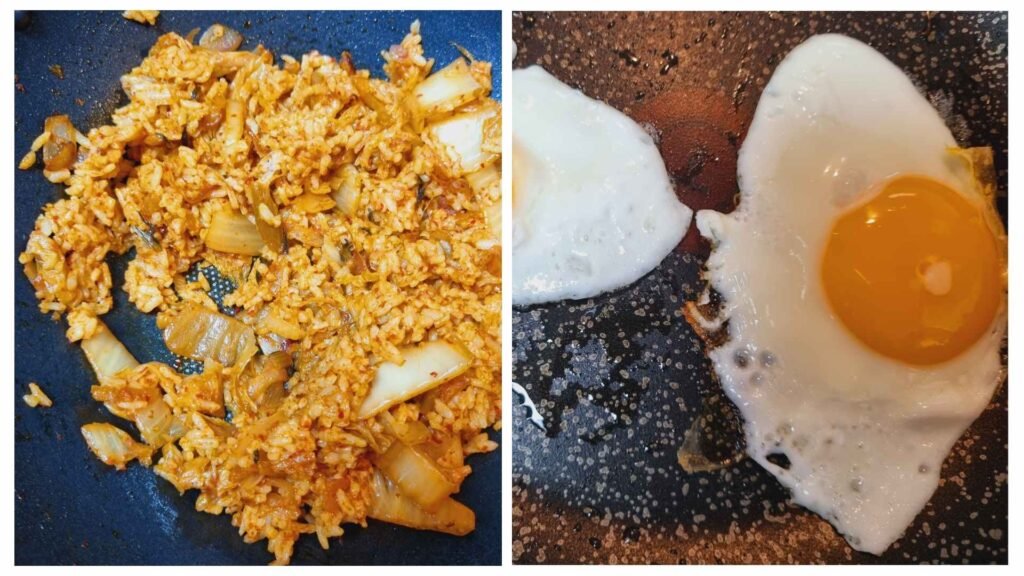
As it bubbles away, it will merge with the tangy and sour flavours of the aged Kimchi, creating a powerful flavour that is uniquely different from other types of Bokkeumbap. As soon as you notice that the Kimchi is browning and turning into fried Kimchi, you will know it is almost time to add the cooked rice. Wait a few minutes until most of the liquid has evaporated. Thereafter, add the cooked rice and stir well.
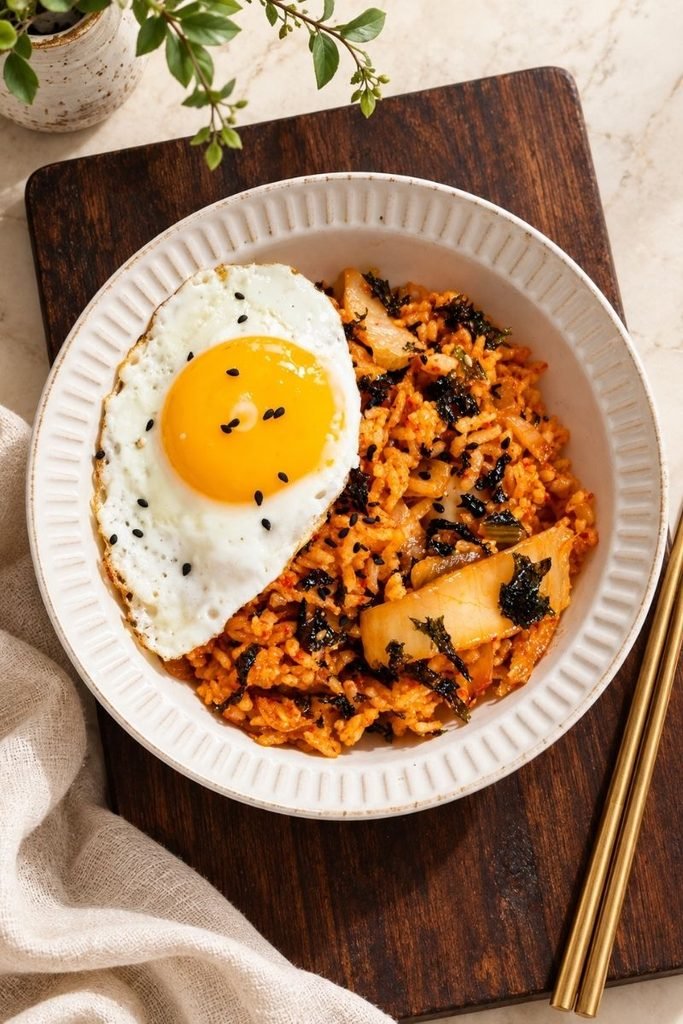
If the rice is one day old, it will have a perfect moisture level of semi-dry, absorbing the little bit of liquid that remains in the wok. Serve with a fried egg, sprinkle some sesame seeds on top, drizzle with sesame seed oil, and add some shredded gim.
How to Store Kimchi Bokkeumbap?
Allow the Kimchi Bokkeumbap to cool down completely before storing it in an airtight container in the refrigerator, where it can last for two to three days. It’s important to note that rice-based dishes should not be left out at room temperature for more than two hours.
While you can freeze Kimchi Bokkeumbap, most Koreans prefer it freshly made. If you’re hosting Korean guests for a meal, it’s best to serve a freshly prepared dish rather than any frozen leftovers.
Different variations of Kimchi Bokkeumbap
If you want to add meat to the Kimchi Bokkeumbap, slice the beef thinly. Add a generous amount of butter and cook the onions and garlic. Then add the meat. Thereafter, add the Kimchi with the condiments. Make sure that the Kimchi browns up and caramelizes; this step is instrumental to the flavour of this dish.
If you’re using processed meat such as salami, check the salt content and then assess the amount of seasoning necessary for the Kimchi Bokkeumbap to have a balanced flavor. If you’re using dashida seasoning in the rice, it is recommended that you use unsalted butter to ensure that the flavours are balanced.
What to Serve with Kimchi Bokkeumbap?
A fried sunny-side-up egg is often served alongside this dish, and it is recommended to season the eggs sparingly. Koreans also enjoy eating seaweed sheets called Gim (or Kim). These sheets differ from Nori, the Japanese seaweed used for sushi or kimbap. Explore more Korean recipes such as Doenjanjiga, Kkakdugi, Galbi Jjim, Kkori Gomtang, Miyeok Guk, Spring Onion Kimchi, Buchu Kimchi.
Gim is typically toasted with sesame seed oil, which enhances its flavor. Other side dish options include Danmuji, a yellow pickled radish, and Oi Muchim, a refreshing cucumber salad.
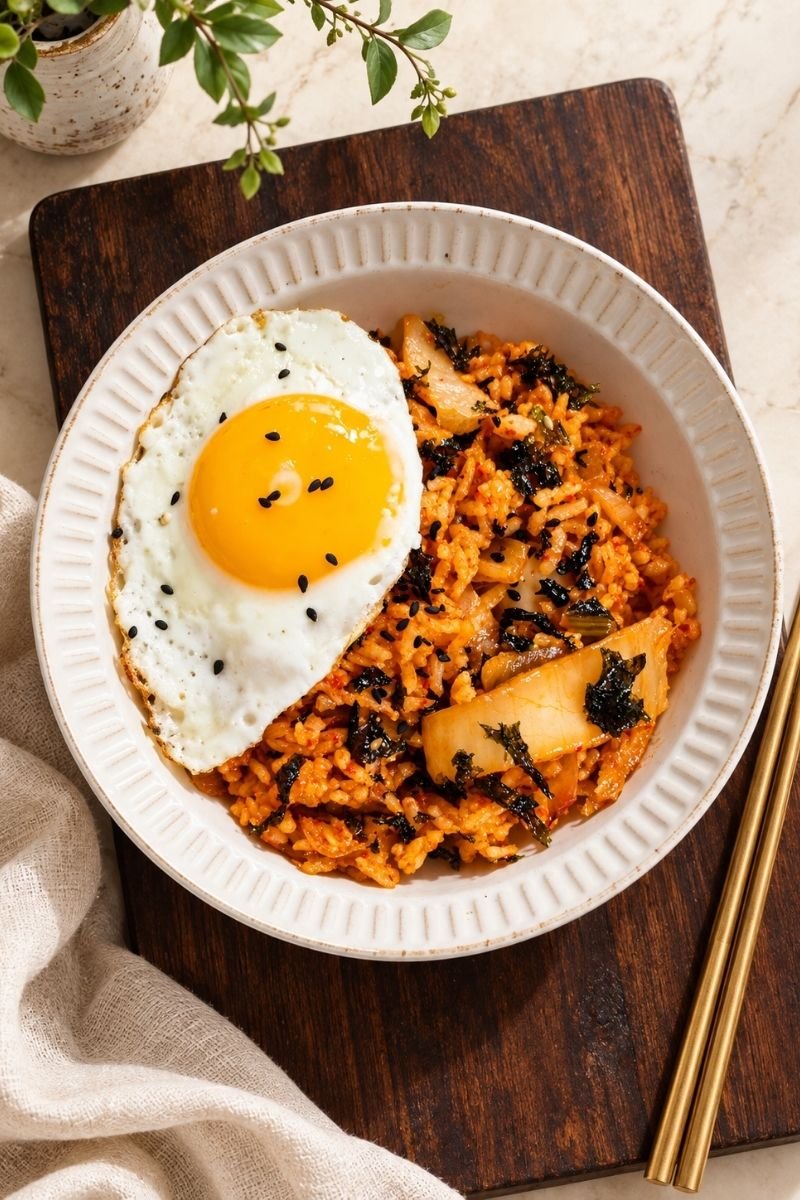
Make delicious Kimchi Bokkeumbap, a Korean kimchi fried rice packed with savory, spicy flavor. An easy, comforting meal ready in about 20 minutes.
Ingredients
- 200 grams Aged Kimchi
- 3 Garlic Cloves
- 1 Onion – medium, sliced
- 400 grams Rice – cooked and preferably a day old.
Condiments
- 2 tbsp Butter
- 3 tbsp Grapeseed oil
- 2 tbsp Sesame seed oil
- 1 tbsp Oyster Sauce
- 1/2 tsp Brown Sugar
Garnish
- 1 tsp Sesame seeds
- 3 tsp Kim, Seaweed sheets – shredded
Instructions
- Prepare the ingredients: Chop the onions and garlic cloves. Chop the kimchi into small and large chunks. Make sure the rice is ready to go.
- Stir-fry: Add butter and grapeseed oil to the pan. Add the chopped onions and garlic to the pan. Cook for three to five minutes until caramelized. Add the aged-kimchi and stir-fry until golden brown for approximately eight minutes on medium low heat. Add the oyster sauce and brown sugar. Mix well. Add the rice and cook for another five minutes.
- Serve: Add the kimchi bokkeumbap to a bowl and top with a sunny-side up egg. Add a generous amount of sesame seed oil and gim. Sprinkle sesame seeds on top.
Nutrition
Calories: 591kcal | Carbohydrates: 98g | Protein: 8g | Fat: 19g | Saturated Fat: 3g | Polyunsaturated Fat: 11g | Monounsaturated Fat: 5g | Trans Fat: 0.02g | Sodium: 184mg | Potassium: 177mg | Fiber: 2g | Sugar: 5g | Vitamin A: 2IU | Vitamin C: 3mg | Calcium: 39mg | Iron: 3mg
Did you make this recipe?Pin to Save this Recipe