Ash-e-Adas
If you have ever wondered what people eat for breakfast in Iran, Ash-e-adas is one of the first dishes that comes to mind. This Persian lentil soup, known locally as Adasi or Ash-e Adas, has been warming Iranian homes for centuries.

Low in calories and packed with nutrition, this thick and hearty dish is a favorite among meal preppers, and for good reason. With a blend of fragrant spices and lentils, it creates a delicious and nourishing meal; it’s the kind of meal that keeps you full for hours and somehow tastes even better the next day.
Although the name Ash-e Adas simply translates to “lentil soup” in Persian, Adasi is actually much thicker than the lentil soups many of us are used to. It’s somewhere between a soup and a stew, with soft lentils, caramelized onions, and warming spices coming together in one pot.
In Iran, Ash-e-Adas is eaten for breakfast, especially during the colder months. You’ll find small shops selling bowls of it early in the morning, often served with warm Barbari bread and a cup of tea.
A little history behind Ash-e-Adas
Lentils have been a staple in Persia since ancient times. They were inexpensive, nutritious, and, most importantly, provided slow-release energy throughout the day. For people living in Iran’s mountainous regions, dishes like Adasi became essential winter meals that could feed an entire family with just a handful of ingredients.
As traders traveled along the Silk Road, new spices found their way into Persian kitchens. Over the centuries, cumin, turmeric, and cinnamon became common additions, and every family developed their own version of the recipe. Today, authentic Iranian breakfast lentil soup is still enjoyed across the country, although no two households make it the same way.
Ash-e Adas, Adasi or Soup-e Adas: what’s the difference?
This can be confusing because many recipes use the names interchangeably. Adasi is the thick Persian breakfast lentil stew recipe that most Iranians eat in the morning. It’s usually made with lentils, onions and warming spices. Ash-e-Adas belongs to the larger family of Persian ash dishes, which are often heartier and may include herbs, leafy greens or extra legumes.
Soup-e Adas is lighter and brothier, more like a traditional soup. In southern Iran, you’ll also come across Dal Adas, a red lentil stew flavored with tamarind and spices. No matter what you call it, the star of the dish is always the lentils.
Ingredients
Lentils, Parsley, Garlic, Chicken Stock Cube, Turmeric, Cumin powder, Leeks, Black Pepper, Lemon.
Brown and Green Lentils are used in the traditional recipe mainly because they retain their shape and gradually break down during cooking. However, you can also use red lentils, which will result in a smoother soup, it also cooks much faster than brown or green lentils. Some people often wonder how they can reduce the phytic acid in brown and green lentils which causes bloating, the answer is simple use red lentils.
And if you favor the brown or green lentils, the addition of the cumin will help for digestion, as well as using a squeeze of lemon juice on the adasi after it has cooked. Lemon juice also balances the earthiness of the soup. If you’re using green or brown lentils, try soaking them for two to four hours beforehand. This short soak helps reduce cooking time, makes them easier to digest, and prevents them from becoming tough. Also, avoid adding salt at the start of the boiling step; salt will toughen the lentils’ skins.
Onions and Garlic add a caramelized sweetness to this dish. Spices such as turmeric, cumin, and black pepper add a unique taste to the dish. Adding a chicken stock cube enhances the soup’s flavor. Common flavors in Ash-e-Adas are coriander, which adds a citrusy note to the soup, and dried mint, which is often cooked in a little oil for 30 seconds and drizzled over the finished soup.
Some families also add tomato paste, potatoes, coriander, or cinnamon for extra flavor. We’re using red lentils in this dish because they break down beautifully and create a creamy texture, but one-pot green lentil soup Persian style is just as delicious if you prefer a heartier bite.
Instructions
Slice the onions and garlic. Set the stove to medium-low heat. Add cooking oil to the pot, then sauté the onions and garlic until golden and caramelized. Rinse the red lentils under running water until the water runs clear.
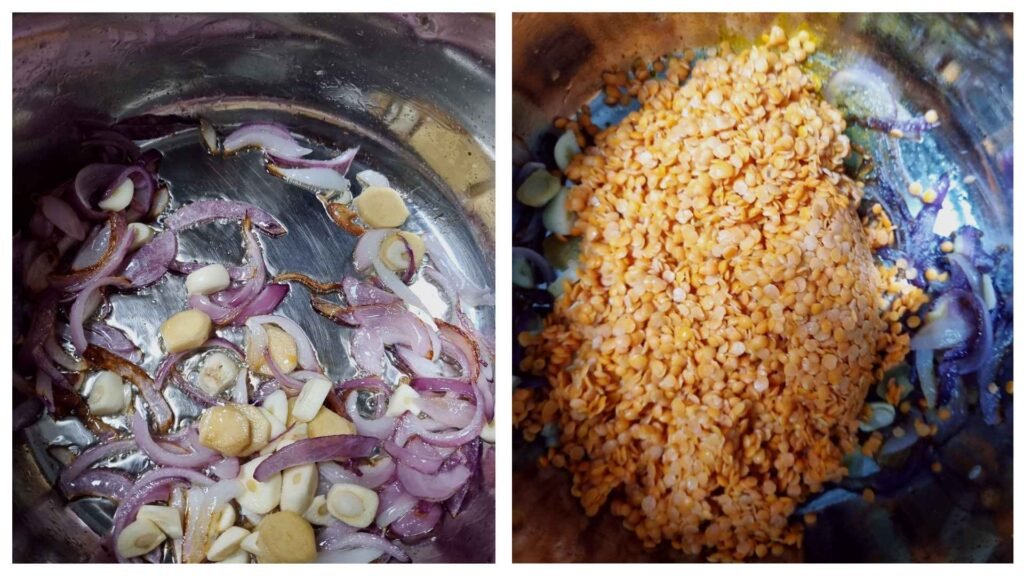
Next, add the spices such as cumin powder, turmeric powder, black pepper powder, salt, and the chicken stock cube to the pot. Once the spices start to sizzle, the flavors will activate and infuse into the cooking oil. Add water to the pot along with the red lentils. Simmer for one hour. Add some freshly chopped parsley on top for a fresh taste, along with lemon juice. The soup is ready to eat and enjoy.

In Iran, this soup is sold at many shops, and most locals can buy it on their way to work to enjoy as a quick, convenient breakfast. Beyond the everyday routines, this soup is enjoyed during family gatherings and religious occasions. Each Iranian household adds its own touch to this recipe, which is often passed down through generations.
What can you serve with Ash-e-Adas?
Traditionally, Adasi is served with warm bread such as Barbari, Sangak, or Naan are fantastic options. You can also serve it with basmati rice, fresh herbs, lemon wedges, or pickled vegetables.
Ash-e-adas is a versatile recipe; you can make it heartier by adding cubed potatoes or carrots. If you want to add more protein, consider lamb or chicken to deepen the flavor.
You can easily make this recipe purely vegetarian by using vegetable stock. Explore more Persian recipes such as Shish Andaaz, Fesenjan, Persian Shirazi Salad, Mast o Khair, and Dill Rice.
How to store the Ash-e-Adas?
One thing to keep in mind is that lentils continue to absorb liquid after they’ve been cooked. By the next day, your soup will probably be much thicker. This is known as the “lentil sponge effect”.
To loosen it up again, add three or four tablespoons of warm water or lemon water for every cup of Adasi before reheating. The soup will keep in the fridge for up to four days and freezes beautifully for up to three months.
Expert tips
Ash-e-Adas is more than just a flavourful dish; it has many nutritional benefits. This is a highly adaptable soup; you can add an array of meats, such as sliced chicken breast, beef, and lamb, or serve it as a purely vegetarian dish.
The chicken stock cube used in Ash-e-adas can be swapped for vegetable stock. Carrots, like potatoes, can be diced and added to increase the soup’s density.
What is golpar in Ash-e-Adas?
If you’ve been looking at Persian recipes, you’ve probably come across golpar, also known as Persian hogweed. Ground golpar spice in Iranian soup adds a citrusy, slightly earthy flavor that balances the richness of lentils.
In Iran, it’s also believed to help with digestion, which is why it’s often sprinkled over bean and lentil dishes consider using 1 teaspoon ground coriander, ½ teaspoon sumac and a pinch of dried marjoram. It’s not the same, but it creates a similar bright, herbal flavor.
How to make crispy fried onions for Ash-e-adas?
Many Iranian families top their Adasi with crispy onions, and once you’ve tried it, you’ll understand why. Simply slice an onion thinly and fry it in oil until golden brown and crisp. Drain it on kitchen paper and sprinkle it over the soup just before serving. For even more flavor, fry a little dried mint in oil for thirty seconds and drizzle it over the top.
Want to try Ash-e-adas with tomato paste and cinnamon?
Some regions make an Adasi recipe with tomato paste and cinnamon, which gives the soup a deeper, slightly sweeter flavour. Just add a tablespoon of tomato paste and a pinch of cinnamon when you’re cooking the onions. It’s a simple change that makes the soup feel even more comforting.
How do you thicken Ash-e-adas naturally?
One of the most common questions people ask is, “Why is my Adasi watery?” Luckily, there are several easy ways to thicken it. The quickest method is to blend part of the soup with a stick blender. If you’re wondering how to thicken Adasi with a stick blender, simply blend about one-third of the soup while leaving the rest chunky.
You can add diced potatoes while cooking or simmer the soup for longer, you can also use a traditional flour slurry. If you’re making gluten-free Adasi without flour slurry, stick to potatoes or blending. Both methods keep the soup naturally gluten-free.
Instant Pot and slow cooker instructions
Want to make Adasi with less effort? For Instant Pot Adasi cooking time, cook: Red lentils for 10 minutes on high pressure, brown lentils for 18 minutes and Green lentils for 20 minutes.
If you’re making slow cooker Persian green lentil soup, cook it on low for six to eight hours. The long cooking time creates an incredibly creamy texture.
Is Adasi vegan and gluten-free?
Absolutely. This vegan gluten-free Persian lentil soup is easy to make by simply swapping the chicken stock for vegetable stock. Since lentils naturally thicken the soup, there’s no need for flour, making it a perfect gluten-free meal. It’s also fantastic for meal prep. In fact, many people make vegan Iranian Adasi meal prep on Sunday and enjoy it throughout the week.

Ash-e-Adas is a traditional Persian lentil soup made with herbs, onions, and warming spices. Nutritious, comforting, and full of authentic Middle Eastern flavor.
Ingredients
- 400 grams Red Lentils
- 1 liter Water
Spices
- 1 tsp Turmeric powder
- 1 tsp Cumin powder
- 1 tsp Black Pepper powder
- 1 Chicken Stock Cube – use vegetarian stock cube.
Garnish
- Parsley – garnish
Instructions
- Preparation: Slice onions and garlic. Rinse red lentils until the water runs clear.
- Sauté: Heat oil in a pot over medium-low. Add onions and garlic; sauté until golden and caramelized.
- Add Spices: Mix in cumin, turmeric, black pepper, salt, and chicken stock cube. Let spices sizzle in the oil. Add water and red lentils to the pot. Simmer for one hour.
- Serve: Top with freshly chopped parsley and a squeeze of lemon juice. Enjoy!
Notes
We advise that you soak brown and green lentils overnight. The flavour deepens with this soup if you let it simmer over a period of time, especially if you are using brown or the green varieties of lentil. You can enhance the flavour of this soup by using meat bones such as oxtail, marrow, etc. Shredded chicken is also an excellent protein for Ash-e-adas. Adjust the consistency of the soup with water.
Nutrition
Calories: 180kcal | Carbohydrates: 30g | Protein: 13g | Fat: 1g | Saturated Fat: 0.1g | Polyunsaturated Fat: 0.3g | Monounsaturated Fat: 0.2g | Cholesterol: 0.1mg | Sodium: 129mg | Potassium: 490mg | Fiber: 15g | Sugar: 1g | Vitamin A: 23IU | Vitamin C: 2mg | Calcium: 35mg | Iron: 4mg
Did you make this recipe?Pin to Save this Recipe