Chicken Adobo
Today, we are making Chicken Adobo, a quintessential Filipino dish known for its complex, savory, and tangy flavors. The special blend of soy sauce and vinegar creates its delicious taste.
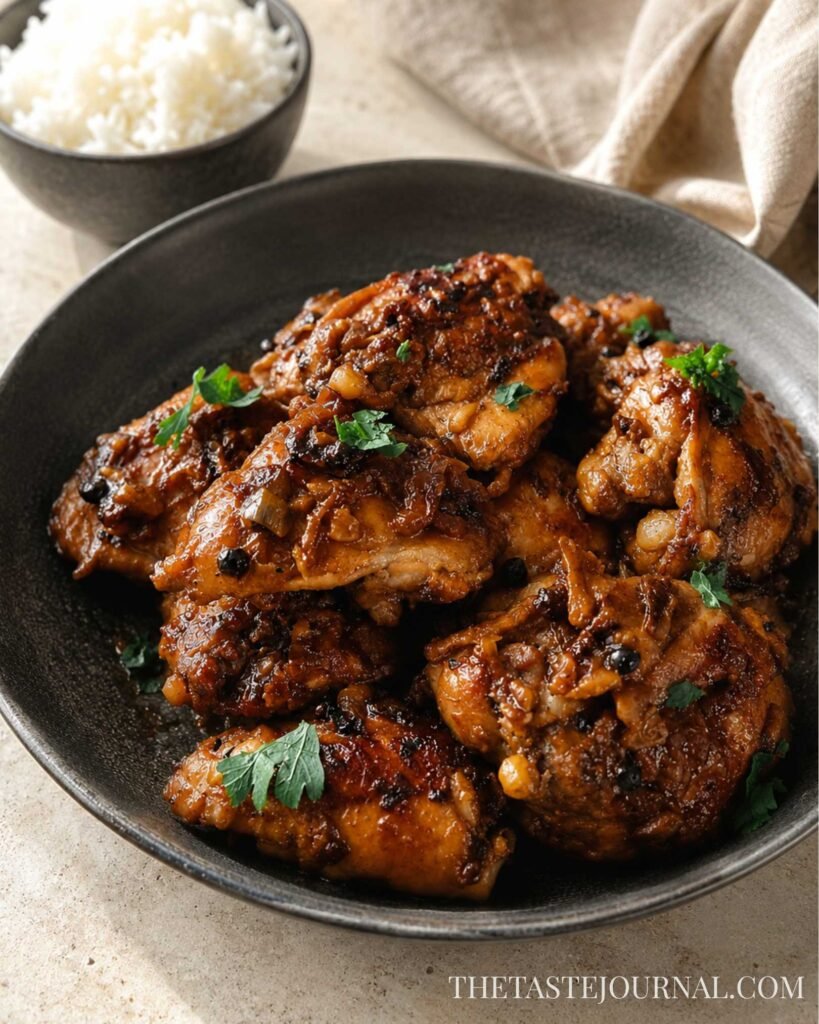
The name “Adobo” originates from Spanish settlers who encountered this traditional marinating method. With the influence of trade routes, ingredients like soy sauce, garlic, and peppercorns enhanced the dish. Now, Chicken Adobo is enjoyed worldwide, and it’s easy to cook at home!
Ingredients
Chicken thighs, Salt, Peppercorn. Dark soy Sauce, White Vinegar, Olive oil, Onion, Garlic, and bay leaves.
Chicken thighs, with their higher fat content, serve as a great centerpiece for Chicken Adobo, though drumsticks or a whole chicken can also be used. Bone-in pieces enhance the dish’s flavor. Salt and freshly crushed black peppercorns deepen the taste as it simmers.
Dark soy sauce adds a savory, slightly sweet note and gives the chicken a glossy finish. White vinegar balances the richness of the soy and cuts through the dish’s fattiness. Olive oil provides a mild base, while onions offer foundational sweetness. Finely minced garlic adds a savory aroma, and bay leaves contribute subtle herbal notes.
Instructions
Wash the chicken thoroughly. Using a knife, make incisions across the skin of the chicken. The incisions will help the marinade seep into the chicken, increasing its flavour.
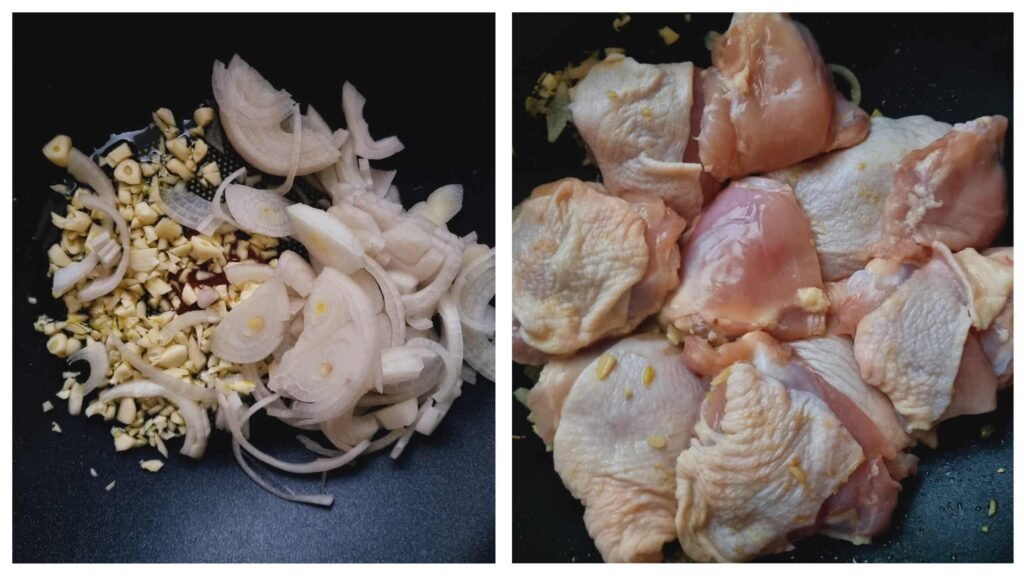
Finely mince the garlic and slice the onions. Set the heat to medium-high. Drizzle cooking oil into the pan, then add the sliced onions and minced garlic. Sauté for 8 to 10 minutes, until caramelized. Next, add the chicken thighs to the pan, placing them skin-side down. Sprinkle salt and pepper over the chicken, then cover the pan with foil.
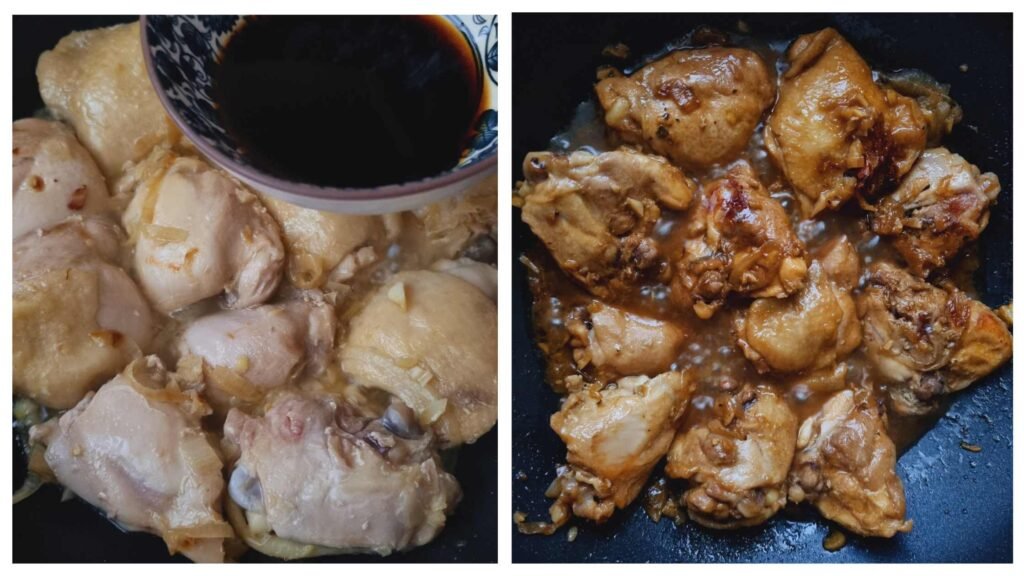
After 4 minutes, turn the chicken over and sprinkle salt and pepper on the skin side. Cover the pan and cook for an additional 6 minutes. After cooking the chicken for 10 minutes, remove the foil and cook both sides over medium-low heat for another 2 minutes. Then, add the soy sauce and vinegar marinade. Continue cooking the chicken on low heat for an additional 20 minutes without the foil.
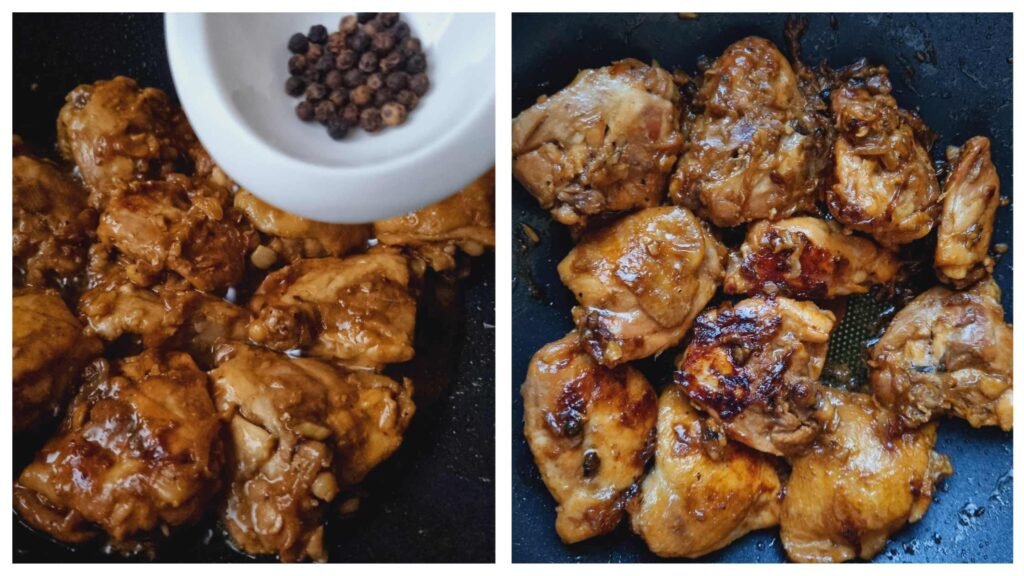
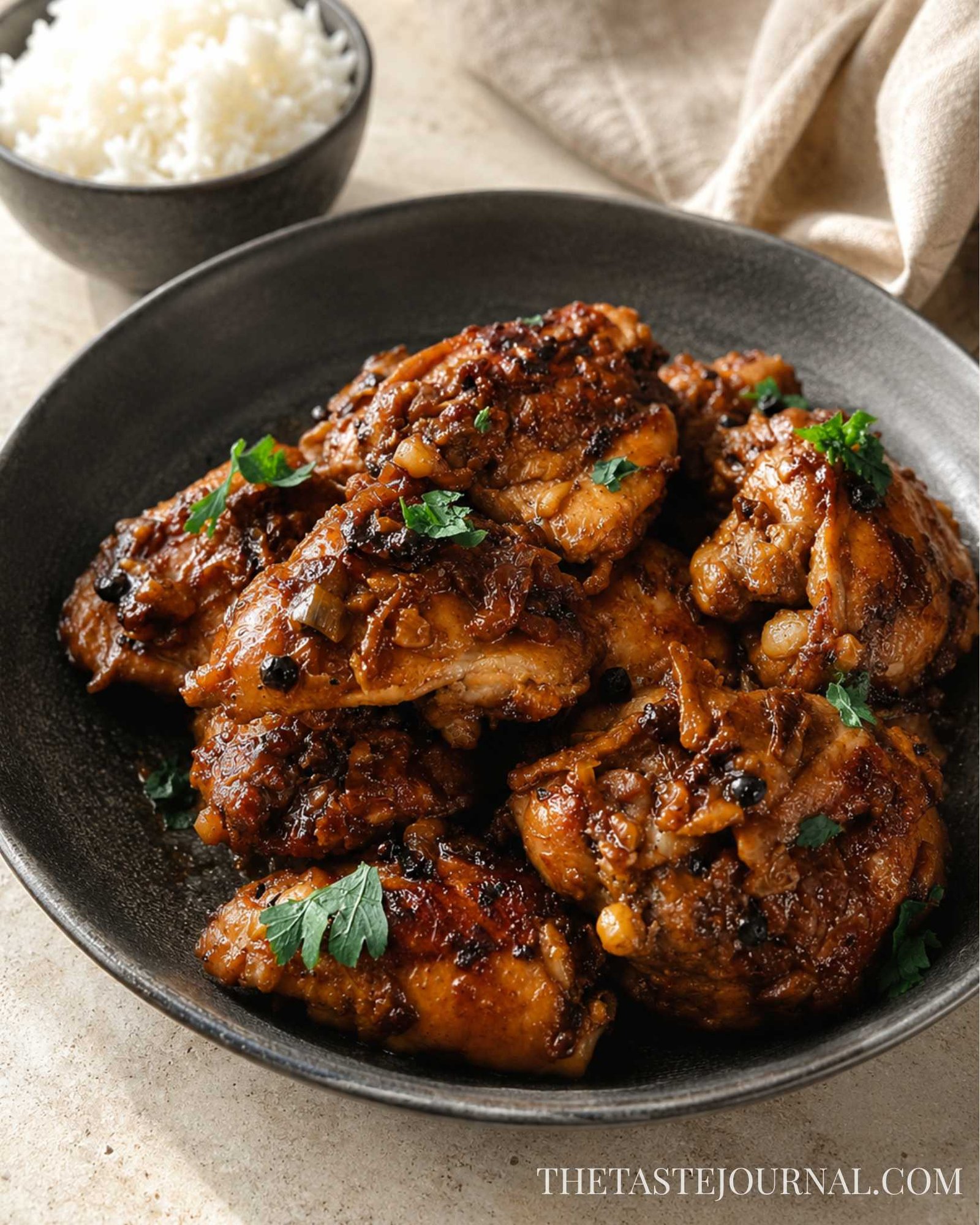
And there you have it! Your Chicken Adobo is ready to be served alongside a bed of rice and a fresh salad. I’m sure you’ll find that this delicious dish is worth adding to your regular cooking rotation.
What to Serve with Chicken Adobo?
Chicken adobo pairs best with steamed white rice. Dinner rolls can also be a good alternative. To balance the rich flavors of the chicken adobo, consider serving a fresh green salad. In the Philippines, many enjoy chicken adobo with a cucumber salad, known as Ensaladang Pipino.
How to Store Chicken Adobo?
To store chicken adobo, place it in the refrigerator, where it will keep for three to four days. Many people believe that the flavors actually intensify over time. If you need to store it for longer, you can freeze chicken adobo for up to three months. When you’re ready to use it, defrost it in the microwave or on the stovetop.
Expert tips
Chicken adobo is a tender dish that should not be overcooked to avoid dryness. Adding small amounts of water during cooking helps keep the chicken juicy. Keep the chicken skin on for added flavor, as the fat enhances the gravy’s richness. Caramelized onions contribute to the overall flavor, and sugar can be added based on regional preferences. Coconut milk is also an option for a unique taste. Garnish with chopped parsley and sliced green onions, and be careful not to overdo the white vinegar and soy sauce. Use measurements closely and reduce the sauce to infuse flavor. Opt for dark soy sauce for less sodium, and consider using apple cider, rice, or red wine vinegar. Some add lemon juice to tenderize the meat before cooking.
Ingredients
Protein + Vegetables
- 900 grams Chicken – cut into serving pieces
- 1 large Onion – peeled and sliced thinly
- 1 head Garlic, peeled and minced – peeled and minced
Spices + Condiments
- 1 teaspoon Black peppercorns – whole
- 3 Bay leaves
Liquids
- 4 Tbsp Soy sauce
- 3 Tbsp White vinegar
- 1/4 cup Water
- Cooking oil – for sautéing
Instructions
- Cook the Onion and Garlic: Preheat the Wok on medium-high heat. Drizzle cooking oil. Cook the minced garlic and chopped onion in a wok. When the onions become clear, add the chicken thighs to the pot along with the bay leaves and marinade.
- Cook the Chicken: Sprinkle salt and pepper over the chicken thighs. Cook on each side for 6 minutes, covered with foil or a lid. Cook for two more minutes on each side without a cover. Pour the soy sauce, vinegar, and water into the wok. Sprinkle with black pepper. Cook the chicken for 25 minutes on low heat to simmer the liquid.
Nutrition
Calories: 112kcal | Carbohydrates: 5g | Protein: 18g | Fat: 2g | Saturated Fat: 1g | Polyunsaturated Fat: 0.5g | Monounsaturated Fat: 1g | Trans Fat: 0.01g | Cholesterol: 51mg | Sodium: 1478mg | Potassium: 408mg | Fiber: 0.5g | Sugar: 2g | Vitamin A: 14IU | Vitamin C: 1mg | Calcium: 19mg | Iron: 1mg
Did you make this recipe?Pin to Save this Recipe