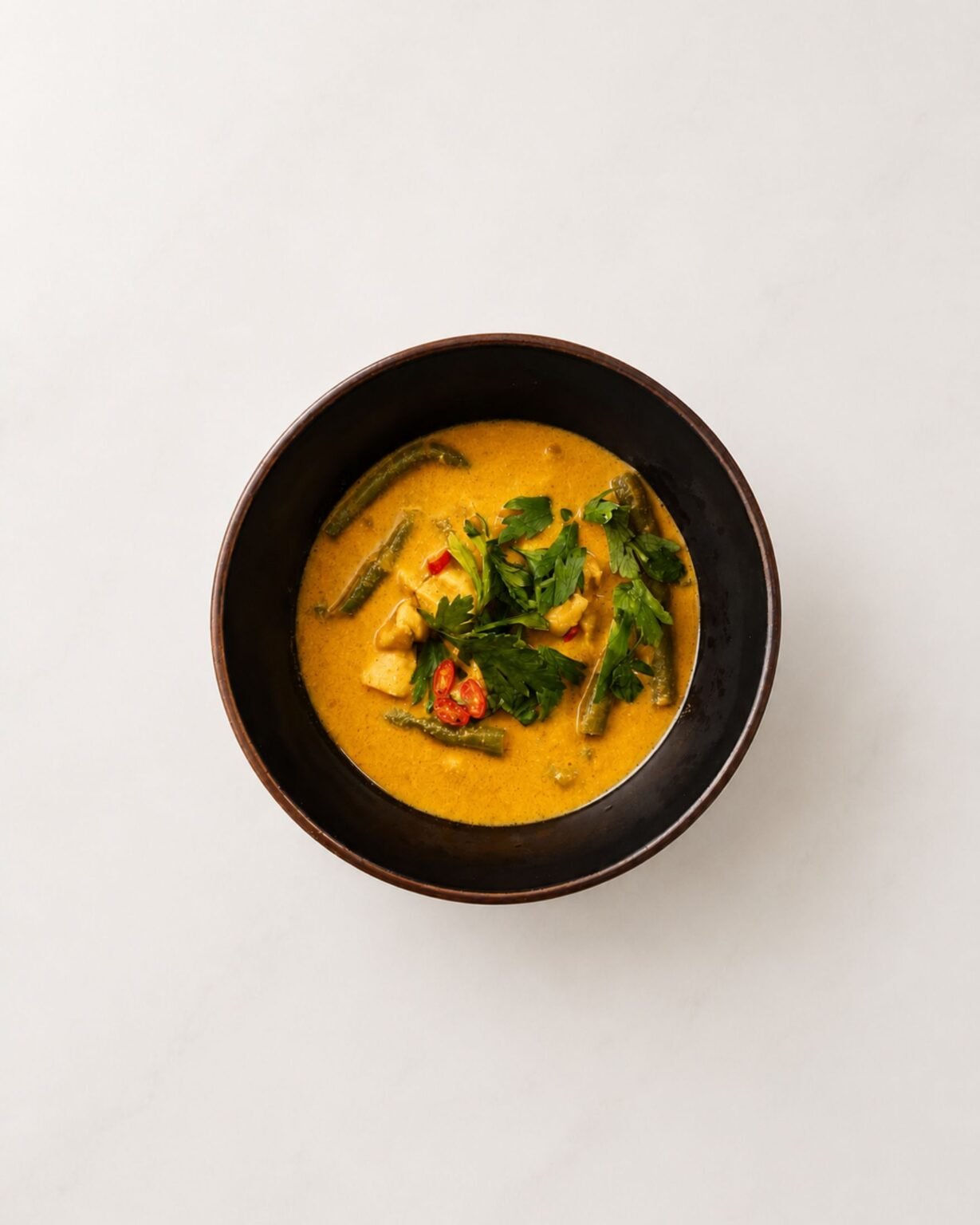
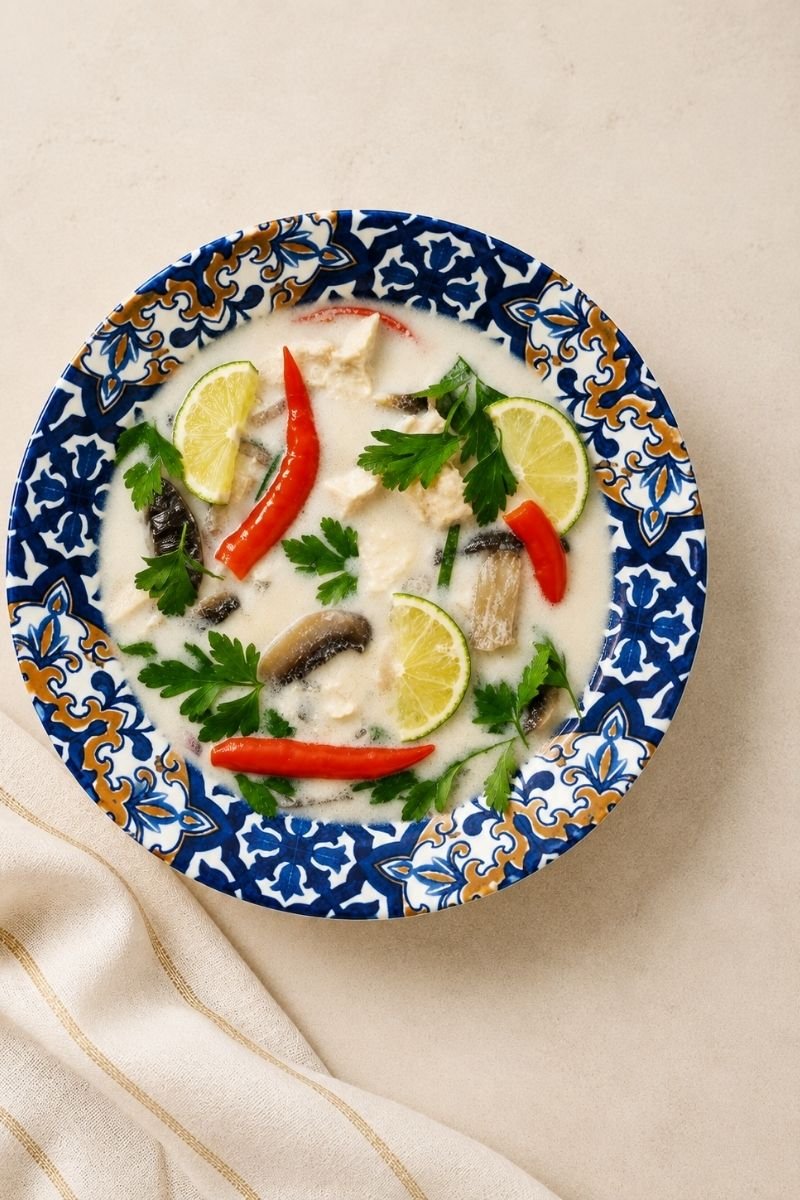
Panang Curry
Today, we’re making Panang curry, a delicious dish from Thailand known for its rich coconut milk and vibrant flavors. Panang curry has a spicy, nutty flavor with a hint of sweetness, and its ingredients include dried red chili, fish sauce and coconut milk,.
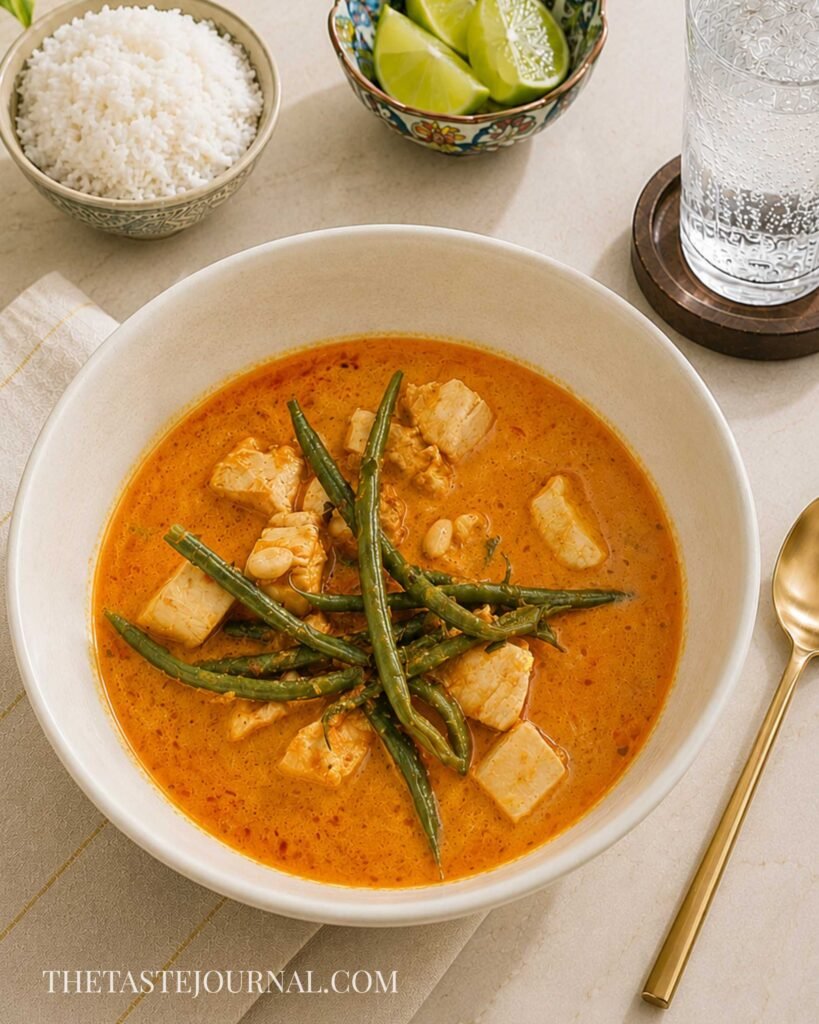
Compared to Thai red curry, it offers milder flavors and a distinct texture, thanks to the addition of peanuts. While store-bought curry paste is convenient, making it from scratch can enhance the flavor. Thai people typically use a mortar and pestle, but a blender works well too. If you go for a store-bought option, there are tips to help replicate that authentic Thai taste at home.
Ingredients
Panang curry paste, Peanuts, Fish sauce, Oyster sauce, Kaffir lime leaves, Coconut milk.
Panang curry paste is the cornerstone of this dish, featuring a blend of spicy and savory flavors from ingredients like dried chillies, galangal, kaffir lime leaves, shrimp paste, and spices such as coriander and cumin. Roasted peanuts add a distinctive nutty flavor, enhancing the dish’s profile. There are two types of Panang curry paste: store-bought and homemade. While store-bought is convenient, making it from scratch allows for adjustments in heat—more dried red chillies can increase spiciness.
Fish sauce adds a salty complexity, while oyster sauce contributes a savory-sweet flavor, enriching the curry. Kaffir lime leaves offer a bright, fragrant citrus note, enhancing the dish’s aroma when thinly sliced or added whole. Coconut milk provides a creamy texture and balances the heat and saltiness. For a richer taste, use full-fat coconut milk, or opt for low-fat for a lighter version.
Instruction
Heat oil in a preheated pot, then add the curry paste. Cook the curry paste, stirring for 2 to 3 minutes, until fragrant. This step is essential as it helps release the spices into the oil.
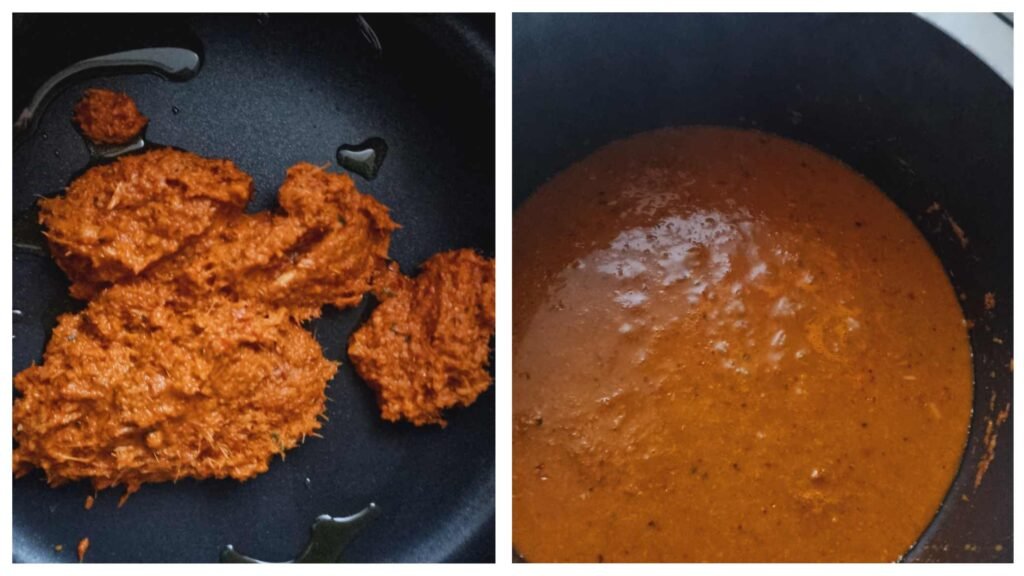
Next, pour in the coconut milk and bring the mixture to a gentle simmer. Cooking the coconut milk with the paste adds flavor, and the gentle simmer improves the curry’s taste. Add fish sauce, oyster sauce, sugar, and kaffir lime leaves. Let it cook for about 5 minutes. Then, add the chicken cubes to the pot and simmer for ten minutes.
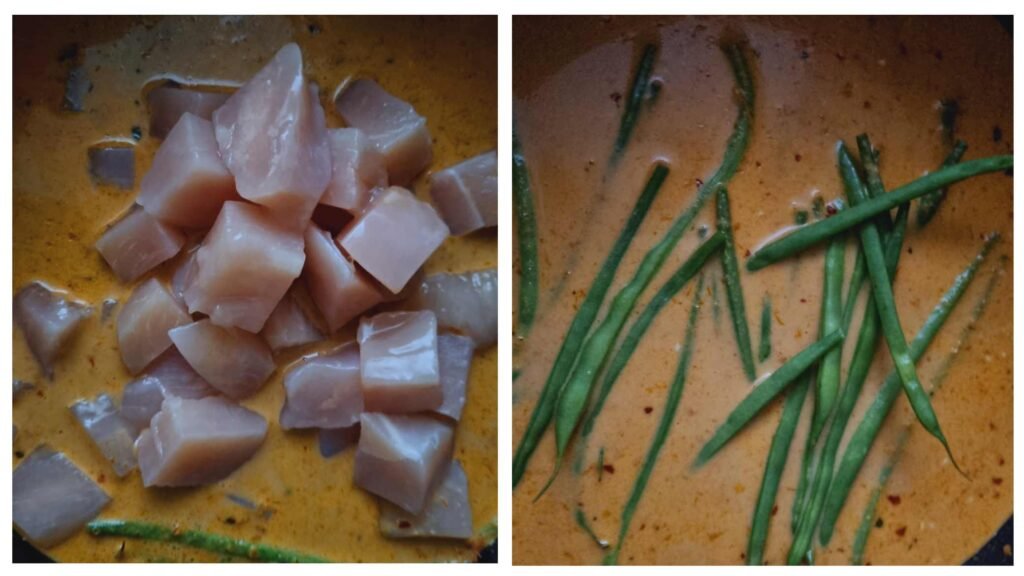
Add the green beans and cook for another five minutes, enhancing the dish’s flavor. You can also use snow peas or bell peppers. If the curry is too thick, add water to reach your desired consistency. Taste and adjust seasoning with fish sauce, curry paste, or sugar. Garnish with Thai basil and serve with jasmine rice. For a vegetarian option, substitute tofu and tempeh for shrimp and use vegetable stock instead of shrimp paste. This curry offers complex flavors that will leave you wanting more. Enjoy!
What can you Serve with Panang curry?
Panang curry pairs well with Jasmine rice; the aromatic, nutty flavours of the rice enhance the subtle heat of the chilies. Stir-fried vegetables such as broccoli, bok choy, or snap peas offer a burst of color and crunch. Cucumber salad is a popular option because it adds a refreshing element to the main dish, while crispy spring rolls make a tasty appetizer.
How can you Store Panang Curry?
You can store Panang curry in the refrigerator for two to four days. It can also be frozen for up to three months. When you’re ready to use it, defrost it on the countertop and reheat it on the stove or in the microwave.
Expert tips
Many ingredients can be found at Asian supermarkets, but if not, there are substitutes. Use lime zest or regular lime leaves for Kaffir lime leaves. If shrimp paste is missing, try fish sauce or a seafood stock cube. For palm sugar, brown or white sugar works as alternatives.
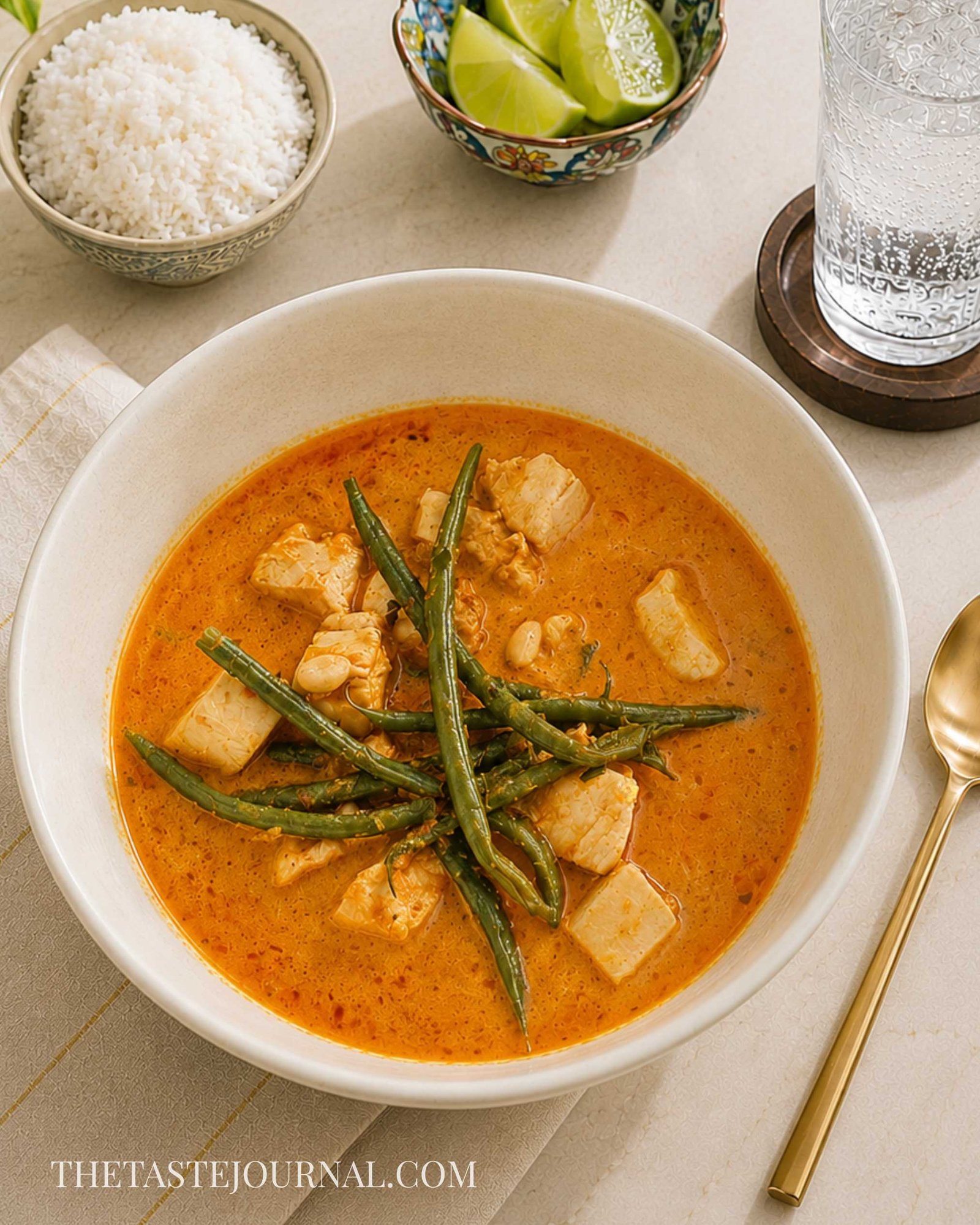
Ingredients
- 550 grams Chicken breast
- 100 grams Green beans
- 4 tbsp Panang curry paste
Condiments
- 2 tsp Fish sauce
- 1 tbsp Oyster sauce
- 400 ml Coconut milk
Instructions
- Cook the Paste: Add oil to a preheated pan on medium heat. Add four tablespoons of panang curry paste. Cook for three minutes, stir continuously.
- Simmer: Add the Coconut milk, fish sauce, oyster sauce, sugar and cook for ten minutes. Add the chicken cubes and cook for eight minutes. Add the green beans and cook for another five minutes.
Nutrition
Calories: 224kcal | Carbohydrates: 6g | Protein: 18g | Fat: 15g | Saturated Fat: 14g | Polyunsaturated Fat: 1g | Monounsaturated Fat: 1g | Trans Fat: 0.01g | Cholesterol: 47mg | Sodium: 1192mg | Potassium: 514mg | Fiber: 0.5g | Sugar: 1g | Vitamin A: 123IU | Vitamin C: 3mg | Calcium: 30mg | Iron: 3mg
Did you make this recipe?Pin to Save this Recipe