
Spicy stir-fried calamari
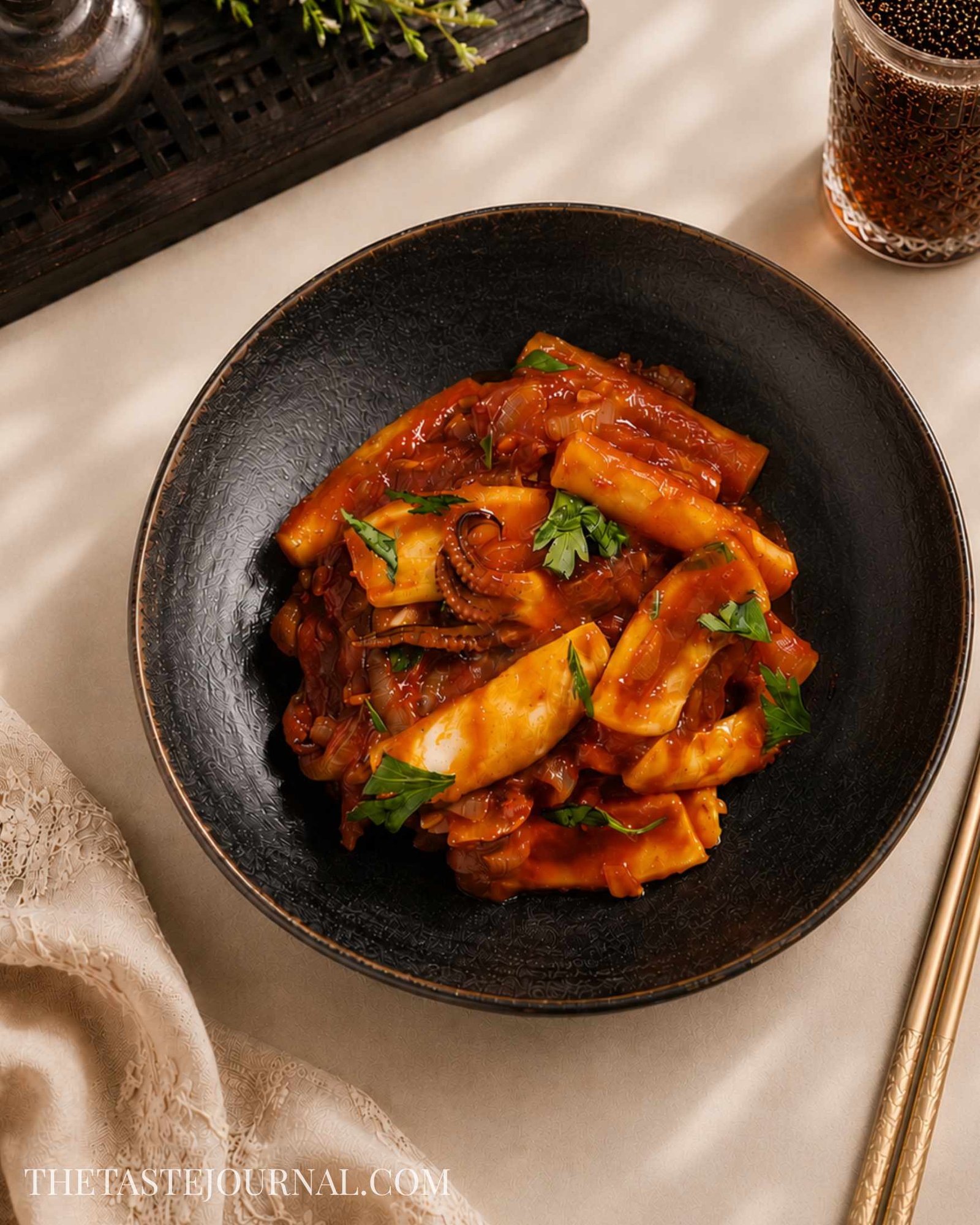
Today, we are preparing restaurant-quality spicy stir-fried calamari, a delicious dish bursting with delicate, tangy, and savory flavors. If you enjoy seafood, you’ll love this stir-fried calamari. In South Korea, this dish is known as Ojingeo-bokkeum.
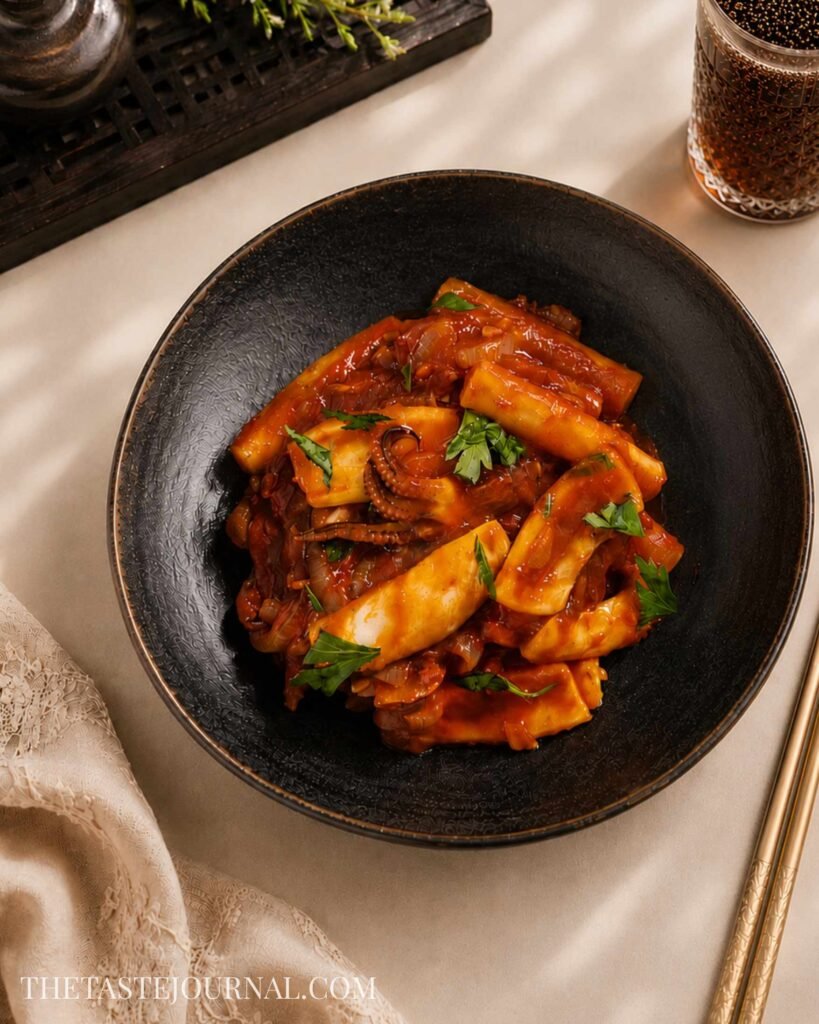
Seafood has long been a staple of Korean diets, and combining fermented red chili paste known as Gochujang with stir-fried calamari is popular among locals across the Korean Peninsula.
Ingredients
Calamari, Onion, Gochujang, Oyster Sauce, Gochugaru, Dark Soy Sauce, Garlic cloves, Rice vinegar, Sesame seed oil, Tomato Paste, Rice cakes (Optional), and Lime or Lemon juice.
Fresh squid has a tender yet chewy texture, making it an excellent match for gochujang sauce. You can also substitute squid with shrimp, prawns, or chicken. Sautéed onions and garlic contribute a subtle nuttiness to this dish. What is gochujang? It is a fermented red chili paste from South Korea, characterized by its deep maroon color and primary flavors of sweetness and spice. Gochujang is made from Korean red chili peppers, which provide a mild heat, milder than that of other chili varieties.
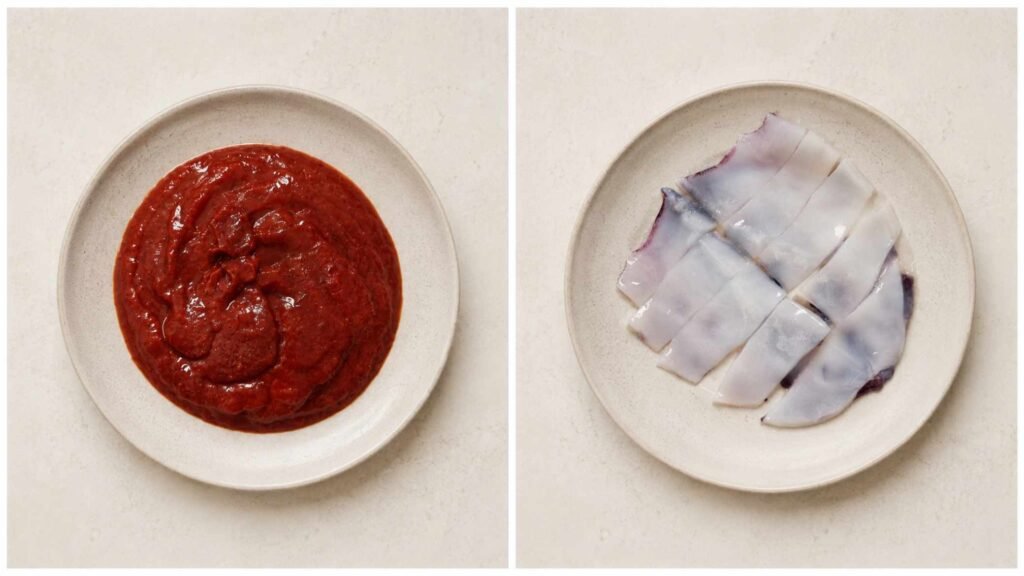
The main condiments used in this dish are soy sauce, oyster sauce, sesame oil, rice vinegar, and gochujang. These ingredients contribute to the dish’s complexity. You can purchase all the condiments at an Asian supermarket or online. If you enjoy Asian cuisine, these ingredients can also be used to create a variety of dishes in both Korean and Chinese cooking.
If you don’t have oyster sauce, you can substitute it with fish sauce or mix two tablespoons of soy sauce with one teaspoon of sugar to mimic the flavor. Oyster sauce, made with real oyster extract and a bit of sugar, is a thick condiment with a mildly sweet and umami taste, enhancing the flavor of seafood. Gochugaru, a popular Korean red chili flake, adds a mild heat.
We recommend using dark soy sauce; however, regular soy sauce can be used as an alternative. Sesame oil imparts a rich, nutty flavor to the dish. While adding rice cakes is optional, they provide a delightful chewy texture. Tomato paste adds a concentrated tomato flavor, and although lime or lemon juice is not traditionally included, it helps balance the flavors along with the seafood and tomato paste.
Instructions
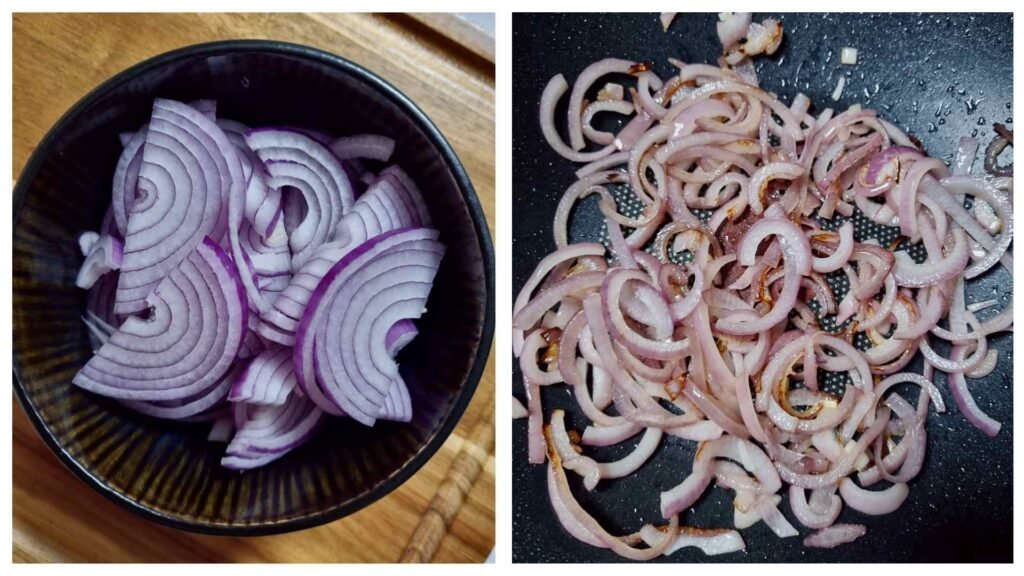
Heat oil in a separate wok over medium-high heat. Add the onion and begin sautéing. Ensure the vegetables are constantly moving in the pan to prevent burning. Gradually, the sliced garlic cloves will soften and caramelize until brown, developing a golden appearance. Make the sauce by combining the soy sauce, oyster sauce, rice vinegar, lime juice, gochugaru, gochujang, and tomato paste in a small bowl, then mixing vigorously.
Add the sauce to the onions and garlic; it will form tiny bubbles on its surface. When infused, these flavors will create a spicy, salty medley. Stir the sauce to ensure that it is well combined.
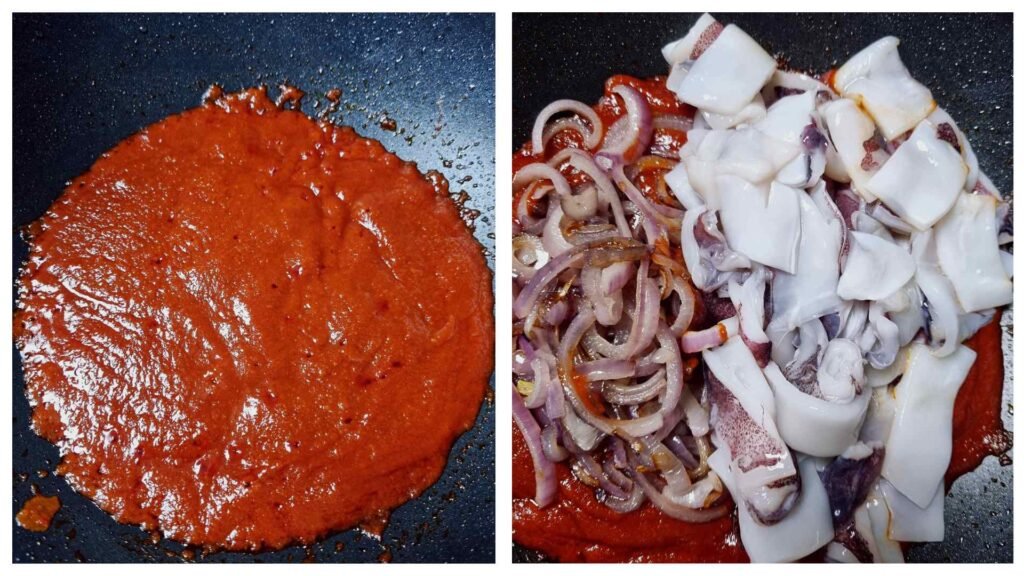
Add the calamari. Allow the sauce to thicken for about 2 minutes, then add 3 tablespoons of water, stirring occasionally to prevent it from burning. Once it has reached a thick consistency, the sauce is ready. It will have a glossy appearance.
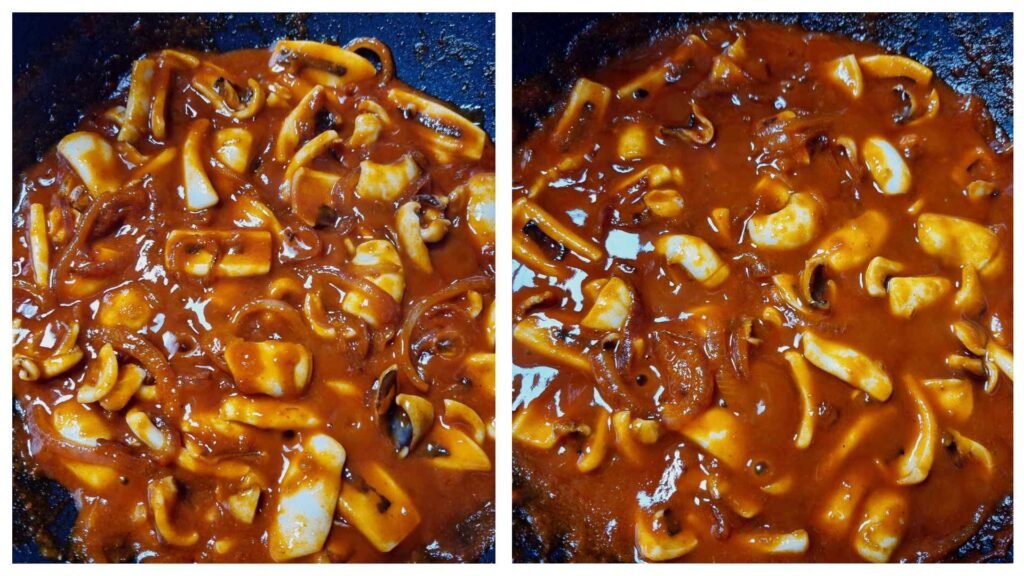
Mix the ingredients together to ensure that the calamari is evenly coated with the sauce. At this point, you can also add the rice cakes. Increase the heat to medium and cook for five minutes. Make sure that the pan is on low heat. Calamari is a delicate mollusk; it can overcook and turn rubbery if the temperature is too high. Once the calamari has curled up around the edges, it is ready.
The calamari will become tender as it simmers in the sauce. After five minutes, drizzle sesame oil on top for an extra nutty flavor. Give the Ojingeo-bokkeum one final stir and serve. Add garnishes such as toasted sesame seeds and chopped green onions or parsley for extra flavor.
How to Store Stir-fried Calamari?
You can store ojingeo-bokkeum in the refrigerator for two to three days. To reheat, use a skillet on low heat. Freezing is also an option, but keep in mind that the texture of the dish may change. Make sure it cools completely before transferring it to a freezer-safe container or freezer bag. You can freeze it for one to two months. To reheat after freezing, warm it up on the stove.
What to Serve with Stir-fried Calamari?
Many people in South Korea pair the stir-fried calamari with Rice. You can use Short-grain rice, which is popular in Asia, or regular rice. Freshly made white buns will also pair perfectly. Kimchi will pair well with this dish. Korean dried seaweed also goes well.
Ingredients
- 450 grams Calamari
- 2 tbsp Gochujang
- 1 Onion – Large, sliced
- 4 Garlic cloves – Sliced
Spicy Korean Sauce
- 2 tsp Gochugaru
- 1½ tbsp Oyster sauce
- 1 tsp Dark soy sauce
- 1 tsp Sesame seed oil
- 3 tsp Lime or Lemon juice
- 2 tbsp Tomato paste
- 3 tsp Rice vinegar – Or Apple Cider Vinegar.
Instructions
- Saute the ingredients: Heat oil in a wok over medium-high heat, sautéing the onion and garlic until the garlic caramelizes.
- Make the paste: In a bowl, mix soy sauce, oyster sauce, rice vinegar, lime juice, gochugaru, gochujang, and tomato paste to create the sauce. Add it to the onions and garlic, stirring until it bubbles, and the flavours meld.
- Simmer: Incorporate the calamari and let the sauce thicken for 2 minutes, adding three tablespoons of water as needed. Stir in rice cakes if desired, increase the heat to medium, and cook for 5 minutes until the calamari is tender. Finish with sesame oil, stir well, and serve.
Nutrition
Calories: 299kcal | Carbohydrates: 24g | Protein: 38g | Fat: 6g | Saturated Fat: 1g | Polyunsaturated Fat: 2g | Monounsaturated Fat: 1g | Cholesterol: 524mg | Sodium: 634mg | Potassium: 926mg | Fiber: 3g | Sugar: 6g | Vitamin A: 945IU | Vitamin C: 24mg | Calcium: 116mg | Iron: 3mg
Did you make this recipe?Pin to Save this Recipe

This is absolutely delicious!