Chuncheon Dakgalbi
Today, we are making a dish that is hugely popular in South Korea but still deserves more attention worldwide: Chuncheon Dakgalbi. Dakgalbi originated in Chuncheon, a city in Gangwon Province, and is also known as Chuncheon dakgalbi.
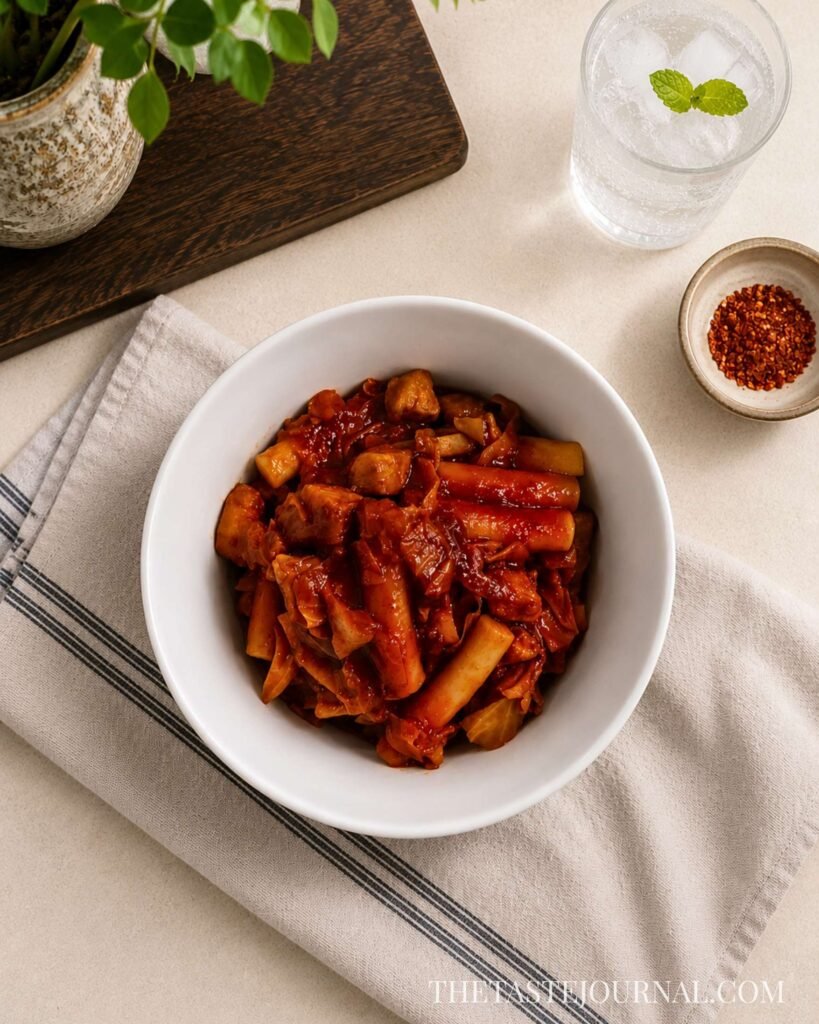
Although the dish has changed over the years, its identity remains centered around spicy chicken cooked with vegetables and rice cakes.
This spicy Korean chicken dish brings together tender pieces of chicken, crunchy cabbage, and chewy rice cakes in a rich gochujang sauce. Every bite delivers a combination of heat, sweetness, savory flavor, and texture that makes dakgalbi such a memorable Korean meal. If you enjoy Cheesy Dakgalbi, you will love this version too. It has all the familiar Korean flavors without relying on a layer of melted cheese.
There are many reasons why you are going to love this dish, the flavours are surprisingly phenomenal, with crunchy cabbage, tender chicken cubes, and chewy rice cakes all slathered in an incredible gochujang-rich sauce. If you enjoy Cheesy Dakgalbi, then you are going to enjoy this dish.
What Is Chuncheon Dakgalbi?
Chuncheon dakgalbi is a Korean spicy chicken stir-fry made with marinated chicken, vegetables, and Korean rice cakes. The chicken is coated in a bold red sauce made primarily with gochujang and gochugaru, then cooked together with cabbage and other ingredients.
The word dak means chicken, while galbi traditionally refers to ribs. Despite its name, the dish does not actually contain chicken ribs. The name is connected to the way chicken was prepared as an affordable alternative to more expensive rib dishes. Modern dakgalbi is commonly cooked on a large hot plate, allowing the chicken, vegetables, sauce and rice cakes to cook together. It is also easy to recreate at home using a large frying pan or skillet.
The History of Chuncheon Dakgalbi
Chuncheon dakgalbi has its roots in the 1960s, when chicken was prepared as an affordable dish. As the dish became more popular, the cooking method evolved. Restaurants eventually began preparing the chicken on hot iron plates with vegetables and rice cakes. By the 1970s, dakgalbi had become especially popular among students and soldiers because it was filling and relatively inexpensive.
Today, Chuncheon is closely associated with dakgalbi, and the city is home to the famous Chuncheon Myeongdong Dakgalbi Street.
Ingredients
Chicken breast, White Cabbage, Rice Cake, Tomato paste, Black Pepper, Gochuchang, Oyster sauce, Dark soy sauce, Sesame seed oil, Gochugaru, Rice Wine, and Water.
This easy Chuncheon dakgalbi recipe uses chicken breast, white cabbage, Korean rice cakes, gochujang, gochugaru, tomato paste, oyster sauce, dark soy sauce, sesame oil, rice wine, black pepper and water.
Gochujang forms the foundation of the sauce. This fermented Korean chilli paste brings heat, sweetness and savoury depth. Gochugaru adds another layer of chilli flavour and gives the dish its vibrant red colour.
Soy sauce and oyster sauce add umami, while sesame oil gives the sauce a nutty aroma. Rice wine helps balance the stronger flavours, and tomato paste gives the sauce extra body and richness. The rice cakes are particularly important because they provide the soft yet chewy texture that makes dakgalbi so satisfying. Korean cylindrical rice cakes, known as tteok, are commonly used in dakgalbi recipes.
Instructions
Peel the outer layers of the onion, garlic, and white cabbage. Rinse under running water. Slice the onion and cabbage, and finely mince the garlic cloves.
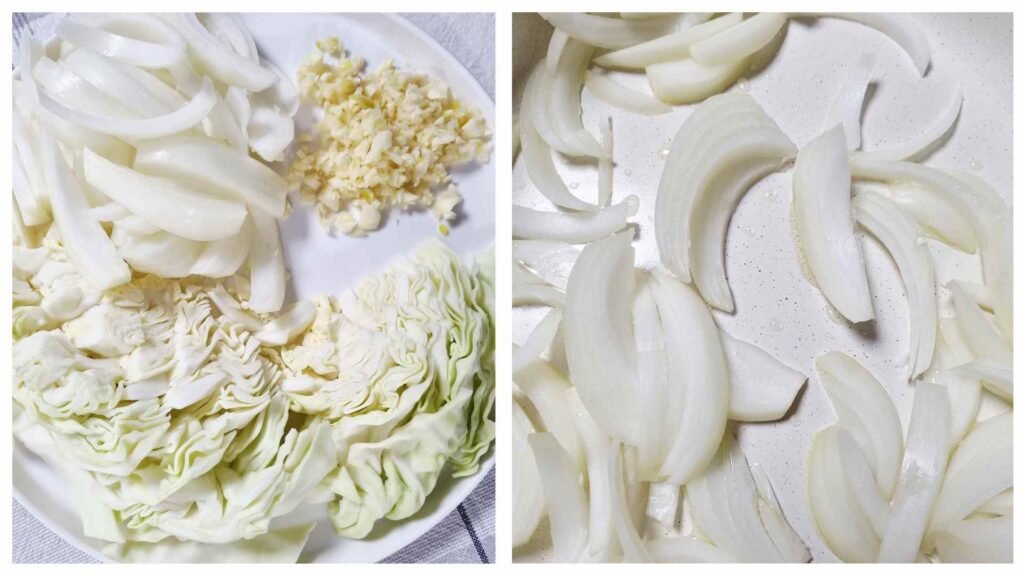
Add cooking oil to the pot, set the temperature to medium-low, and sauté for six to eight minutes, until the onions are caramelized. In the meantime, wash the chicken breast and slice it into cubes. Once caramelized, add the garlic and sauté for an additional minute. Add the cubed chicken breast, then add a bit more cooking oil. Season with salt.
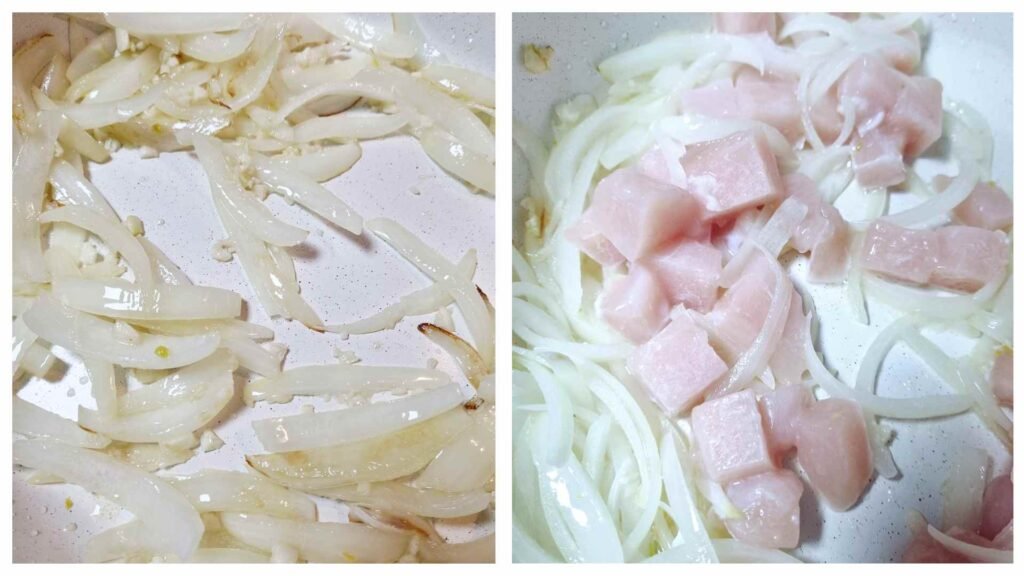
As the chicken cooks, prepare the Chuncheon Dakgalbi marinade by adding all of the ingredients for the sauce, such as Gochujang, Soy sauce, Sesame seed oil, Rice wine, Tomato paste, and Oyster sauce, to a bowl and mixing well.
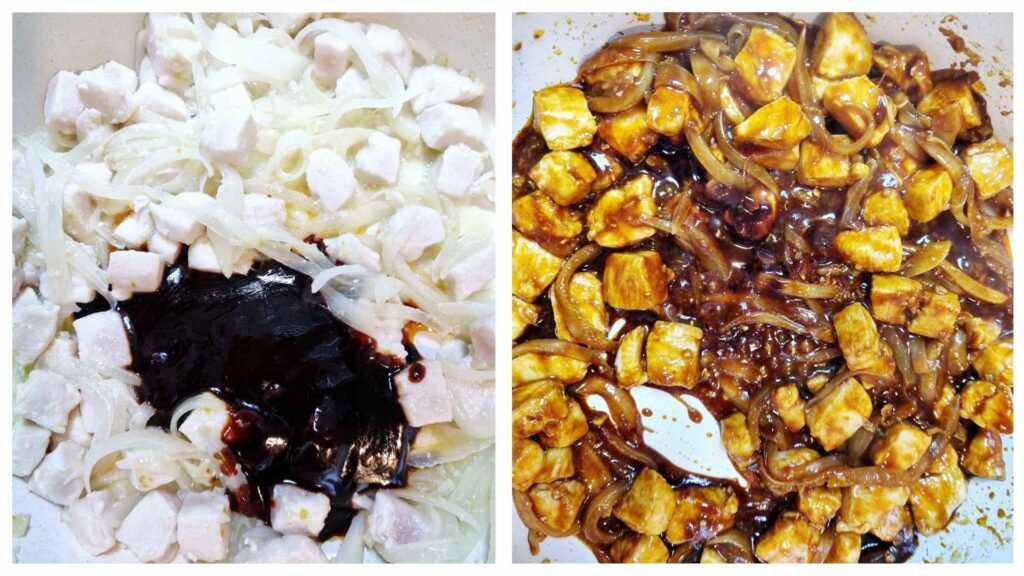
When the chicken turns white, it is time to add the chuncheon dakgalbi sauce and mix well. The sauce will add a lovely caramel colour to the chicken and the aromatics. Add a little bit of water. (About 1/4 cup) and mix again.
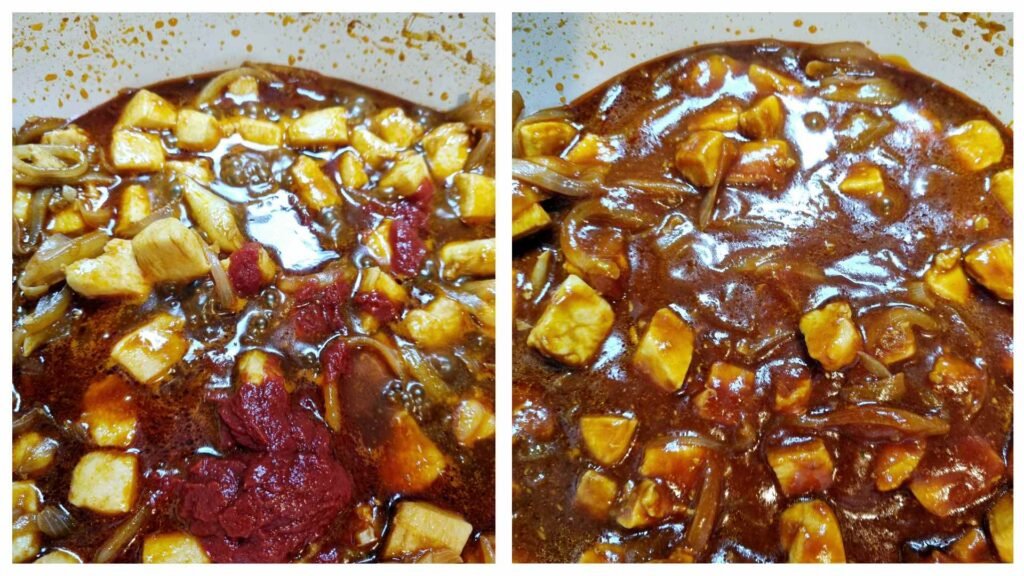
Add the tomato paste. Mix the ingredients well. Add the remaining water to the pot. As the sauce thickens, the colour will deepen to a deep shade of red. Add the white cabbage to the pot.
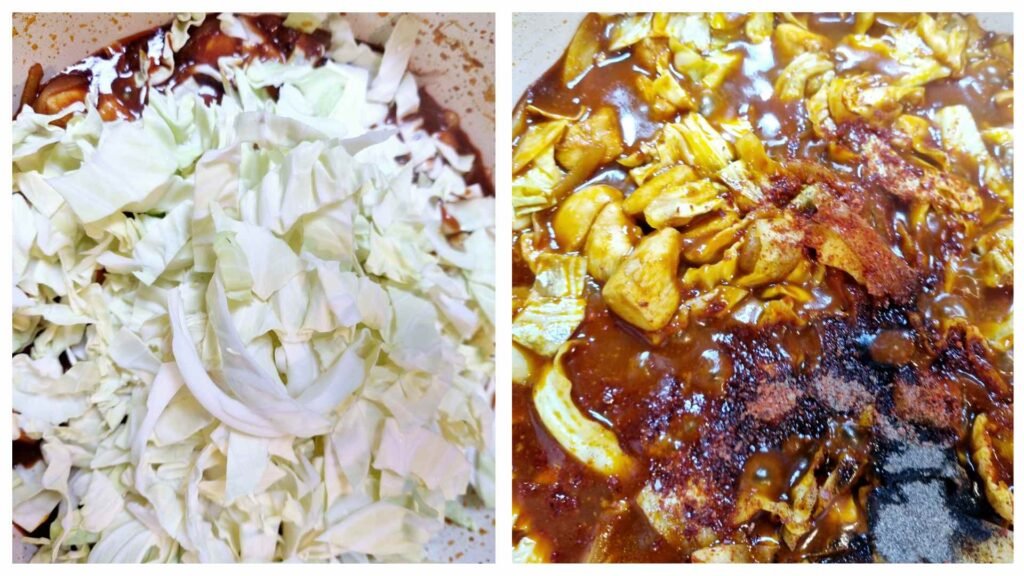
Mix well, and the cabbage will start to soften in the gravy of the Chuncheon Dakgalbi. Once that happens, add the Gochugaru (Korean red pepper flakes) and the ground black pepper. Simmer on low heat for fifteen minutes. Add the rice cake and cook for an additional five minutes until it is soft.
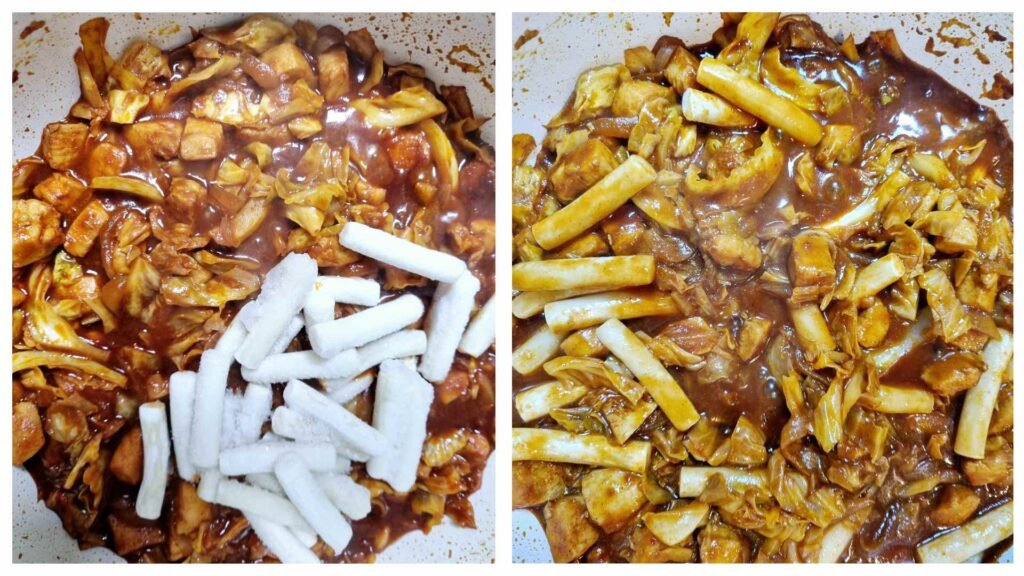
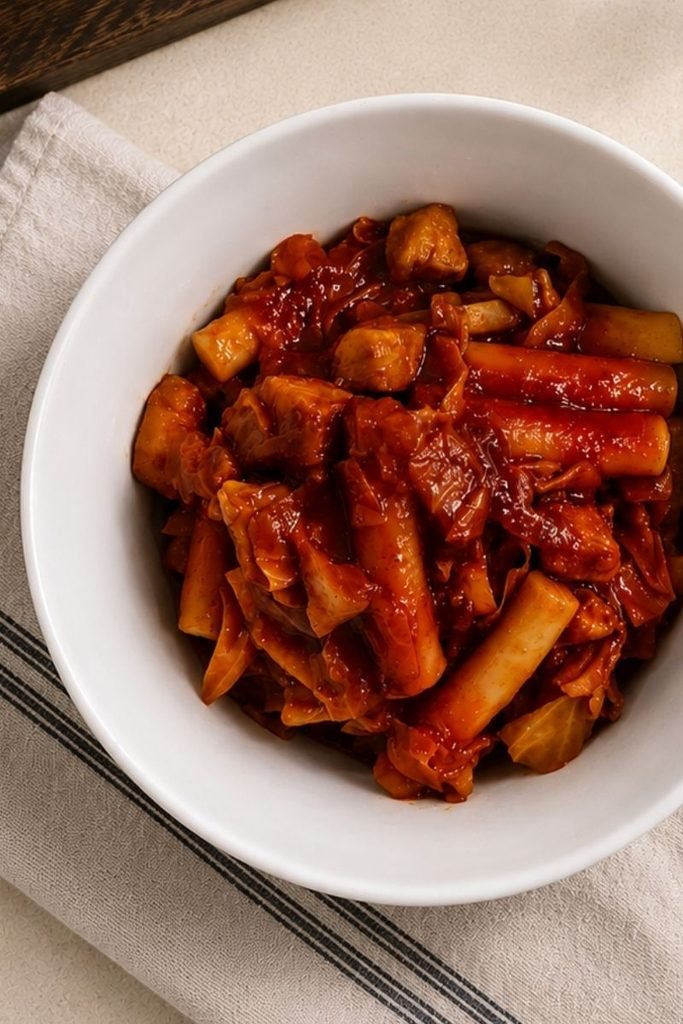
The Chuncheon Dakgalbi is ready to serve and enjoy. Garnish with slices of spring onion, chives, or parsley. Chuncheon dakgalbi is a celebration of the flavour and culture of South Korea. This iconic dish is ideal for seasoned foodies who want to try an easy and simple dish at home.
How to Make the Best Dakgalbi at Home?
For the best texture, cut the chicken into similar sized pieces so everything cooks evenly. Chicken thighs are traditionally a particularly good choice because they remain juicy during cooking, although chicken breast works well if that is what you have available.
If your rice cakes are refrigerated or frozen, soften them before adding them to the pan when necessary. Firm rice cakes can be soaked in water before cooking, which helps them become soft and chewy rather than remaining hard in the centre.
The spice level is easy to adjust. Use less gochugaru for a milder dakgalbi or increase it if you enjoy a stronger chilli flavour. Gochujang contributes both heat and sweetness, so changing the amount can also alter the overall balance of the sauce. Cabbage is one of the defining ingredients because it adds sweetness and texture as it cooks. You can also add ingredients such as sweet potato, carrot, onion and Korean perilla leaves for a more traditional restaurant style version.
What to Serve with Chuncheon Dakgalbi?
Most Koreans enjoy this dish with White steamed rice or Jasmine rice. If you are adding cheese on top, you can also eat the Dakgalbi with fresh rolls, such as a baguette. In Korea, this dish is often eaten with banchans, fried seaweed, or cabbage kimchi. Explore More Korean recipes such as Dakbokkeumtang, Musaengchae, Kkakdugi and Kkori Gomtang.
How to Store Chuncheon Dakgalbi?
Once cool, store in the refrigerator for 3 to 4 days in the same pot or in an airtight container. It is possible to freeze this dish; however, the texture of the rice cake and the cabbage will not be the same as a freshly prepared dish.
Why You Should Try Chuncheon Dakgalbi
Chuncheon dakgalbi is one of those Korean dishes that brings together everything you want from a comforting meal. The chicken is tender, the cabbage becomes naturally sweet, the rice cakes add a satisfying chew and the gochujang sauce ties everything together with a rich spicy flavour.
It is easy enough to prepare at home but distinctive enough to make dinner feel special. If you are looking for an authentic Korean spicy chicken recipe that is filling, flavourful and packed with texture, Chuncheon dakgalbi is an excellent place to start.
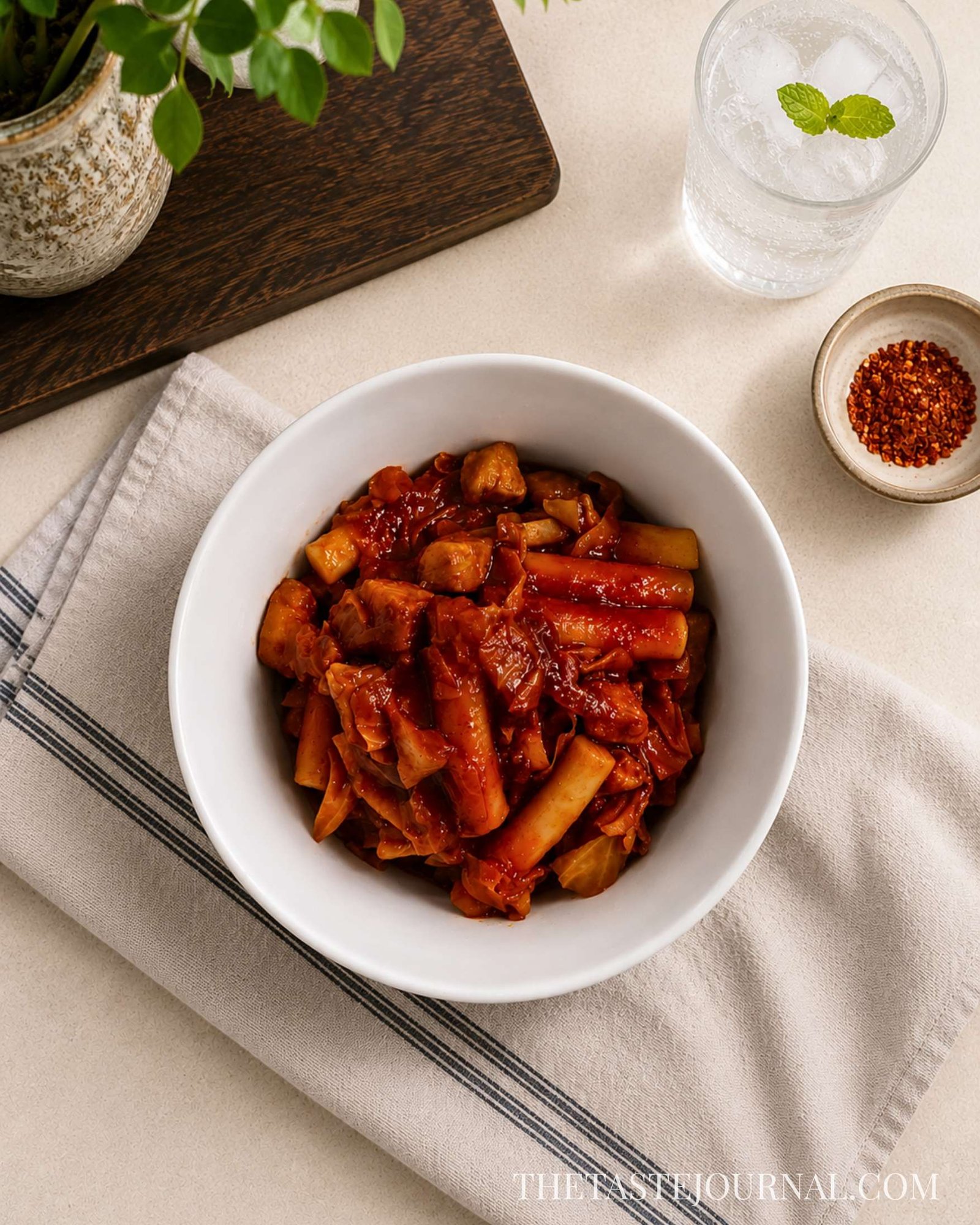
Chuncheon Dakgalbi is a spicy Korean stir-fried chicken dish packed with tender chicken, vegetables and chewy rice cakes coated in a rich, savoury gochujang sauce.
Ingredients
- 900 grams Chicken Breast
- 1½ cup Water
- 500 grams White Cabbage
Dakgalbi Sauce
- 2 tbsp Gochuchang
- 1 tbsp Oyster Sauce
- 2 tbsp Soy Sauce
- 1 tbsp Sesame Seed Oil
- 1 tsp Gochugaru
- 1 tsp Rice Wine
- 4 tbsp Tomato Paste
Instructions
- Prepare the ingredients: Peel and rinse the onion, garlic, and white cabbage. Slice the onion and cabbage, and mince the garlic. Meanwhile, wash and cube the chicken breast.
- Sauté: Heat cooking oil in a pot over medium-low and sauté the onions for 6-8 minutes until caramelized. Once the onions are caramelized, add the garlic and sauté for another minute. Add the chicken and a bit more oil, seasoning with a pinch of salt. Prepare the Chuncheon Dakgalbi marinade by mixing all the sauce ingredients in a bowl.
- Add the marinade and simmer: When the chicken turns white, add the marinade and 1/4 cup of water, followed by tomato paste. Stir until the sauce thickens and deepens in color, then add the cabbage. Mix well and simmer for 15 minutes. Add Gochugaru and black pepper, then the rice cake, cooking for an additional 5 minutes until soft.
- Garnish: Serve the Chuncheon Dakgalbi garnished with spring onions, chives, or parsley. Enjoy!
Nutrition
Calories: 206kcal | Carbohydrates: 13g | Protein: 28g | Fat: 5g | Saturated Fat: 1g | Polyunsaturated Fat: 2g | Monounsaturated Fat: 2g | Trans Fat: 0.02g | Cholesterol: 77mg | Sodium: 2091mg | Potassium: 838mg | Fiber: 3g | Sugar: 6g | Vitamin A: 397IU | Vitamin C: 33mg | Calcium: 60mg | Iron: 2mg
Did you make this recipe?Pin to Save this Recipe