
Thai Red Curry
Thai red curry represents an important component of Thai cuisine, distinguished by its vibrant red hue and complex layering of flavors. This dish has its origins in the central plains of Thailand and it is known for its harmonious combination of fresh herbs, coconut milk, and a diverse array of spices, resulting in a balance of sweetness and richness.
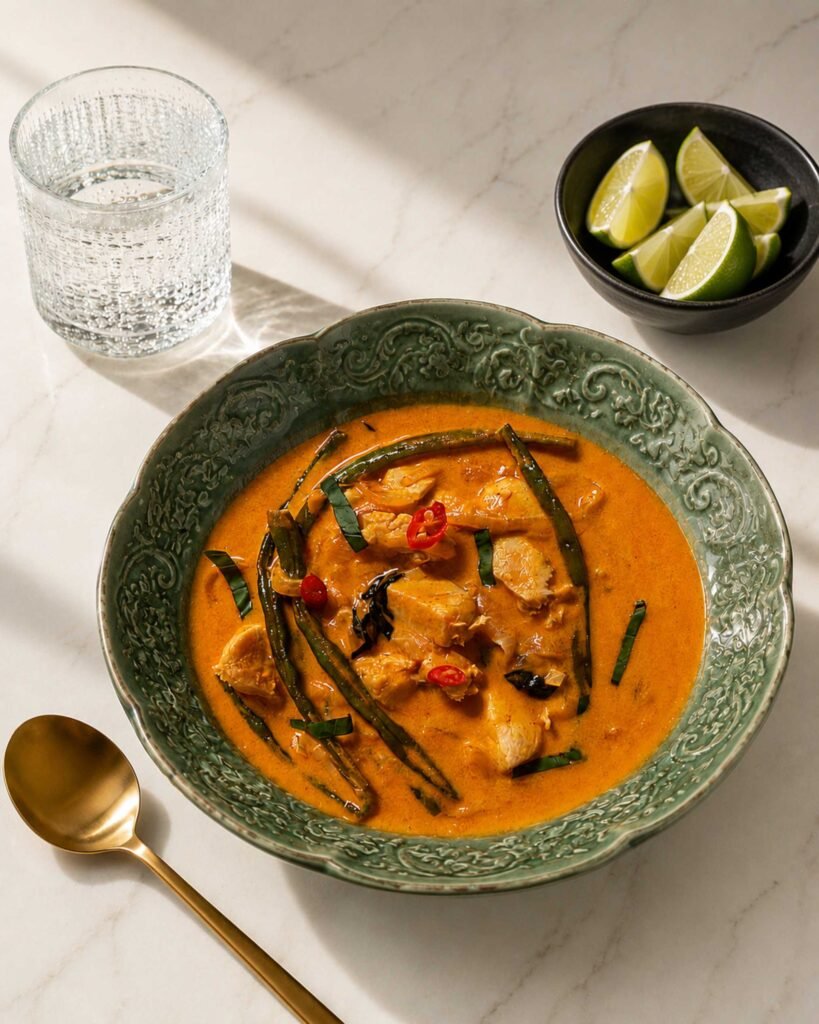
The prominent red color of this curry is primarily derived from dried red chili peppers, which were introduced to Thailand in the 16th century by Portuguese traders.
Ingredients
Red Curry Paste, Coconut cream, Lemongrass stalks, Green beans, Onions, Garlic, Chicken breast, Thai Basil leaves, Kaffir Lime leaves, Red Chili.
In Thai cooking, curry paste and coconut milk are essential. Red curry paste, made from garlic, shallots, lemongrass, galangal, red chilies, and kaffir lime zest, adds rich flavors, while coconut cream balances the spiciness with its creamy texture. You can use full-fat coconut cream for luxury or lighter coconut milk alternatives.
Thai red curry is versatile; you can choose chicken, shrimp, beef, or a vegetarian option, and add vegetables like bamboo shoots, eggplants, green beans, and red peppers for extra flavor. Fresh herbs like Thai basil and kaffir lime leaves enhance the dish even more. If you’re short on time, pre-made red curry paste makes preparation quick and easy.
Instructions
Wash and trim green beans. Slice onions and garlic. Clean chicken and cube the breasts. Squeeze the juice of two limes. In a pot, heat oil, add chicken cubes, and sauté for 6 minutes until golden brown.
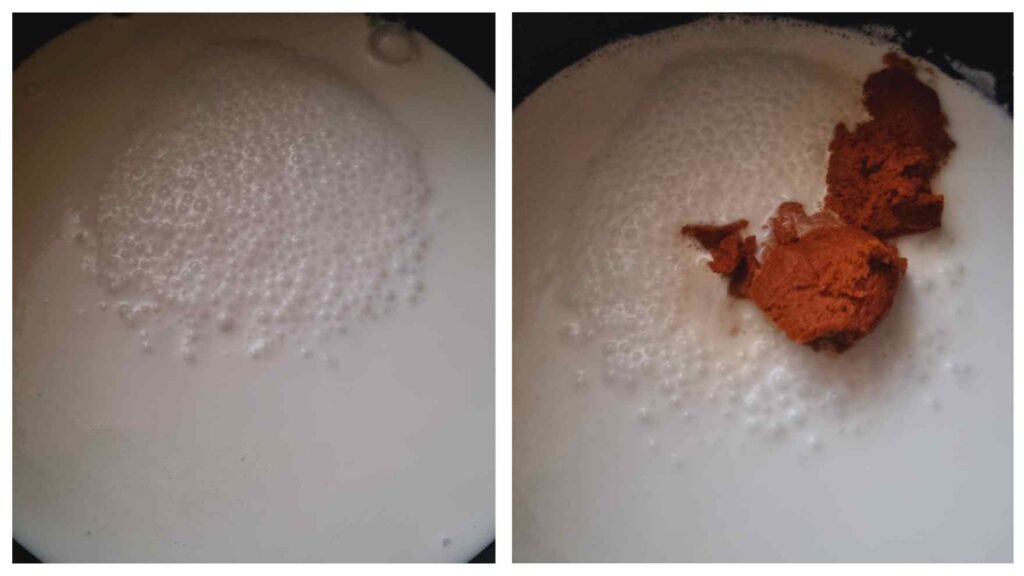
Add the Thai red curry paste to the caramelized onions and garlic. Mix the paste with the aromatics to release its natural oils.
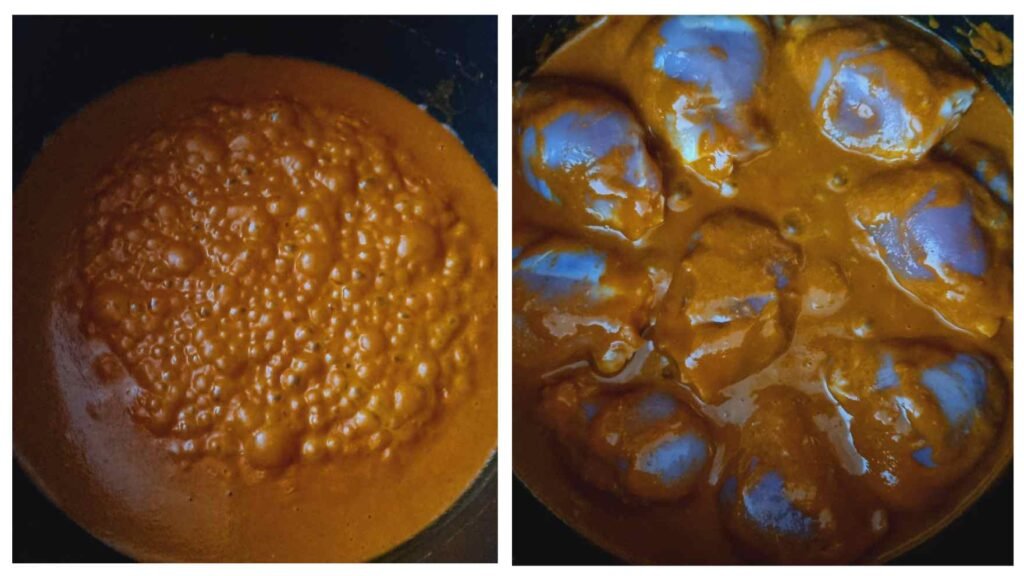
Pour in half of the coconut cream and simmer over high heat for 2 minutes. This step helps the coconut cream separate, releasing fragrant coconut oil that enhances the flavor of the red curry.
If the coconut cream does not release its oil, this may be due to the type used. Shake the can well before opening it. Stir the cream to mix in the Thai red curry paste. While it simmers, add the chicken breasts and 1/2 cup of water.
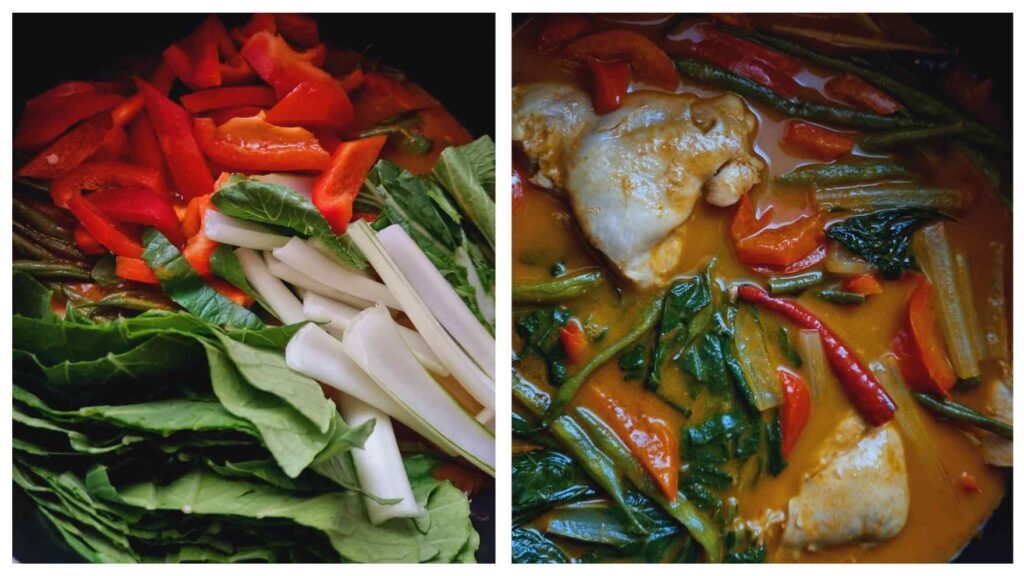
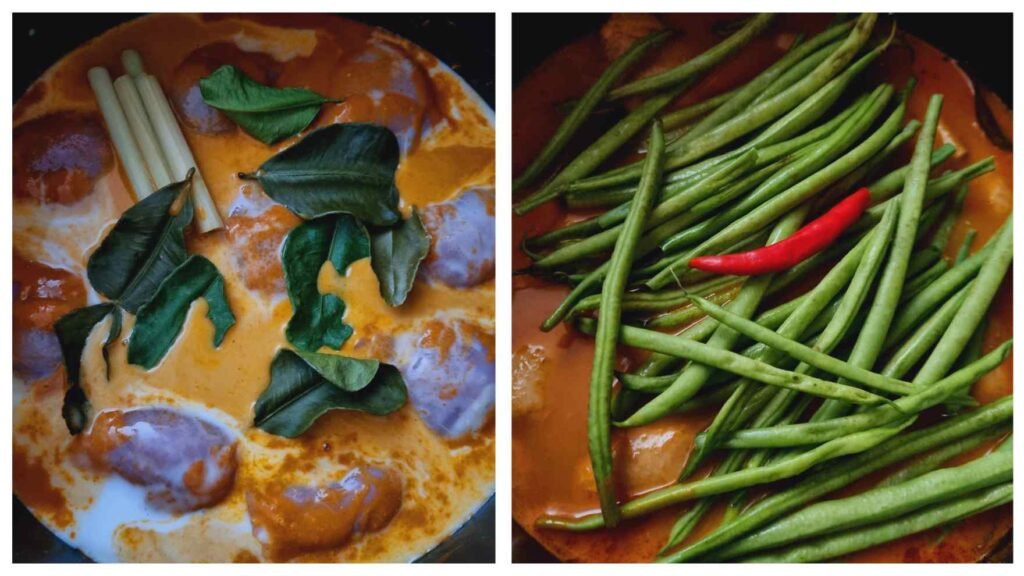
Add the rest of the coconut cream to the pot along with the lime juice. Next, add the kafir lime leaves and lemongrass. These two ingredients will fill your kitchen with a lovely citrus smell. Then, include the green beans and the red chili. Set the heat to medium-low and let the Thai red curry simmer with the lid on for 20 minutes. Be careful not to add all the ingredients at the same time; the chicken takes longer to cook than the green beans and red chili. If you add everything at once, the green beans will become too soft.
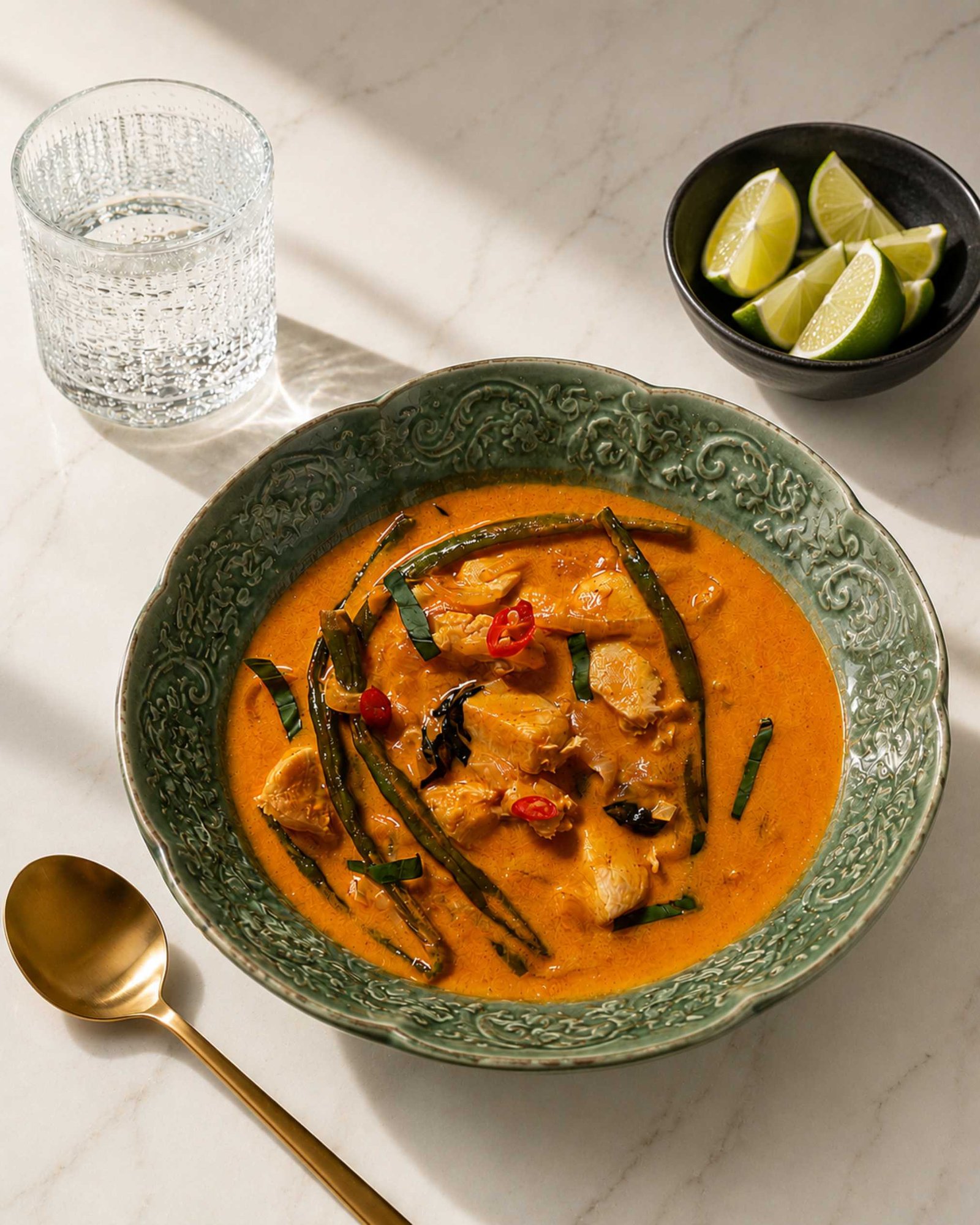
After the curry has simmered, you can take out the kaffir lime leaves, as they only add a pleasant smell. Once the red curry is cooked, its aroma will mix with the creamy coconut gravy. Serve the Thai red curry with Thai jasmine rice. Adding lime slices will boost the curry’s acidity and highlight the coconut’s creaminess. You can also top the dish with fresh basil leaves and parsley for extra flavor and a nice look.
Expert Tips
Choosing a high-quality Thai red curry paste is essential for an authentic dish. We recommend “Thai Choice – Red curry paste” as a great, affordable option found in most supermarkets. For thickness, use full-fat coconut cream, though light coconut milk is a lighter alternative. You can make a vegetarian version by swapping chicken for tofu. Some prefer frying the curry paste before adding coconut cream, while others thicken coconut milk first. Extra herbs like coriander or cumin can enhance the flavor, along with vegetables such as zucchini, bamboo shoots, or eggplants.
What to Serve with Thai Red Curry?
Serve the Thai red curry with Jasmine rice, Fresh Lettuce, Slices of Lime, and Thai basil leaves on an herb-style plate. Crunchy Thai Spring rolls are a great option to serve alongside the Red Curry.
How to Store Thai Red Curry?
Store the Thai red curry in an airtight container in the refrigerator for 2 to 4 days. Reheat the Thai Red curry in a pot or the microwave. You can also freeze the Thai red curry for up to 3 months.
Ingredients
- 2 ½ tsp Thai red curry paste
- 400 grams Chicken breast – Sliced
- 2 tbsp Lime juice
Vegetables
- 1 Onion – Sliced
- 1 Thai Red chili – Sliced and used as a garnish.
- 7 Garlic Cloves – Sliced
- 150 gram Green beans – Remove the stems
- 50 grams Thai Basil Leaves – Optional
Spices and Condiments
- 4 Kefir lime leave
- 40 grams Lemongrass stalks
Liquids
- 400 ml Coconut cream
- 3 tbsp Grapeseed oil
Instructions
- Sauté the ingredients: Wash the green beans and remove the stems. Slice the onions and garlic, then rinse and cube the chicken. Sauté the chicken in cooking oil for 6 minutes until caramelized. Add Thai red curry paste, onions, and garlic, mixing well to release the oils. Pour in half of the coconut cream and simmer for 2 minutes on high heat.
- Add the protein: Add chicken, 1/2 cup of water, the remaining coconut cream, lime juice, kefir lime leaves, and lemongrass. Stir in green beans and red chili. Reduce the heat to medium-low and simmer for 20 minutes with the lid on, ensuring the chicken cooks through while the vegetables remain crisp.
- Serve: Remove the kefir lime leaves before serving. Enjoy with Thai jasmine rice, garnished with lime slices for added flavour.
Nutrition
Calories: 514kcal | Carbohydrates: 66g | Protein: 14g | Fat: 22g | Saturated Fat: 14g | Polyunsaturated Fat: 5g | Monounsaturated Fat: 2g | Trans Fat: 0.01g | Cholesterol: 34mg | Sodium: 731mg | Potassium: 341mg | Fiber: 4g | Sugar: 58g | Vitamin A: 516IU | Vitamin C: 8mg | Calcium: 31mg | Iron: 1mg
Did you make this recipe?Pin to Save this Recipe

Absolutely delicious!!