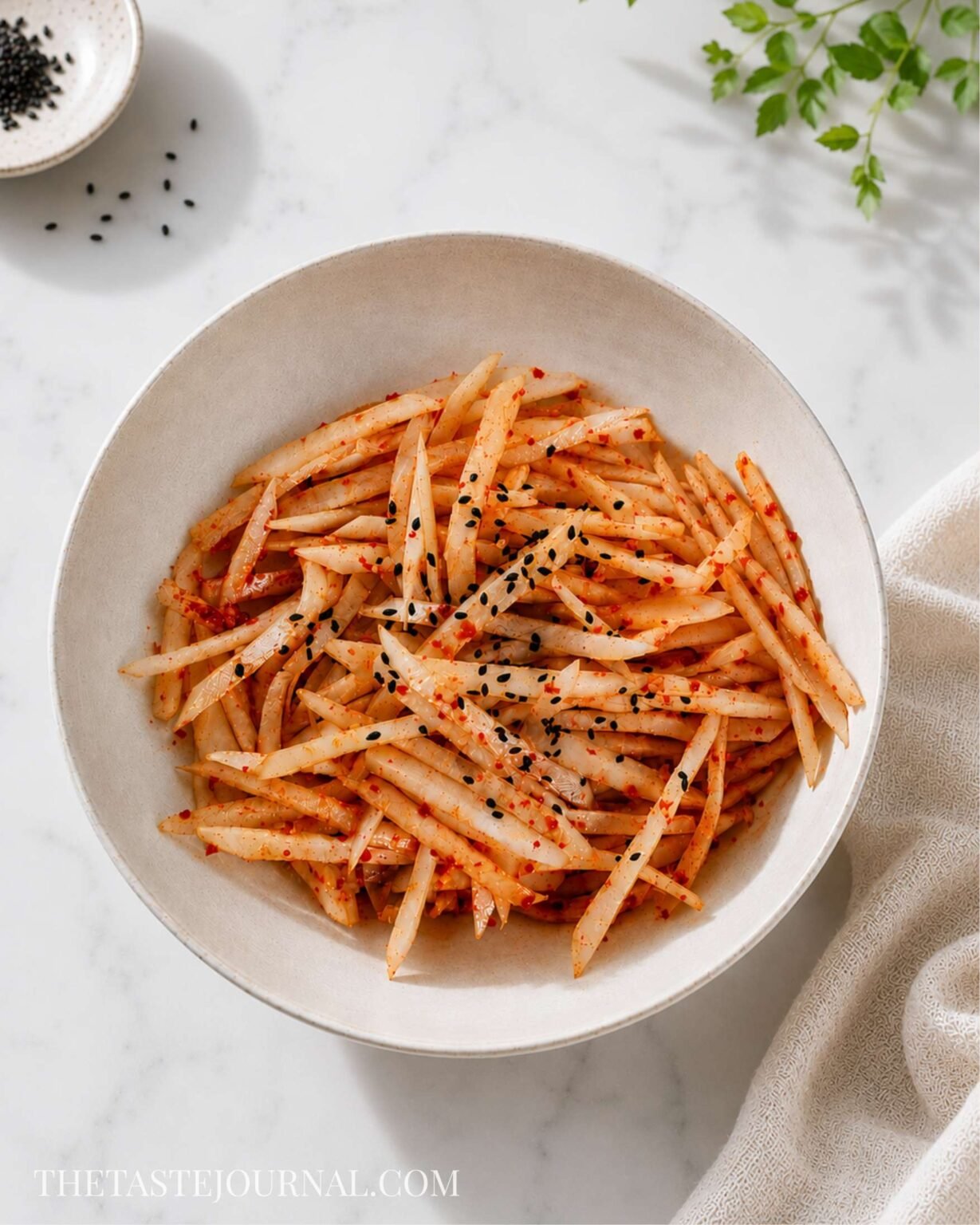
Sauerkraut
Sauerkraut originated in ancient China over 2,000 years ago. This incredible dish is renowned for its extraordinary health benefits. Rich in probiotics, sauerkraut is beneficial for digestion. Making sauerkraut is a straightforward process that requires only a few ingredients: cabbage, salt, and a storage container.
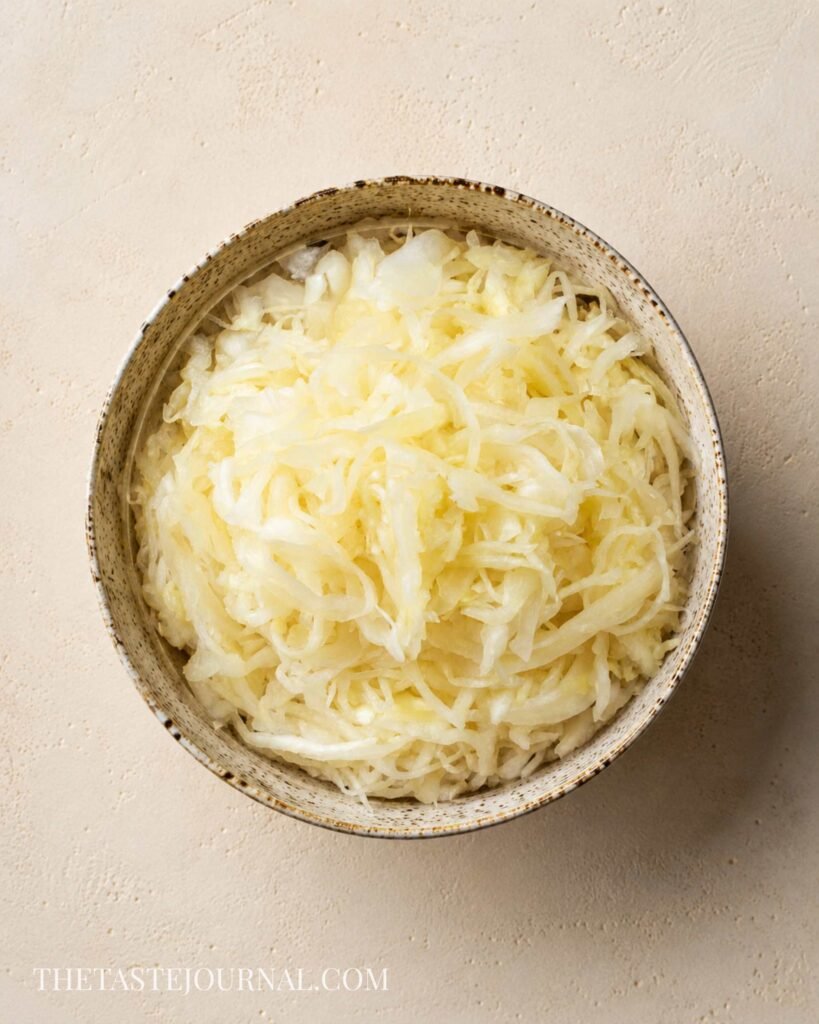
Sauerkraut is often served with a variety of meats, including sausages and hot dogs. The tradition of fermenting cabbage has gained popularity worldwide, spreading along trade routes to countries such as Poland, Russia, Korea, Vietnam, Japan, and Germany.
Ingredients
White Cabbage, and Salt.
Sauerkraut is made using two primary ingredients: cabbage and salt. Most recipes use green cabbage for its stronger and more pungent flavor, white cabbage offers a sweeter dish.
Any type of table salt can draw moisture from the cabbage, creating a brine that is essential for the fermentation process. The salt plays a significant role in enhancing probiotic growth and inhibiting mold formation, as well as adding flavor to the sauerkraut. Carrots can be included to provide additional color and flavor to the white cabbage.
Herbs such as dill or bay leaves may be added for a herbal note, while mustard seeds can introduce a touch of complexity. Other common additions include caraway seeds, which impart a certain tartness, and shredded apples or carrots for sweetness. Red cabbage has more antioxidants, and also enhance the color. To increase sourness, include a a splash of white vinegar. Slicing the cabbage thinly will create a sauerkraut that is easier to eat and tastier on hotdogs.
Instructions
Prepare the cabbage by removing the outer leaves, cutting it into quarters, removing the core, and slicing it into thin shreds. Add the shredded cabbage to a large bowl and sprinkle with sea salt. Massage the salt into the cabbage. Squeeze out any excess juices. This process will take five to ten minutes. This step will create a brine.
At this point, you can add in optional ingredients. Transfer the salted cabbage to a clean glass container. Clean the container by washing it with soap, then rinsing it several times with hot water. Wipe the container with a clean paper towel. Leave some space at the top to allow for bubbling and cabbage expansion. Use a clean cloth to cover the container; this will allow gases to escape.
Let the glass container sit on a countertop, out of direct sunlight, for 1 to 2 weeks. The ideal room temperature is around 18 to 22 degrees. If the indoor temperature is high on some days, it is sufficient to ferment the sauerkraut for 1 to 2 days on the countertop, then refrigerate it. Remove the cloth. Taste the sauerkraut after one week. Once it reaches the desired level of sourness, it is ready to eat and enjoy.
How to Store the Sauerkraut?
For an airtight container, use a glass container; if you don’t have one, use a BPA-free one. Sauerkraut will last for several months in the fridge, and the fermentation process will continue during this time. It is important to use a clean, dry spoon to scoop out the sauerkraut.
What can you Serve with Sauerkraut?
Sauerkraut is often served alongside meat such as sausages and other grilled food. It is a classic topping for hot dogs as it adds crunch and texture. It pairs well with sandwiches such as Dry-cured beef and the Thousand Island dressing.
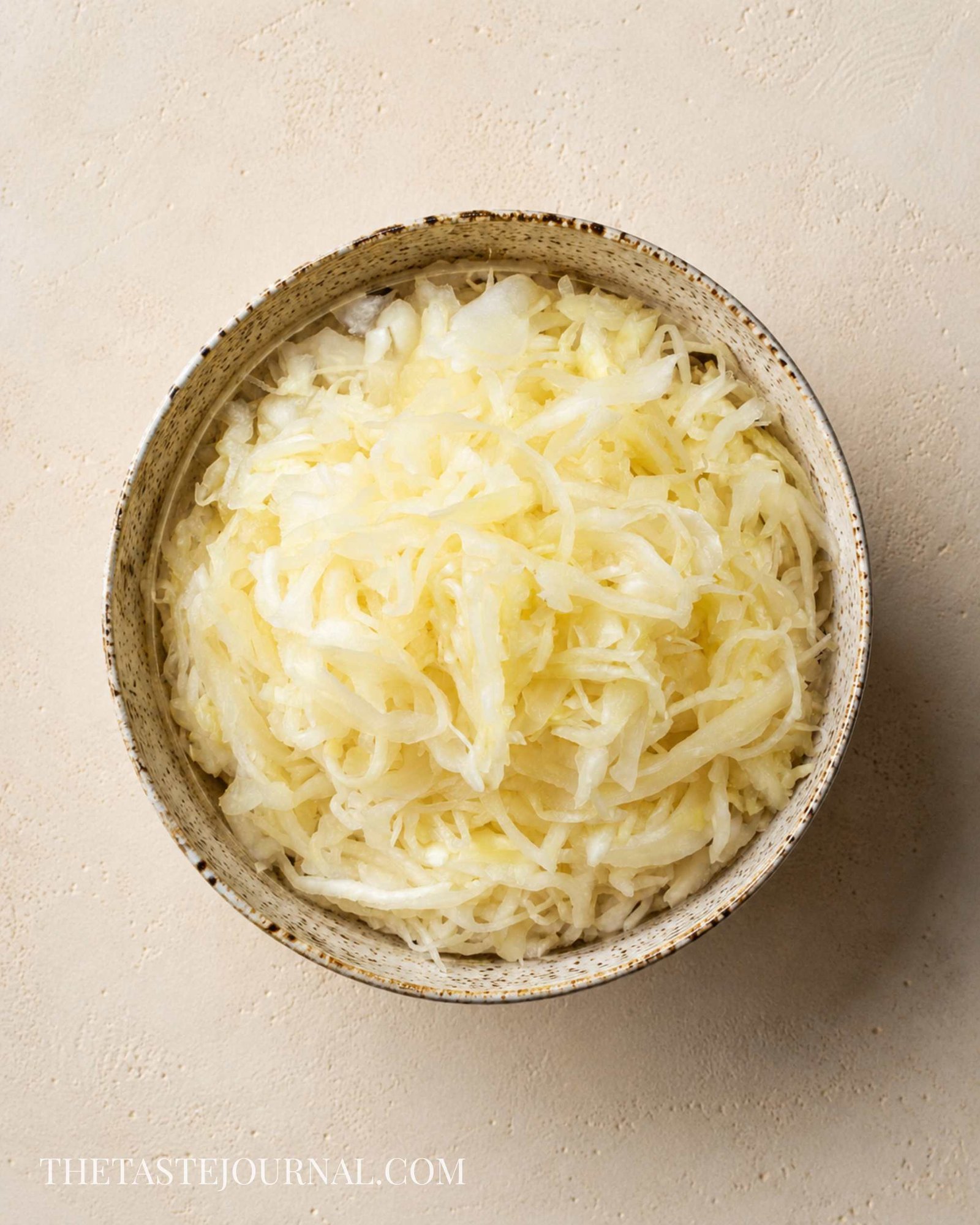
Ingredients
- 500 grams Cabbage
- 1 tbsp Salt
Instructions
- Prepare the Vegetables: Remove outer leaves, cut into quarters, remove the core, and slice into thin shreds. Place shredded cabbage in a large bowl and sprinkle with sea salt. Massage salt into the cabbage and squeeze out excess juices (5-10 minutes) to create brine.
- Transfer to Container: Place salted cabbage and carrot in a clean glass container. Leave space at the top for bubbling. Cover with a clean cloth to allow gases to escape.
- Fermentation: Let the container sit on a countertop at 18-22°C (64-72°F) for 1-2 weeks, out of direct sunlight. If the temperature is high, ferment for 1-2 days at room temperature, then refrigerate.
- Taste and Store: After one week, taste the sauerkraut. Once it reaches the desired sourness, seal it with an airtight lid and enjoy!
Nutrition
Calories: 168kcal | Carbohydrates: 29g | Protein: 16g | Fat: 1g | Saturated Fat: 0.2g | Polyunsaturated Fat: 0.2g | Monounsaturated Fat: 0.1g | Cholesterol: 22mg | Sodium: 1140mg | Potassium: 1066mg | Fiber: 14g | Sugar: 16g | Vitamin A: 511IU | Vitamin C: 184mg | Calcium: 224mg | Iron: 3mg
Did you make this recipe?Pin to Save this Recipe