Marinara sauce
Today, we’re making marinara sauce, a classic Italian staple from Southern Italy. The term “marinara” derives from the Italian word “marina,” as tomatoes were accessible to sailors.
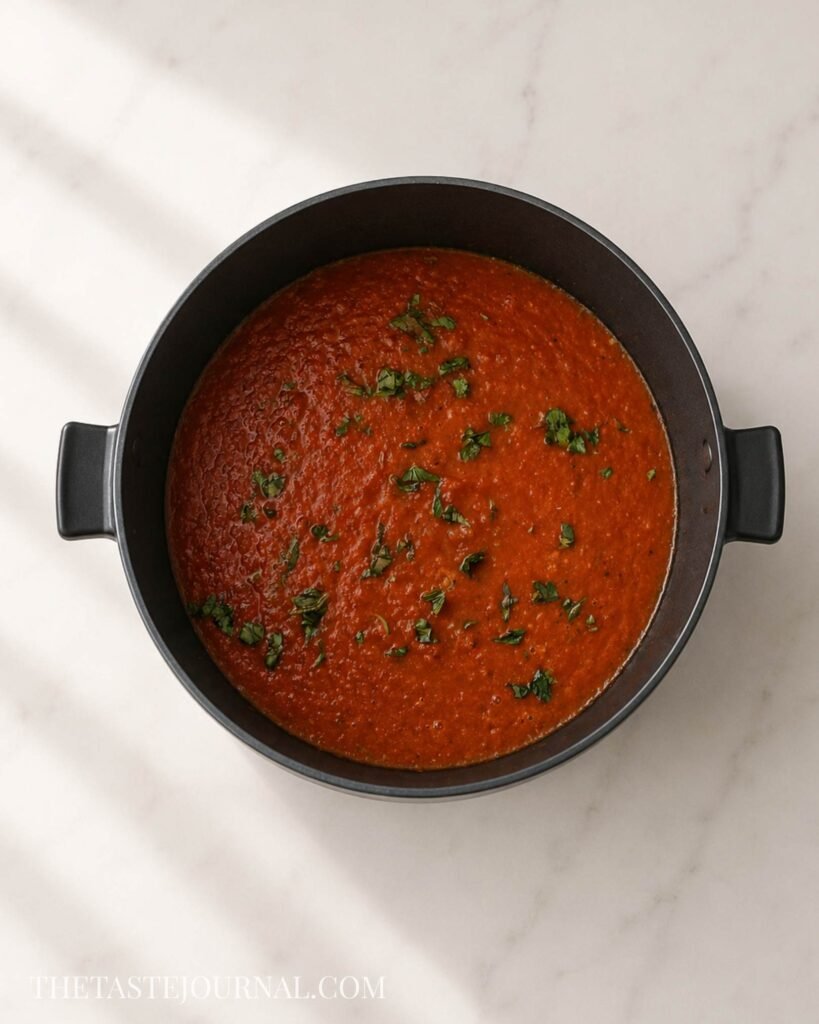
This tangy sauce became a hallmark of Italian cuisine, with fresh tomatoes preferred but canned tomatoes as an option. Garlic cloves and fresh basil can also be substituted with garlic powder and dried basil, respectively. This rich tomato sauce, made with garlic, fresh tomatoes, and herbs, is a versatile base for many dishes, including Pasta, Baked Ziti, and Lasagne.
The main ingredients include tomatoes, garlic, olive oil, and herbs, and it can be used in recipes like eggplant Parmesan, Chicken Parmesan, pizza, and meatball subs.
Ingredients
Olive oil, Onion, Fresh Garlic cloves, Bay leaves, Water, Canned tomatoes, Fresh tomatoes, Tomato paste, Fresh Basil and butter. Dried basil, Paprika powder, Dried oregano, Dried thyme, Brown sugar, Worcestershire sauce, Salt.
Marinara sauce is unique due to its short cooking time and simple ingredients. It can be made with fresh or canned tomatoes, garlic for heat, and olive oil for aroma. A blend of fresh herbs like basil and oregano balances the tomatoes’ acidity and enhances flavor.
The sauce combines onions, garlic, and bay leaves, using fresh tomatoes, canned tomatoes, and tomato paste for a sweet complexity. Fresh basil enriches the flavor, while dried herbs add warmth. Worcestershire sauce introduces a savory element. Unlike rich ragù or creamy Alfredo, marinara is light and tangy, making it versatile for pizza, pasta, seafood, or even as a dip.
Instructions
Finely cube the onion and mince the garlic cloves. Cut the tomatoes into chunky pieces. Preheat a pot over medium-high heat. Drizzle in some olive oil and add the butter, onion, and minced garlic. Sauté for 3 minutes. While the onion and garlic are cooking, blend the tomatoes in a blender until smooth.
Transfer the blended tomatoes to a pot. Add the bay leaves, tomato paste, Worcestershire sauce, water, basil, oregano, thyme, paprika, brown sugar, and salt. Bring the mixture to a boil, then reduce the heat and let it simmer on low for 30 minutes.
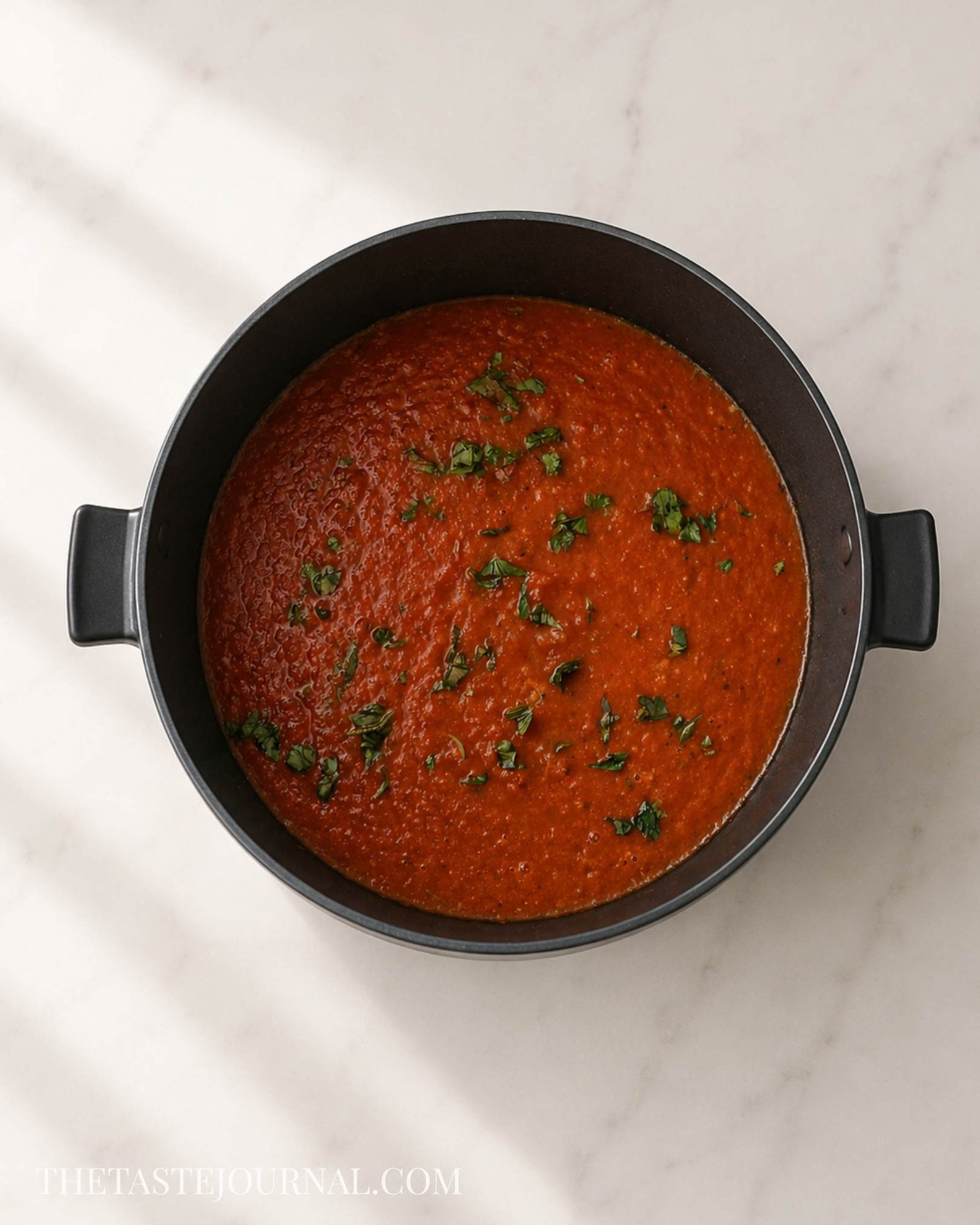
After simmering, remove the bay leaves. Use an immersion blender to blend the marinara sauce until smooth. Be careful not to scratch the pot while blending. If necessary, you can transfer the sauce to a mixing bowl to blend it safely. The Marinara sauce is ready to enjoy!
How to Store Marinara Sauce?
Marinara sauce can be kept in the fridge for a week or frozen for 3 months. Making a large batch of this sauce and storing it in portions will let you quickly prepare future meals.
Expert tips
Traditional marinara sauce is simple to make, with chunky variants using whole tomatoes for a hearty texture, perfect for pasta like rigatoni or penne. The spicy arrabbiata sauce includes red chili flakes for a kick. For added flavor, consider herbs like rosemary, thyme, or parsley. In Southern Italy, sugar may be added to balance acidity without overpowering the tomatoes.
A slow-simmered version melds flavors better, often including onions and red wine for richness. Be careful not to burn the onion or garlic while sautéing and adjust salt and pepper at the end. Simmer for at least 30 minutes to deepen the flavor, adding fresh herbs just before serving and dried herbs at the start. A pinch of sugar can help cut acidity, and adding red wine after the onions and garlic enhances the complexity of the sauce.
Ingredients
Base ingredients
- 1 Onion – sliced
- 6 Garlic Cloves – sliced
- 3 Bay leaves
- 20 grams Butter
- 2 tbsp Olive oil
Fresh Ingredients
- 40 grams Basil leaves
- 1/4 cup Water
Different tomato types
- 250 grams Tomatoes – can
- 2 tbsp Tomato paste
- 4 Tomatoes
Spices
- 1 tsp Basil
- 1 tsp Paprika powder
- 1 tsp Oregano
- 1 tsp Thyme
- 1 tsp Brown sugar
- 1 tsp Worcestershire sauce
- Salt
Instructions
- Preparation: Finely cube the onion and mince the garlic. Cut the tomatoes into chunky pieces.
- Cooking: In a pot, heat olive oil and butter over medium-high heat. Sauté the onion and garlic for 3 minutes. Blend the tomatoes until smooth and add them to the pot. Stir in bay leaves, tomato paste, Worcestershire sauce, water, and spices. Bring to a boil, then reduce heat and let it simmer for 30 minutes.
- Serve: Remove the bay leaves and blend the sauce until smooth. Enjoy your marinara sauce!
Nutrition
Calories: 111kcal | Carbohydrates: 24g | Protein: 4g | Fat: 1g | Saturated Fat: 0.3g | Polyunsaturated Fat: 0.4g | Monounsaturated Fat: 1g | Trans Fat: 0.01g | Sodium: 277mg | Potassium: 810mg | Fiber: 5g | Sugar: 14g | Vitamin A: 2356IU | Vitamin C: 39mg | Calcium: 101mg | Iron: 3mg
Did you make this recipe?Pin to Save this Recipe