Kung Pao Cauliflower
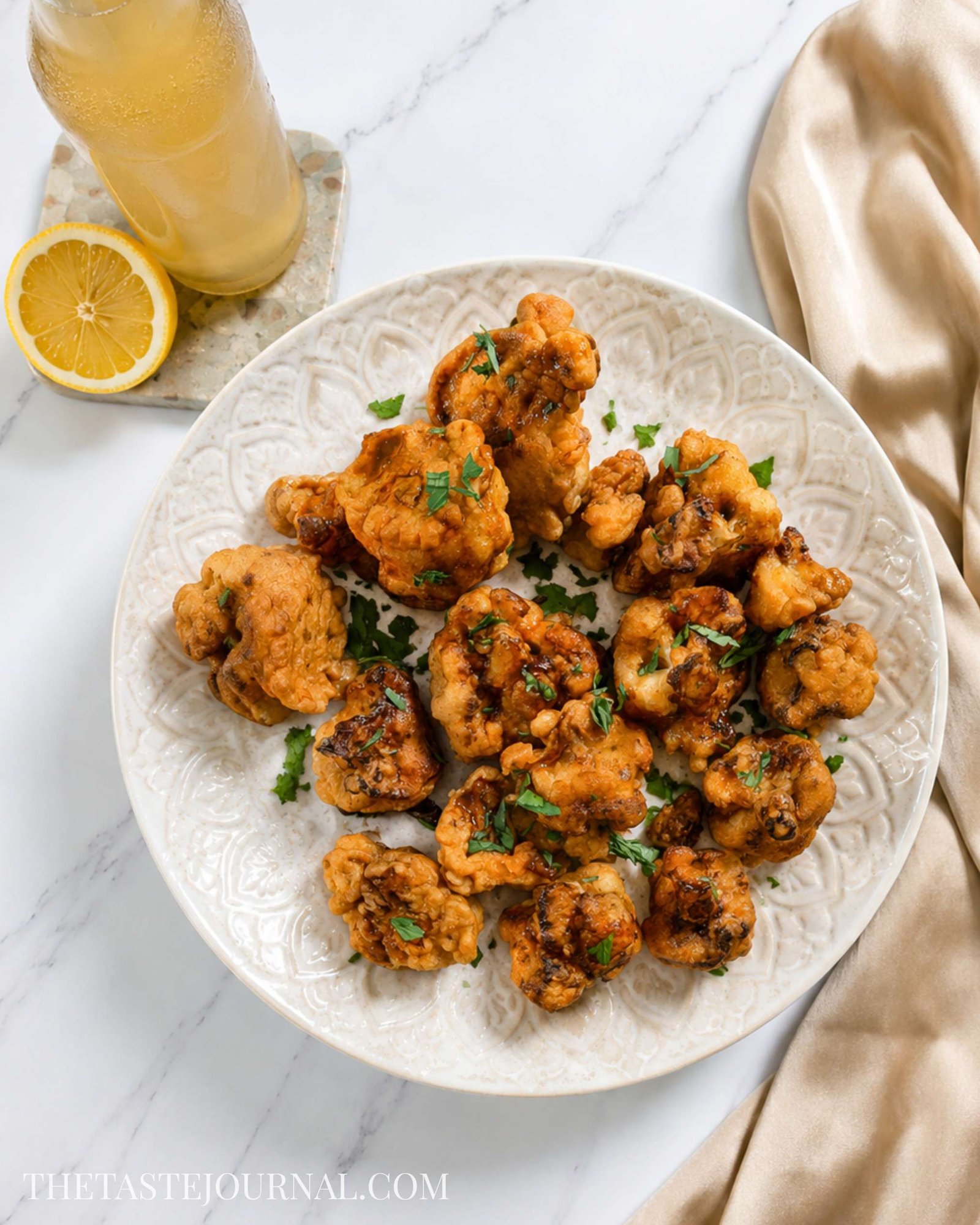
Today, we are making Kung Pao Cauliflower. If you’ve ever visited an Asian-fusion restaurant that focuses on plant-based meals, then we’re certain that you’ve come across Kung Pao Cauliflower.
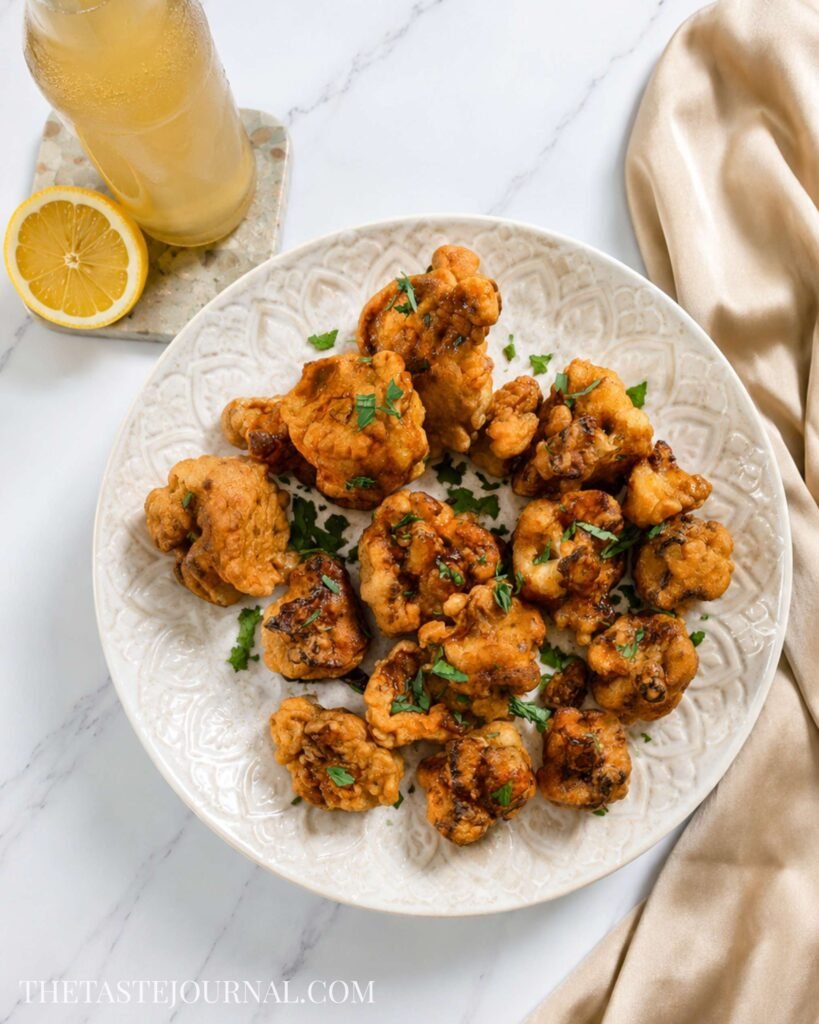
This dish is a vegetarian version of the traditional Chinese dish, Kung Pao Chicken. Kung Pao dishes are celebrated worldwide for their bold, sweet, and spicy flavors. Originating from the Sichuan province of China, it offers a lighter yet satisfying experience while preserving the signature flavor and texture. Many people in China enjoy Kung Pao cauliflower as a side dish alongside their main meals.
Ingredients
Cauliflower, All purpose flour, Water, Egg, Paprika. Celery salt, White pepper powder, Ginger powder, Garlic powder, Sesame seed oil, Soy sauce, Hoisin sauce, Oyster sauce, Brown sugar, Rice vinegar.
Choose a small to medium-sized cauliflower for this dish. This recipe serves as a side dish. All-purpose flour provides a crispy coating for the recipe. Ginger and garlic powders add a savory flavor to the cauliflower. Soy sauce, hoisin sauce, and oyster sauce add an umami flavor to the dish. Brown sugar adds sweetness. Rice flour helps to thicken the marinade. Sesame seed oil adds a nutty note, though you could also use peanut oil.
Instructions
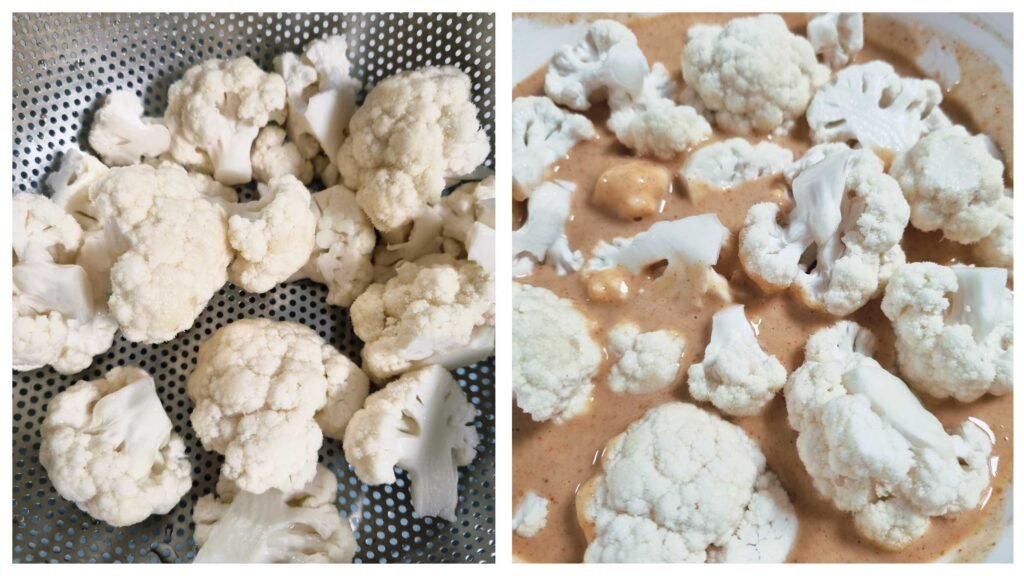
Cut the florets off the main stem and slice them into roughly the same size. This is to ensure that all the cauliflower florets cook evenly and to prevent some from over- or undercooking. Also, use the stems by cutting them into half-inch cubes and cooking them just like the florets. The cauliflower stems are rich in nutrition and shouldn’t be thrown away.
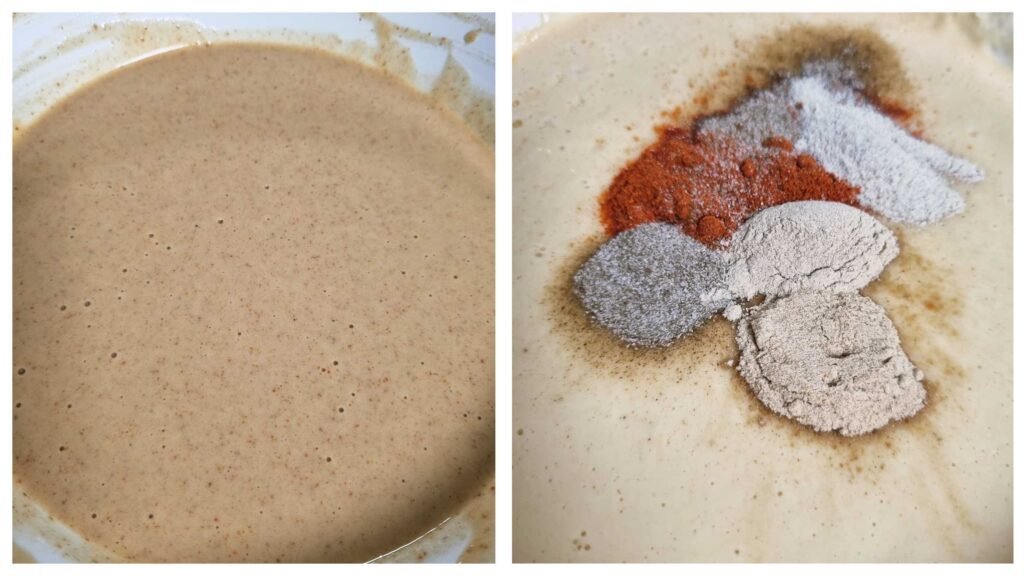
Prepare a large mixing bowl and add the all-purpose flour, water, and egg. Whisk the egg until the batter becomes runny and uniform. Then add spices such as garlic powder, ginger powder, paprika, ground white pepper, and celery salt. Thereafter, stir the batter to mix everything. Add the cauliflower florets to the batter mixture. Then toss from the bottom up, thoroughly coating all floret surfaces. Ensure each floret is fully coated with batter before placing it in the frying pan for a crunchier texture and delicious flavor.
Add the sunflower oil to a cool pan or skillet. Then adjust the temperature to medium-low and wait for it to reach 175ºC / 350ºF, which you can check by dropping a tiny bit of batter into the oil. See if it rises back up to the surface within three seconds. If so, it is at the right temperature to start frying the cauliflower.
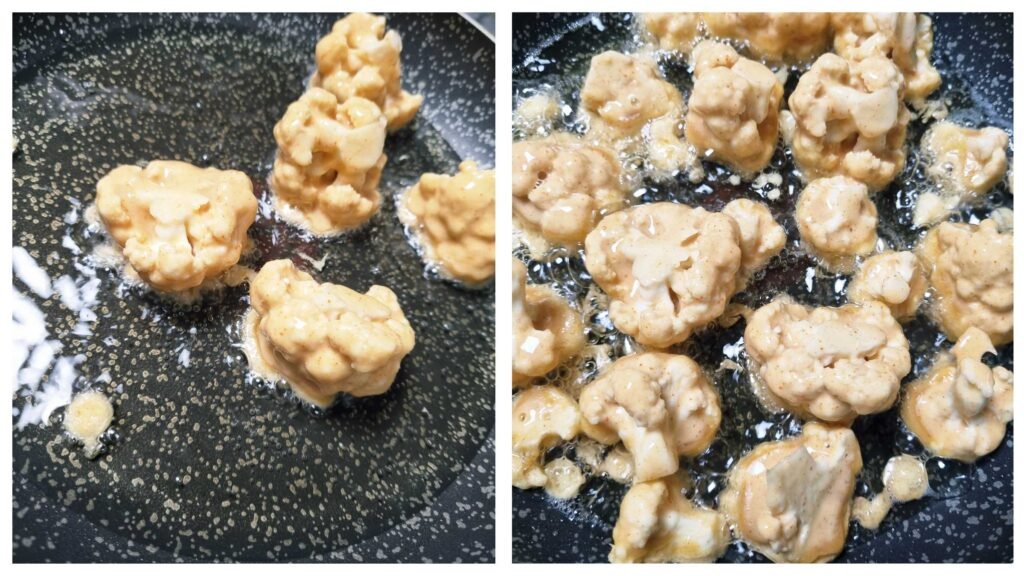
Place the cauliflowers in the pan and fry for two minutes on each side. Make sure to leave some space between the cauliflowers when placing them on the pan to prevent them from sticking together.
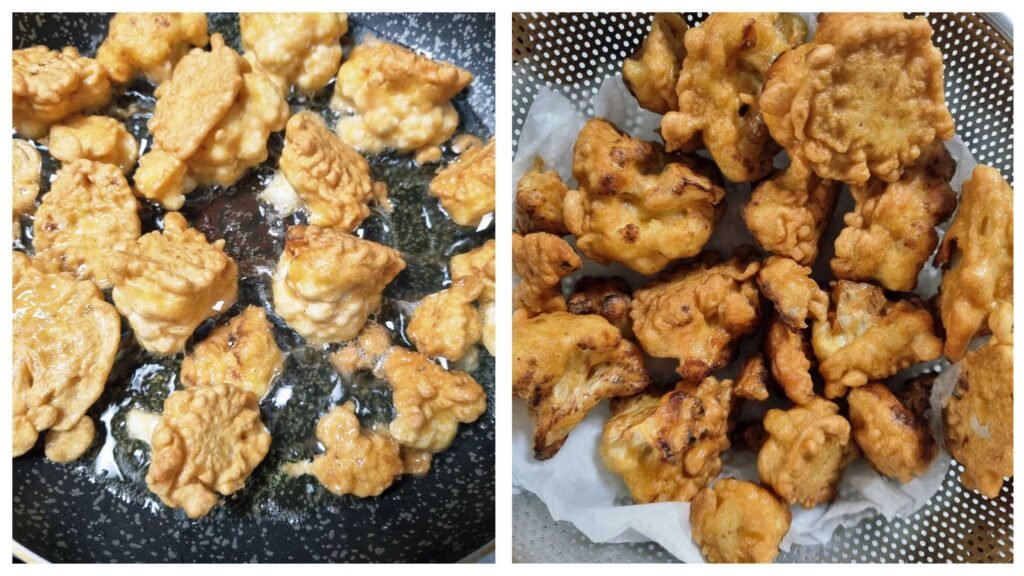
Flip the cauliflowers over so the side that needs cooking is facing up. Once the cauliflower is done frying, transfer it to a strainer or colander lined with a kitchen towel. The kitchen towel will absorb excess oil, and the strainer will help the fried cauliflower become crispy.
Enjoy the crispy Kung Pao cauliflower with its flavorful sauce. If available, consider adding a few Sichuan peppercorns to enhance the dish with spicy, floral, and citrus notes. If you can’t find Sichuan peppercorns, coriander seeds, or black peppercorns are good alternatives.
Expert tips
First, fry the cauliflower until golden and crispy, then drizzle the sauce over it. You can also roast the cauliflower in the oven, drizzling the sauce on top to add a nutty flavor. If you are short on time, this method is the easiest—just marinate the cauliflower and bake it for 35 minutes at 180 °C (356 °F). For a quick option, stir-frying in a wok is reliable and fast. Using high heat will help the cauliflower crisp up beautifully. Each of these methods offers a unique take on the dish.
What can you serve with Kung Pao Cauliflower?
The perfect side for sweet-and-spicy kung pao cauliflower is steamed white or jasmine rice. Fried rice is also a great option to pair with kung pao cauliflower, along with pickled vegetables like carrots, radishes, or cucumbers.
How to store and reheat Kung Pao Cauliflower?
Allow the Kung Pao cauliflower to cool to room temperature before refrigerating it. Once it has cooled, transfer the cauliflower to an airtight container. It can be stored in the refrigerator for up to three days; however, it is best to consume it the next day, as the batter may become soft and eventually soggy as it absorbs moisture.
Freezing the Kung Pao cauliflower is not recommended, as the texture and flavor will change during freezing and thawing. You can reheat the Kung Pao cauliflower in the microwave or on the stovetop. The microwave offers a quick, easy, and convenient option for warming a single portion; however, the batter may turn soft or soggy after reheating. Reheating on the stovetop takes about five to seven minutes and will help maintain a crispy texture for the batter.
Ingredients
- 1 Cauliflower – medium, small florets
- ⅓ cup Sunflower oil
Batter
- ½ cup All purpose flour
- ½ cup Water
- 1 Egg
Spices
- 1 tsp Paprika
- 1 tsp Celery salt
- ½ tsp White pepper powder
- 1 tsp Ginger powder
- 1 tsp Garlic powder
Sauce
- 1 tsp Soy sauce
- 3 Tbsp Hoisin sauce
- 1 Tbsp Oyster sauce
- 1 tsp Brown sugar
- 1 tsp Rice wine / rice vinegar
- 1 tsp Sesame seed oil
Instructions
- Make the batter: In a large bowl, mix all-purpose flour, water, and whisked egg. Add garlic powder, ginger powder, paprika, ground white pepper, and celery salt, stirring until smooth. Add cauliflower florets to the batter, tossing to ensure they are well-coated.
- Heat the oil: Heat sunflower oil in a pan to 175ºC / 350ºF. Test with a drop of batter. Fry florets for two minutes on each side, leaving space between them.
- Fry: Transfer fried florets to a strainer lined with a kitchen towel to absorb excess oil. Enjoy your crispy Kung Pao cauliflower with sauce!
Nutrition
Calories: 317kcal | Carbohydrates: 27g | Protein: 7g | Fat: 21g | Saturated Fat: 3g | Polyunsaturated Fat: 2g | Monounsaturated Fat: 16g | Trans Fat: 0.01g | Cholesterol: 41mg | Sodium: 1044mg | Potassium: 510mg | Fiber: 4g | Sugar: 7g | Vitamin A: 307IU | Vitamin C: 69mg | Calcium: 50mg | Iron: 2mg
Did you make this recipe?Pin to Save this Recipe