Roast Vegetables
Today, we will be preparing roasted vegetables. While many individuals may perceive the process of roasting vegetables as merely arranging chopped vegetables on a baking tray and activating the oven, the technique encompasses more nuanced considerations.
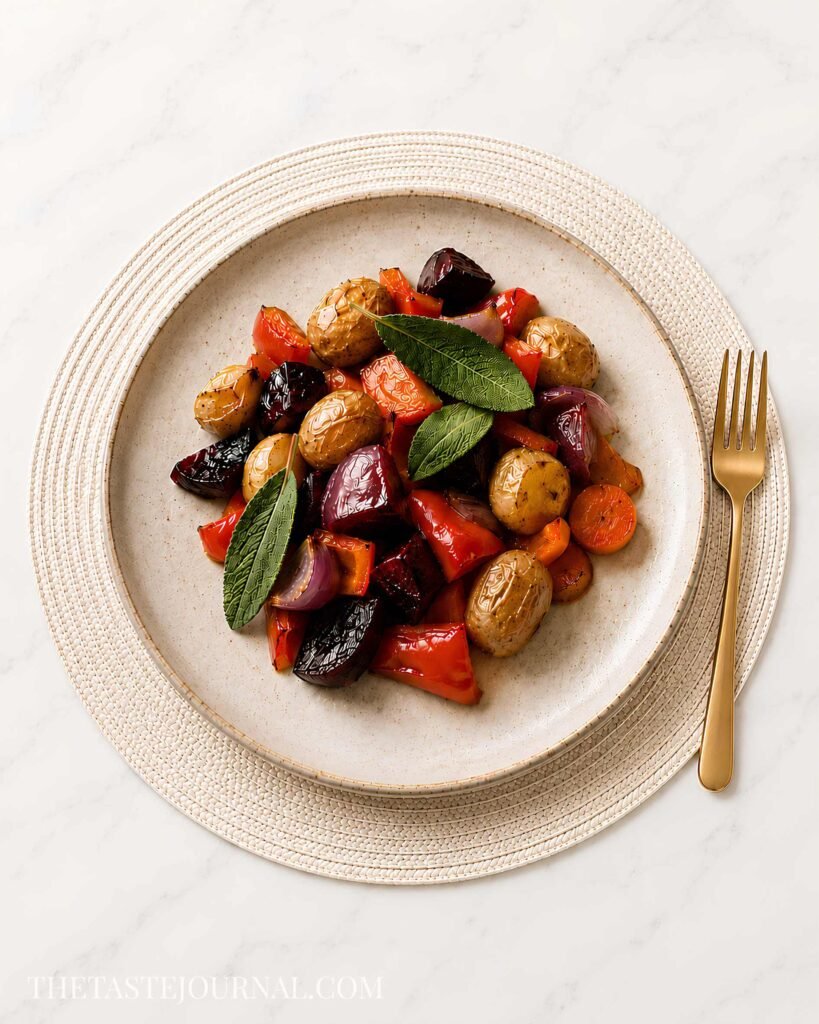
To achieve a dish that is richly flavored, it is essential to apply specific techniques that incorporate higher temperatures and olive oil, which serve to enhance the vegetables’ natural flavors with minimal seasoning. The science behind roasting vegetables is particularly noteworthy; during the Maillard reaction, amino acids and sugars undergo a reaction at elevated temperatures.
This process results in the caramelization of flavors, thereby enhancing the inherent sweetness of the vegetables. The method of roasting diverges significantly from boiling or steaming. Through roasting, vegetables experience a reduction in moisture, leading to a naturally sweet and tender outcome. Consequently, roasted vegetables can be highly appealing, even to the most discerning palates, particularly when accompanied by grilled meats or roasted chicken.
How do you Choose the Right Vegetables?
Root vegetables work beautifully in a roasted vegetable dish. Consider using carrots, parsnips, turnips, sweet potatoes, and baby potatoes for the best results. You can also use regular potatoes. On the other hand, the cruciferous vegetables such as broccoli, cauliflower, and Brussels sprouts, when roasted, become nutty with golden edges.
Ingredients
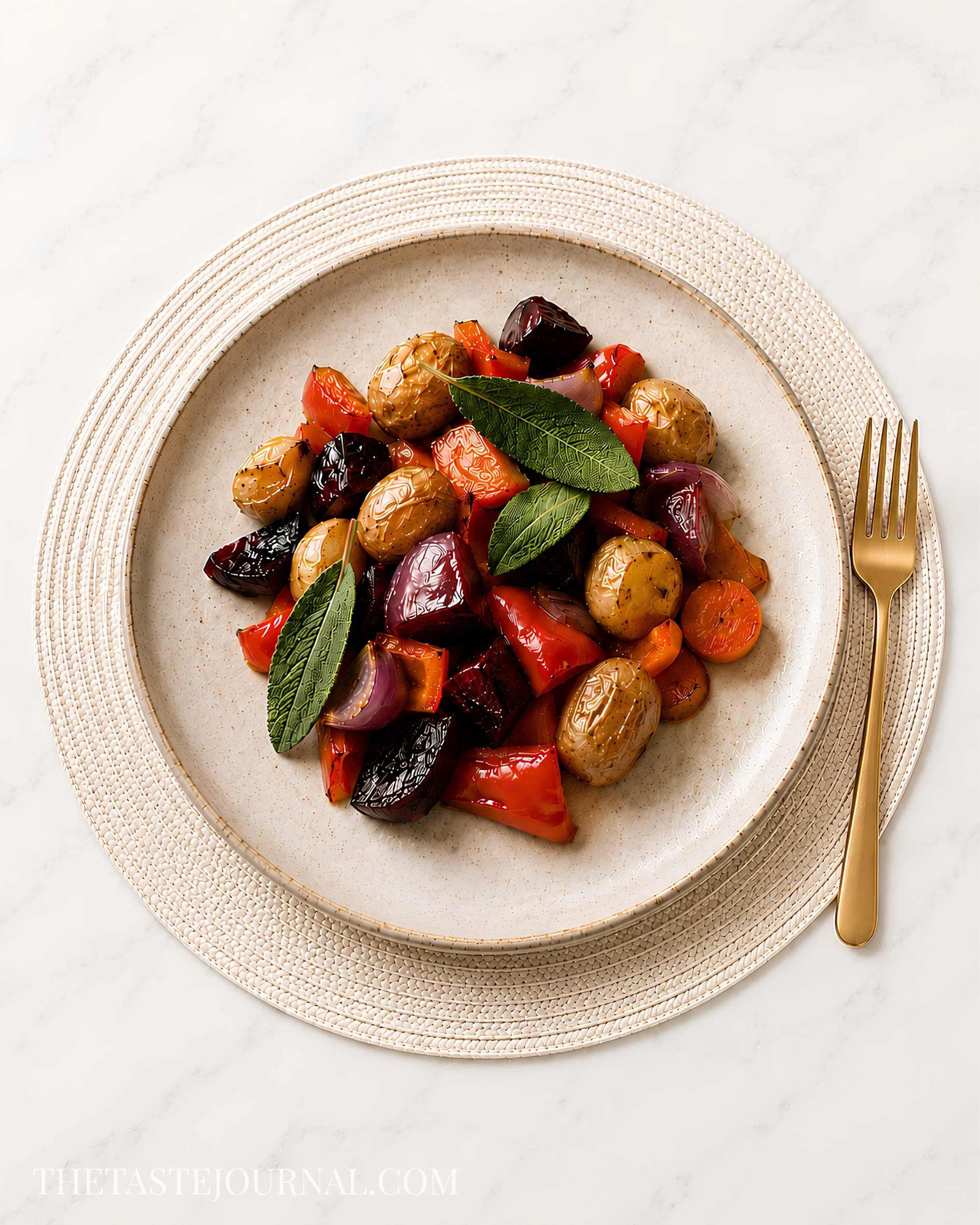
Carrots, Baby Potatoes, Red Onions, Beetroot, Red Bell Pepper, Turnips and Sage.
Cruciferous vegetables like broccoli and cauliflower should be halved for even baking at 425°F (220°C) for 20 to 25 minutes. Root vegetables such as carrots and sweet potatoes should be cut into bite-sized chunks and roasted at 400°F (200°C) for 30 to 40 minutes. High-moisture vegetables like cherry tomatoes and zucchini need less time, baking for 15 to 25 minutes at 400°F (200°C).
Instructions
Preheat the oven to 400°F (200°C). Wash and peel the carrots, cutting them at an angle. Peel the red onion and cut it into four pieces. Leave the baby potatoes unpeeled for a rustic roast vegetable side dish.
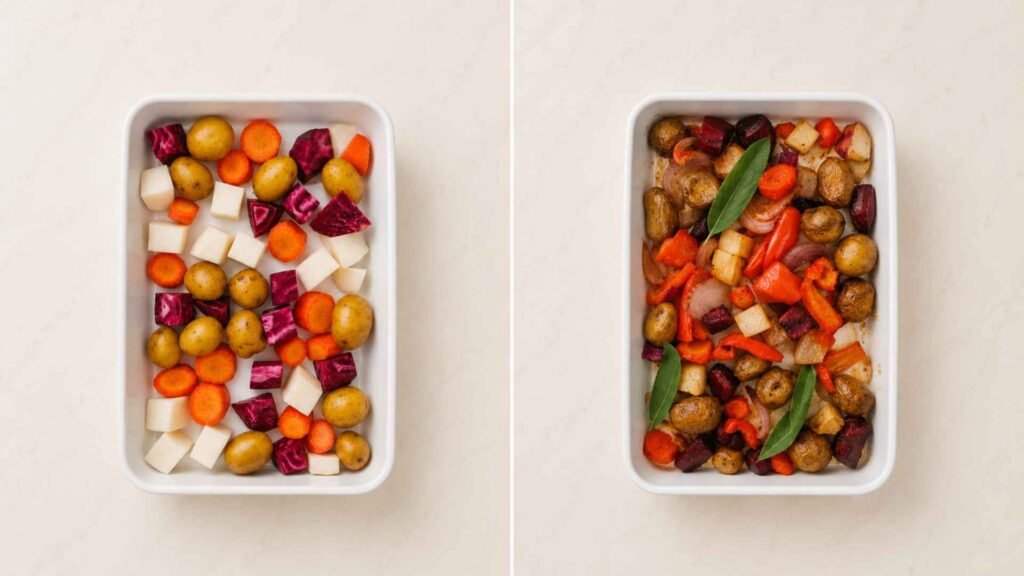
Chop turnips and red bell pepper into cubes, and peel and cube the beetroot. Arrange turnips, baby potatoes, and beetroot on a baking tray, drizzle with olive oil, and season with salt and pepper. Bake for 20 minutes, then add red onion and more red bell pepper, baking for an additional 10 minutes. Serve immediately after removing from the oven.
How to Store Roast Vegetables?
After the roast vegetables have cooled, place them in an airtight container and refrigerate for 3 to 5 days. Freezing roasted vegetables is possible. However, it is important to consider that the texture of some vegetables may lose crispness. Root vegetables such as potatoes and carrots will freeze well. Other vegetables, such as red peppers, can become mushy.
What to Serve with Roast Vegetables?
Roasted vegetables are a standard side dish at most family gatherings. Loaded with nutrients and a vibrant collection of root vegetables, this hearty dish pairs with most main meals. Consider serving alongside Grilled Steak, Grilled fish, or your favourite Pasta dishes or Salads.
Expert tips
Avoid overcrowding the baking sheet; use two if needed, especially for large batches of roast vegetables. Overlapping can hinder proper roasting and caramelization. Wash, peel, and dry vegetables before roasting, and cut them into uniform sizes for best results. Simple seasoning with salt and pepper works well, but feel free to add other spices and herbs. Be mindful of different roasting times; adding high-moisture vegetables too early may cause onions and bell peppers to dry out or burn.
Ingredients
Vegetables
- 200 grams Baby Potatoes
- 120 grams Carrots
- 1 Red Bell Pepper – Medium sized.
- 180 grams Beetroot
- 100 grams Turnip
- 1 Red Onion – Small
Spices
- 1 tsp Salt
- 1 tsp Black Pepper
Other ingredients
- 3 tbsp Olive oil
Instructions
- Preheat the oven: Set the temperature to 400 Fahrenheit or 200 Celsius.
- Prepare the vegetables: Peel the carrots and chop at an angular angle. Thereafter, chop the red onions into quarters. Wash the Baby potatoes. Peel the turnip and beetroot and chop into cubes. Add all the root vegetables into a baking tray or dish. Add in the spices.
- Bake: Drizzle generously with olive oil and bake for 20 minutes, after 20 minutes, add the red bell pepper and red onions and bake for another 10 minutes at the same temperature
Nutrition
Calories: 108kcal | Carbohydrates: 22g | Protein: 4g | Fat: 1g | Saturated Fat: 0.2g | Polyunsaturated Fat: 0.2g | Monounsaturated Fat: 1g | Cholesterol: 2mg | Sodium: 839mg | Potassium: 624mg | Fiber: 5g | Sugar: 8g | Vitamin A: 5985IU | Vitamin C: 59mg | Calcium: 44mg | Iron: 1mg
Did you make this recipe?Pin to Save this Recipe