Lemon Pickles
If you have ever eaten at an Indian restaurant, then you may have come across lemon pickles. It is enjoyed throughout India, and it is one of the most favorite condiments in the country.
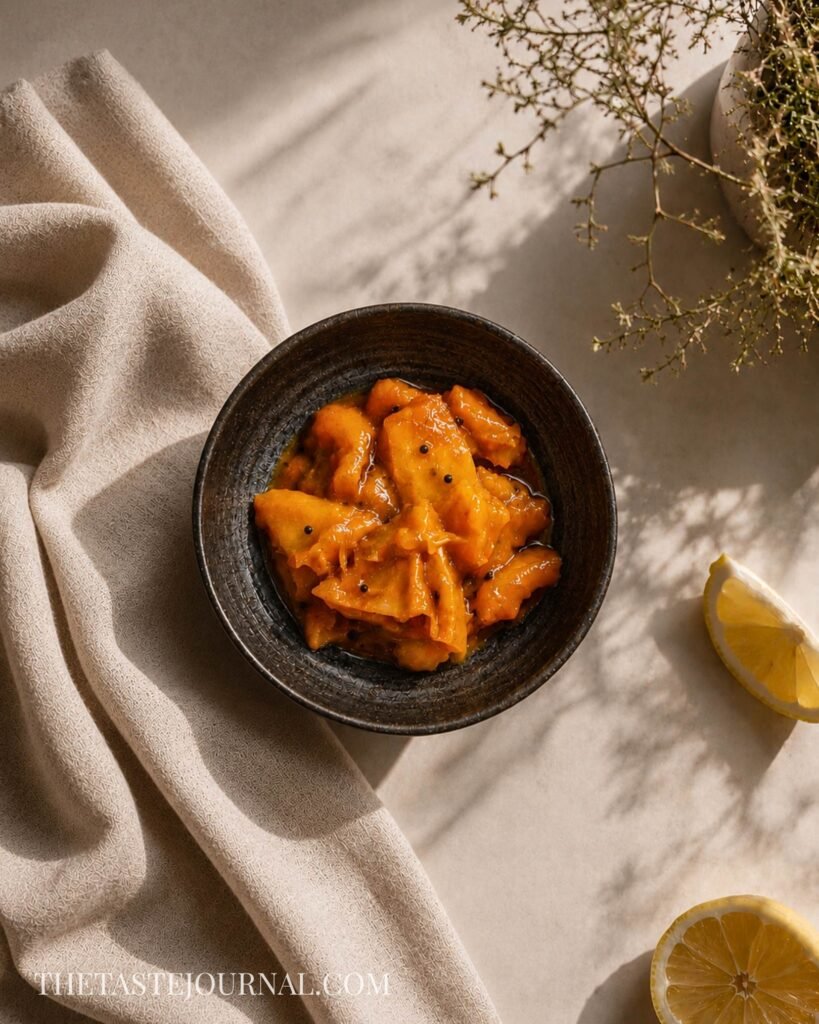
Now, you might be thinking that Lemon pickle sounds like it would taste sour; well, not quite. This pickle has sweet notes too.
Why eat lemon pickles?? Well, India has many different types of curries made with simple ingredients and flavors, such as Dal, Coconut based curries, Lamb curry and more. Lemon pickles enhance the overall flavor of soups and the various vegetable curries enjoyed in the country.
Lemon pickles have been made in India for thousands of years. Historians trace the origin of pickling back to the Indian subcontinent; during the Indus Valley civilization, oil and salt were used to preserve food.
Traditionally, lemons were layered with salt in clay jars known as Martabans. These jars were then placed in the sun, and this practice has remained unchanged for over a thousand years. It wasn’t until the Portuguese arrived in the late 15th century, bringing with them chilies, that lemon pickle adopted its spicy and modern flavor.
During the pickling process, lemons behave differently from vegetables, since they are technically a fruit; they have natural sugars, which means that they contain their own sugars, and when combined with white or brown sugar, they result in a thick and syrupy pickle.
Lemons are botanically hesperidiums, meaning they have a leathery rind and a segmented pulp. The rind contains pectin; over time, it thickens into a gel-like texture.
Centuries later, when Portuguese traders introduced chilies to India, lemon pickle evolved into the spicy condiment we know today. Unlike pickled vegetables, lemons contain natural sugars and pectin within their rind. Over time, these compounds create the thick, glossy, and slightly syrupy texture that makes homemade lemon pickle so irresistible.
Ingredients
Lemons, Salt, Kashmiri Chili Powder, Turmeric Powder, Mustard seeds, Sugar, Cumin Powder, and Grapeseed oil.
Choose medium-sized, fresh lemons. Kashmiri chili powder adds a crimson hue and has less heat than the traditional types. Turmeric powder acts as a natural preservative, and mustard seeds add a pungent flavor. Grapeseed oil is preferred; it is neutral, ensuring the lemon pickle maintains its authentic taste.
Two types of lemons are available at most supermarkets: thin-skinned and thick-skinned lemons. Thinner-skinned varieties soften more quickly and produce a less bitter pickle. Thicker-skinned lemons take longer to ferment; however, there is a way to overcome this factor.
Kashmiri chili powder adds a deep red color without the overwhelming heat that is found in regular chili powders. Turmeric acts as a natural preservative, along with the salt and oil. Mustard seeds add a pungent flavor. Grapeseed oil allows the citrus flavors to shine through.
Before You Start: How to Prevent Bitter Lemon Pickle
One of the most common questions people ask is: “Why is my lemon pickle bitter, and how can I fix it?” The bitterness usually comes from two places: the seeds and the thick white inner layer, known as the pith.
Boiling the lemons before pickling can help reduce the bitterness; some people choose to boil them for 30 seconds, but it is better to boil them for 10 minutes. This will soften the skin. This step will also ensure that the white part of the lemon is not overly bitter.
After the lemons have cooled down, gently scrub them with a vegetable brush along with coarse salt; this will allow the salt and spices to penetrate the rind. This is especially helpful for wax-coated lemons.
And, if you want to take extra measures, consider taking a few extra minutes to remove any large seeds and trim away excess pith after the lemons have cooled down. This simple step can make all the difference and helps create a pickle that’s bright and tangy rather than overly bitter.
Instructions
Thoroughly wash the lemons. Use a knife to make tiny incisions in the lemons at random spots. This will ensure that the lemons do not burst during boiling. Add water to a pot and bring to a boil on medium-high heat.
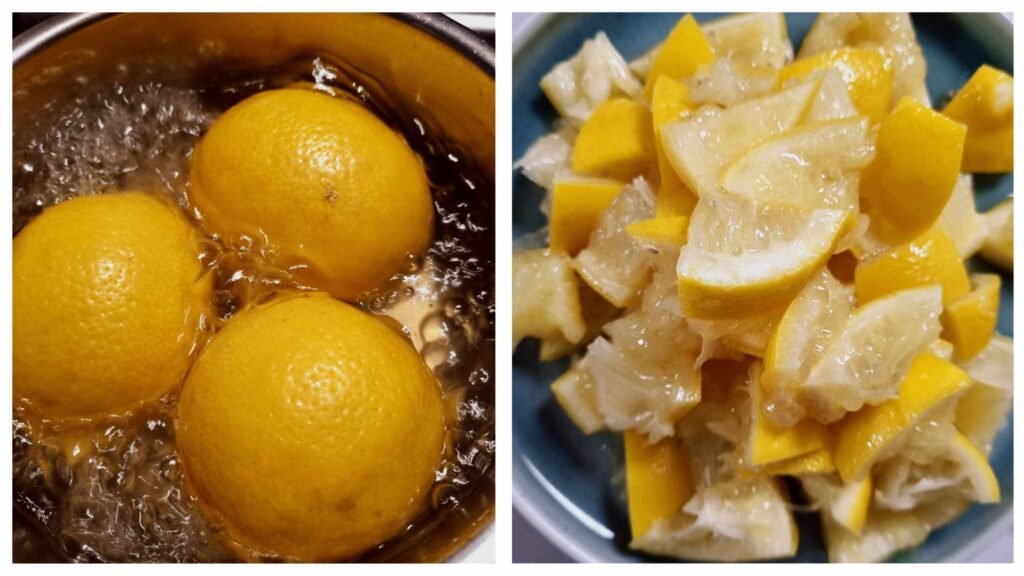
Add the lemons and boil for twenty minutes. This step will soften the lemons’ skin. Thereafter, let the lemons cool to room temperature, then cut them in half and cube them. Remove and discard any lemon seeds. Add the grapeseed oil to a pan, add the spices such as Kashmiri chili powder, cumin powder, Turmeric powder, salt, sugar, and mustard seeds.
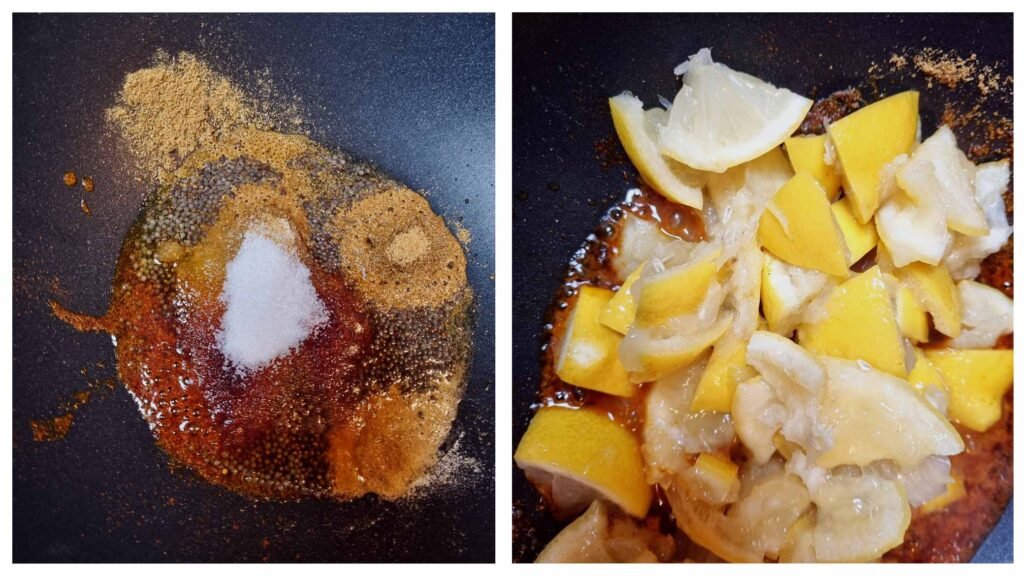
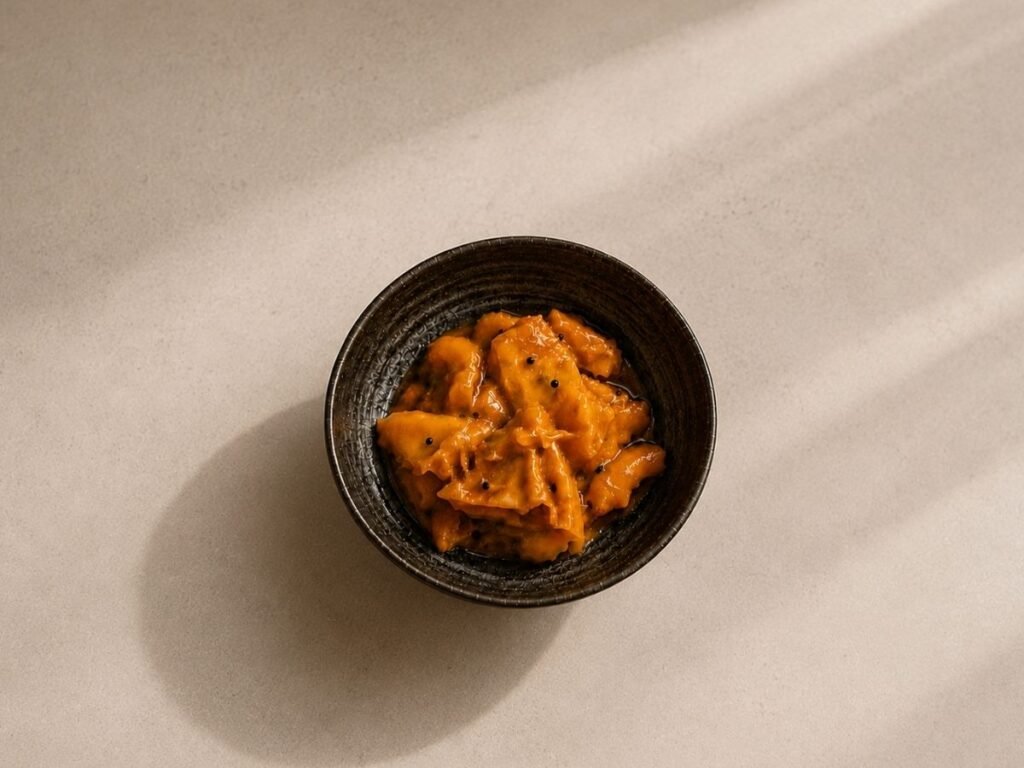
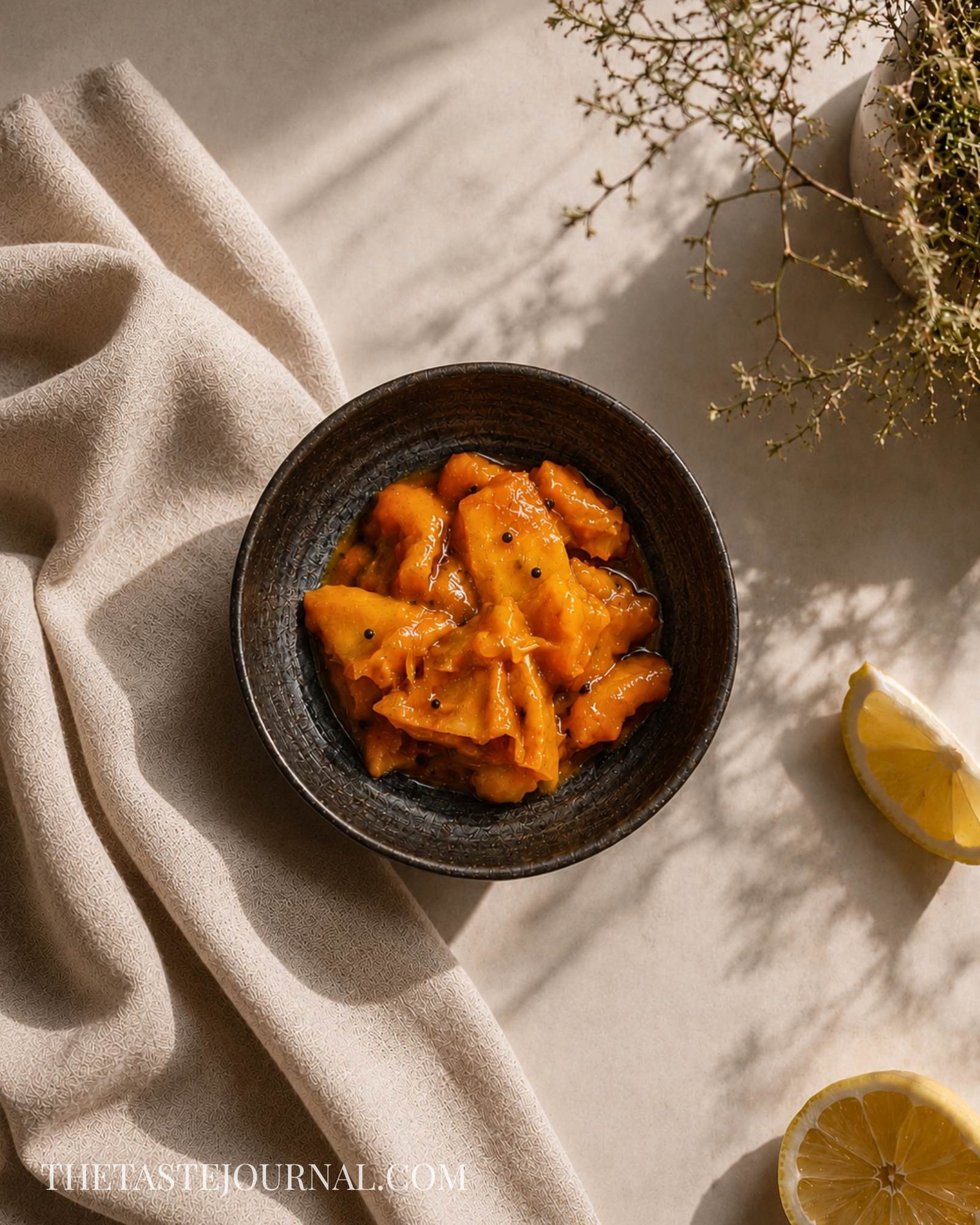
Once the spices start to sizzle, they will release their flavors into the oil. This is an important step in making lemon pickle. Add the cubed lemons and sauté over medium-high heat for 7 to 8 minutes. Let the lemons cool down before transferring to a clean, glass container. You can enjoy the pickle immediately; the flavors will intensify and develop over time. Place the pickle in the fridge for storage.
How to Store Lemon Pickles?
Always make sure to properly wash the glass container and use boiling water to sterilize it. Make sure that the container is dry and free of any liquid. Store the lemon pickles in an airtight glass container; avoid using a metallic spoon. Once you place the pickle in the jar, add an extra layer of oil on top, about 1 cm; this will act as a protective barrier. Lemon pickle can last for up to three months in the fridge.
What to Serve with Lemon Pickles?
Lemon pickles offer a vibrant burst of flavor as a condiment, making them perfect for pairing with simple foods with subtle, earthy flavors such as Red lentil soup or Yellow Lentil Soup. An exception to this pairing rule is seafood recipes, such as Prawn curry and Goan fish curry.
Additionally, India has a variety of coconut-based recipes that can complement the tangy taste of lemon pickles. It’s best to opt for less-spicy versions of these curries to ensure that the flavors harmonize without overpowering one another.
Everything You Need to Know About Lemon Pickle
Oil-Based vs Oil-Free Lemon Pickle
If you are wondering about the difference between oil-free Indian lemon pickle and traditional oil-based recipes. Oil-free pickles rely primarily on lemon juice, vinegar, and salt to preserve the fruit. Because they lack an oil barrier, they usually need refrigeration sooner then the oil based recipes.
Traditional lemon pickles use a layer of oil on top of the pickle to protect it from oxygen and slow the fermentation process so that the flavors mature over time. Oil-based recipes develop a more robust flavor compared to the oil-free versions of lemon pickle that are made with salt and vinegar.
Can you use grocery-store lemons for pickling?
Absolutely. If they’re waxed, simply blanch and scrub them before use.
How do you reduce the bitter taste in lemon pickle?
Remove the seeds, trim excess white pith, and use thin-skinned lemons whenever possible.
How do you soften thick lemon skins quickly?
Boiling the lemons for twenty minutes or steaming them briefly in a pressure cooker will help soften the rind before pickling.
Does lemon pickle need refrigeration?
Traditional oil-heavy pickles can sometimes be stored at room temperature, but for food safety, homemade lemon pickle is best kept in the refrigerator.
Ingredients
- 1 Kg Lemons
- 1 tsp Salt
- 100 grams Sugar
Spices
- 6 tbsp Cumin powder
- 1 tsp Kashmiri Chili powder
- 2 tsp Mustard seeds
- 1 tsp Turmeric powder
Instructions
- Wash and Prepare Lemons: Thoroughly wash the lemons and make tiny incisions to prevent them from bursting during boiling. Add water to a pot, bring to a boil, and boil the lemons for 20 minutes.
- Cool and Saute: Let lemons cool to room temperature, cut in half, cube, and remove seeds. Heat grapeseed oil in a pan over medium heat with Kashmiri chili powder, cumin powder, turmeric powder, salt, sugar, and mustard seeds, until sizzling.
- Sauté Lemons: Add cubed lemons and sauté on medium-high heat for 7-8 minutes. Let cool and transfer to a clean glass container. Enjoy immediately or refrigerate for added flavor.
Nutrition
Calories: 108kcal | Carbohydrates: 26g | Protein: 4g | Fat: 2g | Saturated Fat: 0.1g | Polyunsaturated Fat: 0.2g | Monounsaturated Fat: 1g | Cholesterol: 1mg | Sodium: 54mg | Potassium: 274mg | Fiber: 4g | Sugar: 16g | Vitamin A: 86IU | Vitamin C: 67mg | Calcium: 78mg | Iron: 4mg
Did you make this recipe?Pin to Save this Recipe