Goan Fish Curry
Goan fish curry is one of India’s beloved coastal dishes. Rich, creamy, and tangy, this traditional dish is gently spiced with white fish as the preferred protein; it combines aromatic spices, coconut cream, and tamarind to create a meal that is comforting and vibrant.
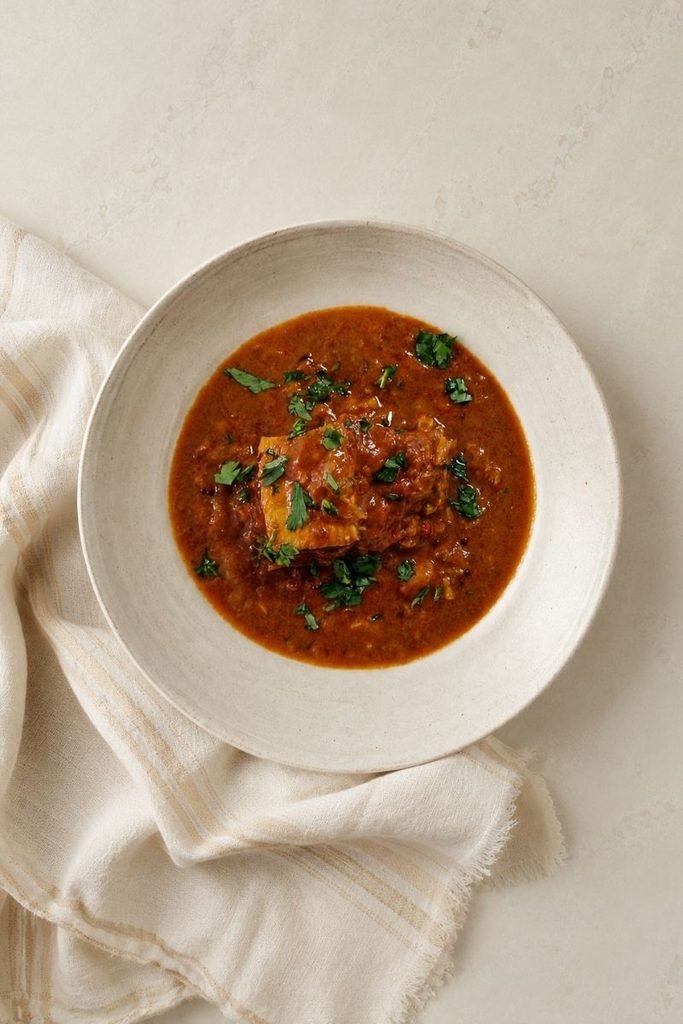
The aroma of coconut fish curry will instantly transport you to the Goan seaside. Every spoonful balances the creamy coconut, fragrant spices, and the tangy flavors of tamarind paste. Goan fish curry traces its roots back thousands of years. Long before modern curries existed, ancient Indians were already using spices to flavor fish and seafood dishes.
Many people think that making this curry involves a complex process and a good few hours in the kitchen, but not with this recipe. This dish takes 30 minutes to prepare and enjoy; this easy Goan fish curry recipe with tamarind delivers restaurant-quality flavors using simple ingredients.
The History of Goan Fish Curry
Archaeologists have discovered traces of turmeric and ginger on pottery shards from the Indus Valley civilization dating back more than 5,000 years. Ancient Sangam literature from the third century BCE even mentions crab and dried-fish curries enjoyed by India’s coastal communities.
Many people are unaware that the early fish curries did not contain tomatoes or chilies. Instead, cooks relied on black pepper, ginger, and mustard seeds. Over time, the Goan fish curry evolved to include tomatoes and chilies. The result is the creamy, tangy fish curry that has become synonymous with Goan cuisine.
What Does Goan Fish Curry Taste Like?
If you have never tried it, but you are curious, an authentic Goan fish curry has the tangy notes from tamarind, and the coconut milk adds creaminess. Turmeric and cumin add warmth, while Kashmiri chili powder gives it a slight heat. Unlike many heavily spiced curries, Goan fish curry focuses on balance. The coconut softens the acidity of the tamarind, while the spices enhance the natural sweetness of the fish.
Ingredients
Nile Perch, Onions, Ginger, Garlic, Cumin seeds, Turmeric, Cumin Powder, Black Pepper powder, Red chili, Kashmiri chili powder, Curry leaves, Mustard seeds, Tomato Paste, Tamarind Paste, Water, Coconut cream, Brown Sugar, Apple Cider Vinegar.
Finding the right fish for this dish is essential to ensure that the flavors are harmonious. Consider firm white fish; these types hold their shape during the cooking process. Excellent choices include Nile perch, Kingfish, Snapper, Sea bass and Barramundi. When purchasing fish, ask your fishmonger to remove the skin and central bones to make preparation easier.
Why Does Goan Fish Curry Use Tamarind and Coconut?
The two most important components of Goan fish curry are tamarind and coconut; this creates a distinct flavor for the dish. Tamarind has a tangy taste that cuts through the richness of the fish and gives the curry its bright and fruity flavor. Coconut cream adds a sweet and creamy texture that mellows down the spices.
This combination reflects Goa’s tropical landscape. Together, they create the perfect balance of sour, spicy, and creamy flavors that makes Goan fish curry so distinctive. Tomato paste serves as the base for the gravy, and using concentrated tomato paste can significantly reduce cooking time. If fresh tomatoes are used instead, the cooking time may increase by approximately 15 minutes. Tamarind paste introduces a tangy and tart flavor.
It can be found in block form, which can be strained through a sieve and cheesecloth, or in ready-made paste form. Apple cider vinegar can enhance the flavor of tamarind paste, while brown sugar may balance the acidity of the tomatoes.
Instruction
Begin by washing the fish and cutting it into rectangular cubes; you can also cut the fish into bite-sized pieces. Place the fish in the fridge. When purchasing the fish from the fishmonger, request that the skin and the central bony part be removed.
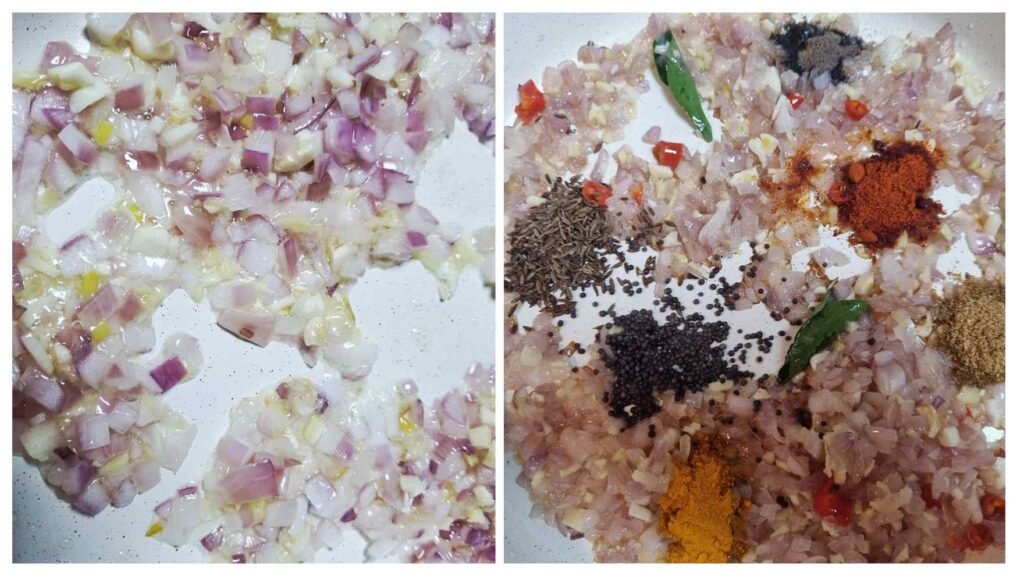
Add cooking oil to a pot and set the temperature to medium heat. Once hot, add the onions and ginger, and caramelize until lightly browned. Then add the sliced garlic and sauté for 2 minutes. Once sauteed, add the spices such as mustard seeds and cumin seeds. During this process, the seeds will release their natural oils. Thereafter, add the spices, chilies, and curry leaves.
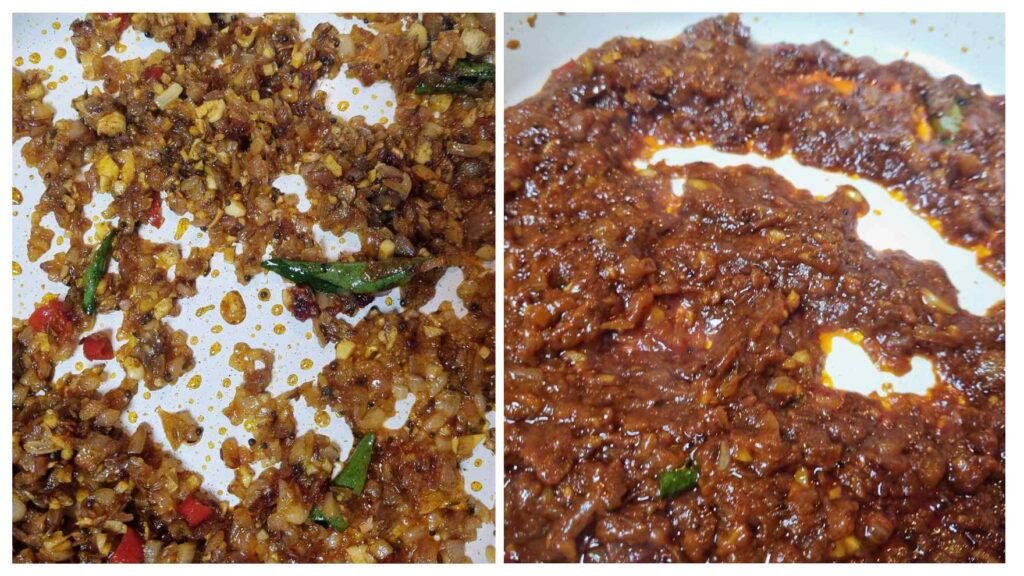
Add the tomato paste, tamarind and water. Simmer for ten minutes until a rich tomato gravy forms, at this point the fragrance will be tangy with a bit of sharpness to it.
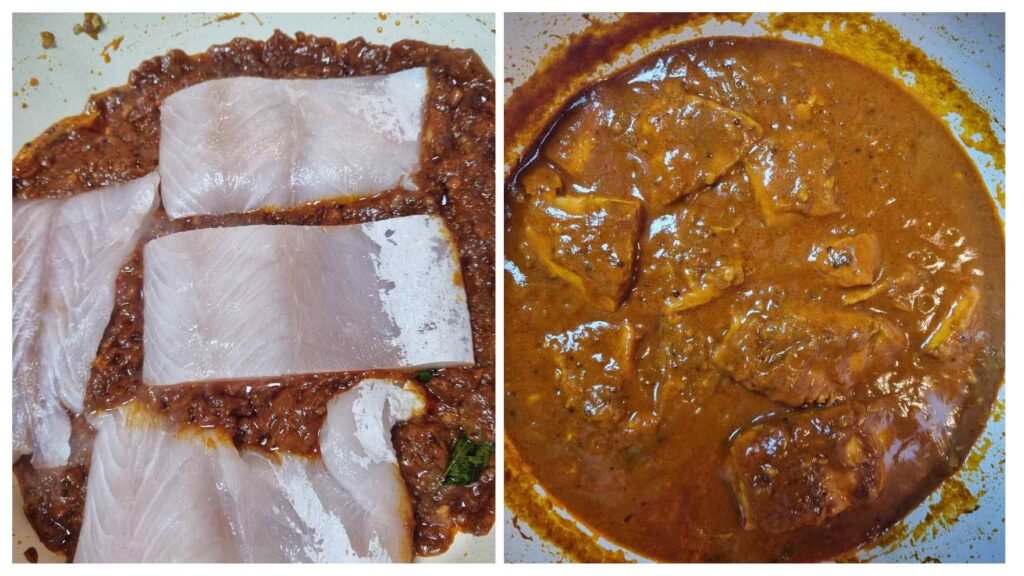
Add the coconut cream and stir thoroughly. Add the pieces of rectangular fish on top of the curry, and coat the fish with the sauce. Add the balance of the water and simmer for ten minutes.
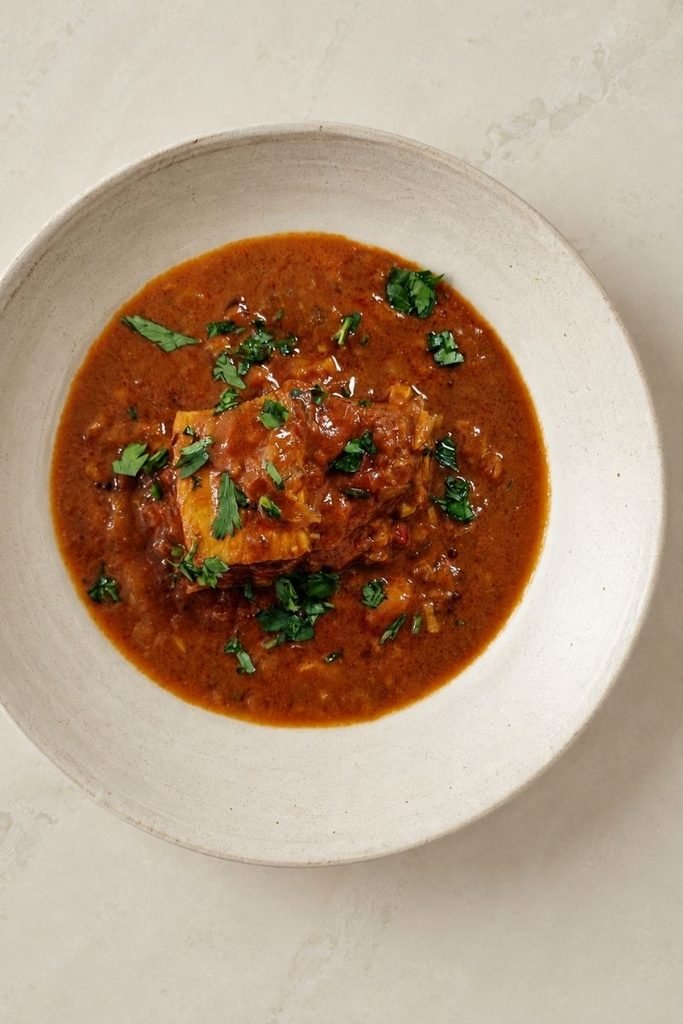
During this time, the fish will absorb the flavours of the spices. Be careful when stirring as the fish is delicate and breaks apart easily. The Goan fish curry is ready to be served and enjoyed immediately.
What to Serve with Goan Fish Curry?
This curry pairs beautifully with Basmati rice or Garlic naan. You can also serve a salad along the dish such as Cucumber salad, Rocket and Red pepper salad. Explore more Indian recipes such as Lamb Curry, Easy Butter Chicken, Aloo Methi, Palak Paneer, Garlic Naan, Chole and Prawn Curry.
How to Store Goan Fish Curry?
Allow the curry to cool to room temperature and store in the fridge within two hours of cook time, for two to four days. Reheat on the stove or in the microwave. You can freeze the Goan fish curry for up to three months, store in a zip-lock packet and remove as much air as possible and seal. Make sure to fold the packet in half to reduce spillage during the defrost process. To reheat, defrost and cook on the stove to reduce any excess liquid.
What Makes Goan Fish Curry Different From Other Indian Fish Curries?
In India, there are many different types of fish curry. Each with its own unique historical relevance. In the Northern parts, fish curries comprise tomatoes, cream, and yogurt. The Goan version is more tangy and lighter in taste because of a unique blend of coconut, tamarind, and aromatic spices.
The Role of Spices in Authentic Goan Fish Curry
The spices in Goan fish curry do much more than simply add heat. Each one contributes something different to the final dish. Cumin provides warmth, whilst turmeric provides the subtle bitterness. Mustard seeds add a nutty, slightly pungent flavor when tempered in hot oil, and black pepper contributes a gentle warmth.
Curry leaves add a citrusy aroma to the dish, and they also complement both the seafood and the coconut. Together, these spices create the complex flavor profile that Goan fish curry is famous for: rich, tangy, spicy, and fragrant all at once.
Can You Substitute Curry Leaves or Kashmiri Chili Powder?
If you cannot find curry leaves, the curry will still taste delicious, but it will lose some of its authentic aroma. Fresh basil or a small amount of lime zest can add freshness, although neither is a perfect substitute. Whenever possible, using the traditional ingredients will give you the most authentic flavor.
Expert tips on Goan Fish Curry
The traditional way to cook Goan fish curry is to use a generous amount of tamarind paste. Usually, a few teaspoons will suffice to create that authentic flavor. If you prefer a dish with less tang and more coconut flavour, use less tamarind. Start with a small amount and taste the sauce. Apple cider vinegar adds more tartness to the dish.
Coconut cream is an important element that rounds out and balances the flavors. If you want to use fresh tomatoes, use three medium-sized tomatoes and cook for a further 15 minutes. Tomato paste is preferred because it adds a richer flavor to the dish. Choose full-fat coconut milk or coconut cream for the best results.
How to prepare tamarind paste?
To prepare tamarind from scratch, soak a block in warm water for 10-20 minutes. Press the mixture through a sieve to create a paste, discarding any inedible root strands and seeds. Next, strain the paste through cheesecloth to remove any gritty texture.
You can also buy store-bought tamarind paste; just ensure it has minimal sugar, and if it contains sugar, skip the brown sugar in your recipe. Alternatively, you can use tamarind-flavored sauces and adjust tartness with apple cider vinegar.
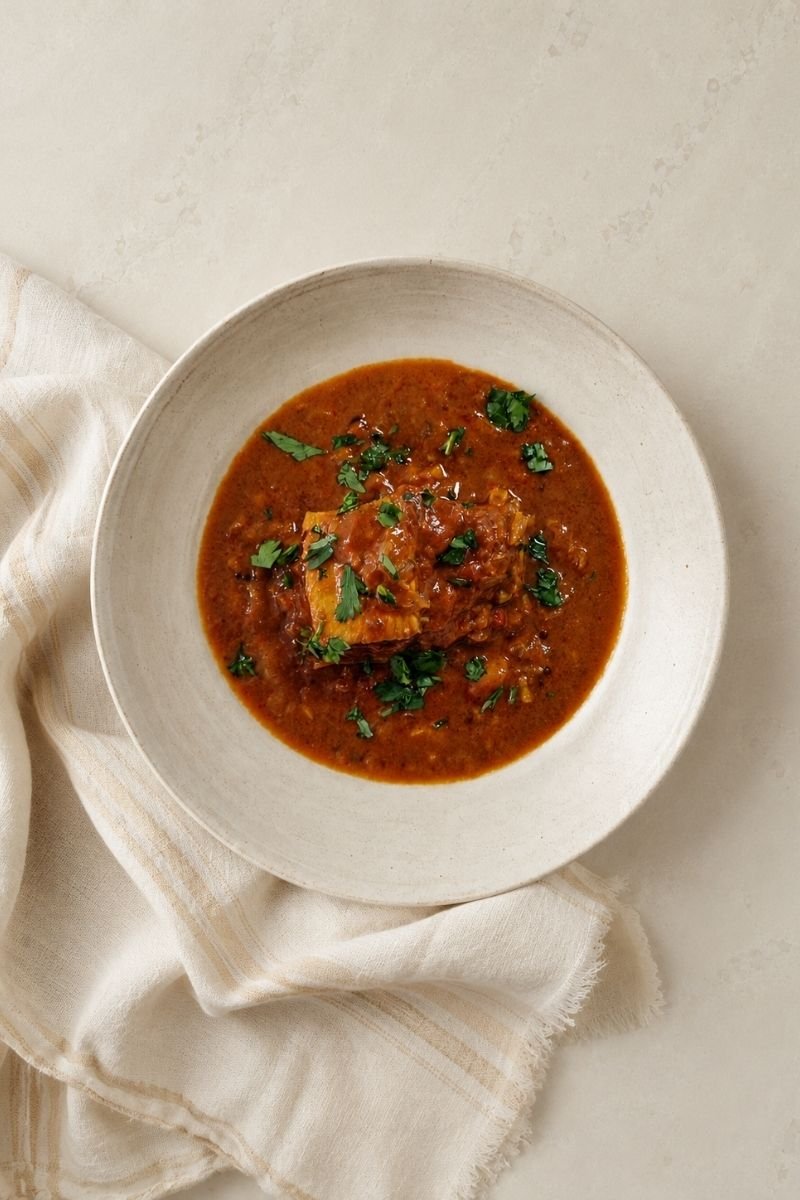
Bring the coastal flavors of western India to your kitchen with this classic Goan fish curry. Featuring a vibrant, spiced coconut and tamarind base, it pairs tender chunks of fresh fish with a rich, aromatic sauce that is perfect for serving over steaming white rice.
Ingredients
- 400 grams Nile Perch
Aromatics and Other
- 15 grams Ginger – Grated or Finely Minced.
- 3 Onions – Medium, cubed.
- 4 Garlic cloves – Finely Minced.
- 3 tsp Tamarind Paste – Taste, add more if needed.
- 7 tbsp Coconut Cream – Taste, add more if needed.
- 250 ml Water
- 1 tbsp Brown sugar
Spices
- 1 tsp Cumin seeds
- ½ tsp Cumin Powder
- ½ tsp Turmeric
- ½ tsp Black Pepper Powder
- ½ tsp Kashmiri Chili Powder
- ½ tsp Mustard Seeds
- 5-6 Curry Leaves
- ½ tsp Salt
Instructions
- Prepare the Fish: Cut fish into bite-sized pieces and refrigerate. Have the skin and central bones removed by the fishmonger.
- Cook Aromatics: Heat cooking oil in a pot over medium heat. Add chopped onions and ginger, caramelizing until lightly browned. Then, add sliced garlic and sauté for 2 minutes.
- Add Spices: Incorporate mustard seeds and cumin seeds, allowing them to release their oils. Then, add additional spices, chilies, and curry leaves.
- Create the Gravy: Stir in tomato paste, tamarind, and water. Simmer for 10 minutes until a rich, tangy tomato gravy forms. Mix in coconut cream thoroughly.
- Cook the Fish: Place fish pieces on top of the curry, coating them with the sauce. Add remaining water and simmer for another 10 minutes, stirring carefully to avoid breaking the fish. The Goan fish curry is ready to serve immediately. Enjoy!
Nutrition
Calories: 144kcal | Carbohydrates: 26g | Protein: 1g | Fat: 4g | Saturated Fat: 3g | Polyunsaturated Fat: 0.1g | Monounsaturated Fat: 0.1g | Cholesterol: 1mg | Sodium: 47mg | Potassium: 144mg | Fiber: 2g | Sugar: 21g | Vitamin A: 41IU | Vitamin C: 22mg | Calcium: 32mg | Iron: 1mg
Did you make this recipe?Pin to Save this Recipe