
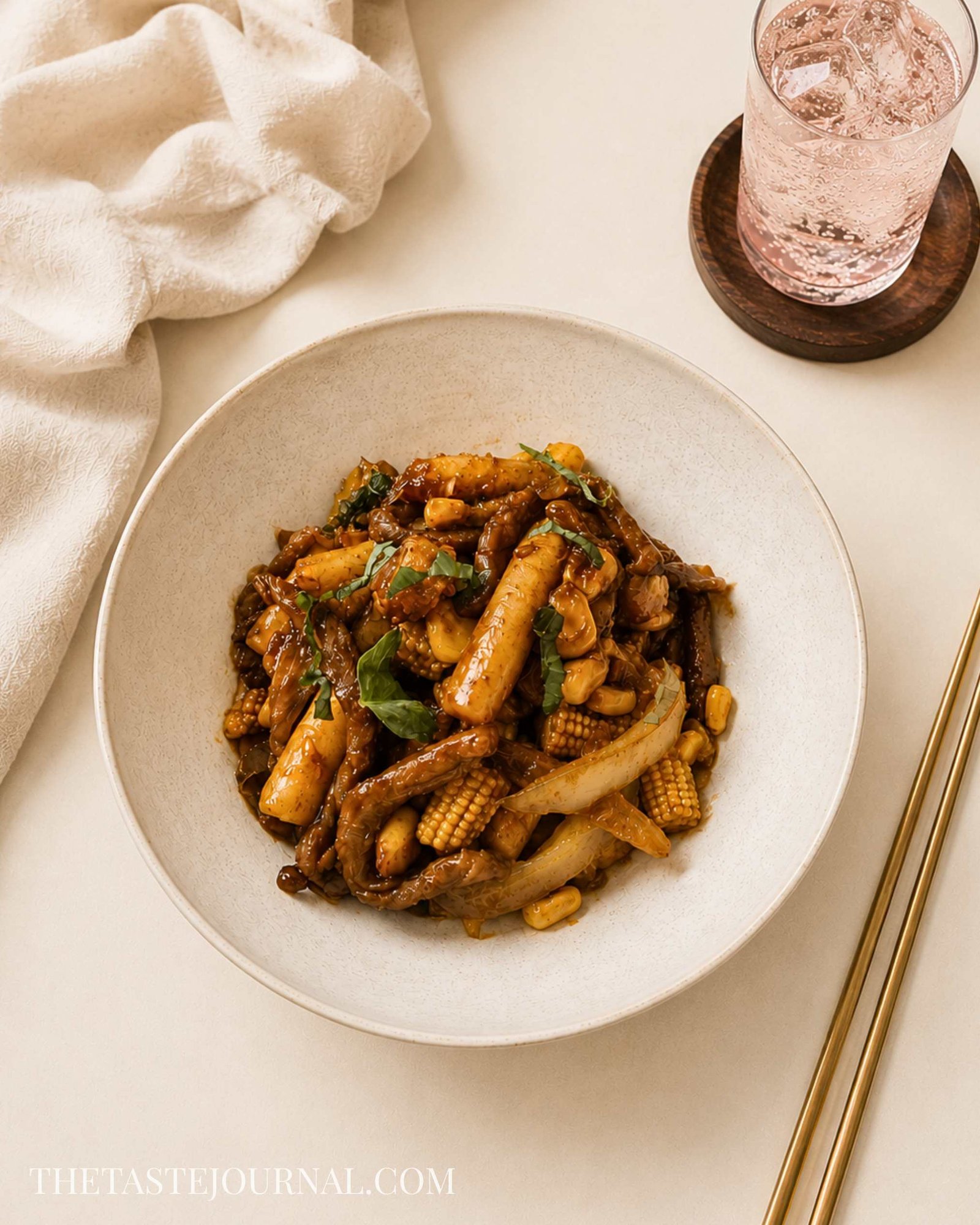
Gungjung Tteokbokki
Today, we are making Gunjung Tteokbokkie, a dish that translates to “royal rice cake” because it originated during the Joseon Dynasty. Essentially, this recipe is the non-spicy variation of spicy Tteokbokkie.
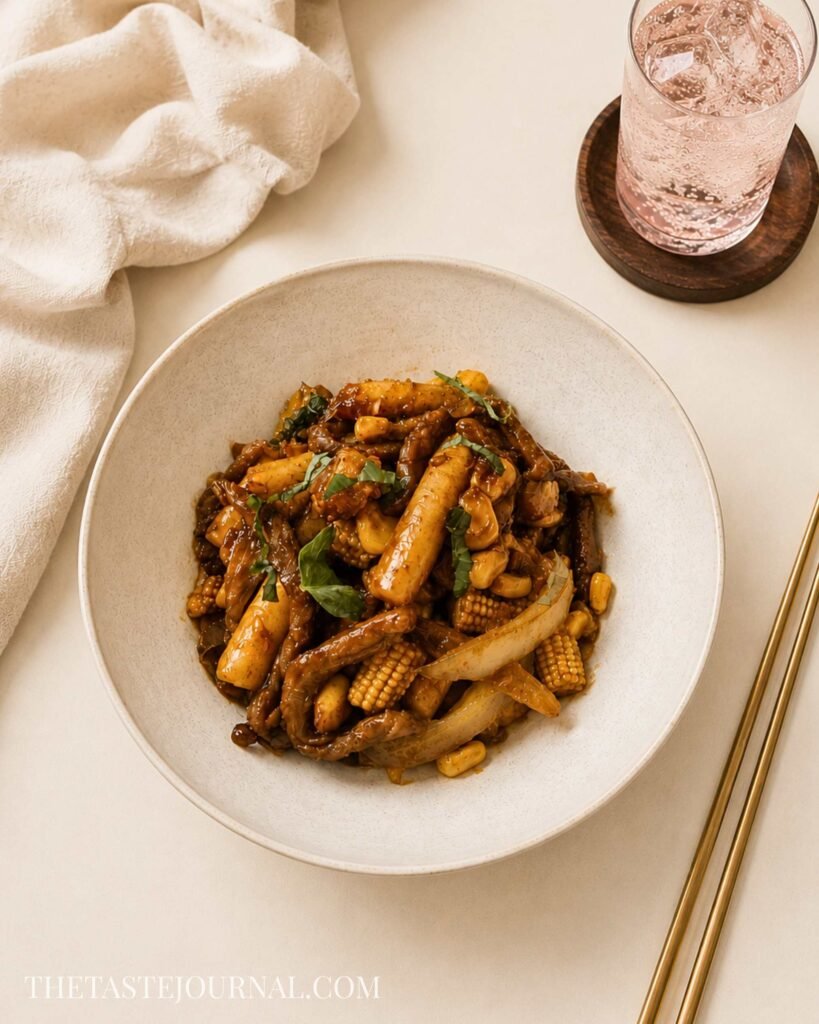
Tteokbokki is the beloved street food made with chewy rice cakes and a fiery, gochujang-based sauce. Gungjung Tteokbokkie is a dish created by the Korean Royal Court. The origin of Gungjung Tteokbokki traces back to the Joseon Dynasty (1392 – 1897). This dish was served in the royal court for the King and his officials. The original recipe for royal rice cake had a complex depth of flavour, fitting the intricate culinary traditions of royal courts.
Ingredients
Tteobokki, Ribeye steak, Dark Soy sauce, Sesame seed oil, Brown sugar, Garlic cloves, Oyster sauce, Black pepper, Hoisin sauce, Sweet corn, Baby corn, Red bell pepper, Onion, Olive oil.
Gungjung tteokbokki uses vegetables such as carrots, bell peppers, zucchini, mushrooms, onions, and garlic. This recipe also features thinly sliced beef, cooked with soy sauce, oyster sauce, sesame oil, and other ingredients. This dish uses a savory and sweet sauce. It also includes a subtle nuttiness, thanks to the addition of sesame seed oil. The rice cakes have a chewy base that complements the sauce’s flavors. You can substitute traditional rice cakes with wheat rice cakes, which are quite similar but made from wheat. The texture of wheat rice cakes is almost identical to that of traditional rice cakes.
Instructions
One of the benefits of medium-sized rice cakes is that they defrost quickly. Leave the packet of rice cakes on the countertop for 15 minutes; it will be ready to use soon. Make the marinade.
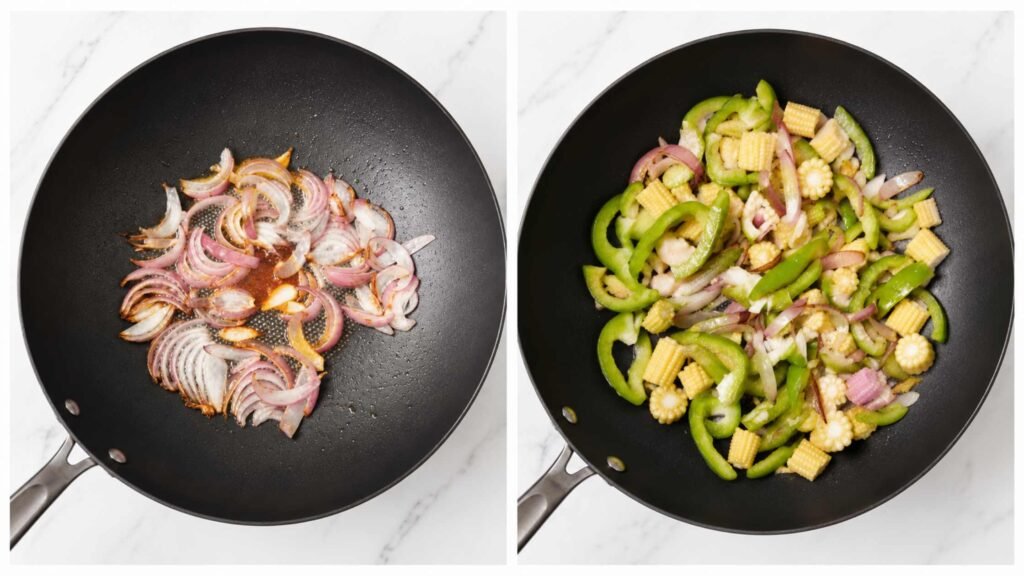
Slice the red bell pepper, onion, and garlic. Thinly slice the ribeye steak. Rinse the corn and baby corn. Marinate the ribeye steak with two tablespoons of dark soy sauce. Preheat a wok on medium-high heat. Add olive oil and the onion. After it has caramelized, add the garlic, green pepper, and sweet corn. Stir to mix and cook for five minutes.
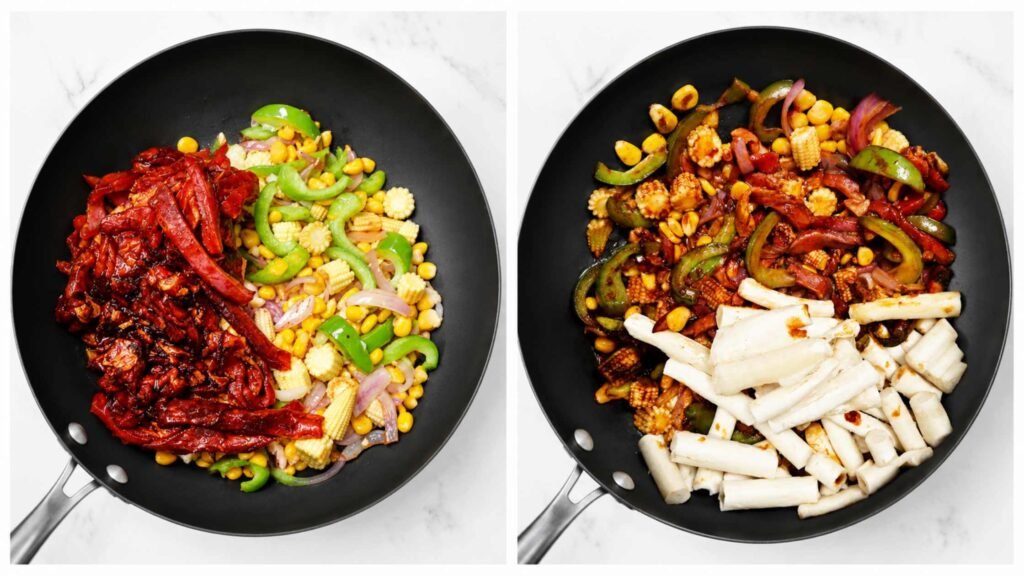
Add the red bell pepper, baby corn, and carrot. Continuously stir and cook for two minutes. Then, add the beef and cook for three minutes. Add the rice cake and the mixture. Toss to mix everything and cook for eight minutes. It is important to note that the rice cake used in this recipe is two inches long and ¼ inch round, which takes a short time to cook. If you use thicker rice cakes, the cooking time may be longer.
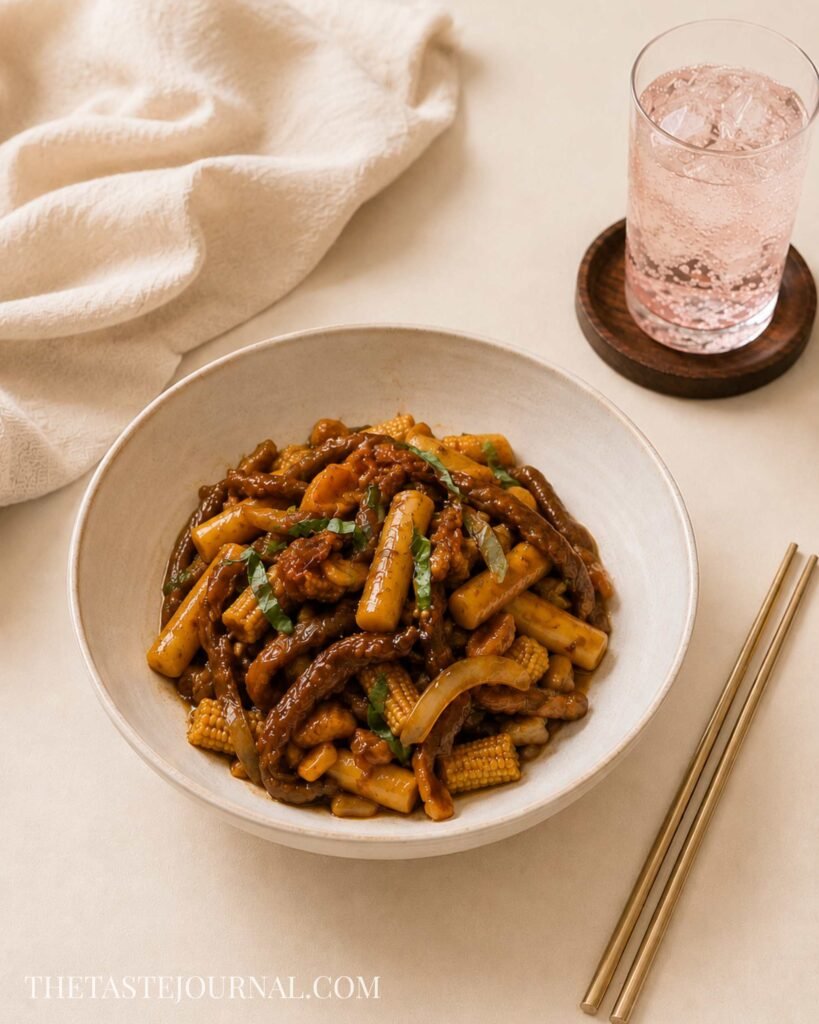
Continue to stir from the bottom up so that all the ingredients absorb the marinade sauce. Garnish with your favourite herbs, such as parsley, basil, or chives. Serve immediately.
How to Store and Reheat Gungjung Tteokbokki?
Gungjung tteokbokki can be stored in the refrigerator for up to three days without altering its taste. Allow the gungjung tteokbokki to cool before refrigerating. To keep it fresh, place it in an airtight container or a suitable zip-lock bag if you decide to freeze it. It can last up to two months in the freezer. To reheat refrigerated gungjung tteokbokki, use either the stovetop or the microwave.
What to Serve with Gungjung Tteokbokki?
Given its complex flavor profile, it is best to serve side dishes that complement the richness and umami of gungjung tteokbokki without overpowering it. One great option is kongnamul muchim, which consists of blanched bean sprouts seasoned with hot pepper flakes, salt, sugar, and sesame seed oil.
Ingredients
- 400 grams Tteok – Korean Rice Cake
- 210 grams Ribeye steak – Thinly sliced
- 3 Tbsp Olive oil – for cooking
Vegetables
- 4 Garlic cloves – Sliced
- 1 Bell pepper – sliced
- 1 Medium Onion – sliced
- ½ cup Sweet corn
- 40 grams Baby corn – Optional
Marinade
- 3 Tbsp Soy sauce
- 1 tsp Sesame seed oil
- ½ tsp Brown sugar
- 2 Tbsp Oyster sauce
- ½ tsp Black pepper
- 1 Tbsp Hoisin sauce
Instructions
- Prepare the rice cake (tteok): If the rice cakes are frozen, set them on the countertop and let them defrost for a few minutes. They should take about 10 to 15 minutes to semi-thaw.
- Vegetables: Slice the green bell pepper, onion, and garlic. Thinly slice the ribeye steak. Rinse the corn and baby corn.
- Stir-fry: Preheat a wok on medium-high heat. Add olive oil and sauté the onion until caramelized. Add the garlic, green bell peppers, and sweet corn. Cook for five minutes while stirring occasionally. Continuously stir and cook for two minutes. Then, add the beef and cook for three minutes while stirring continuously.
- The Marinade: Add the rice cake and the marinade mixture, and cook for eight minutes. Continuously toss from the bottom up so that the ingredients evenly absorb the marinade sauce. Garnish with green onion and serve immediately.
Nutrition
Calories: 190kcal | Carbohydrates: 14g | Protein: 14g | Fat: 10g | Saturated Fat: 4g | Polyunsaturated Fat: 1g | Monounsaturated Fat: 5g | Cholesterol: 32mg | Sodium: 1478mg | Potassium: 321mg | Fiber: 2g | Sugar: 4g | Vitamin A: 1040IU | Vitamin C: 41mg | Calcium: 23mg | Iron: 2mg
Did you make this recipe?Pin to Save this Recipe
Royal rice cake! Wow, this is so simple to make and it’s sooooooo delicious!
I am a huge fan of traditional tteokbokki, but when I saw this recipe I was like, what is that? is that tteokbokki? I gotta try this out! and it was ABSOLUTELY AMAZING!