Kimbap
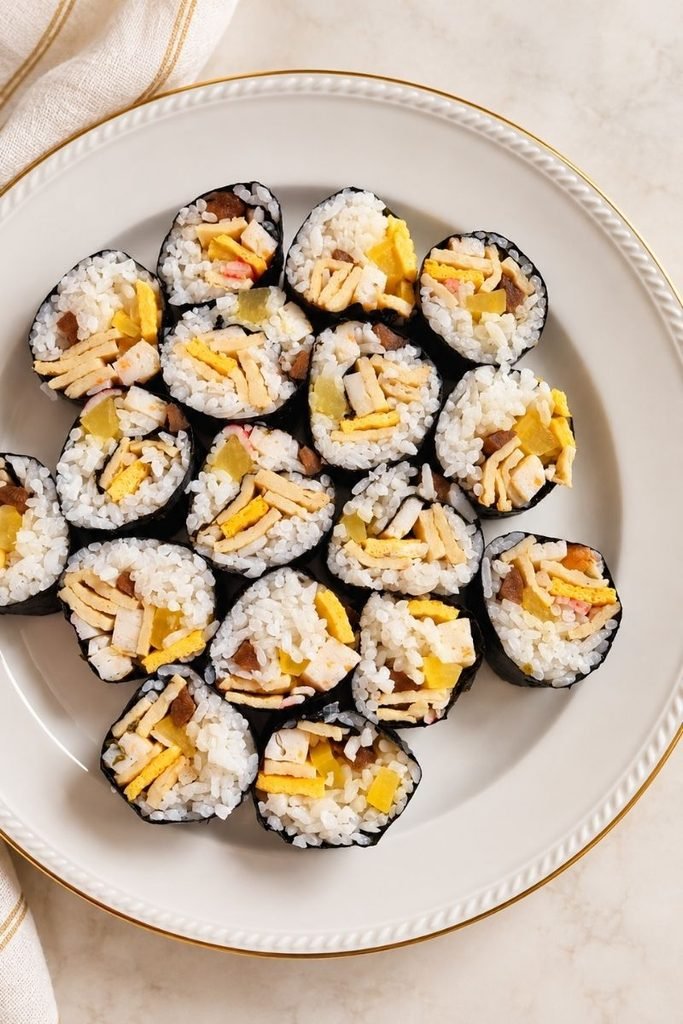
Kimbap is one of the most recognizable Korean foods and is enjoyed for breakfast, lunch, picnics, snacks, or as part of a larger Korean meal. These Korean seaweed rice rolls are colorful, filling, portable, and easy to customize according to different tastes and dietary preferences.
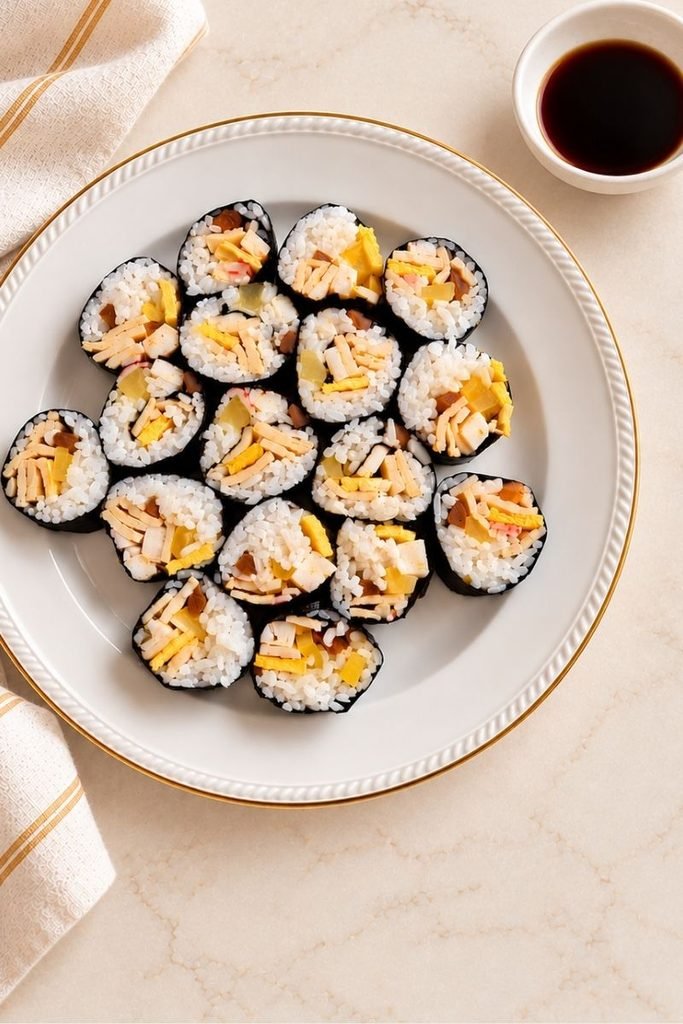
Homemade kimbap is especially useful when you need a convenient Korean lunch idea. You can fill the rolls with vegetables, eggs, beef, tuna, fish cake, crab sticks, pickled radish, or other cooked ingredients. Once everything is prepared, you can assemble several rolls quickly.
When making kimbap, it is best to prepare a large batch because you can cook and organize the ingredients all at once. Preparing seasoned rice, seaweed sheets, vegetables, eggs, pickled radish, and your choice of protein together saves valuable kitchen time.
Instead of preparing ingredients repeatedly, you can set up an easy kimbap assembly station and make multiple rolls in one session. This makes homemade kimbap a practical meal-prep recipe, lunchbox food, picnic meal, family snack, or quick Korean dinner.
What Is Kimbap?
It is a Korean dish made by wrapping seasoned rice and various fillings in seaweed sheets. The finished roll is usually brushed lightly with sesame oil and sliced into bite-sized pieces.
This dish is sometimes compared with Japanese sushi rolls because both use rice and seaweed. However, these korean seaweed rolls has its own preparation methods, fillings, seasoning, and flavor profile, and is particularly distinguished by not including raw fish.
The rice is seasoned with sesame oil and salt rather than the vinegar-based seasoning commonly associated with sushi rice. Many traditional seaweed rice fillings are also cooked, seasoned, grilled, or stir-fried before adding them to the roll.
This dish comes in wide varieties. Traditional vegetarian options, beef, tuna mayo, egg, and kimchi kimbap are just a few popular choices.
Ingredients
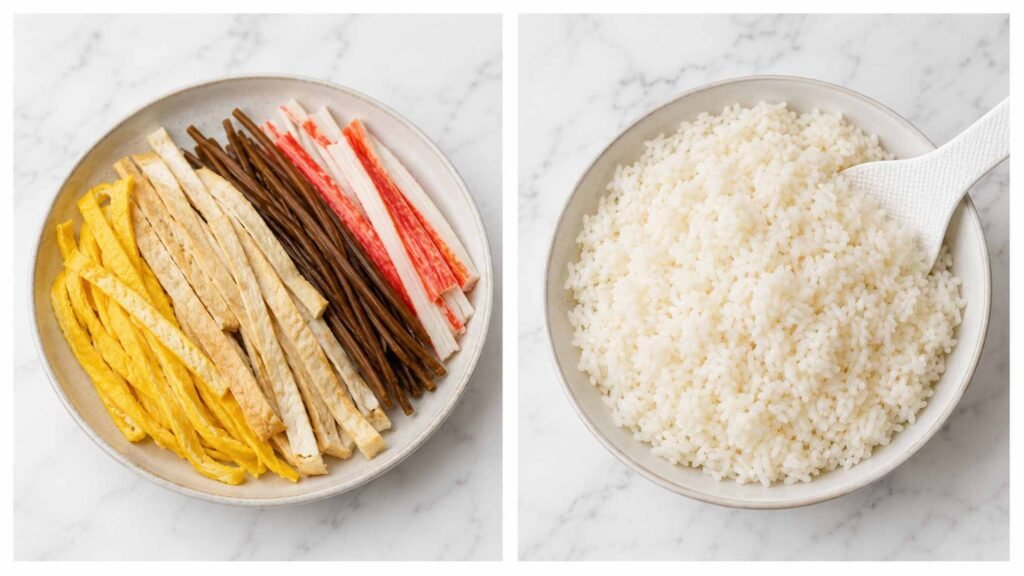
Plain seaweed sheets (Not roasted or seasoned), eggs, yellow radish pickle, crab meat, flat fish cake, burdock root, and fish cakes.
Seaweed
In stores that sell Korean foods, you’ll find seaweed sheets for making kimbap that are strong enough to hold the rice and fillings without tearing. Korean gim differs from Japanese nori, which is used to make Sushi. Gim has two different textured surfaces: a rough side to spread the rice and a smooth side to coat with sesame oil, whereas nori for sushi rolls has a tougher overall texture and a more distinct seaweed flavor.
You can use plain or lightly seasoned sheets, depending on the recipe. Roasted seaweed is commonly used for kimbap, and regular nori sheets can also work when suitable Korean gim is not available.
The seaweed’s texture makes a noticeable difference in the finished roll. Very thin or fragile sheets can tear if you add too much rice or filling.
Rice
Short grain rice is ideal because it has enough moisture and stickiness to hold the roll together without becoming mushy. Calrose-style rice can also work well for homemade kimbap.
You do not need special sushi rice to make gimbap. The most important factor is the cooked rice’s texture. It should be cohesive enough to spread across the seaweed while still keeping some texture between the grains.
Eggs
Eggs are a common kimbap ingredient and add a soft texture and mild flavor. They are usually whisked, cooked in a thin layer, and sliced into long strips.
Yellow Pickled Radish
Yellow pickled radish, known as danmuji, is one of the most recognizable kimbap fillings. It is made from radish and has a firm texture with a sweet, slightly sour flavor. Danmuji is usually sold in long strips specifically for gimbap, making it convenient to add to the roll.
Crab Sticks
Imitation crab sticks are frequently used in homemade gimbap. They are convenient, inexpensive, and require very little preparation. Simply cut them to a suitable length before assembly.
Fish Cake
Korean fish cake, known as eomuk, is another popular filling. Slice the fish cake into strips and lightly cook or season it before adding it to the roll.
Burdock Root
Burdock root, known as ueong, adds a slightly sweet, earthy flavor. Prepared, seasoned burdock root is often available at Asian supermarkets and Korean grocery stores.
Vegetables
Optional vegetables include cucumber, carrot, spinach, perilla leaves, bell peppers, mushrooms, and other fresh or cooked vegetables. Vegetables are often blanched, stir-fried, grilled, or seasoned before being placed inside the gimbap. Keep the fillings relatively dry because excess moisture can soften the seaweed.
Instructions
To begin, cook the white rice in boiling water according to the usual method, and then reduce the heat to the lowest setting to let it simmer. Once the rice is cooked, transfer it to a large bowl. Next, add sesame oil, salt, and white vinegar. Wear a food-safe glove and gently massage the rice with the added ingredients to combine them evenly.
Start by placing a bamboo mat on a chopping board. Then, lay down a sheet of cling wrap large enough to cover the entire roller. Next, take the kimbap seaweed, which has a smooth side and a rough side. Place the seaweed on the roller with the rough side facing up; this helps keep the rice and other ingredients in place.
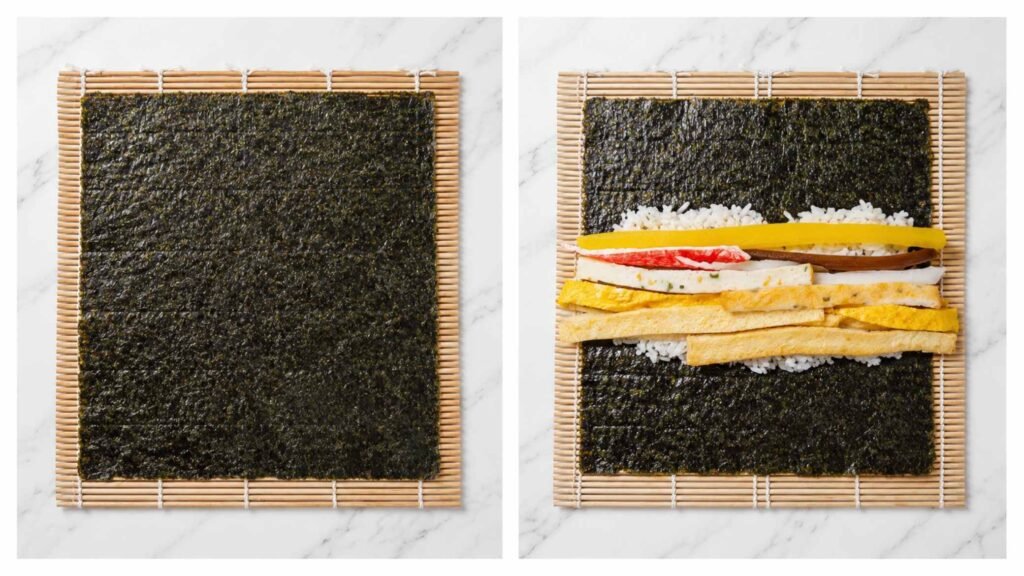
Place the Seaweed on a bamboo rolling mat with the rough side of the nori sheet facing upwards. Begin by thinly spreading the seasoned rice across the center of the seaweed. Thereafter, add the remaining ingredients on top of the rice.
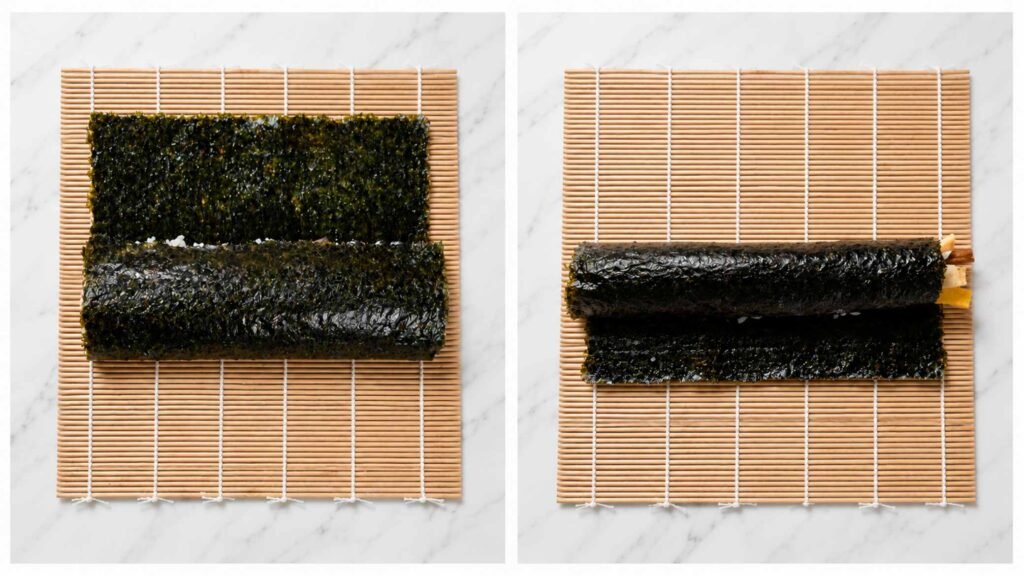
Avoid using a thick layer of rice, as this can make the Kimbap difficult to roll. Instead, layer the remaining ingredients on top of the rice. Some people prefer to spread the rice thinly to cover the entire sheet of seaweed, placing the ingredients at one edge of the rice. Now comes the technical part, which requires a delicate touch. Use a bamboo mat to help roll the seaweed around the ingredients. Press down with both hands and fingers to apply slight pressure around the Kimbap. This ensures that the rice roll won’t open when you slice it. Continue rolling and pressing until the entire seaweed is fully wrapped.
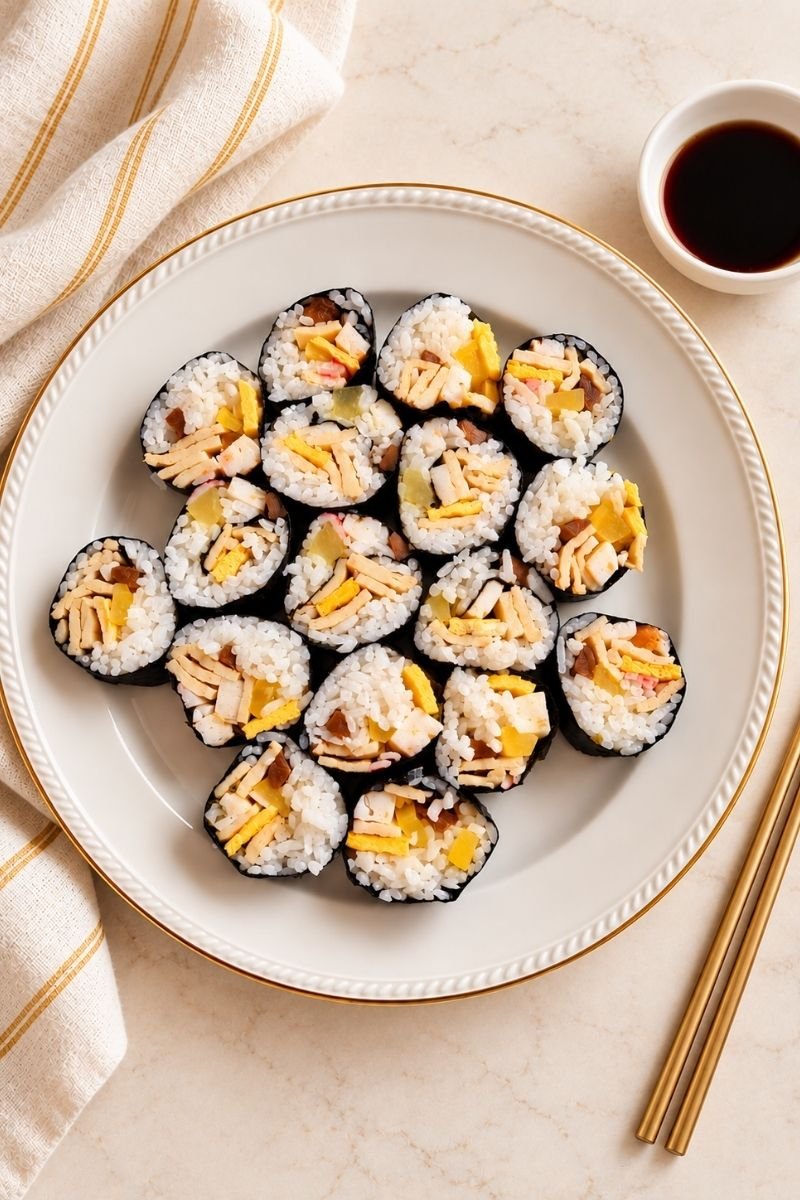
Roll the Kimbap and slice with a clean, non-serrated knife.Brush sesame seed oil over the kim. This step helps keep the kimbap intact and makes it easier to cut. Slice the kimbap into bite-sized pieces by cutting back and forth through the roll to avoid breaking or tearing it.
How to Prevent Kimbap From Falling Apart
If homemade kimbap keeps falling apart, the most common problem is usually the balance between rice, fillings, and rolling pressure. Too much rice can make the roll difficult to close. Unevenly placed fillings can also make the roll loose on one side.
Use a moderate amount of rice and keep the fillings in a compact line. Roll slowly and maintain even pressure from one end to the other. The seaweed should also be fresh enough to bend without breaking. If the sheet is very dry or brittle, it may crack during rolling.
How to Slice Kimbap
Once you’ve rolled the kimbap, brush a small amount of sesame oil over the outside of the seaweed. Use a clean, sharp, non-serrated knife to cut the roll. A gentle back-and-forth motion usually works better than pressing straight down. The knife may become sticky while slicing.
If this happens, wipe the blade clean before continuing. Cut the roll into bite-sized pieces of similar thickness. When properly prepared, each slice should show a neat combination of rice and colorful fillings.
What to Serve with Kimbap?
The most popular side dish to accompany Kimbap is Spring Onion Kimchi or Buchu Kimchi. Kimbap is typically enjoyed as a quick breakfast or a light lunch during picnics. Explore more Korean Recipes such as Kkakdugi, Cheesy Dakgalbi, Galbi Jjim, Tteokbokkie, etc.
How to Store and Reheat Kimbap?
Kimchi is best enjoyed fresh, but Kimbap is often made in large quantities for convenience. Store the Kimchi in the fridge for up to two days; any longer and the rice may lose its texture, while the ingredients can release moisture, making the Kimbap soggy. While it is safe to consume Kimbap stored this way, provided it has been kept in the fridge, the original flavor and texture will be affected.
To store Kimbap effectively, wrap each roll in cling wrap and place them in an airtight container. This method prevents the rolls from sticking together, making them easier to separate.
Spicy Korean Noodles With Gimbap
Spicy Korean noodles provide a bold contrast to kimbap’s mild, balanced flavors. Depending on the recipe, the sauce may contain Korean chili paste, Korean chili powder, garlic, sesame oil, and soy sauce. The rice in kimbap provides a satisfying contrast to spicy noodles, making this combination particularly suitable for lunch or dinner.
Korean Dumplings or Mandu
Korean dumplings, known as mandu, are another excellent choice. Mandu can contain meat, vegetables, tofu, noodles, or a combination of ingredients. Pan-cooked mandu provides a crisp exterior, while steamed mandu has a softer texture. Both work well with the soft rice and seaweed in kimbap.
Korean Glass Noodles or Japchae
Japchae is made with Korean glass noodles and vegetables and can also include meat or other protein. The noodles are usually seasoned with sesame oil and soy sauce, creating a savory and slightly sweet flavor. The soft and chewy texture of japchae complements the rice and vegetables in gimbap.
Kimchi and Other Banchan
For a simple Korean meal, freshly sliced kimbap with kimchi may be enough. Spring onion kimchi, buchu kimchi, cucumber dishes, pickled vegetables, and other banchan can add additional flavor and texture.
Different Variations of Gimbap
Beef Kimbap
Beef kimbap can include thinly sliced beef, pickled radish, carrots, spinach, egg, cucumber, and burdock root. Slice sirloin or another tender cut into strips, cook it, and season it before adding it to the roll.
Tuna Mayo Kimbap
Tuna mayo kimbap is convenient because the ingredients are easy to find and require relatively little preparation. Drain canned tuna and mix it with mayonnaise. Add cucumber, egg, pickled radish, or other vegetables, then roll everything together with seasoned rice.
Kimchi Kimbap
Kimchi kimbap is a flavorful option for anyone who enjoys spicy and fermented flavors. Add well-drained, sliced kimchi to the rice along with your preferred protein or vegetables. You can also add cheese for a richer variation.
Vegetable Kimbap
Vegetable kimbap can include carrots, spinach, cucumber, bell peppers, mushrooms, perilla leaves, egg, and pickled radish. This is an excellent option for a colorful, meat-free Korean lunch or picnic meal.
Tips for Making Homemade Kimbap
The key to making delicious homemade kimbap is preparation. Cook, slice, and arrange all the fillings before you begin rolling.
One-day-old rice is preferred but not required; the rice should be warm, not hot. Sesame oil and salt provide flavor to the rice without overpowering the other ingredients. Cutting the filling into similar lengths and thicknesses makes it easier to fold into the kimbap roll. Avoid wet fillings; they can make the seaweed soggy. Do not add too much rice to the seaweed; it will be difficult to fold. Using steady pressure will make the process easier. Use a sharp knife when cutting the kimbap roll.
Most importantly, take your time. Proper kimbap rolling becomes much easier with practice. Once you understand how much rice and filling to use, you can prepare several rolls quickly and consistently.
Homemade kimbap is a practical Korean food that works for almost any occasion. You can make it as a simple vegetable lunch, a filling beef meal, a quick tuna snack, or a colorful dish for a picnic or family gathering. With the ingredients prepared in advance, making several rolls at once becomes much easier, making kimbap a useful addition to your collection of easy Korean recipes.
Learn how to make delicious Korean kimbap with seasoned rice, egg, pickled radish and savory fillings wrapped in crisp seaweed. Easy and flavorful!
Ingredients
Kimbab Rice
- 1 cup White rice
- 1 Tbsp Sesame seed oil
- ½ Tbsp White vinegar
- ¼ tsp Salt
Kimbab Fillings
- 8 Seaweed Sheets
- 5 Eggs – whisked and cooked in single layer egg
- 200 grams Yellow radish pickle
- 100 grams Crab meat
- 200 grams Flat fish cake
- 150 grams Woo-ung – burdock root, Optional
- 200 grams Vegetable fish cake – optional
Instructions
- Cooking the Rice: To start, cook the white rice in boiling water, then let it simmer on low heat. Once done, transfer it to a large bowl and mix in sesame oil, salt, and white vinegar, using a food-safe glove to combine evenly.
- Preparing the Rolling Station: Place a bamboo mat on a chopping board and lay down a sheet of cling wrap if desired. Position the kimbap seaweed on the mat with the rough side up. Spread a thin layer of rice across the center of the seaweed, then add your ingredients on top.
- Assembling the Kimbap: Using the bamboo mat, gently roll the seaweed around the ingredients, applying slight pressure to keep it tight. After rolling completely, brush the roll with sesame oil for added flavor and easier cutting. Slice the kimbap into bite-sized pieces and sprinkle sesame seeds on top.
- Serving: Slice the kimbap into bite-sized pieces and sprinkle sesame seeds on top. Serve with kimchi or ginger pickles for an extra touch.
Nutrition
Calories: 115kcal | Carbohydrates: 19g | Protein: 4g | Fat: 2g | Saturated Fat: 0.4g | Polyunsaturated Fat: 1g | Monounsaturated Fat: 1g | Cholesterol: 6mg | Sodium: 118mg | Potassium: 63mg | Fiber: 0.3g | Sugar: 0.4g | Vitamin A: 135IU | Vitamin C: 2mg | Calcium: 16mg | Iron: 0.3mg
Did you make this recipe?Pin to Save this Recipe