Newsletter Subscribe
Enter your email address below and subscribe to our newsletter
Enter your email address below and subscribe to our newsletter
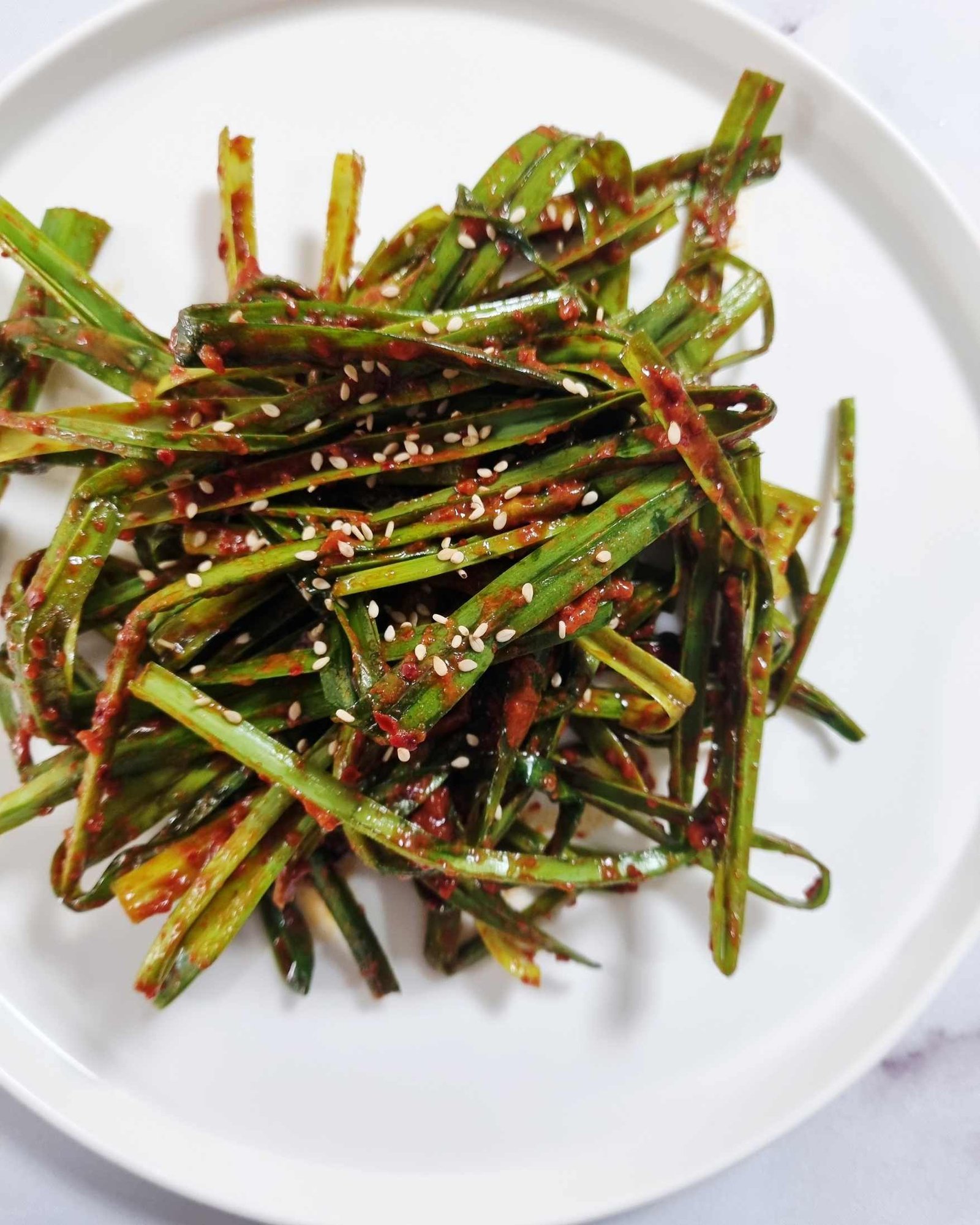
Today, we are making Buchu Kimchi. If the word ”kimchi” makes you think of traditional napa cabbage kimchi that takes a few weeks of patience, then this recipe is certainly going to surprise you.
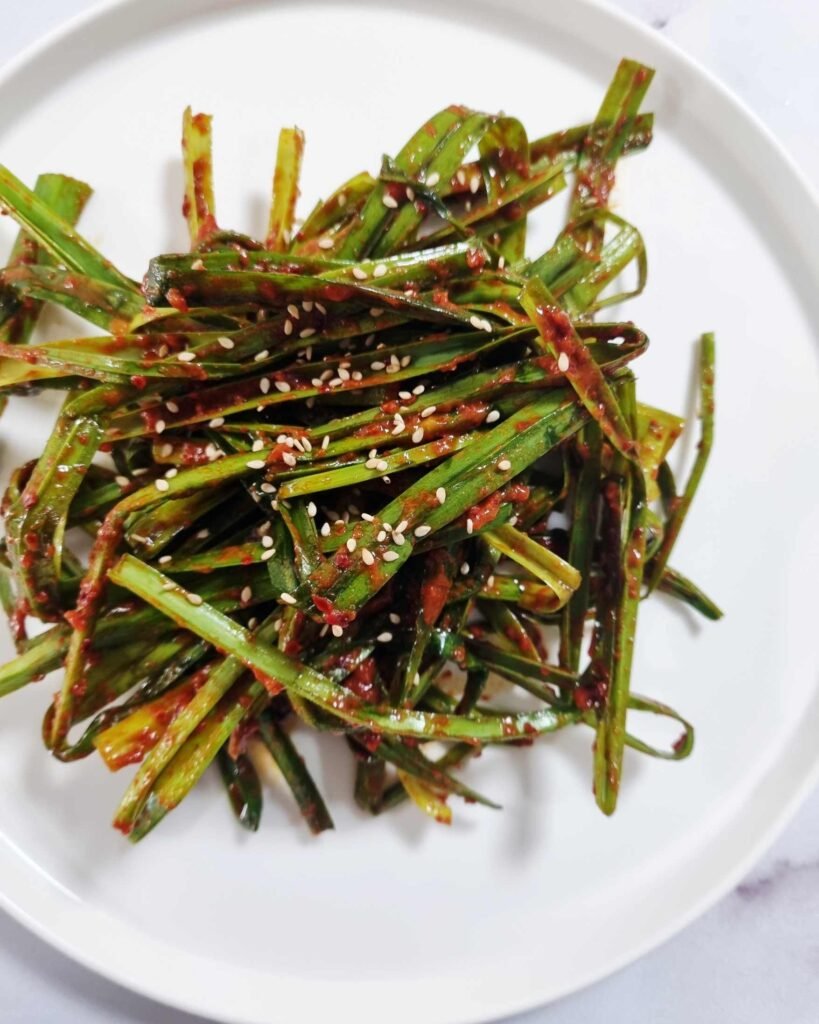
Let us introduce you to a Kimchi made with Garlic Chives. The best part about this recipe is that you can eat it right away or ferment it for a few days to let it develop those fermented flavours.
Buchu Kimchi has its roots in the southern regions of the Korean peninsula, specifically in the Jeolla provinces, where the climate is warmer. Jeolla province is known as South Korea’s food capital.
With a wide array of different banchan’s, it is not uncommon to stop by a restaurant and receive about twenty complementary side dishes to accompany your main meal. Apart from Buchu Kimchi, it is also the birthplace of bibimbap. Now, let’s talk about Buchu Kimchi; if you’re like me and appreciate that the culinary world also borders on its medicinal attributes, then you’re curious about herbs, natural foods, and more. Buchu Kimchi is packed with vitamins. In fact, Chives were considered the fountain of youth in the Middle Ages.
Garlic Chives, Fish sauce, Brown Sugar, Gochugaru, Rice Flour, Sesame seed oil, and sesame seeds.
Garlic chives are also called Asian Chives. They are different from regular chives or spring onions; they are flat and have a wider surface area. You can find the Garlic chives at most Asian supermarkets; some Western supermarkets will also stock them. Fish sauce is a concentrated fish flavour; despite its name, it will not add an overly fishy taste to the garlic chives.

On the contrary, the fish sauce will lightly enhance the flavour of the gochugaru paste. The gochugaru is a Korean hot pepper flake that adds that rich, red colour to the dish. Brown sugar adds a subtle sweetness; it can be swapped out for honey. Rice flour acts as a thickening agent for the paste. Sesame seed oil adds a nutty flavour.
Start by washing the garlic chives under running water. Add the garlic chives to a large bowl, then add the fish sauce. Let it sit for ten minutes. In the meantime, make the rice-flour paste. add the rice flour to a small pan and add water.
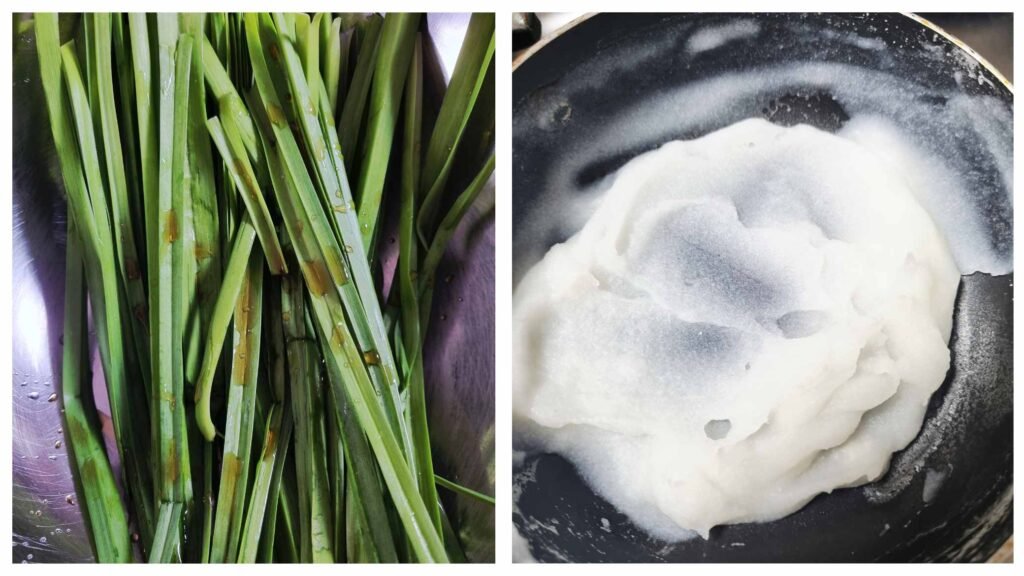
Set the temperature to medium-low, and slowly mix the rice flour with the water until it forms a paste; it will thicken up in less than 15 seconds.
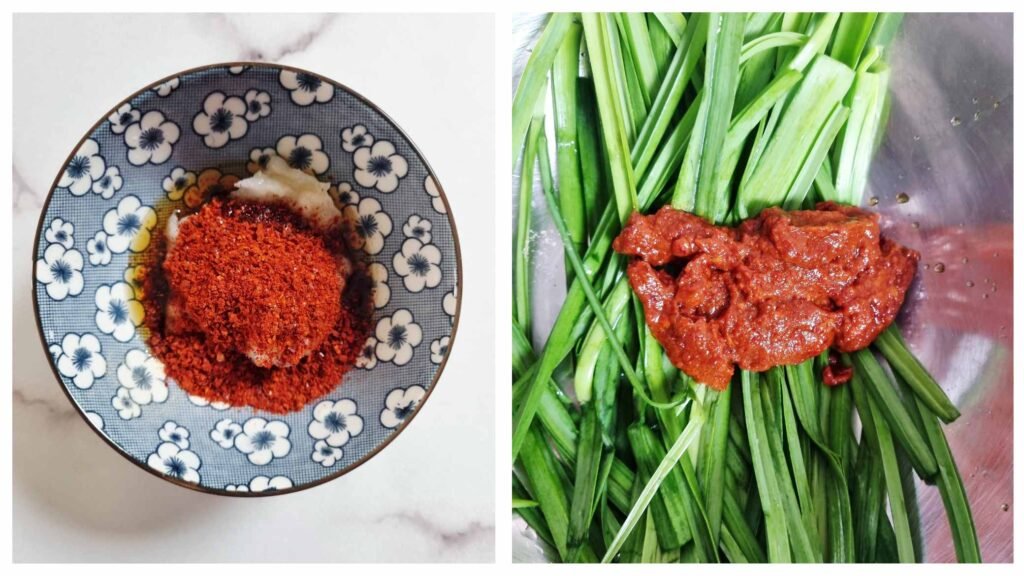
Add the rice-flour paste to a small bowl. Add the sesame seed oil, honey, and gochugaru to a bowl. Mix well and form the red pepper paste. Add the paste to the garlic chives.
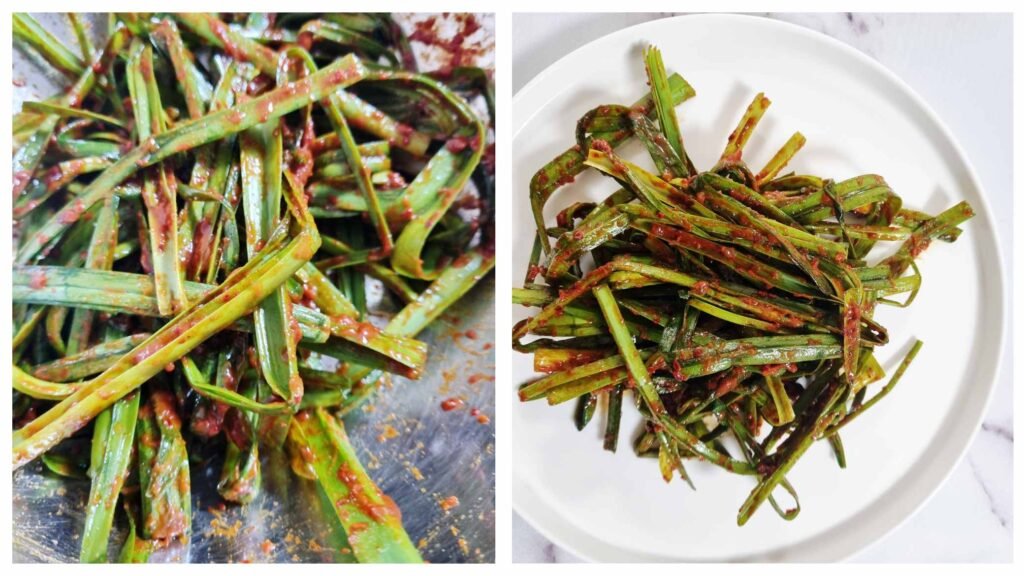
Combine the garlic chives with the red pepper paste, ensuring all the chives are fully covered. You can leave the Buchu Kimchi in the fridge for a few minutes or eat it right away.
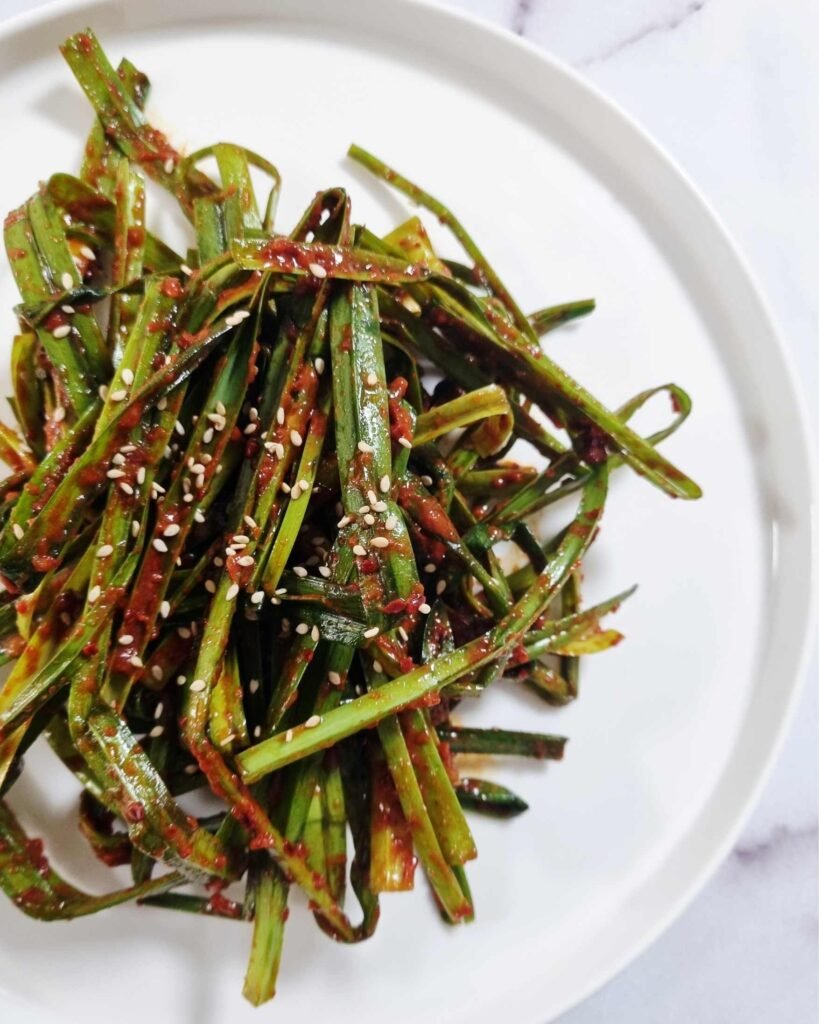
The dish is ready to be enjoyed. Serve the Buchu Kimchi alongside your favourite main meal. This recipe is a fast and easy banchan to prepare on busy days when you are craving a bit of green in your diet.
You can serve this dish with White Rice or Doenjang jjigae. This dish is made with soybean paste. It uses a lot of vegetables and tofu. If you want to eat this dish with protein, consider these three Chicken dishes from South Korea: Dakbokkeumtang, Cheese Dakgalbi, and Chuncheon Dakgalbi. The first dish is made with vegetables and Chicken. It is almost like a Korean braised chicken; it is a type of stew.
The second option is Cheese Dakgalbi, which is spicy and topped with chicken and lots of cheese. Lastly, Chuncheon Dakgalbi is similar to Cheese Dakgalbi, but without Cheese and using chicken and white cabbage. This dish is crunchy and would be absolutely enjoyable with the Buchu Kimchi.
Store the Buchu Kimchi in the fridge and consume it within a few days. If you have not prepared it yet, ensure it is not wet, then store it completely dry in the fridge until you are ready to use it.