Hard Boiled Eggs
Hard-boiled eggs are a nutrient-rich food enjoyed by many across the globe. With their origins dating back to ancient civilizations, they have become a staple in a variety of cuisines, served in salads, sandwiches, and as snacks.
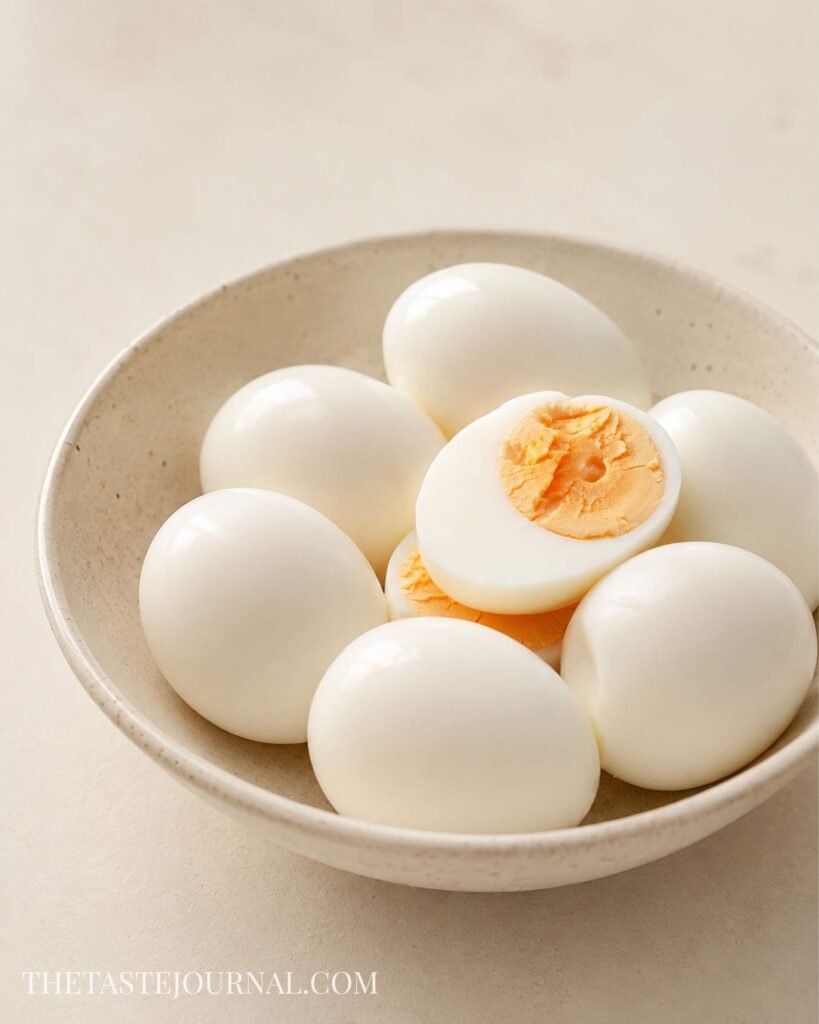
However, achieving the perfect hard-boiled egg requires attention to detail and techniques that ensure the shell remains intact, peels easily, and presents a beautiful, unblemished yolk.
In this guide, we’ll explore the science behind cooking hard-boiled eggs and share tips for achieving flawless results every time. Here is a fun fact that you may not have known: Older hens lay eggs that crack more easily than younger hens’ eggs, making the hen’s age more significant than the egg’s age for cracking.
Ingredients
Eggs, a stainless steel pot, salt, and water.
Using aluminium pots is a sure-fire way to turn your aluminium pot black. Cast iron pots take longer to heat up than standard pots. Stainless steel pots are considered the best pots for making hard-boiled eggs.
Instructions
Remove the eggs from the fridge and set aside. Fill a pot with enough water to cover the eggs by three inches, then bring it to a boil and add salt. It’s best to use room-temperature eggs to avoid rubbery whites. Carefully add the eggs to the boiling water with a spoon to prevent splashes.
For peeling, try these techniques: Tap the egg on a hard surface and roll it under your palm to loosen the shell. Peel under running water to minimize damage or crack the egg slightly and soak it in water for a few minutes to help remove the shell easily.
What to Serve with Hard-Boiled Eggs?
Hard-boiled eggs can be eaten in a variety of ways. You can serve them as deviled eggs where they are halved, and the yolks are removed and mixed with mustard, mayonnaise, and spices, then piped back into the hallows of the egg whites. Other ways to eat eggs include a sandwich or soy sauce eggs, which are usually served as a topping for Ramyun noodles. Many Asians enjoy hard-boiled eggs with chili oil.
How to Store Hard-Boiled Eggs?
Store in the fridge for three to four days. Eat cold or reheat in a bowl of warm water. Avoid freezing eggs.
Expert tips
To properly boil eggs, use plenty of water; only using 1 inch can cause uneven cooking. An ice bath isn’t essential; simply drain the hot water and run cold water over the eggs to stop cooking. Some recommend poking a tiny hole in the egg to reduce cracking. The temperature of the eggs is crucial. Room temperature eggs yield a softer texture, while cold eggs may turn rubbery. Let eggs warm for about 3 minutes before boiling. Additionally, placing eggs in cold water can increase cracking. A common method involves cooking eggs in boiling water with the lid on for twelve minutes, but this is less effective as the water cools when the heat is turned off.
Ingredients
- 4 Eggs (as many as desired)
- 2 cups Water
- ½ tsp Salt
Instructions
- Boil: Add water to a pot. When it is rapidly boiling and bubbling, your water is ready. Set your timer for 12 minutes. (Use a phone timer). Gently add your eggs to the pot. Add the salt.
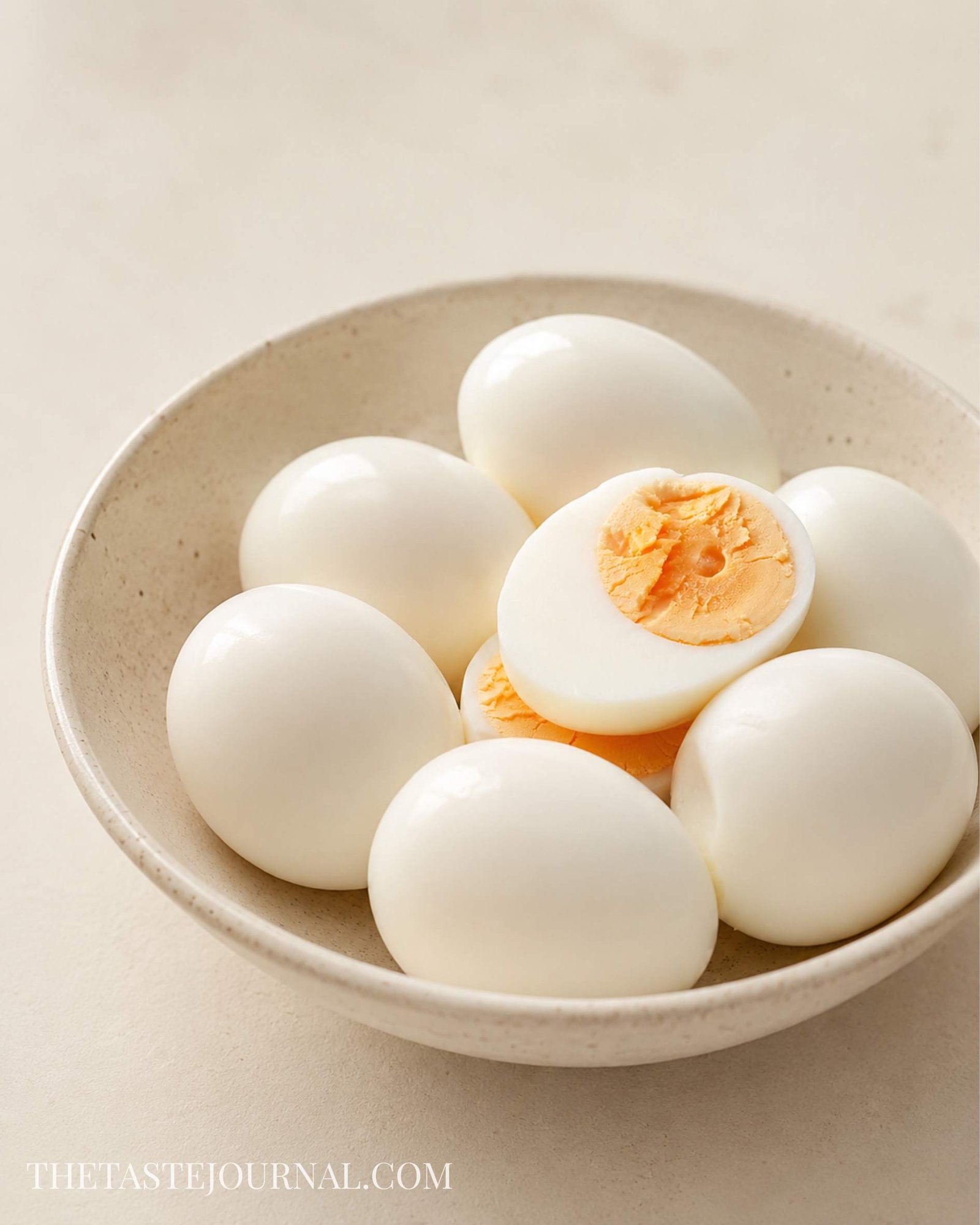
- Peel the eggs: After 12 minutes, remove your boiled eggs from the hot water and partially crack the shells. Add the partially cracked eggs to a bowl of water. Let it rest for a few minutes. Then peel the eggs under the water.
Nutrition
Calories: 4kcal | Protein: 1g | Fat: 0.03g | Saturated Fat: 0.01g | Polyunsaturated Fat: 0.01g | Monounsaturated Fat: 0.01g | Cholesterol: 2mg | Sodium: 98mg | Potassium: 18mg | Vitamin A: 2IU | Vitamin C: 0.04mg | Calcium: 9mg | Iron: 0.03mg
Did you make this recipe?Pin to Save this Recipe