Thai Yellow Curry
Thai yellow curry is a great choice when you want something creamy, aromatic, and flavorful without spending hours in the kitchen. Its golden color comes largely from turmeric in the curry paste, while lemongrass, garlic, and other spices give the sauce its distinctive aroma.

For this Thai yellow curry recipe, I use store-bought yellow curry paste to keep preparation simple. Chicken breast, green beans, and silken tofu are the main ingredients, while coconut cream gives the sauce a thick, velvety texture. A squeeze of fresh lime juice ties it all together, adding a little sharpness to balance the coconut cream’s richness. The curry takes about 30 minutes to prepare and cook, making it a great weeknight option.
What Does Thai Yellow Curry Taste Like?
Thai yellow curry has a warm, aromatic flavor with earthy turmeric notes and gentle heat from the curry paste. Coconut cream softens the spices and adds richness, while lime juice adds a refreshing contrast.
Thai Yellow curry is often milder than Thai red or green curry, though heat varies by curry paste brand. If you prefer a milder dish, start with less paste and adjust as you cook.
Ingredients
Yellow Curry Paste, Garlic cloves, Onions, Tofu, Chicken Breast, Lime juice, Green beans, Coconut milk, Kefir lime leaves, Thai red chili, Lemongrass stick.
Thai yellow curry paste is a ready-made paste that saves time and provides the dish’s aromatic base. You can find it in the international foods section of most grocery stores. You can also order it from online retailers.
I use boneless chicken breast cut into bite-sized cubes. It cooks quickly and absorbs the curry sauce’s flavor. When making Thai food, always choose coconut cream; it is thicker and richer than coconut milk, giving this curry a wonderfully creamy consistency. I use a 400 g can for the sauce.
Silken tofu, also known as soft tofu, has a delicate texture that works particularly well in creamy curries. Handle it gently when adding it to the pot, as it breaks apart more easily than firm tofu.
Green beans add color and a little bite. Cut them into manageable lengths for easy eating. Onion and garlic form the dish’s aromatic base. Allow the onion to soften and turn lightly golden before adding the curry paste.
Lime juice cuts through the coconut cream’s richness and brightens the overall flavor. Lemongrass and makrut lime leaves add fragrant citrus notes that complement the yellow curry paste. Shops sometimes label makrut lime leaves as kaffir lime leaves. Add the sliced chili at the end for a little extra heat. Adjust the color to suit your preference.
Instructions
Thinly slice an onion and garlic. Set the temperature to medium-low heat. Add cooking oil to a pot. Once the onions have caramelized, add the yellow curry paste.
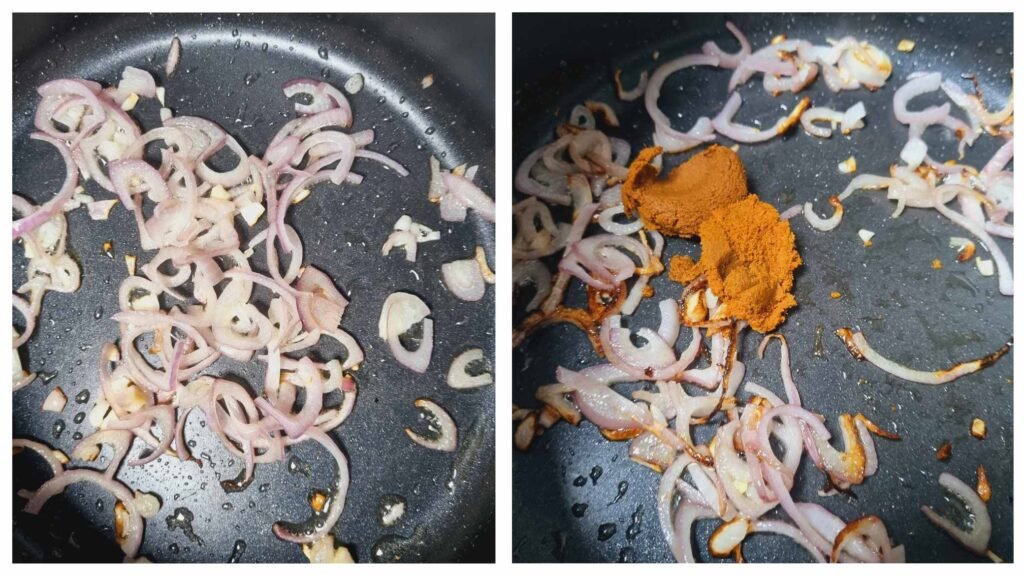
Mix the caramelized onions with the Thai yellow curry paste. Allow the paste to meld with the oil and the onions. Open a can of coconut cream (400ml). Add 1/4 of the thick coconut cream to the pot.
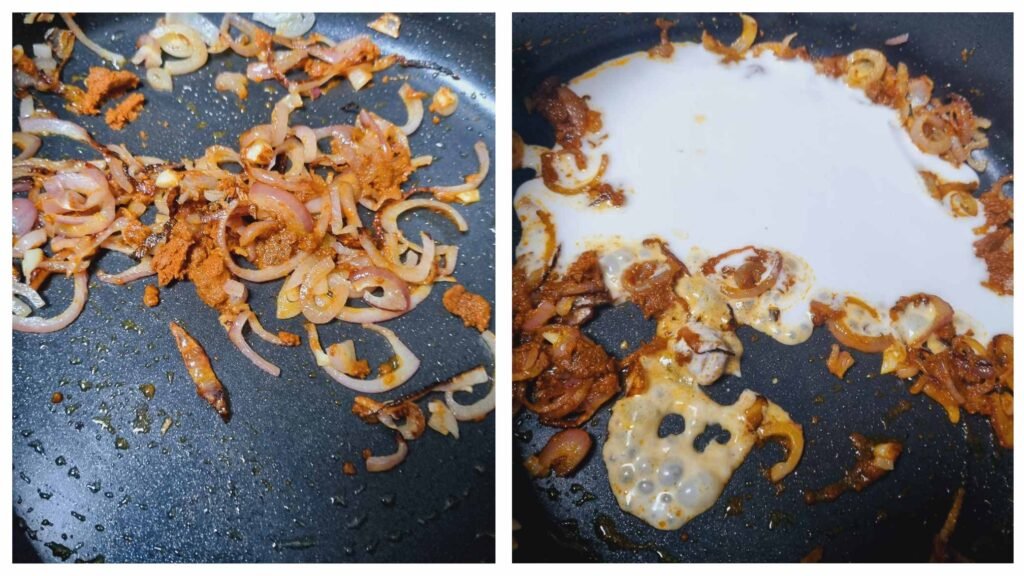
Mix the ingredients well until the coconut cream turns a light yellow. Simmer for one to two minutes. Add the chicken cubes to the pot. Squeeze the juice of two limes and add it to the pot. The citrus of the lime juice will enhance the flavour of the chicken, and it also brightens and balances the yellow curry.
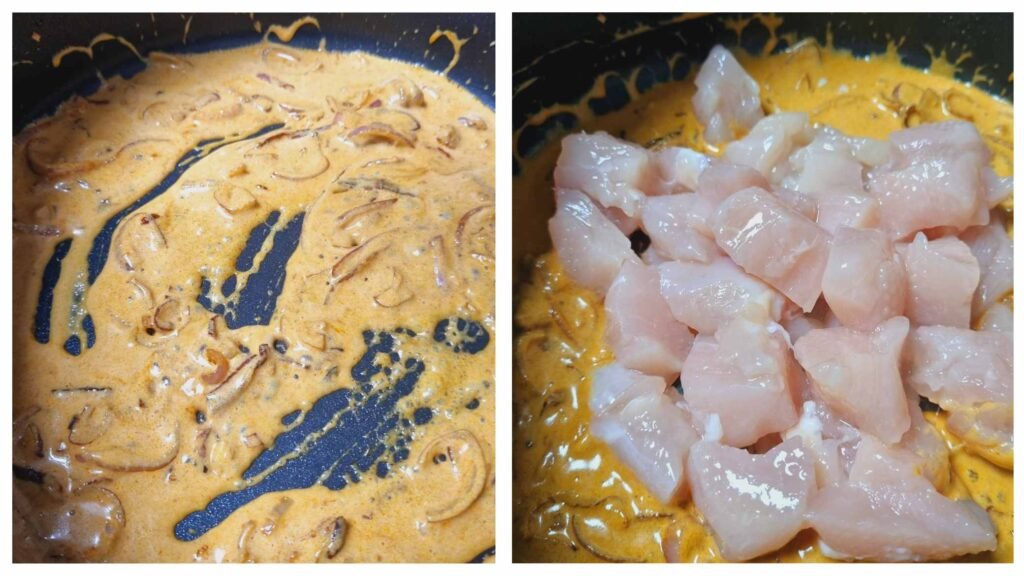
Add the balance of thick coconut cream. Add the green beans. Mix well and simmer for five to ten minutes. Then, add the soft tofu, which is also known as silken tofu. Gently mix the ingredients; this will ensure that the tofu does not break apart.
Add half a cup of water and let the curry simmer for 15 minutes. As the curry cooks on the stove, the flavours will intensify. Thereafter, allow the curry to cool down for five minutes and serve with jasmine rice. Garnish with parsley and red chili.
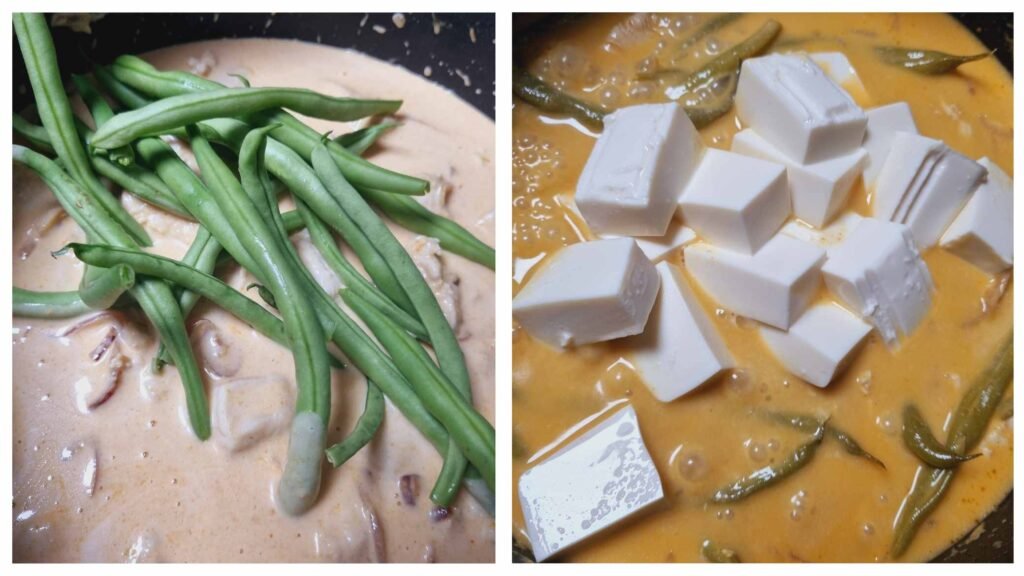
The Thai yellow curry is ready to eat. If you’ve never tried it before, prepare to be surprised. The tender chicken, along with warm spices, thick coconut cream, and lime juice, will provide you with a delicious experience.
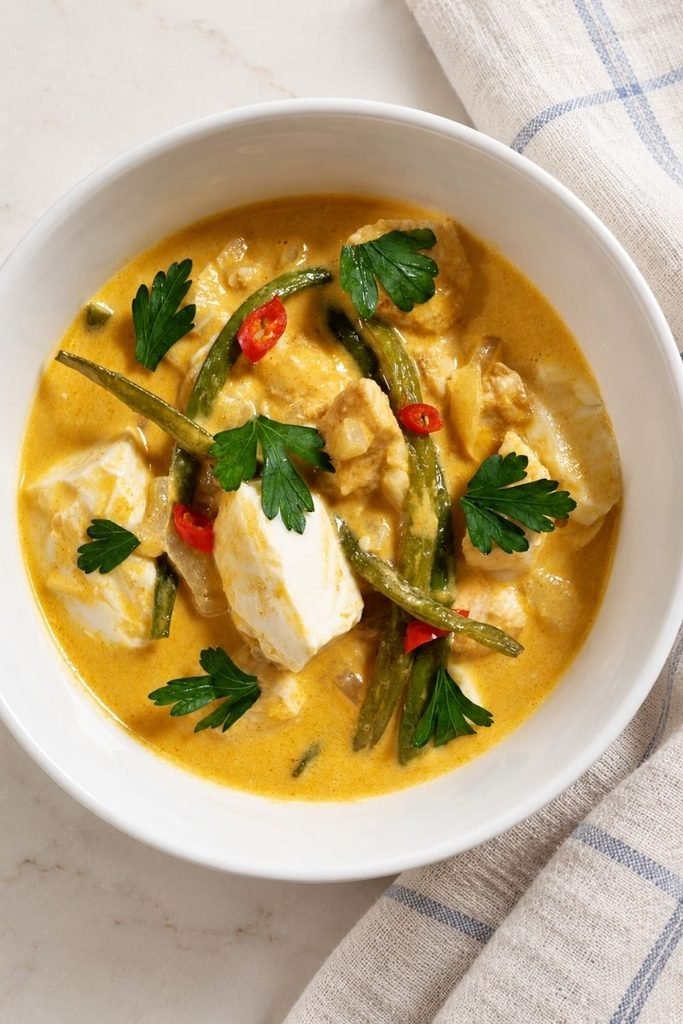
The best part about this dish is that the flavours in Thai yellow curry will deepen the next day. We recommend that you double the portions in this recipe; it’s that delicious.
Coconut Cream or Coconut Milk: Which Is Better?
Both work well in Thai curry, but they produce slightly different results. Coconut cream has a higher fat content and creates a thicker, richer sauce. Coconut milk gives the curry a lighter consistency. I use coconut cream in this recipe because I like how it coats the chicken and tofu. The half cup of water balances the thickness without losing the coconut flavor.
What to Serve with Thai Yellow Curry?
Thai yellow curry is served over Jasmine rice. It usually comes with no other side dishes; however, you can pair it with a cucumber salad. Did you know Thais have their own type of roti, thin and flaky? Thai roti, a flatbread, is pan-fried, making it a quick, easy alternative to jasmine rice. Explore more Thai recipes such as Thai Red Curry, Tom Yum Goong, Thai Green Curry, Panang Curry, Tom Kha Gai, Thai Fish Cakes and Massamam curry.
How to Store Thai Yellow Curry?
Leftovers store well; place the Thai yellow curry in an airtight container in the fridge for up to three days. You can also freeze the Thai yellow curry for up to three months. Reheat on the stove or in the microwave.
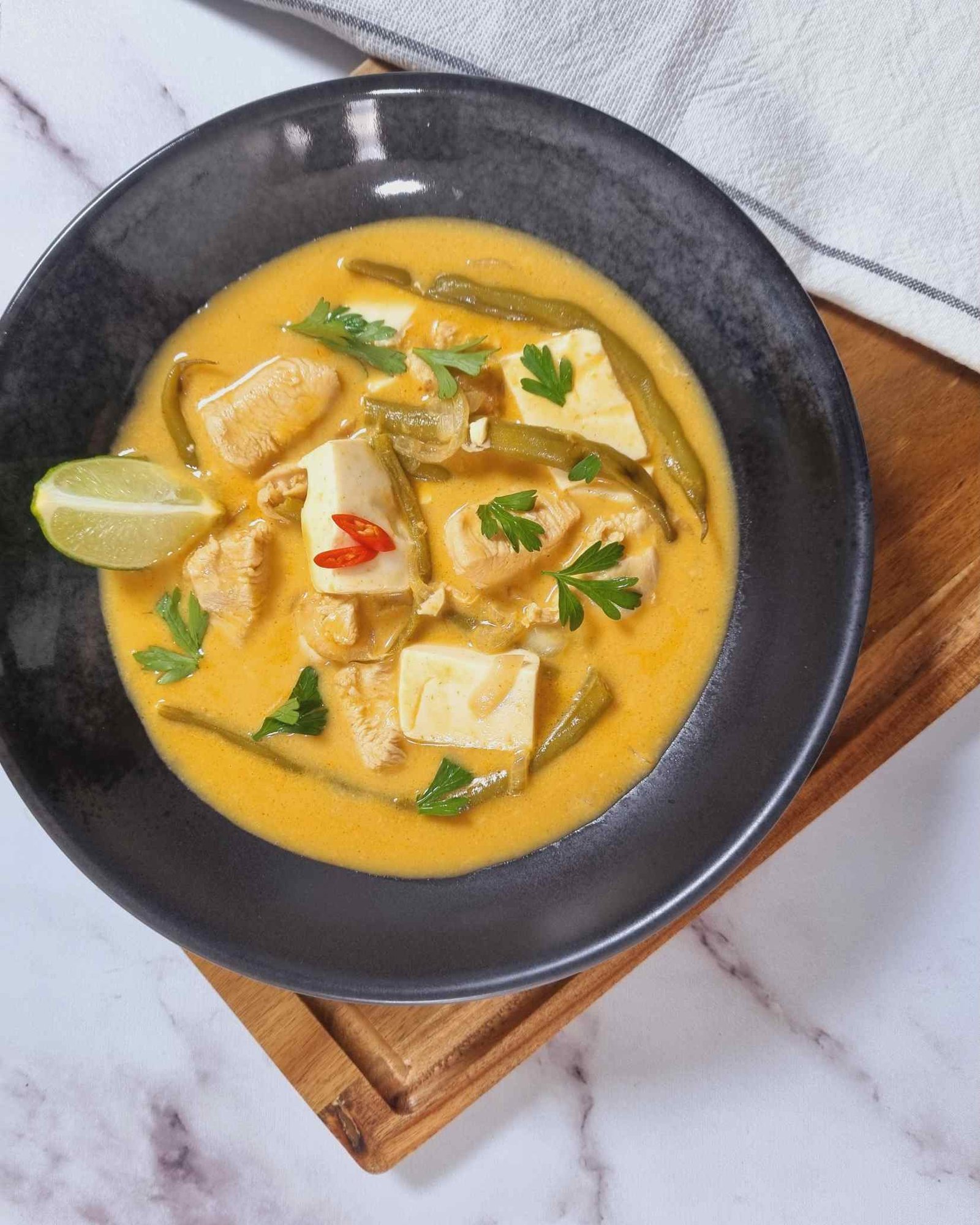
Make this easy Thai yellow curry with chicken, coconut cream, silken tofu and green beans. A creamy, flavourful 30-minute dinner served with jasmine rice.
Ingredients
Protein
- 200 grams Chicken breast – cubed
Condiments
- 3 tsp Thai yellow curry paste
- 3 tbsp Cooking oil
- 400 grams Coconut cream – canned
- 200 grams Soft Tofu
Fresh ingredients
- 1 Red Thai chili
- 2 Limes – Fresh lime juice
- 150 grams Green beans
- 5 Garlic cloves – Sliced
- 4 Kefir limes leaves
- 10 grams Lemongrass stick
- ½ Onion – Sliced
Instructions
- Sauté: Finely slice the onion and garlic. Add oil to a pot and set the heat to medium-low. Add the onion to the pot and sauté for 3 to 5 minutes, until golden brown.
- Paste: Add the Thai yellow curry paste to the pot and mix well. Once the paste starts to infuse with the oil and onion, add 1/4 of the coconut cream and mix. When it starts to bubble, it means that the coconut oil is separating from the cream. Mix the paste along with the cream. This process will elevate the flavours of the curry.
- Add the chicken: Wash and cut the chicken breast into cubes. Add the chicken to the pot. Add the juice of two limes. Mix the ingredients. Add the remaining coconut cream. Add the green beans. Cook for a few minutes. Add the tofu and lightly mix.
Nutrition
Calories: 608kcal | Carbohydrates: 80g | Protein: 10g | Fat: 28g | Saturated Fat: 16g | Polyunsaturated Fat: 8g | Monounsaturated Fat: 2g | Trans Fat: 0.01g | Cholesterol: 26mg | Sodium: 569mg | Potassium: 331mg | Fiber: 6g | Sugar: 69g | Vitamin A: 289IU | Vitamin C: 18mg | Calcium: 41mg | Iron: 1mg
Did you make this recipe?Pin to Save this Recipe