Thai Basil Pesto
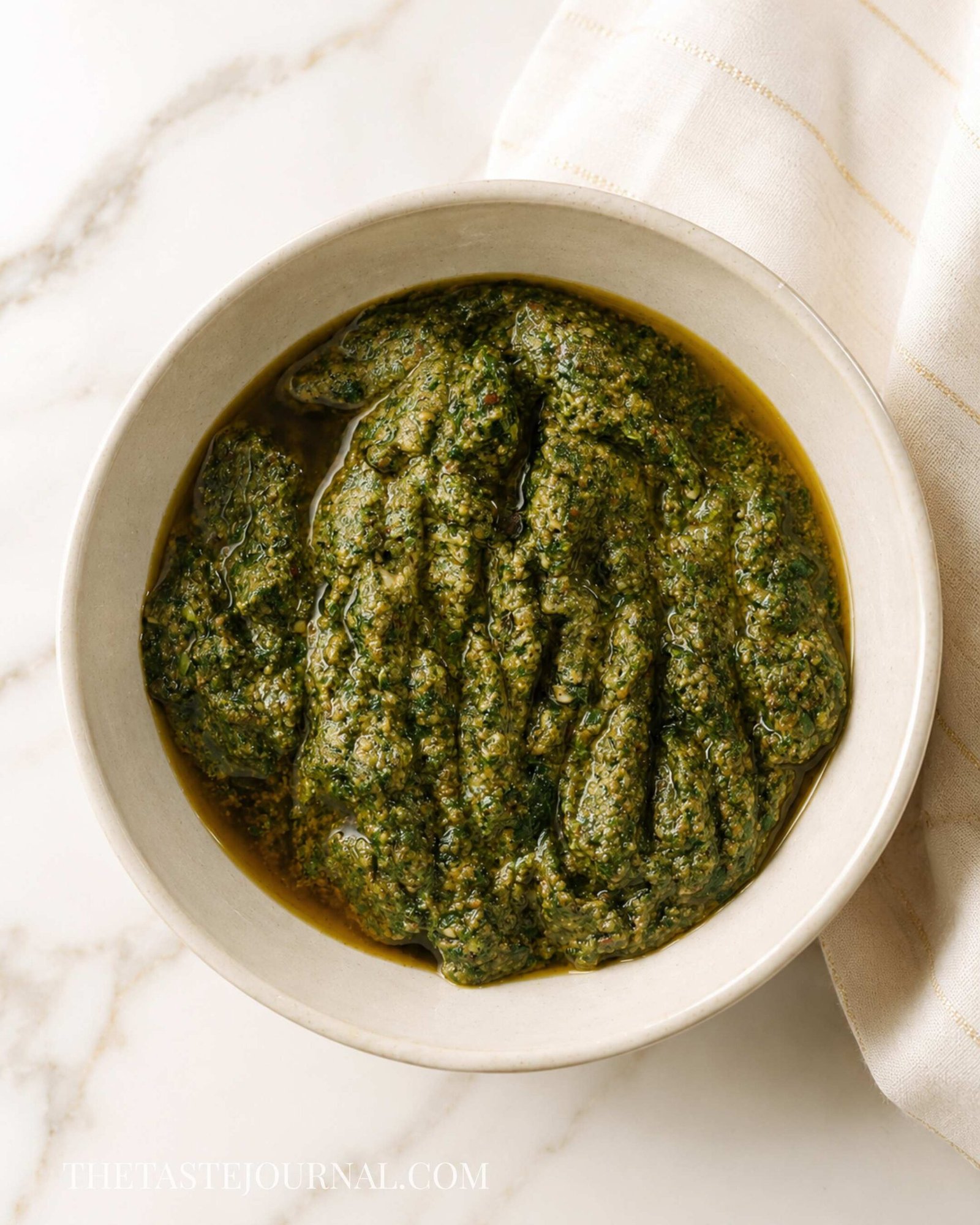
Thai Basil Pesto, this unusual recipe features licorice flavoured herbs along with nuts and parmesan cheese to create a unique type of pesto that is unlike anything you have had before. Thai basil, a herb that flourishes in Thailand, is readily available in many Asian supermarkets.
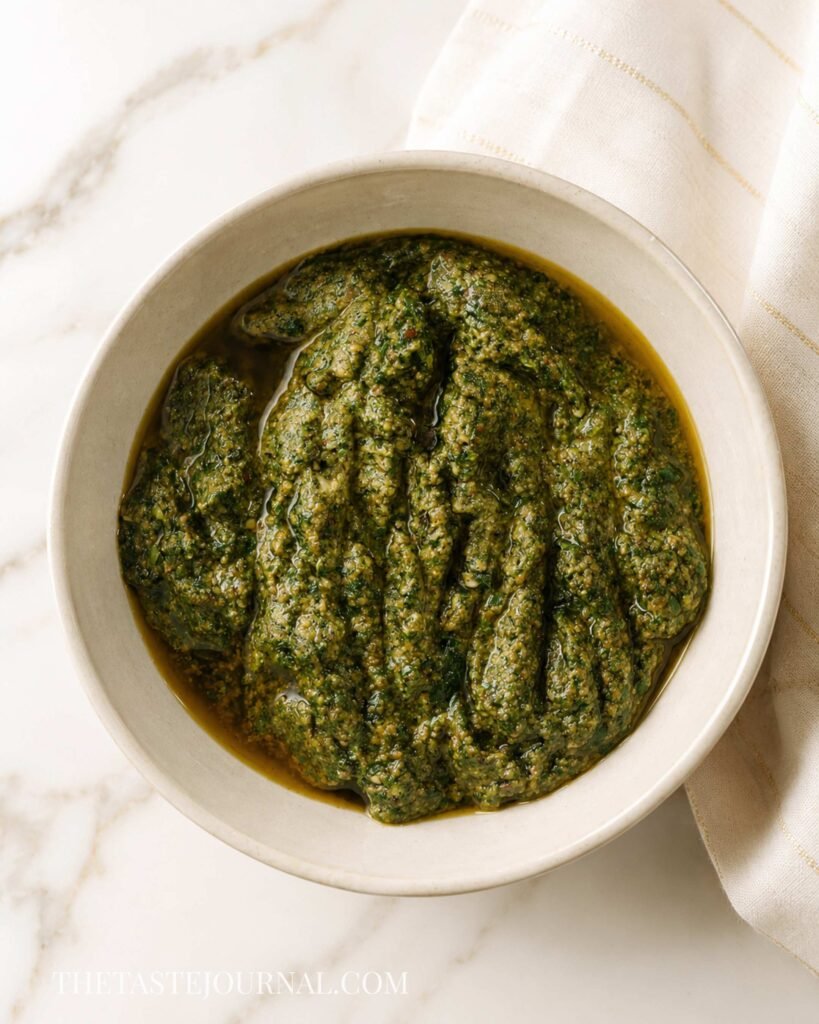
The appeal of this Thai basil pesto lies in its adaptability to various culinary applications. It pairs seamlessly with pasta, providing a fresh interpretation of Italian flavors with an Asian influence. The versatility of this pesto means that you can serve it as a marinade for grilled meats or seafood. It can also be utilized as a spread for Asian-inspired sandwiches or to enhance wraps, as well as a drizzling sauce for pizza, thereby elevating the overall flavor profile of the dish.
Ingredients
Almonds, pecan nuts or walnuts, grape seed oil, chili flakes, butter, grated parmesan cheese, rice vinegar, oyster sauce, sugar, and salt.
In terms of cheese, Parmesan has been chosen to impart a robust cheesy flavor; however, alternatives such as Pecorino Romano, Grana Padano, or Asiago may also be utilized. Numerous varieties of cheese, characterized by strong and sharp tastes, are available for selection. The addition of rice vinegar serves to counterbalance the richness of the other components, enhancing the overall harmony of the pesto. Finally, while oyster sauce represents an unconventional choice, it provides a distinct umami flavor. Should Thai basil be unavailable, one may substitute it with regular basil or other preferred herbs, including parsley, coriander, Italian basil, or arugula.
One may consider employing a mixture of your favorite nuts for this recipe. The inclusion of garlic introduces a savory depth, while grapeseed oil acts as a neutral base, allowing the other flavors to be highlighted effectively. Chili flakes contribute a subtle warmth to the dish.
Instructions
Slice the garlic cloves and rinse the Thai basil. Pour the cooking oil in a pot and preheat it on medium-low heat. Add the sliced garlic and the chili flakes, and fry the ingredients for two minutes.
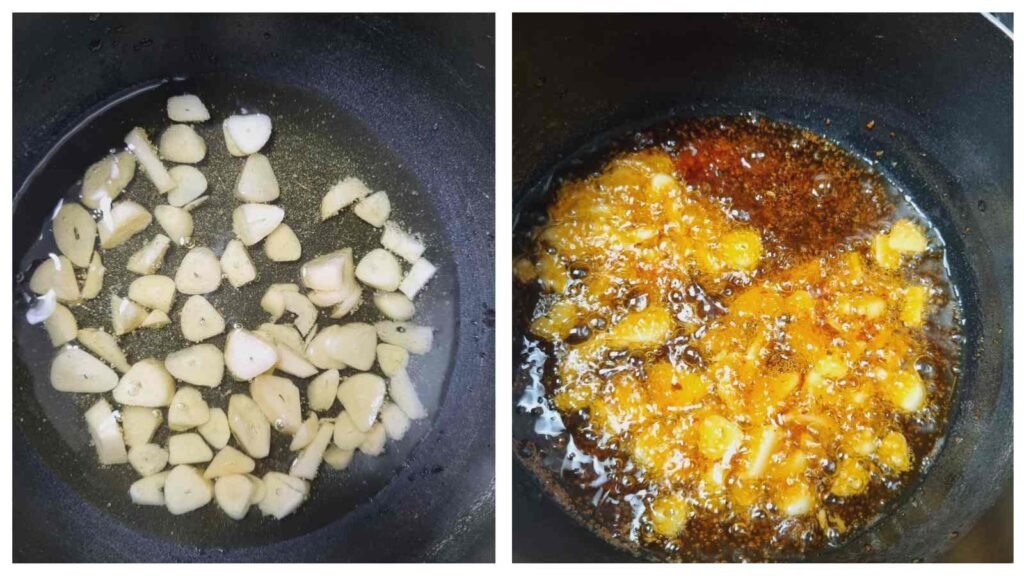
When it is done, turn off the heat or move the pot away from the heat to prevent the ingredients from burning. Remove the fried garlic and keep the chili oil aside.
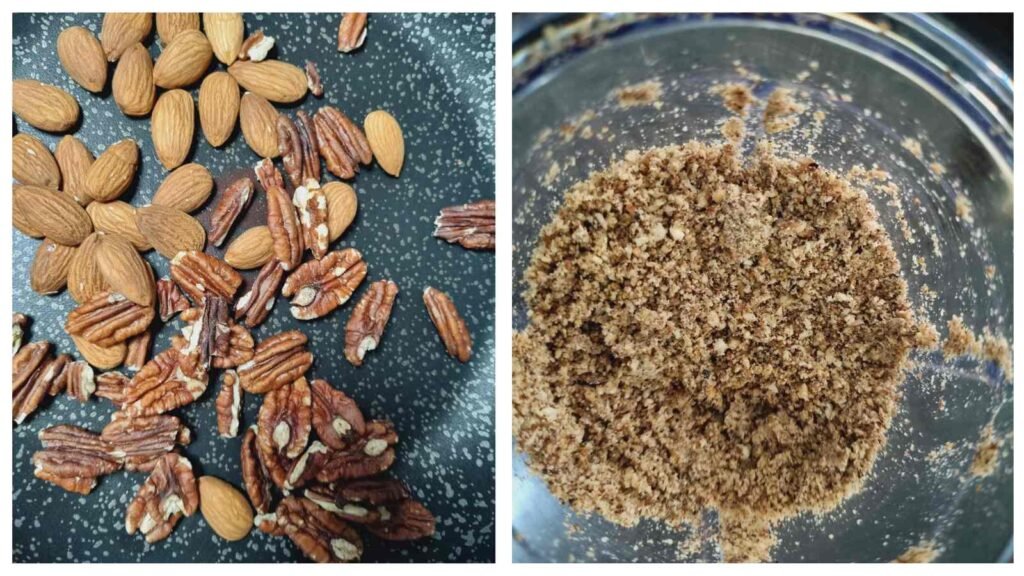
Preheat a pan on the lowest heat and add the almonds and pecan nuts. Roast the nuts for less than two minutes, moving them around while roasting. Transfer the roasted nuts to a grinder and grind them into a fine powder.
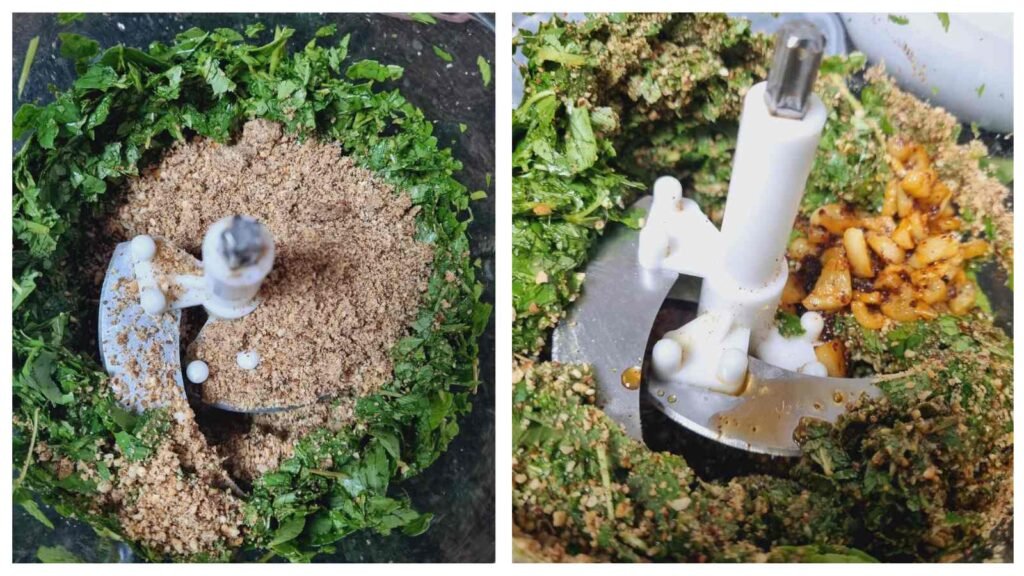
Add Thai basil and fried garlic to the grinder with nuts, then grind all the ingredients together until they become paste-like.
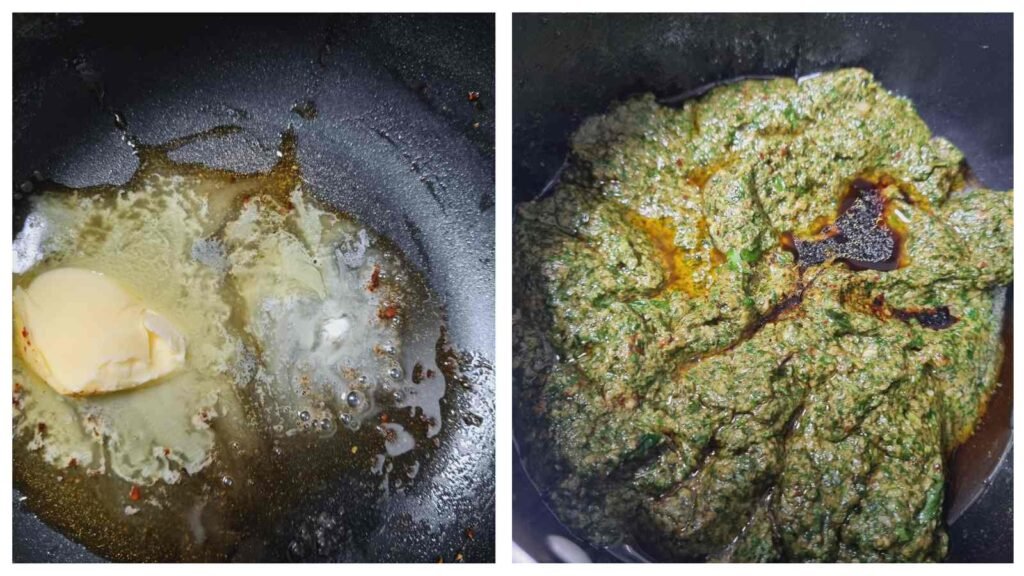
Adjust the wok containing chili oil to medium-low temperature. Then, add oyster sauce, rice vinegar, butter, sugar, and salt. Stir to mix the butter mixture, and then add the pesto. Cook the Thai basil pesto for three minutes while thoroughly mixing all the ingredients.
What to Serve with Thai basil pesto?
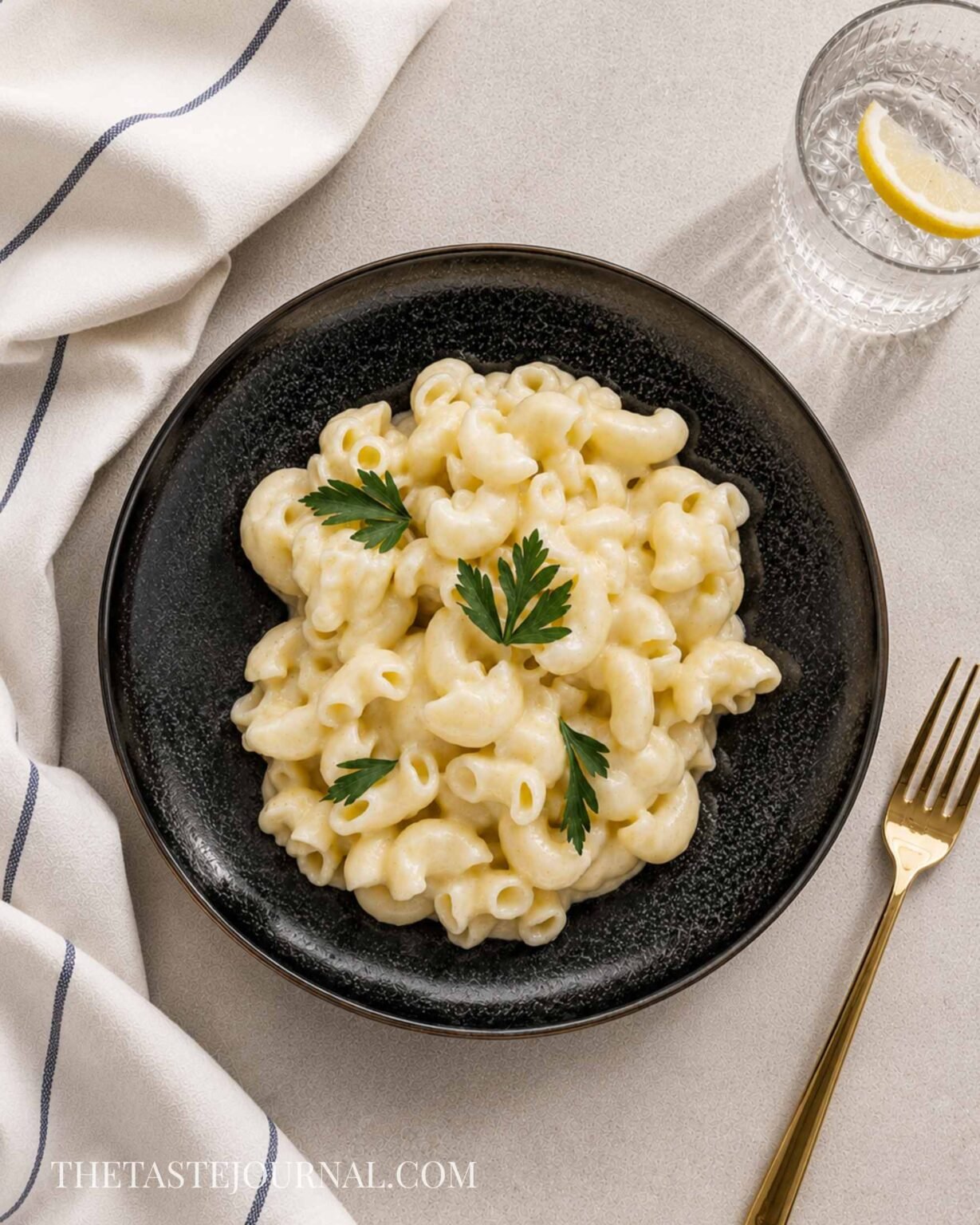
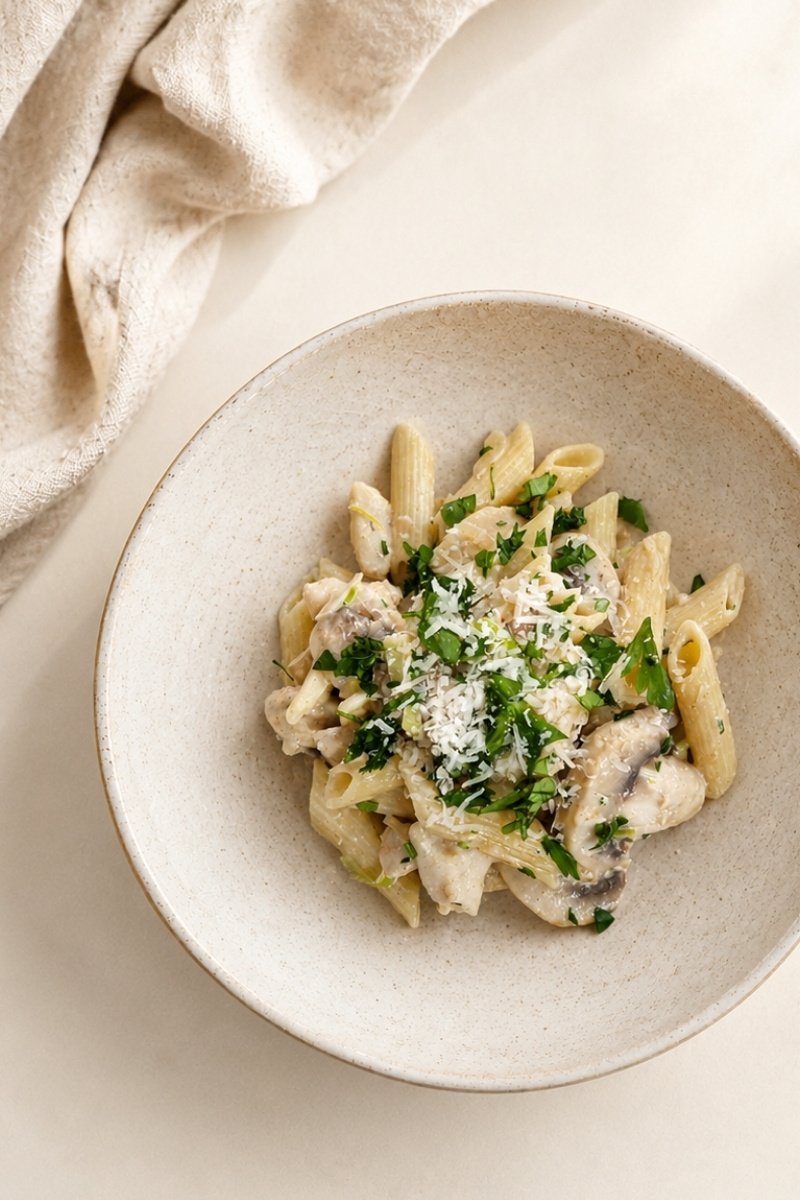
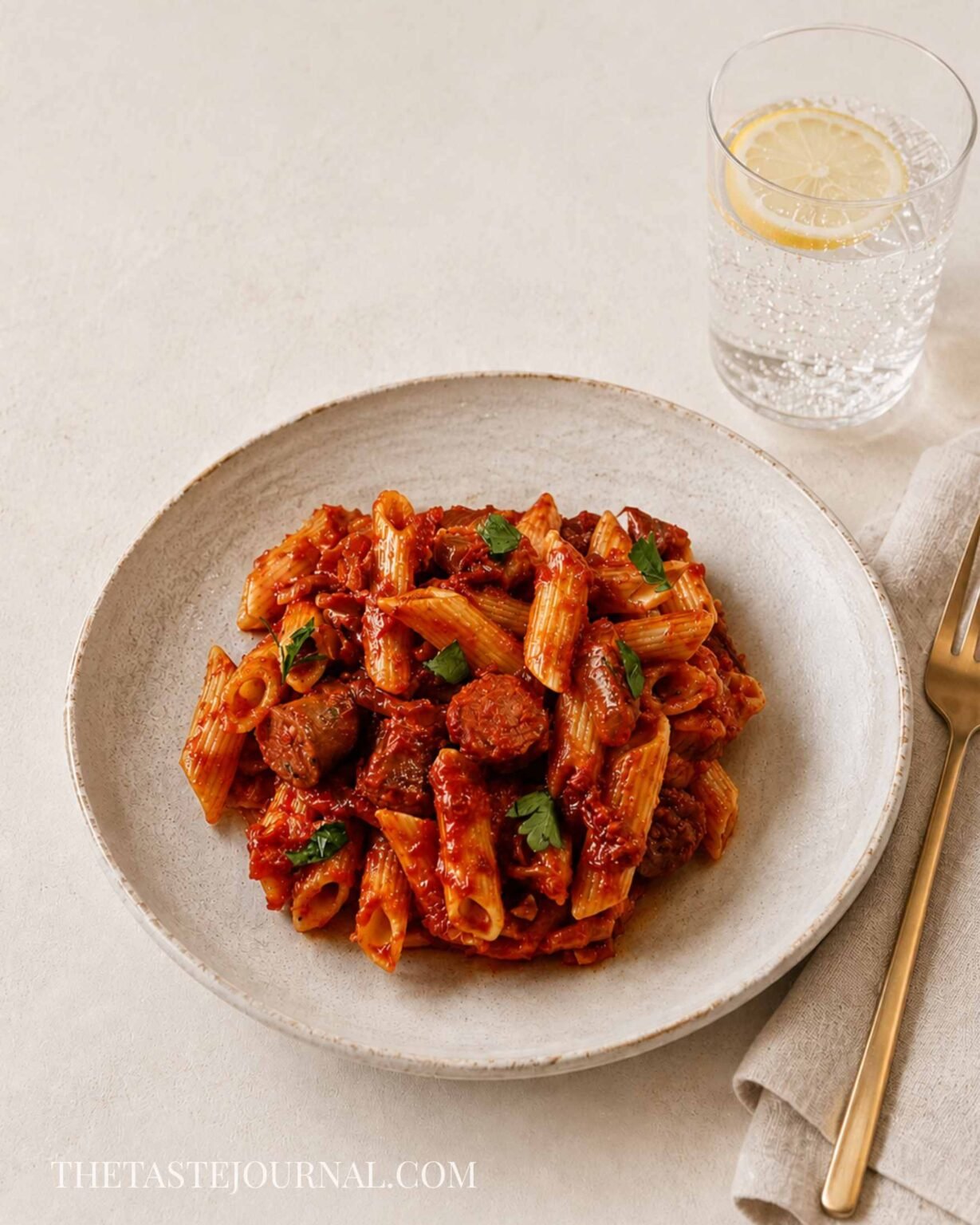
Serve Thai basil pesto with pasta. It can be penne, spaghetti, fusilli, or linguini—any pasta that you feel like. This delicious pesto can also be served as a pizza topping or as a spread in a wrap or sandwich made with grilled chicken.
How do you store and reheat Thai basil pesto?
Storing Thai basil pesto is simple. Use a clean spoon to transfer it into an airtight container and keep it in the fridge for up to 5 days. To prevent browning, add a thin layer of grapeseed oil on top. For long-term storage, freeze the pesto in an ice cube tray or silicone mold, where it can last up to three months. To reheat, thaw it first if frozen, then warm it in a saucepan over medium-low heat for 3 to 4 minutes, or mix thawed pesto with pasta on the stovetop or in the microwave.
Ingredients
Grinding
- 200 grams Thai basil
- 100 grams Nut mix (Almond, pecan nuts) – roasted
- 8 Garlic cloves – sliced
- 100 ml Grapeseed oil
- 1 tsp Chili flakes
Cooking
- 1 Tbsp Butter
- 200 grams Parmesan cheese – grated
- 2 Tbsp Rice vinegar
- ½ tsp Salt
- ½ tsp Sugar
- 1 Tbsp Oyster sauce
Instructions
- Saute: Slice the garlic cloves and rinse the Thai basil. Heat cooking oil in a wok over medium-low heat, then add the sliced garlic and chili flakes, frying for two minutes. Remove the garlic and set aside the chili oil.
- Roast the nuts: In a separate pan, roast almonds and pecan nuts over low heat for under two minutes, then grind into a fine powder. Add the Thai basil and fried garlic to the grinder, blending until a paste forms.
- Add the condiments: Return the chili oil to medium-low heat and mix in oyster sauce, rice vinegar, butter, sugar, and salt. Stir until combined, then add the pesto, cooking for three minutes while mixing thoroughly.
Notes
This recipe yields 360 grams of pesto.
Nutrition
Calories: 295kcal | Carbohydrates: 6g | Protein: 14g | Fat: 24g | Saturated Fat: 7g | Polyunsaturated Fat: 11g | Monounsaturated Fat: 5g | Trans Fat: 0.01g | Cholesterol: 23mg | Sodium: 670mg | Potassium: 160mg | Fiber: 1g | Sugar: 2g | Vitamin A: 2118IU | Vitamin C: 7mg | Calcium: 469mg | Iron: 2mg
Did you make this recipe?Pin to Save this Recipe