Newsletter Subscribe
Enter your email address below and subscribe to our newsletter
Enter your email address below and subscribe to our newsletter
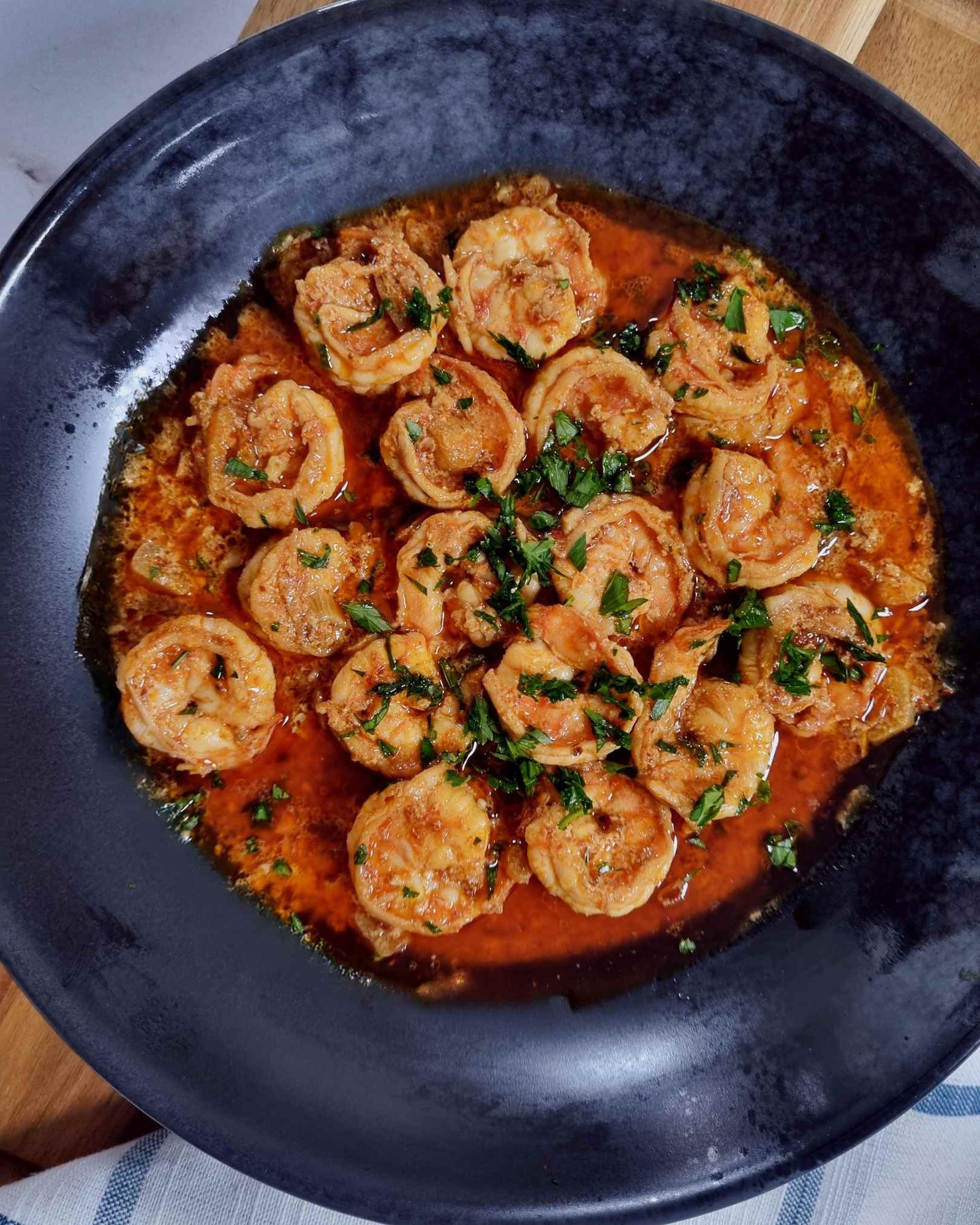
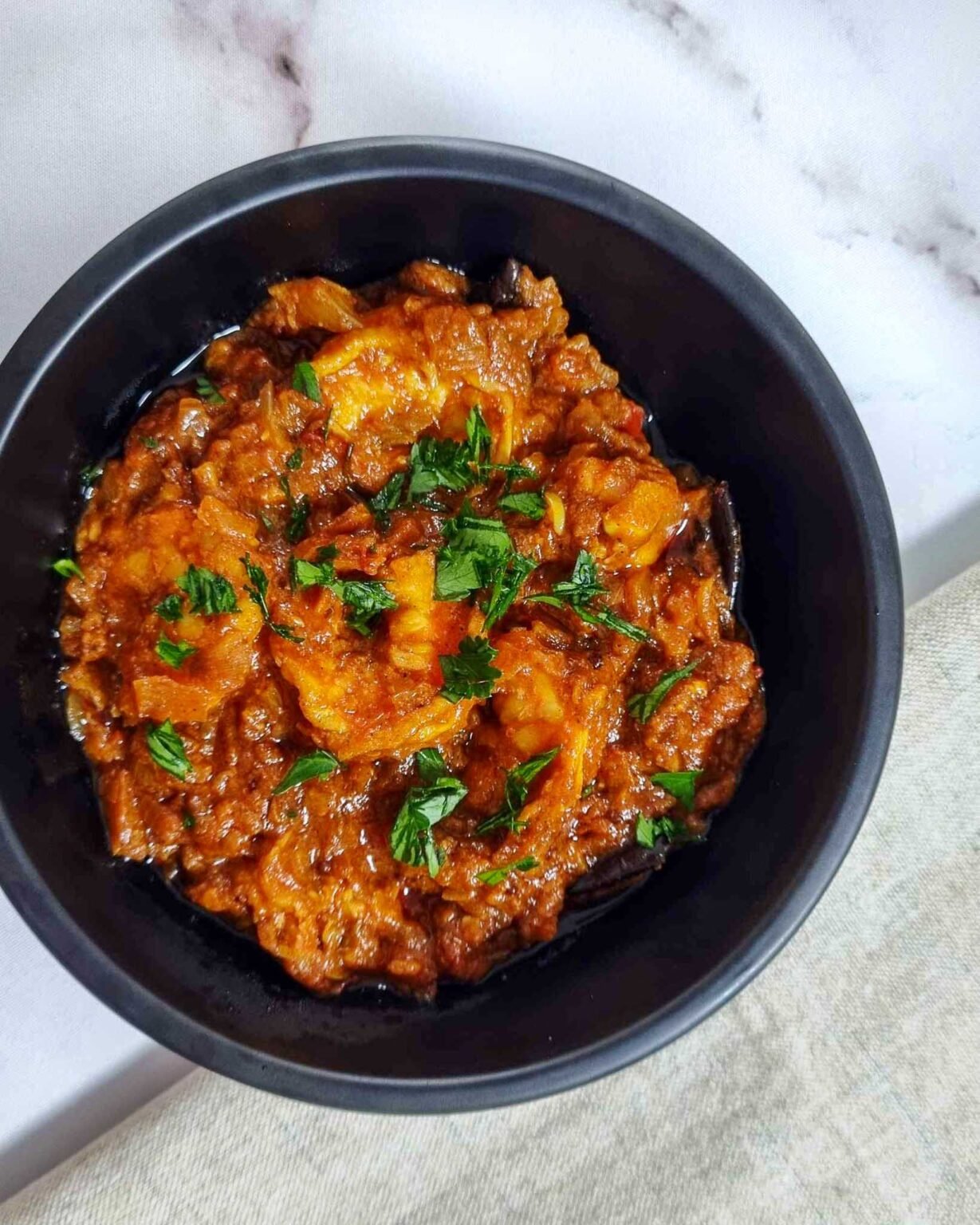
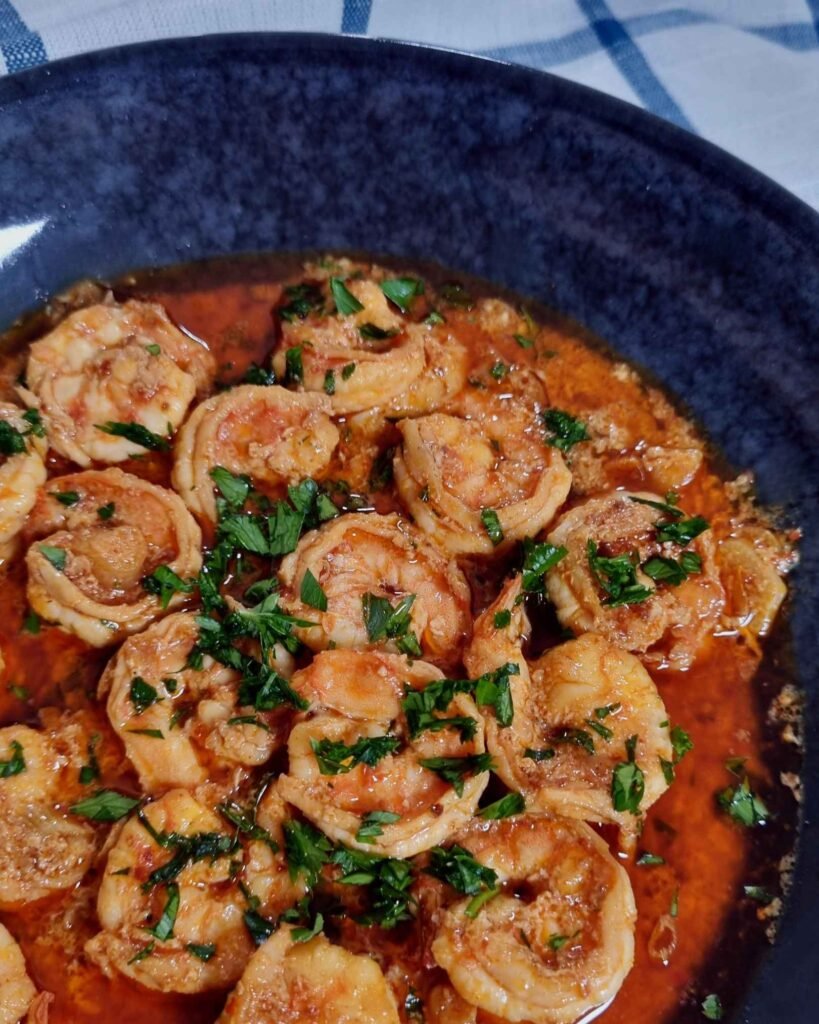
Gambas al ajillo is an iconic Spanish dish that features fresh shrimp cooked in olive oil and generously seasoned with garlic, capturing the culinary decadence of Spanish cuisine. Gambas al ajillo translates to “garlic shrimp”; this dish originated in Andalusia, a region in southern Spain.
The Spanish people believe that the dish has its roots in Moorish culture. The Moors came from Northern Africa to the Iberian Peninsula during the 8th century and settled in Spain and Portugal until the 15th century. When the Moors arrived, they brought a unique array of spices, including cumin, cinnamon, coriander, and saffron.
They employed a distinct set of cooking techniques, including grilling, stewing, and marinating. These skills impressed the people of the Mediterranean, and as a result, they were adopted by the Spanish & Portuguese locals.
Shrimps, Garlic cloves, Parsley, Chili flakes, Olive oil, Salt, White pepper or Black pepper.
Traditionally, shrimp is the main ingredient in Gambas al Ajillo, a Spanish dish where “gambas” means shrimp in Spanish. However, you can also use other types of seafood, such as prawns, crab, and calamari. Garlic cloves provide flavor to the dish, while chili flakes add heat. If you prefer a milder spice level, you can substitute the chili flakes with Aleppo chili flakes or Ancho chili flakes.
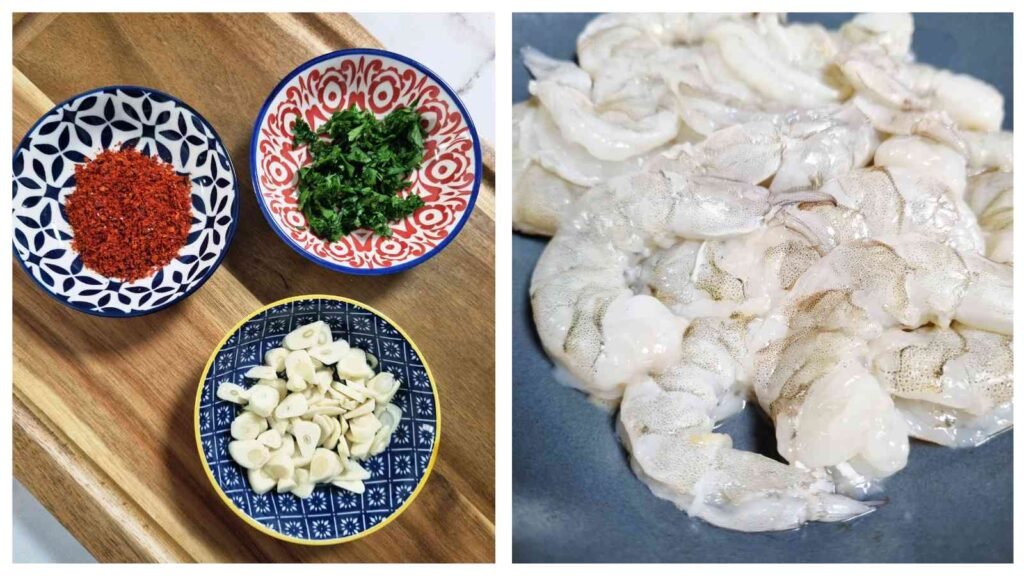
Olive oil lends this recipe a robust, fruity taste; you can substitute it with grapeseed oil, which will give the Gambas al ajillo a lighter flavor. A little sprinkle of ground white pepper or black pepper will round off the flavors. If you would like to add a richer flavor, consider adding a dollop of butter. A freshly squeezed lemon juice will bring the gambas together.
Peel and thinly slice the garlic cloves. Wash and clean the shrimps. Remove the shell and the gut along the back of the shrimp. Add olive oil to a pan on medium-low heat. Add the garlic cloves to the pan. As soon as the garlic cloves are lightly browned, add the chili flakes and mix them in. Once the oil turns bright red, add the shrimps.
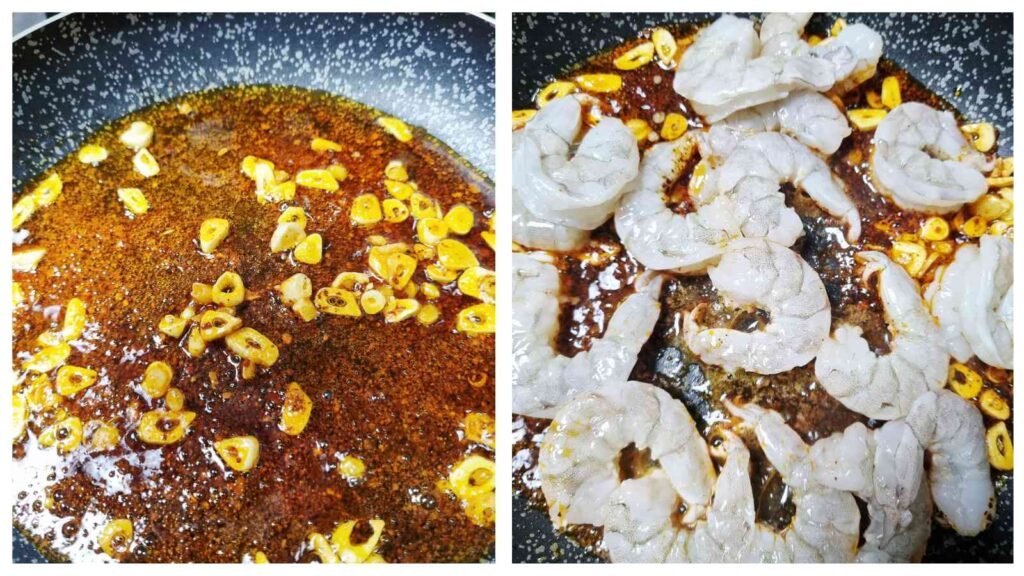
The shrimp will cook in a matter of minutes. Mix the shrimp with the oil and garlic, ensuring that the shrimp is thoroughly coated with the spicy chili oil. The shrimp will release some liquid into the chili oil.
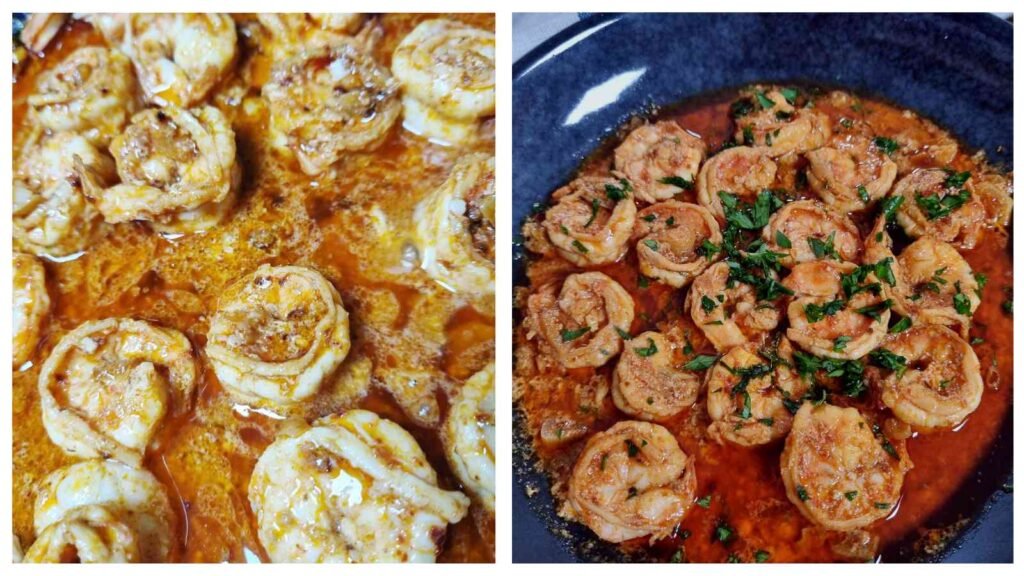
Once the shrimp has turned from translucent to white, it is cooked. Add the white pepper and paprika powder. Mix well. This entire simmering process should take less than five minutes. As the oil bubbles away, the red chili flakes and the shrimp juice will infuse into the dish, making the gravy flavourful and delicious. Garnish with chopped parsley.
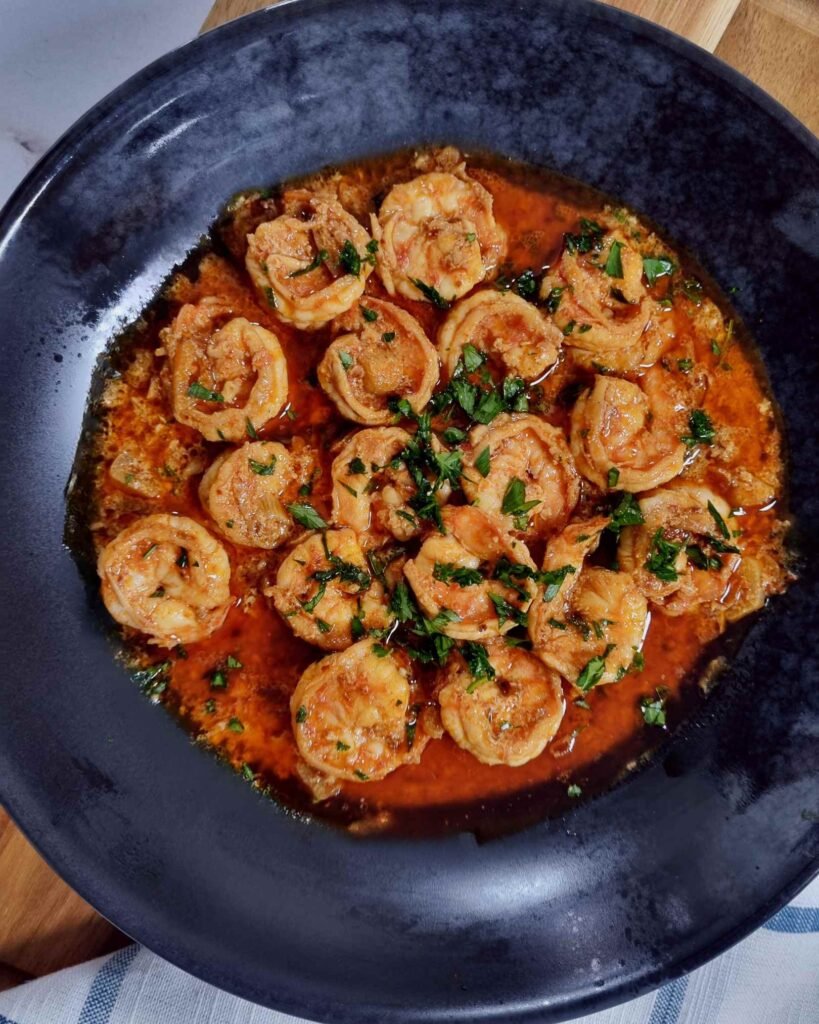
This dish is extremely popular worldwide. In fact, if you visit Spain, you will find it served in many local restaurants. The combination of tender shrimp with the savory garlic and fruity notes of the olive oil is hard to resist. This dish is considered tapas, which means it is perfect for communal dining—a significant aspect of Spanish culture. Share the Gambas al ajillo with your friends and family.
Allow the Gambas al ajillo to cool down. Store in an airtight container for two to three days. Add the oil on top of the shrimp to ensure they remain moist and soft. Reheat in a pan.
Gambas al ajillo is served with a chewy bread such as a baguette, the French loaf can be a day old or two. It doesn’t have to be fresh; in fact, the sturdier the bread, the easier it will be to soak up the chili oil. If you want a different sort of flavour, consider rustic sourdough bread, which will have a slightly yeasty flavour with hints of tanginess and saltiness. You can also use fresh dinner rolls that are generously buttered and toasted in a hot pan. Consider dolloping some tartar sauce onto the dinner rolls and then adding a spoonful of the chili oil and the shrimp on top of the dinner rolls for an unusual burst of tangy flavours. Many Spanish people enjoy Gambas with a simple green salad and other accompaniments, such as olives and patatas bravas.