Vietnamese Pho
Today, we are preparing Pho, a traditional Vietnamese dish renowned for its rich flavor and nourishing qualities. The broth, which serves as the foundation of the dish, is the focal point in any bowl of Pho. While the preparation process may require several hours, the resulting complexity of flavors justifies the time invested.
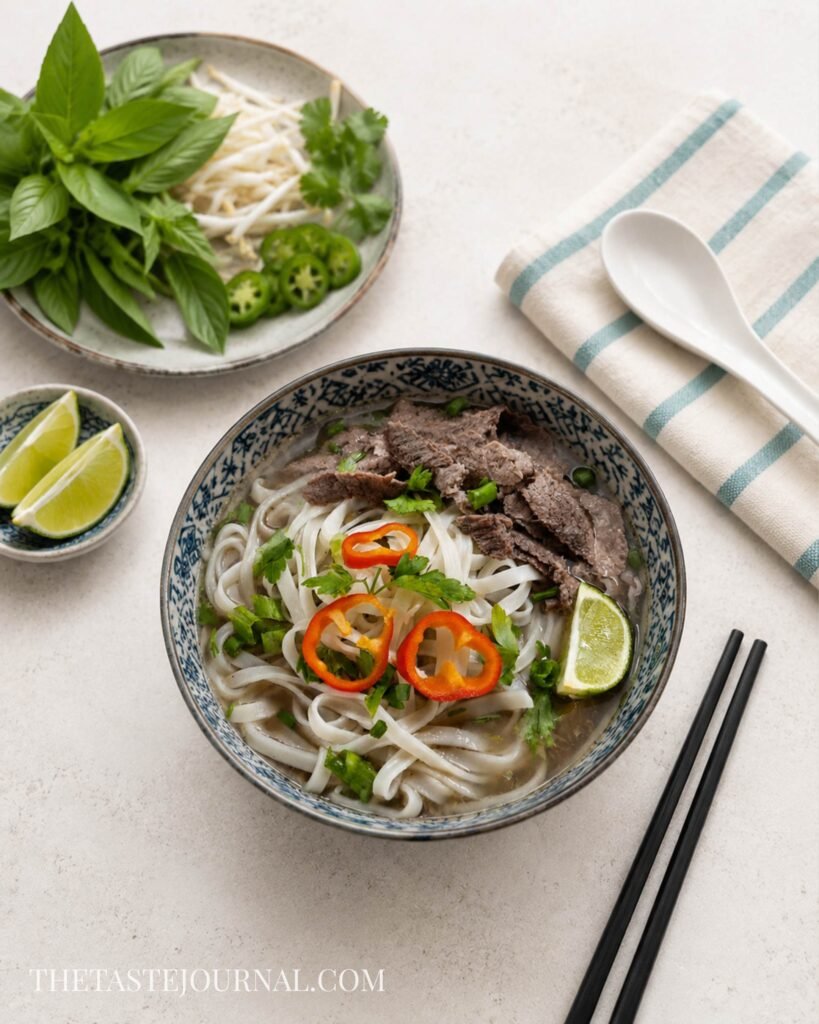
The broth is characterized by its depth and richness, crafted from beef bones and aromatic spices. In various regions of Asia, it is common to consume this dish during warmer temperatures, rendering Pho an excellent choice for hot summer days as well as cool afternoons.
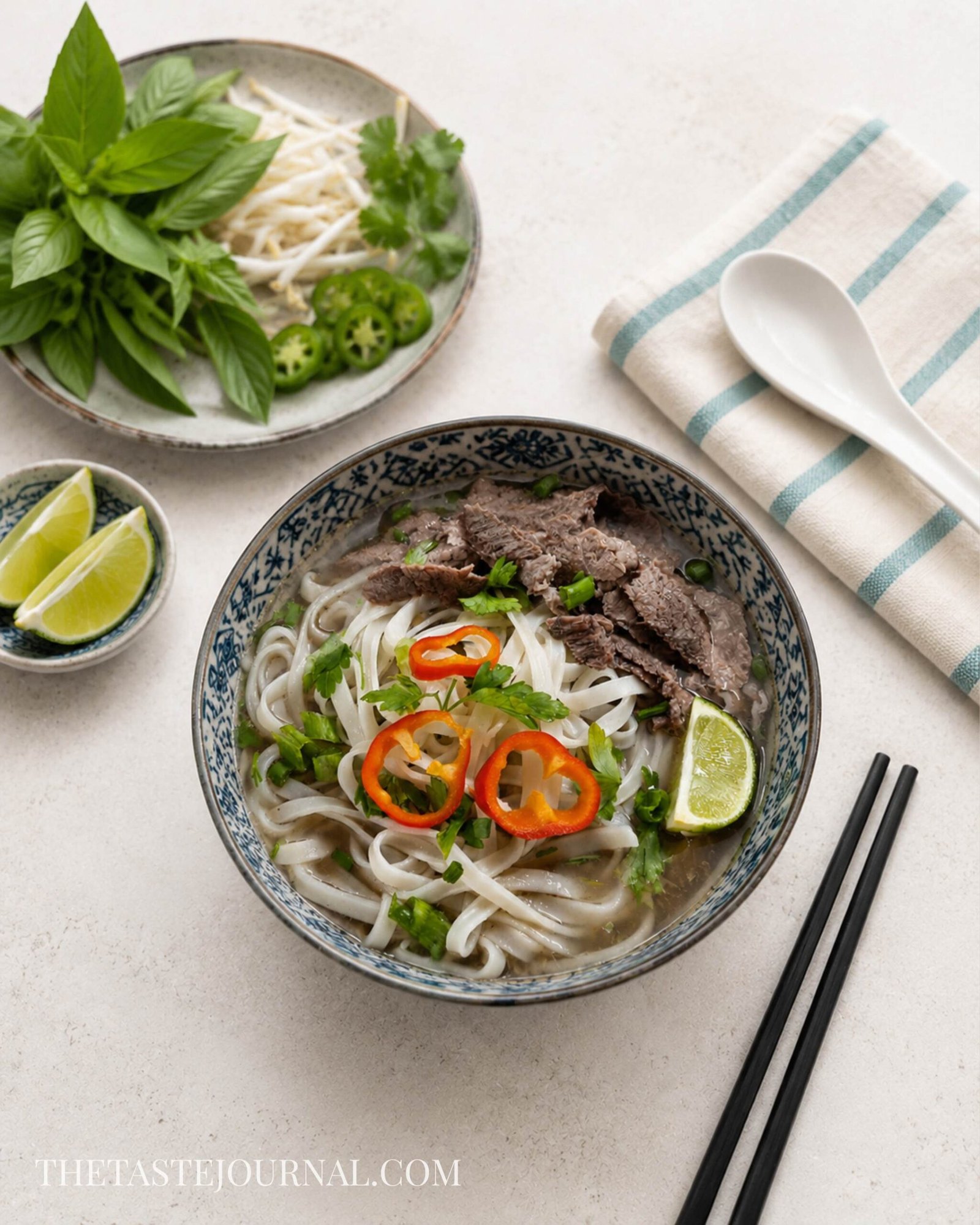
The dish incorporates flat, delicate rice noodles, which effectively absorb the rich broth. Additionally, it is enhanced by fresh herbs, the zesty acidity of lime, and the gentle heat of sliced red chilies. Each spoonful delivers a distinctive combination of flavors, contributing to an exceptional culinary experience.
Ingredients
Coriander, Cumin, Cloves, Sugar, Star Anise, Cinnamon sticks, Bay leaves, Ginger, Garlic Cloves, Fish sauce, Coriander, Red chili, Lemon, Onion, Spring-onion, Sliced beef and bone marrow.
The spices and aromatics in pho create a rich flavor profile. Coriander seeds and cumin add citrus notes, while cloves and sugar contribute sweetness. Star anise offers a distinct licorice flavor, and cinnamon sticks paired with bay leaves introduce woody sweetness. Whole cinnamon sticks are ideal for slow flavor infusion. Caramelized ginger, garlic, and onions add depth, with garlic mellowing significantly during cooking.
To make the broth, use a mix of beef bones—marrow, knuckle, oxtail, rib, and neck bones—providing collagen-rich flavor. For meat, thinly sliced options like eye of round, sirloin, and brisket add excellent texture. Choose rice noodles like Banh Pho or alternative options like mung bean noodles or vermicelli. You can also enjoy pho with white rice if preferred.
Instructions
Wash the beef bones thoroughly and rinse several times to reduce scum and impurities. Slice the steak of your choice while slightly frozen for easier cutting, and store the slices in the fridge.
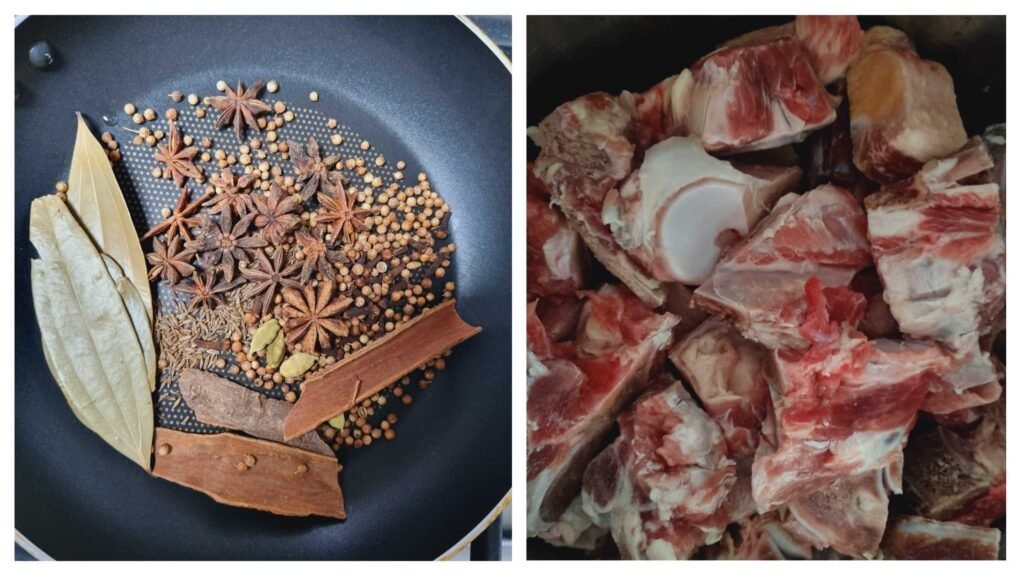
Place the meat with bones in a pot of water and cook for 180 minutes, skimming off any scum that forms. Use a ladle to remove floating oil, then add ice cubes to reduce surface fat.
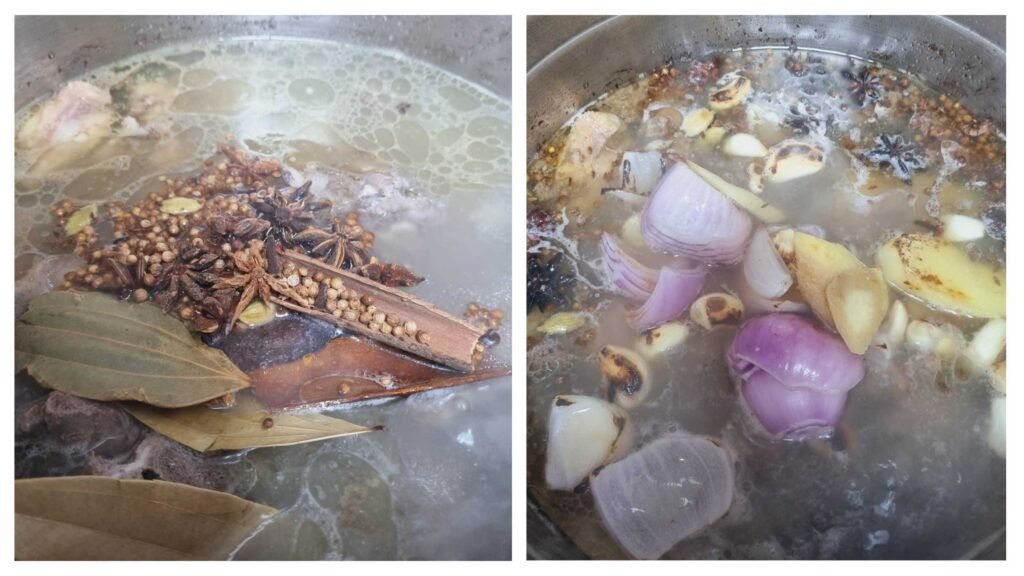
Gather coriander seeds, star anise, cardamom pods, a cinnamon stick, bay leaves, and fennel seeds. Measure 1/4 cup of fish sauce. Toast the spices in a pan for 2-3 minutes, then add them to a pot with the fish sauce. Slice an onion into quarters and peel about two bunches of garlic cloves. Char a large garlic clove in a pan over medium-high heat, stirring frequently. Add the spices to the pot.
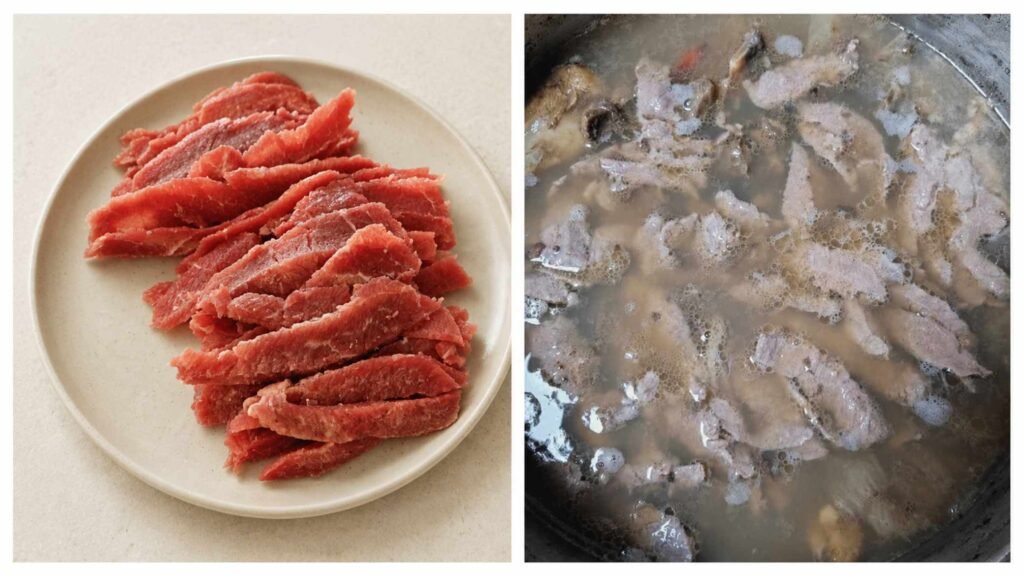
After three hours, remove the sliced steak from the fridge and add it to the pot. Slice the green onions, parsley, red chilies, and lime. Wash the mung bean sprouts. Boil water on medium-high heat and cook the rice noodles for about eight minutes. Drain and set aside.
In a bowl, add rice noodles and ladle pho broth over them. Top with sliced steak, spring onions, and red chilies, then squeeze lime over the dish. Enjoy your Vietnamese Pho, perfect for an autumn afternoon or spring evening. Pho originated in the 20th century near Hanoi.
How to Store your Vietnamese Pho?
Let your broth cool before transferring it to airtight containers. Broth can be stored for 3 to 4 days. (Freeze for longer storage) Don’t cook large batches of noodles; make them fresh to eat with your reheated broth.
What to Serve with Vietnamese pho?
We recommended Vietnamese pickles, such as Daikon in vinegar. An alternative is also Korean pickles, such as fermented Kimchi. For extra crunch, consider crispy fried onion.
Ingredients
For the Broth
- 3 tbsp Coriander Seeds
- 8 Star anise
- 2 tbsp Fennel Seeds
- 2 Cinnamon Stick
- 3 Bay Leaves
- 1 tbsp Sugar
- 17 Garlic
- 100 grams Ginger – Sliced
- 1 Onion – Sliced in half
- 3 1/2 liters Water
For Soup Base
- 2 Kilograms Beef Shanks
- 400 grams Rib eye steak (sliced thinly)
- 200 grams Rice Noodles (dry)
- 1/4 cup Fish Sauce
For the Garnish
- 100 grams Parsley leaves – Chopped
- 2 Stalks Spring Onion -Sliced
- Red Chili, (sliced)
- 3 Limes – Cut into wedges
Instructions
- Roast the spices: In a dry pan, toast coriander seeds, cumin, star anise, cinnamon stick, and cloves over medium heat until fragrant, about 2-3 minutes.
- Char the onions and whole ginger: Slice the onions in half, and peel the ginger, then char on a pan.
- The Meat and Bones: Thoroughly wash the beef bones. Add it to a pot. Add 3 1/2 litres of water. Cook for twenty minutes. Remove any scum on the top. To remove any floating fat, use a ladle with ice-cubes in it and skim the surface of the Pho to remove floating fat. Add the roasted spices, onion, sliced ginger, garlic, sugar and fish sauce. Bring to a boil on high heat, then reduce heat to medium high and let it simmer for at least three hours. Thinly slice the steak and add it to the pot in the last half hour of cooking.
- Rice noodles: Cook the rice noodles in a separate pot of boiling water for approximately eight minutes. Drain Rice noodles and set aside. Divide rice noodles, top with thin slices of beef. Ladle the Pho broth over noodles. Garnish with parsley leaves and red chili. Squeeze fresh lime juice on top and enjoy!
Nutrition
Calories: 509kcal | Carbohydrates: 28g | Protein: 70g | Fat: 14g | Saturated Fat: 4g | Polyunsaturated Fat: 1g | Monounsaturated Fat: 6g | Cholesterol: 117mg | Sodium: 1400mg | Potassium: 1740mg | Fiber: 8g | Sugar: 6g | Vitamin A: 2214IU | Vitamin C: 58mg | Calcium: 275mg | Iron: 12mg
Did you make this recipe?Pin to Save this Recipe