Newsletter Subscribe
Enter your email address below and subscribe to our newsletter
Enter your email address below and subscribe to our newsletter
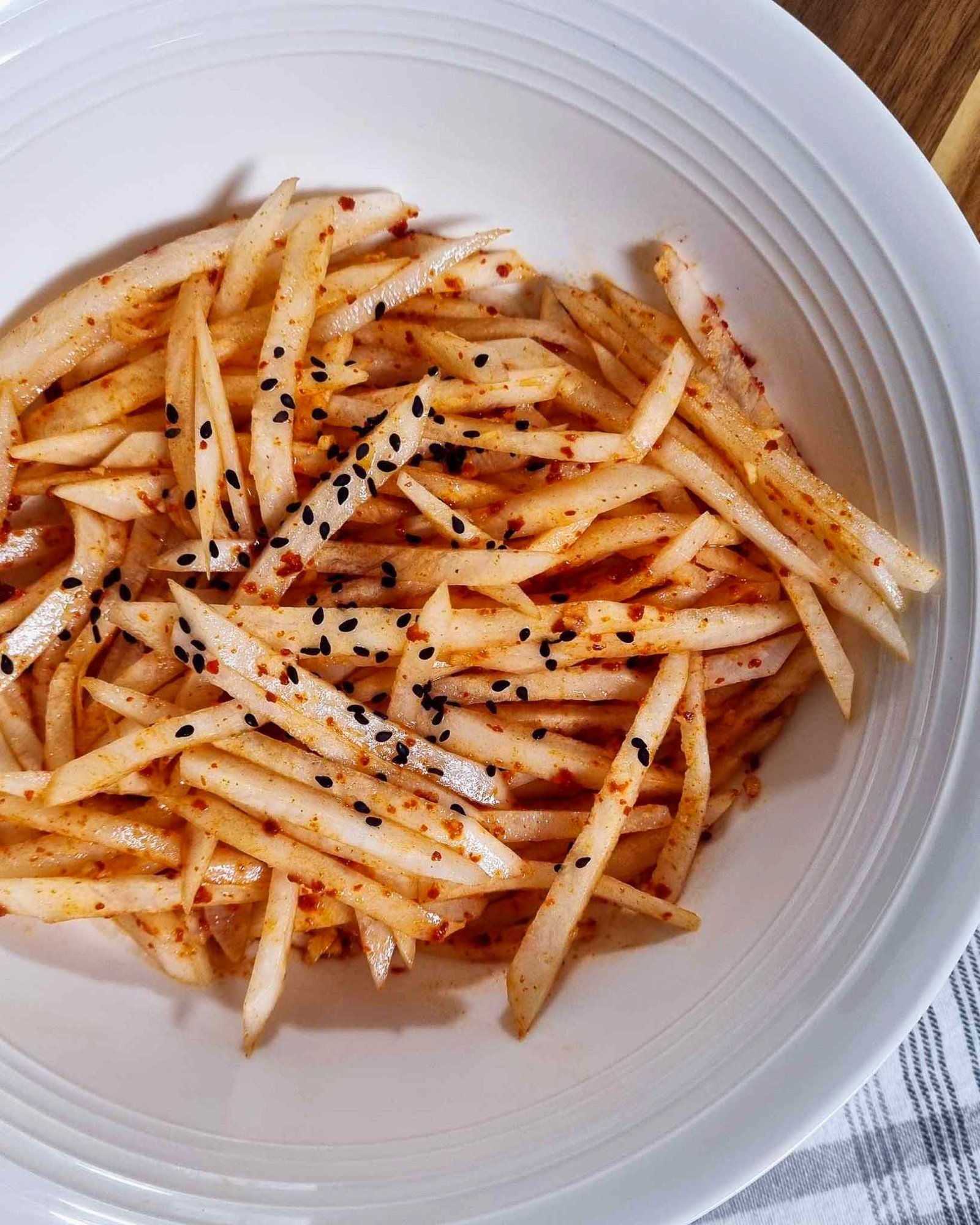
Musaengchae is a healthy banchan from South Korea. It uses gochugaru and white radish, both of which grow in East Asia. This dish uses minimal ingredients. The white radishes are julienned and mixed with garlic, ginger, and gochugaru.
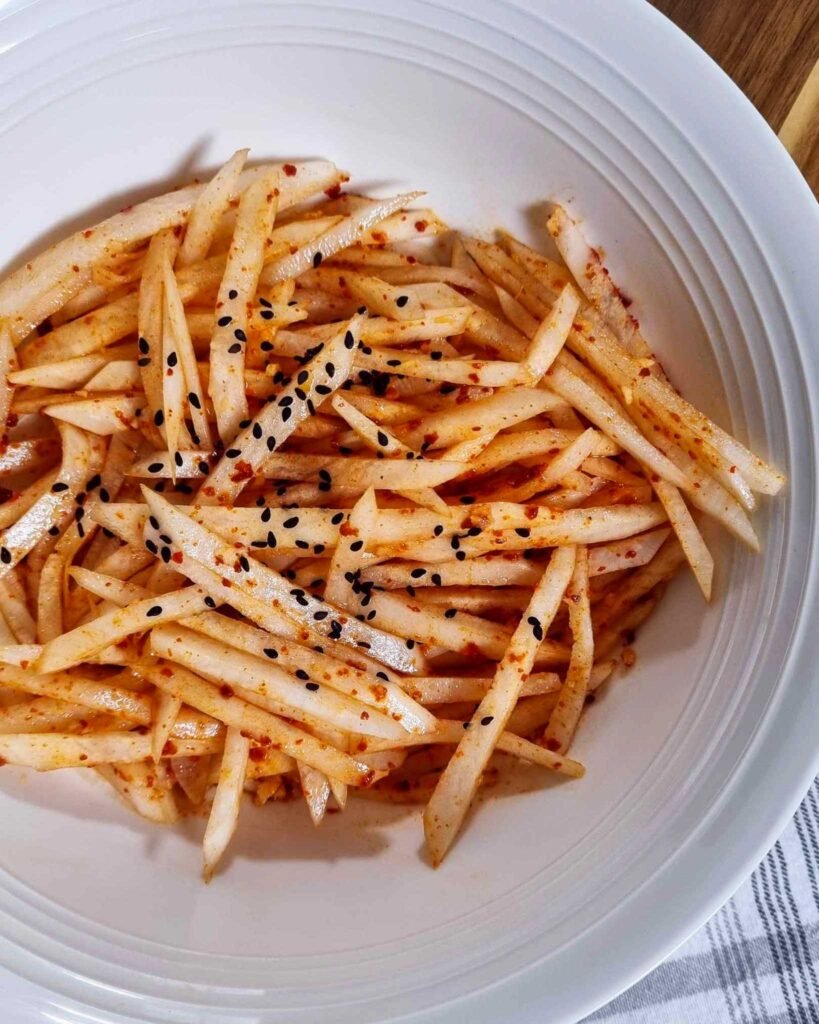
It produces a lightly spicy, tangy, crunchy side dish that pairs well with bibimbap, japchae, and meat-based dishes like bulgogi. You can increase the spiciness of this dish by adding more gochugaru. If you are making an Asian feast at home, this dish is not only aesthetically pleasing; it also has many health benefits.
One of the wonderful aspects of white radish is that it has many health benefits; Koreans eat it to aid digestion after eating dishes with high levels of heavy meals. What sort of dishes are high in heavy metals? If you are thinking tuna, then you are correct. However, other large fish, such as King Mackerel, Swordfish, Tilefish, and Marlin, are also high in heavy metals.
Leafy greens and some root vegetables also contain high levels of heavy metals, such as lettuce and spinach, carrots, and sweet potatoes. White radish is high in fibre, minerals, and vitamins. The Musaengchae dish is a crunchy, easy-to-make recipe that is ready within minutes. If you are looking to add more white radish to your regular diet, consider making the Korean beef soup called Kkori Gomtang.
This dish is quite popular in Korean history; it originated during the Joseon Dynasty. Traditionally, it is enjoyed during festive occasions and banquets. During the Joseon dynasty, Musaengchae was introduced as a means to combine Confucian ideals with healthy eating, leading to recipes that focused on a balanced diet.
White Radish, Garlic, Ginger, Gochugaru, Fish sauce, Rice vinegar, Sesame seed oil, Salt, Sugar, Black Sesame seeds.
White radish, also known as daikon, is a versatile and nutritious root vegetable widely used in Asian cuisine, particularly in Korean, Japanese, and Chinese dishes. It has a mild taste with a slightly peppery kick, making it an excellent addition to salads, pickles, and various cooked dishes.
When choosing radishes, check for firmness. Avoid any soft or mushy radishes. Check that the skin is smooth and free of cracks. It should have an even colour. Smaller radishes are sweeter, whilst larger radishes have a subtle flavour. The heavier the radish, the better the quality and moisture levels.
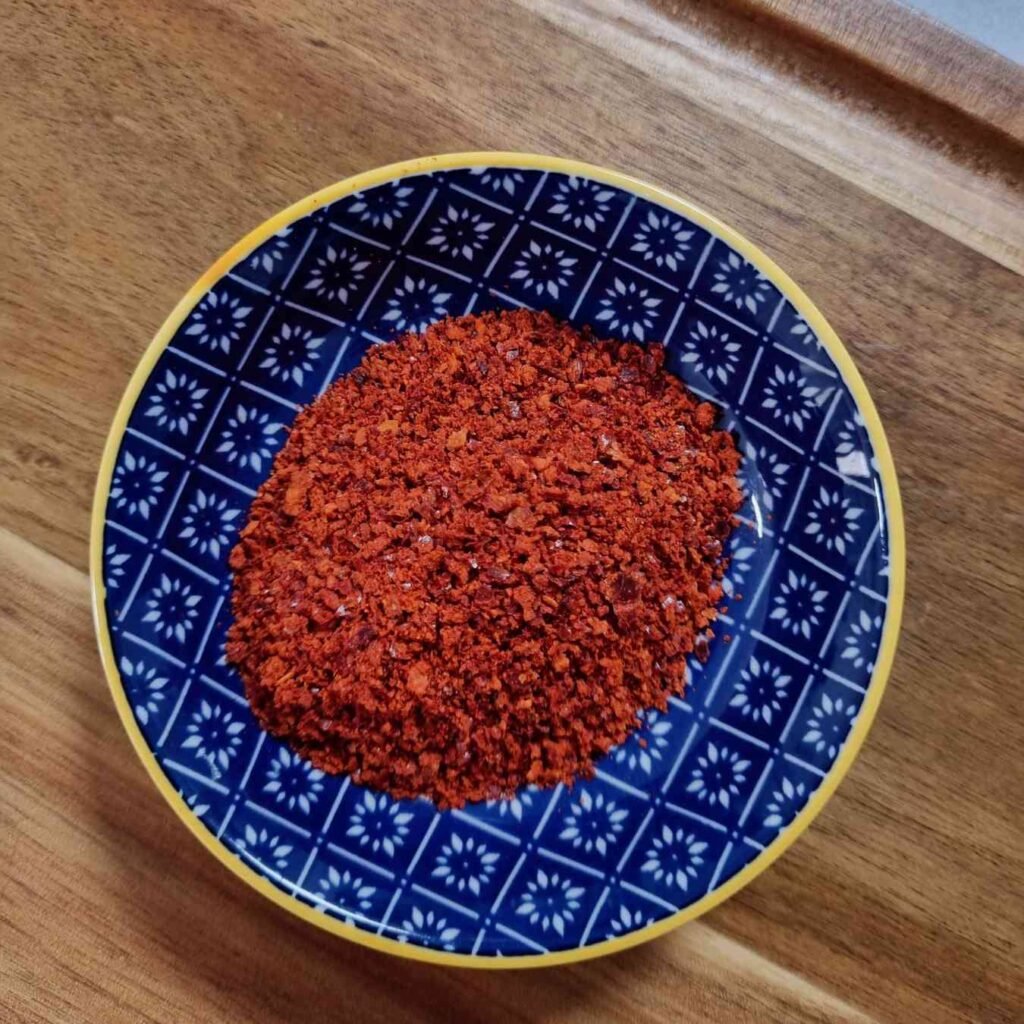
Gochugaru is a korean red pepper flake, it is a key ingredient in Korean cuisine. It is made from sun-dried, ground red pepper. It has a vibrant red colour and a touch of heat with subtle sweetness. It is used in many different Korean dishes such as kimchi and various stews.
Can you use regular chili flakes? It depends on the level of heat that you can handle, Korean gochugaru has a fruity taste, this dish is not meant to be overwhelmingly spicy. However, if you enjoy spicy dishes, you can use regular red chili flakes and add a bit more sugar to off-set the heat. Fish sauce, rice vinegar and sesame seed oil add flavour. You can purchase all of these ingredients online or at the Korean supermarket.
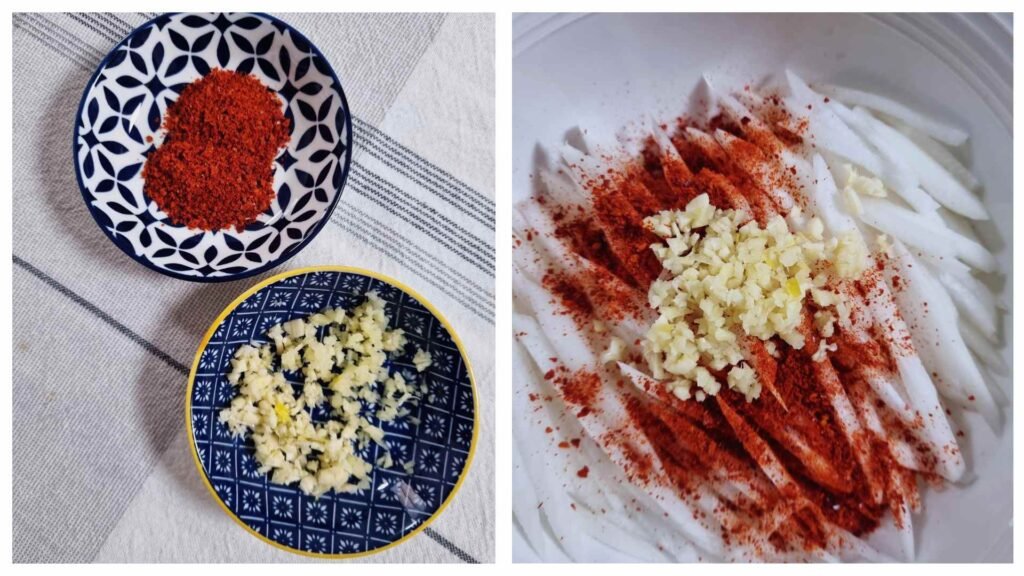
Rinse radish and the peel it, thereafter julienne it into 2-inch lengths. Peel the garlic and ginger, and finely mince them. Prepare a mixing bowl and transfer the white radish to it. Also, add the minced garlic and ginger, gochugaru (Korean chili flakes), fish sauce, rice vinegar, salt, sugar, sesame seed oil, and black sesame seeds.
Use a spoon or your hand, wearing a glove, to toss the musaengchae. Evenly coat the radish with all the ingredients. Garnish with extra sesame seeds and scallions. Serve immediately and enjoy.
Musaengchae (무생채) is a Korean side dish made from white radish, seasoned with various seasonings and sauces, and is tangy, spicy, crunchy, and refreshing. Due to its texture and flavour, it is often enjoyed with bulgogi, a savoury, slightly sweet dish. Musaengchae pairs well with japchae & bibimbap, adding texture and refreshing taste to the dish. Some restaurants serve radish with cold noodles or black noodles to add a crunchy texture and tangy flavour to the dish.
Storing musaengchae is as simple as making it. Simply add the radish to an airtight container and store it in the fridge. It lasts up to five days. Refrigerate the leftovers as soon as possible to keep the radish fresh. When serving refrigerated musaengchae, it is best to serve it while it is still cool. Freezing musaengchae is not recommended.