Newsletter Subscribe
Enter your email address below and subscribe to our newsletter
Enter your email address below and subscribe to our newsletter
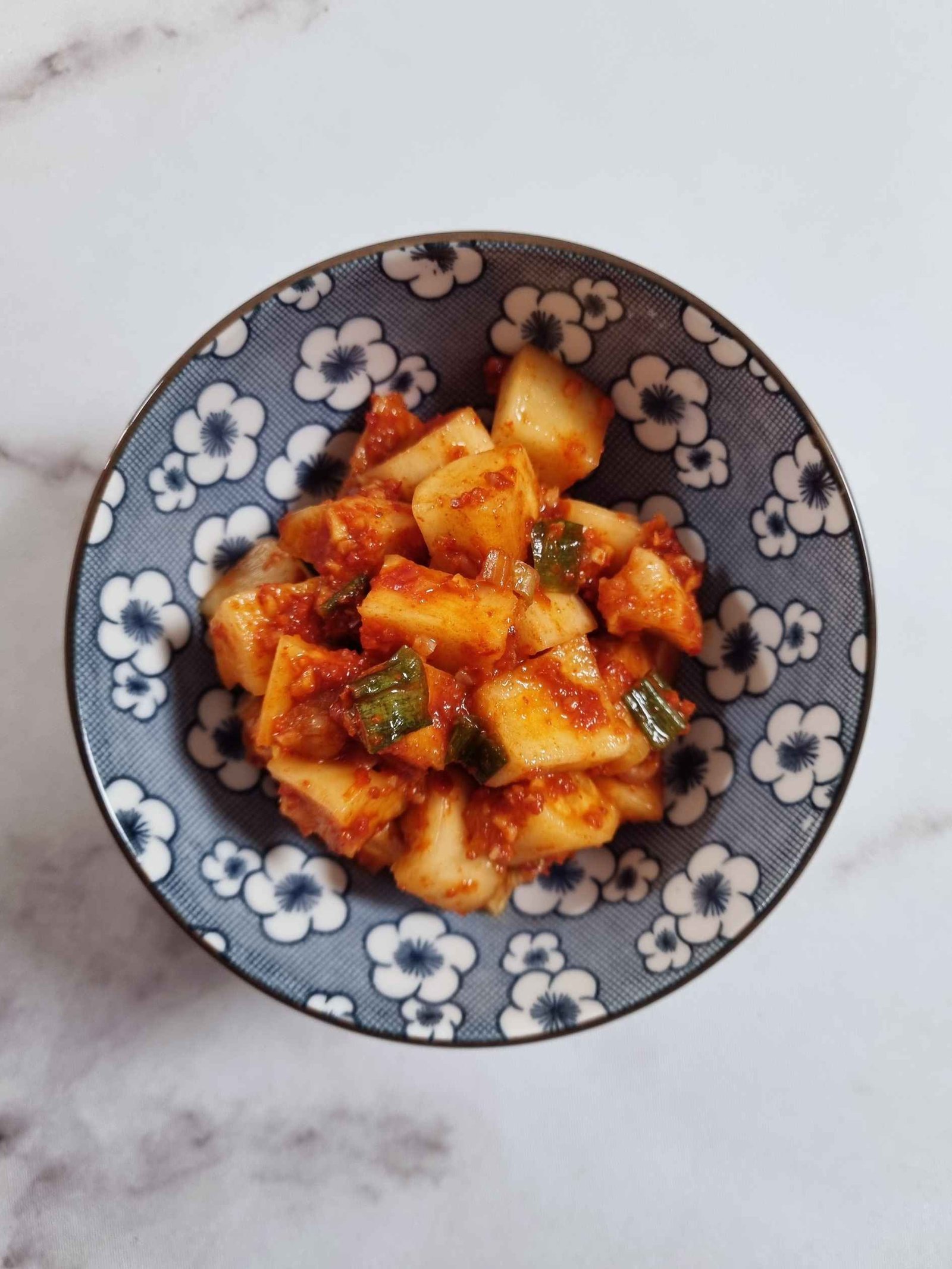
Kkakdugi is a type of kimchi that is made with Daikon radish, also known as white radish. In Korea, these bright, crimson cubes of fermented radish have a refreshing, sharp crunch that cuts through rich broths. Most Koreans believe that no bowl of Soup is complete without kkakdugi.
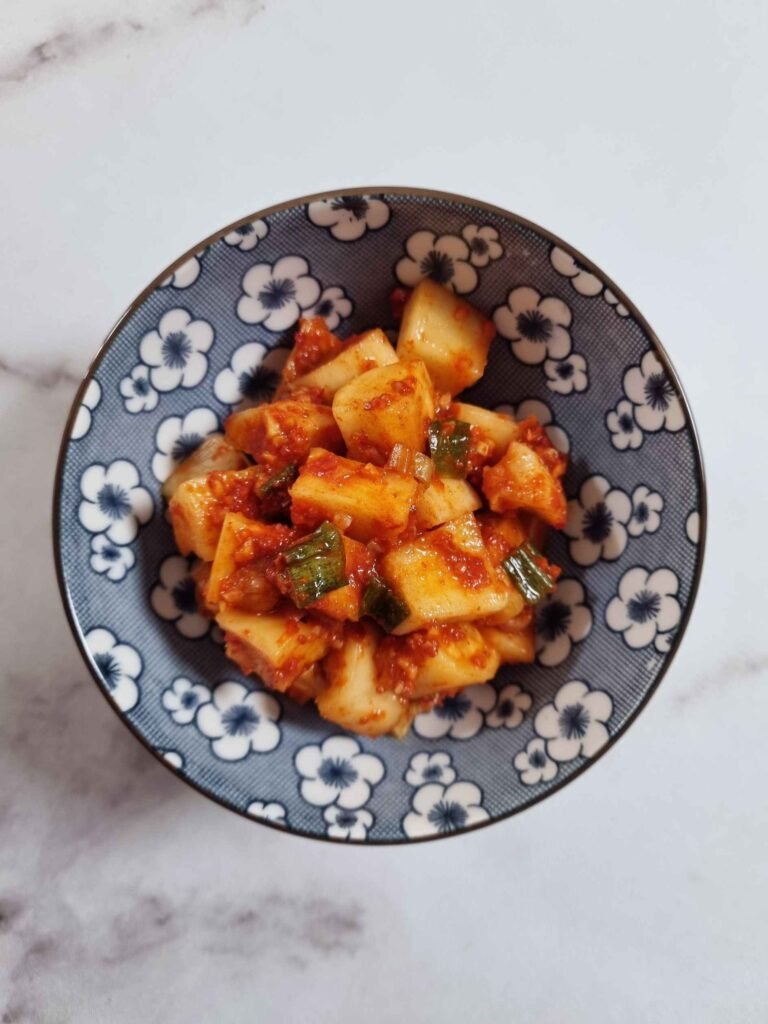
Many supermarkets stock and sell daikon radish. White radish is a firm, stout root vegetable with a subtle sweetness, and with the right spices, the flavours are amplified during fermentation. Kkakdugi is considered a probiotic powerhouse. It offers powerful protection for the gut and the immune system.
Kkakdugi originated during the Joseon dynasty in the late 18th century. According to royal records, the dish was invented by Princess Sukseon, the daughter of King Jeongjo, who was deeply impressed by the texture and flavour of the seasoned radish cubes. It eventually spread from the royal palace to the homes of the Yangban (aristocracy) and finally to the commoners.
Gochugaru, Fish sauce, Ginger and Garlic, Green Onions, Salt, Sugar.
Gochugaru is a Korean red chili powder. It is made with sun-dried red chili peppers. It has a distinct flavour that is mildly sweet to moderately spicy. Fish sauce is a fermented condiment made from salted fish and is a staple in many Southeast Asian cuisines. It has a rich aroma that elevates the taste of many dishes.
Ginger and garlic are essential ingredients in many dishes from cultures around the world. In this recipe, the ginger adds a warm, spicy flavour with a hint of sweetness. Whilst garlic is famous for its pungent flavour. Green onions offer a mild flavour to the radish kimchi.
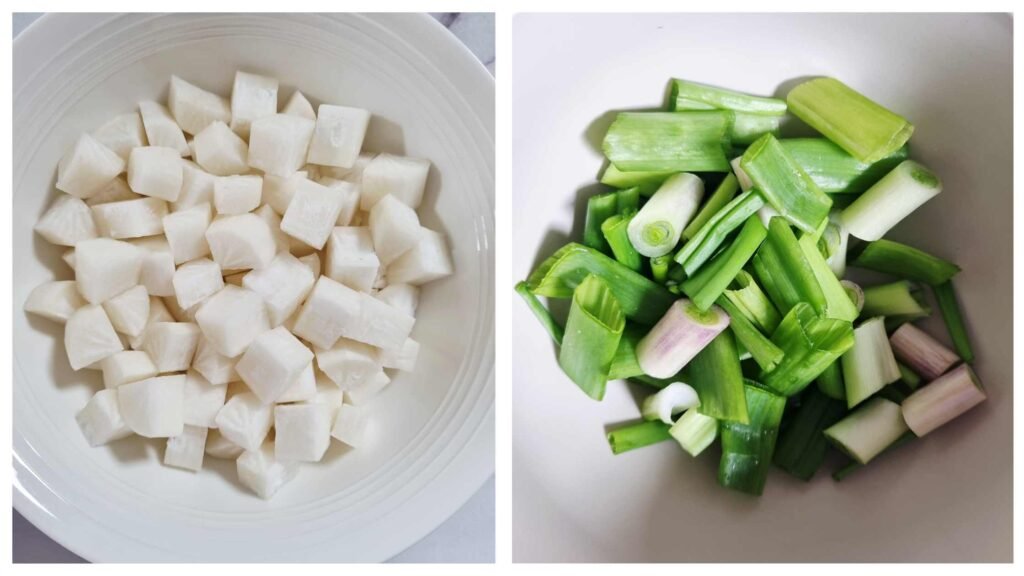
Wash the daikon radish and peel it with a potato peeler. Cut the radish into three sections: first, cut vertically; then cut each section into cubes. Wash the spring onion and slice it. Add the radishes to a bowl and sprinkle salt. Let it rest for 20 to 40 minutes to release moisture.
Reserve 2 tablespoons of the liquid, then drain the rest. The next step is to make the paste. Add the condiments to a bowl, such as gochugaru, ginger and garlic paste, soy sauce, and fish sauce. Mix with a spoon until the ingredients are well-combined.
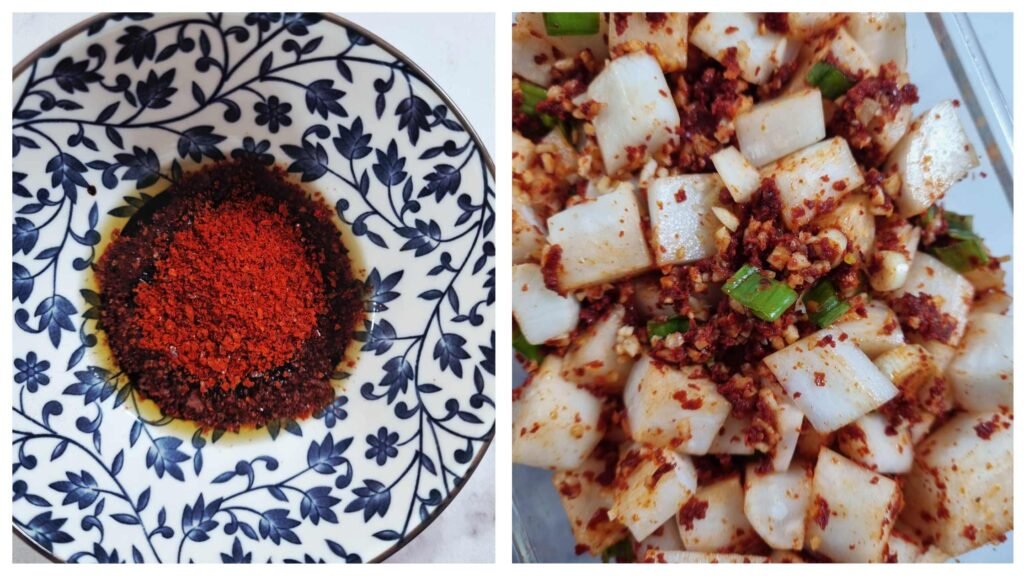
Add the paste to the bowl of radish and spring onions. Coat the cubes with the hot pepper paste until the radish is evenly coated. Store the radish cubes in a glass container on the countertop for 12-48 hours in a cool place. This will jumpstart the fermentation process. Thereafter, store the kimchi in the fridge.
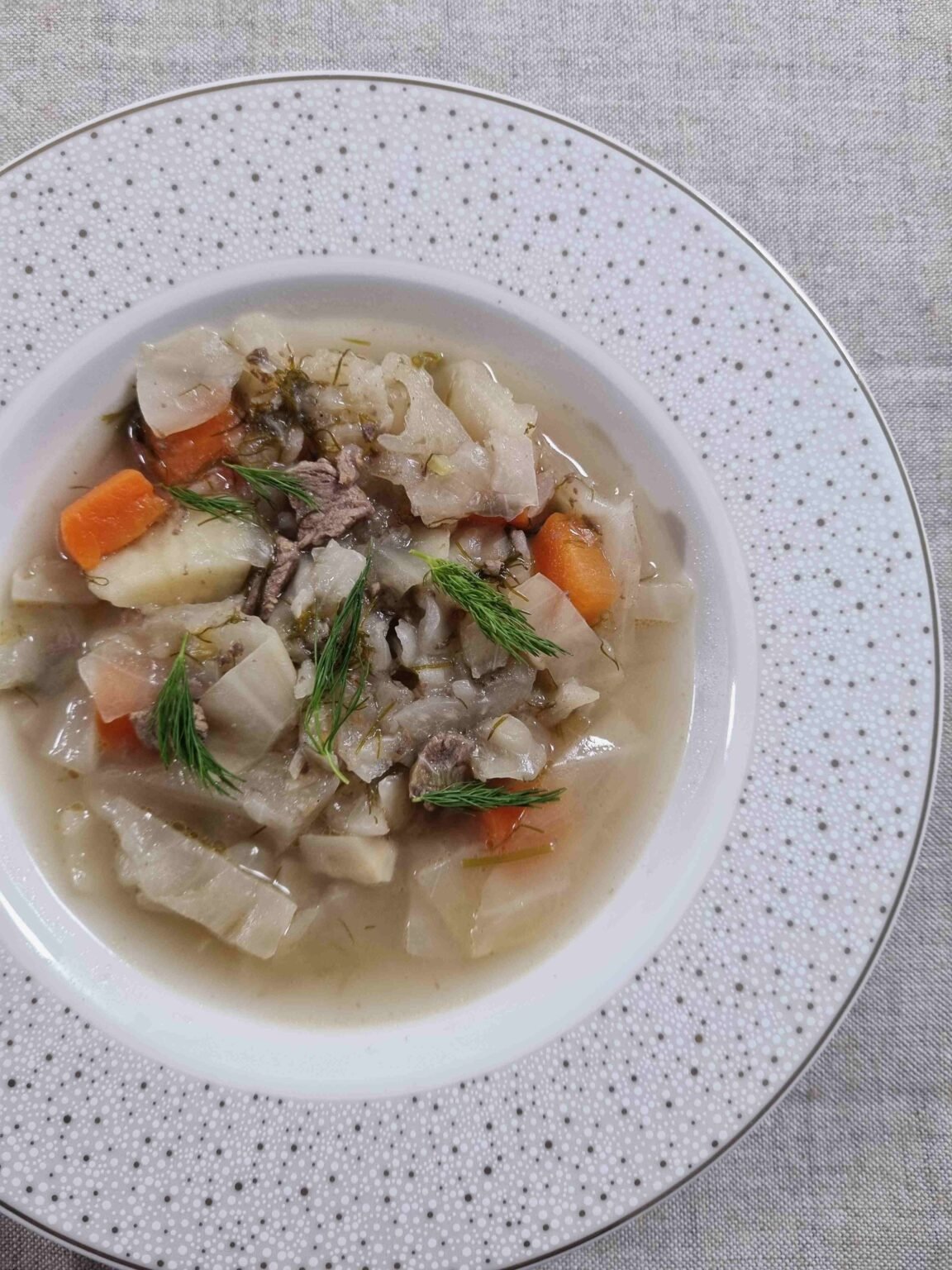
In Korea, this side dish is served with Seolleongtang (Ox bone soup) and Galbitang (short rib soup). Radishes are high in diastase, an enzyme that aids in the digestion of proteins. It is considered a perfect side-dish for heavy, meat-based meals. Interestingly, radish kimchi releases a higher proportion of liquid than cabbage kimchi. This liquid is a savoury, tangy tonic that is poured directly into rich, hearty broths, adding depth to the flavour profile.
The shelf life of Kkakdugi will depend on how sour you like the kimchi. If the fermented dish is left on the countertop for 1 to 3 days in a cool climate, it will accelerate fermentation. Even though this kimchi can be eaten right away, it will reach its peak flavour after two to four weeks in the fridge. Kkakdugi can last for up to three months in a fridge set to a temperature below 4°C (40°F).
When dealing with kimchi, it is important to dish it out with a clean, dry spoon and immediately place it back in the refrigerator. Rehydrate the top layers of the radish cubes with liquid from the bottom of the container. This will ensure that the kimchi lasts longer.