Newsletter Subscribe
Enter your email address below and subscribe to our newsletter
Enter your email address below and subscribe to our newsletter
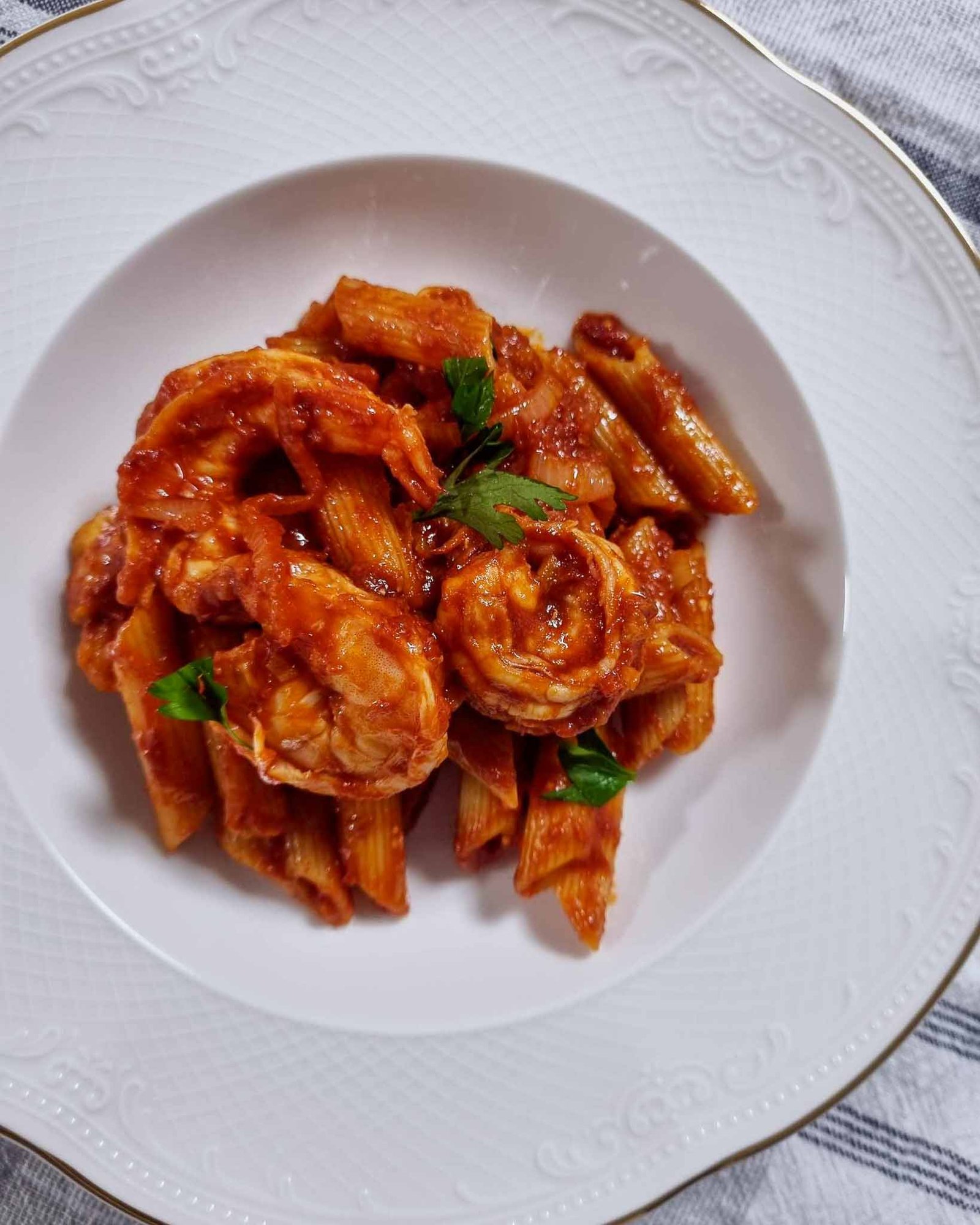
Today, we are making Gochujang pasta. This dish is a fusion recipe that has grown in popularity worldwide. Many home cooks in South Korea have been experimenting with different ways to use the fermented paste.
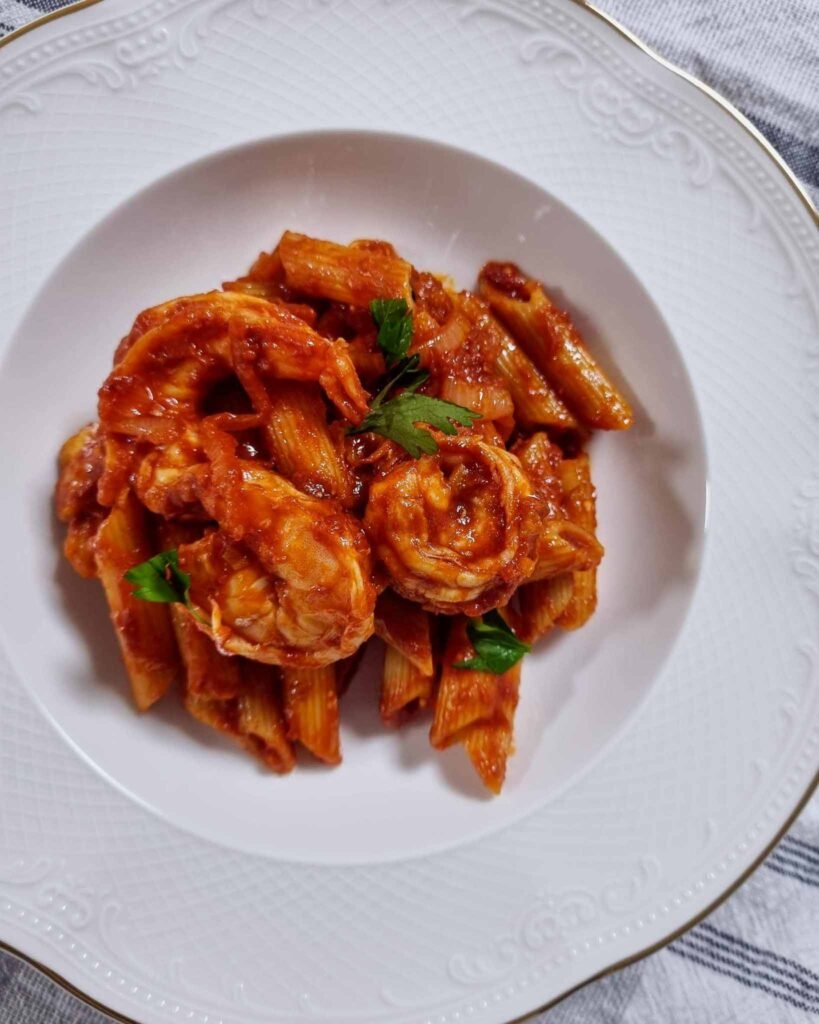
As a result, it has evolved into Italian pasta in Korean cuisine, a Korean recipe that is rich and extremely tasty. Before it became a trend, many years ago, I experimented with Gochujang paste, using it as a base for a noodle sauce with shrimp, creating an exciting dish full of flavour. Although I can’t recall the same recipe, I have recreated something a little similar, if not better.
Shrimp, Onion, Garlic, Gochujang, Dark Soy sauce, Butter, Olive oil, Oyster sauce, Rice Vinegar, Sesame Seed oil, Tomato Paste and Salt.
Gochujang pasta is a versatile dish; you can use shrimp, prawns, chicken breast, or salami as the protein. Onions and garlic add a savoury taste. Gochujang is a fermented chili paste from Korea. If you are unfamiliar with it, it is not as spicy as you would assume.
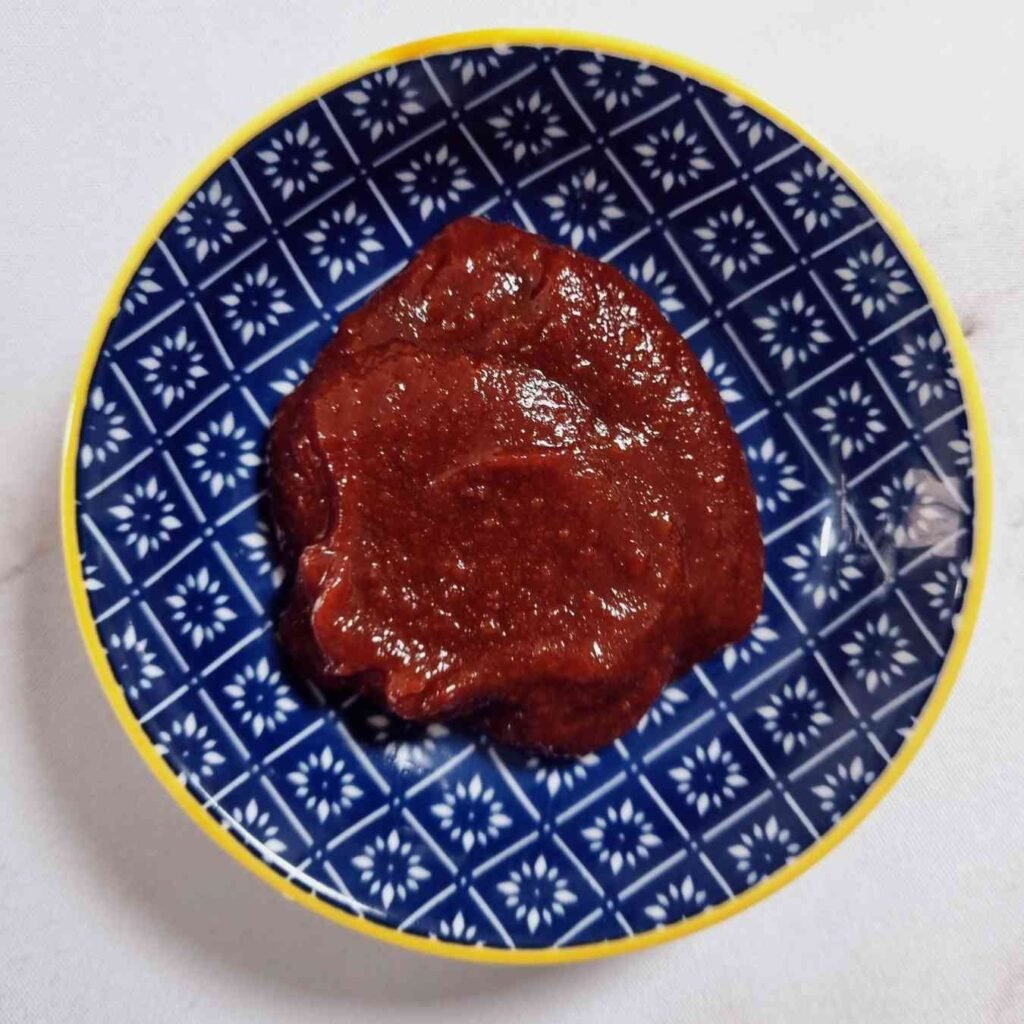
Dark soy sauce has a slightly sweet taste and is less salty than regular soy sauce. Oyster sauce is made from oyster extract and adds a rich flavour to this dish. Rice vinegar adds a tangy flavour; you can substitute it with regular vinegar or apple cider vinegar. Sesame seed oil adds a nutty flavour. Tomato paste is a concentrated tomato flavour; it provides a rich base for this dish.
Slice the onion thinly, and finely dice the garlic cloves. Peel the shrimps and devein. Wash the shrimps thoroughly under water.

Set the temperature to medium-low. Add olive oil and butter to the pot. Add the onions and garlic to the pot. Sauté for six to seven minutes until lightly golden.
Begin boiling a pot of water for the pasta. It will take five minutes for the water to reach the boiling point; thereafter, add salt and pasta, and set the timer for eight and a half minutes. Once the pasta is al dente, reserve 1/4 cup of pasta water and drain the rest into the sink.
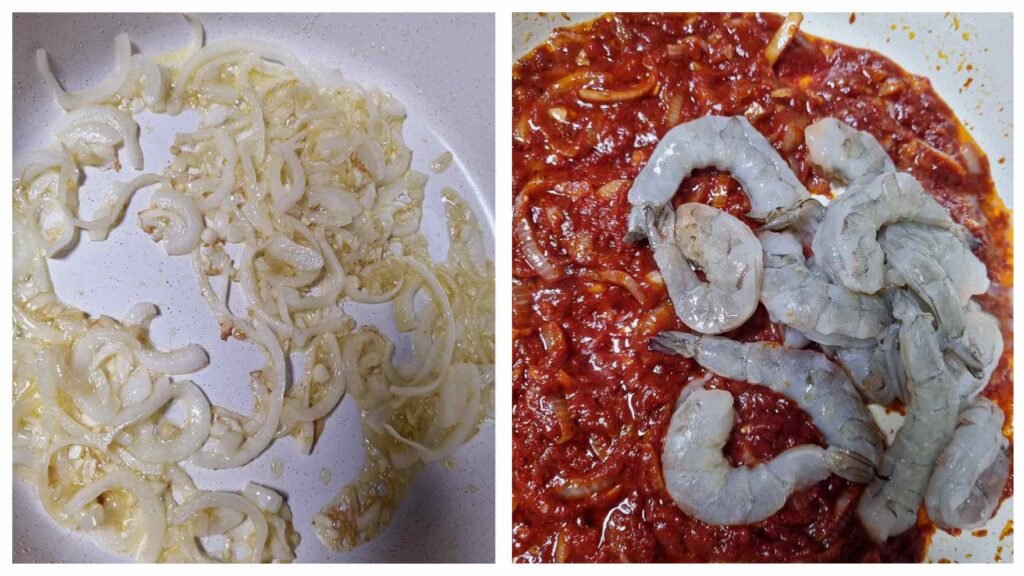
During this process, add the following ingredients, such as the tomato paste, gochujang, sesame seed oil, dark soy sauce, oyster sauce, and rice vinegar, to a bowl to create the gochujang sauce. Add the sauce to the pot and sauté for 2 minutes, until the gochujang is well incorporated into the onions and garlic.
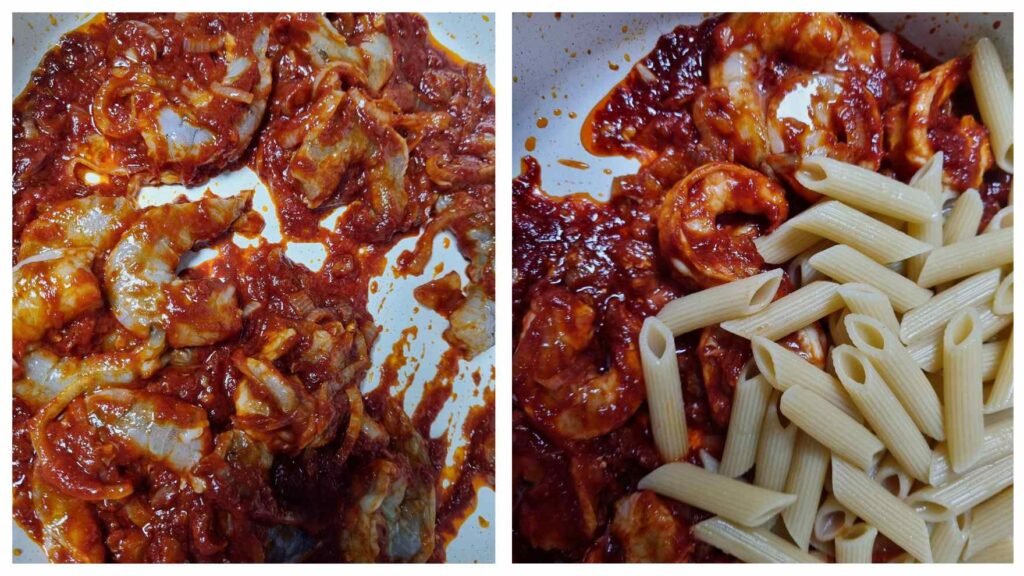
Add the shrimps to the pot and mix well. Cook the shrimps until they turn from translucent to white. This should take two to four minutes on medium-low heat. In the meantime, slice a small to medium-sized lime or lemon.
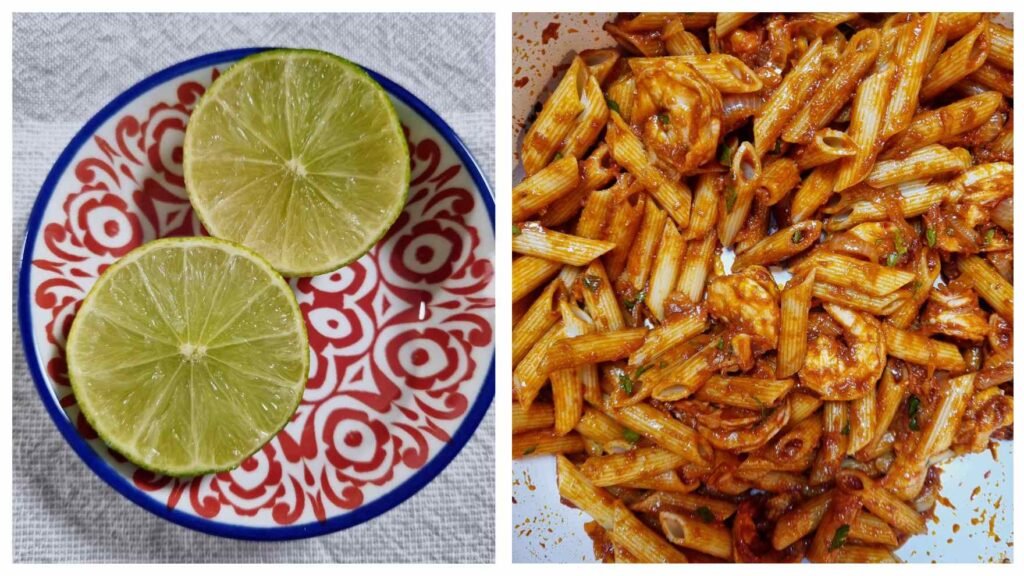
Add the pasta to the gochujang sauce mixture and mix well. Squeeze the fresh lime over the pasta and mix. Wash and chop parsley and garnish.

The dish is ready to eat and enjoy. This recipe is very similar to restaurant versions of gochujang pasta. You can adjust the heat by adding chili flakes or gochugaru, a Korean chili flake. Check the salt levels and add a light sprinkle more if needed. You can use different types of pasta for this dish, such as spaghetti, linguine, or fettuccine.
Allow the gochujang pasta to cool down to room temperature. Store the gochujang pasta in an airtight container in the fridge. This dish can last up to three days in the refrigerator and up to two months in the freezer. You can reheat the pasta on the stovetop or in the microwave. Place the gochujang pasta in a pan over medium heat. Add half a teaspoon of olive oil or one tablespoon of water to rehydrate the sauce.
There are so many amazing dishes that you can have with gochujang pasta. If you’re into a Mediterranean experience, consider a nice Greek Salad. This Caprese salad is adored with creamy mozzarella balls that add a ton of flavour to the entire experience. In terms of other side-dishes, consider Brussels Sprouts, Grilled Asparagus and Sautéed Green beans.