Homemade Sauerkraut Recipe
This homemade sauerkraut recipe is ideal for beginners; it uses a simple method that has a defined salt-to-cabbage ratio. The best part about this recipe is that you don’t need a fermentation crock or specialized equipment to make it at home.
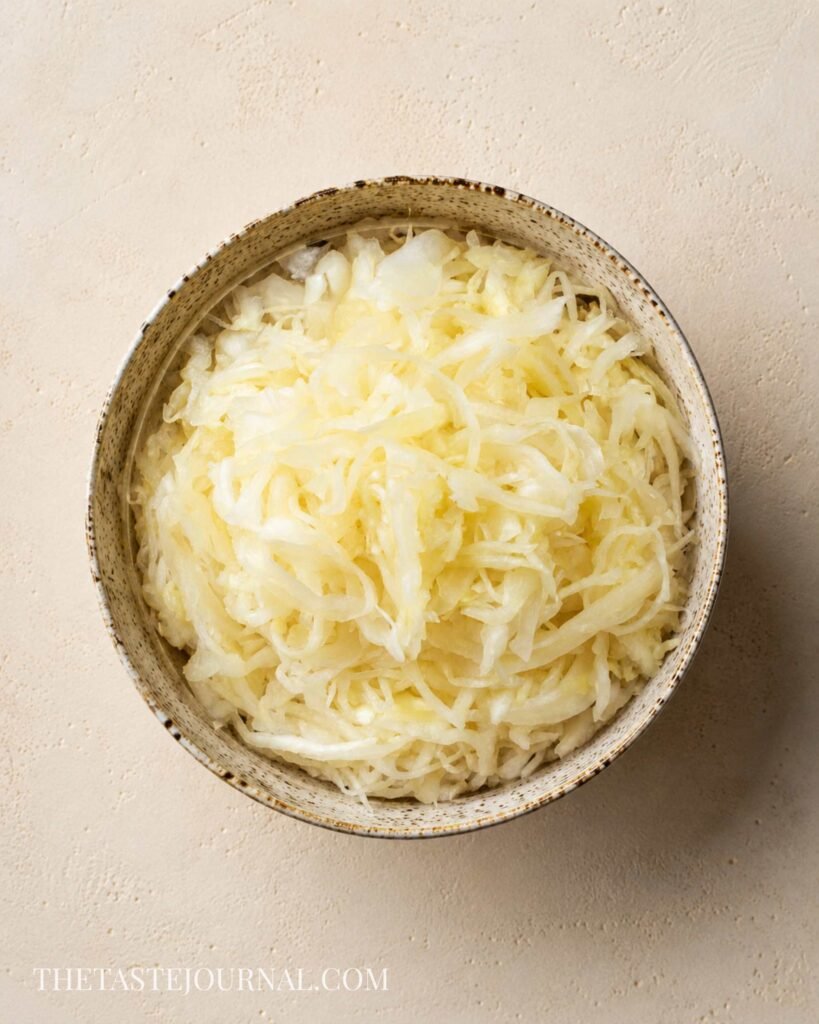
And, once you learn how to make sauerkraut, you can switch things up by adding different ingredients such as dill, garlic, carrots, apple, caraway, and red cabbage. Homemade sauerkraut is best served with sausages, grilled meats, burgers, and sandwiches. Sauerkraut is known for its crunchy texture and sharp acidity; this helps to balance richer foods.
What Is Sauerkraut?
Sauerkraut is finely shredded cabbage that has been preserved through lactic-acid fermentation. During this process, microorganisms use sugars found naturally in the cabbage to produce lactic acid. This gives the sauerkraut its signature characteristic flavor.
The name sauerkraut comes from German and means “sour cabbage.” Although sauerkraut is strongly associated with German and Central European cuisine today, fermented cabbage has a much wider history across Europe and Asia. If you’ve ever tried a vinegar-based pickle, you might assume that homemade sauerkraut develops its sour flavor through the addition of vinegar; however, the lactic-fermentation process develops the sour taste.
Why you’ll Love this Homemade Sauerkraut
It uses two ingredients: cabbage and salt. This is a beginner-friendly recipe to make sauerkraut. It is easily customizable using herbs, spices, carrots, and apples. Sauerkraut can be refrigerated for months. It is a versatile recipe; you can serve it with your favorite grilled foods, sausages, pizza, and beef sandwiches.
Ingredients
White Cabbage, and Salt.
It uses fresh, firm green or white cabbage. Green cabbage has a strong cabbage flavor. White cabbage has a mild, slightly sweet flavor. Salt is one of the most important ingredients in making homemade sauerkraut. It draws moisture from the cabbage, creating the salty brine. One of the best tips that we can give you to make homemade sauerkraut is to weigh your cabbage and calculate the recommended salt levels. This step will produce the most accurate results.
How Much Salt Do You Need for Sauerkraut?
Generally, you would need 2% salt by weight of the prepared cabbage. Using grams as a method of measurement is considered more reliable than using volume measurements because different salts have different densities. See recipe notes for accurate salt amounts.
Caraway seeds are one of the most traditional additions to homemade sauerkraut. With an earthy and slightly licorice flavor, they pair well with sausages. Finely shredded carrots add sweetness, texture, and color. Dill can be fresh or dried; it gives the sauerkraut a herbal flavor.
Garlic adds a savory depth. Apple has a natural sweetness that balances the sourness of the fermented cabbage; it is suited for use with green cabbage, as it has a more pungent flavor compared to white cabbage. Red cabbage has a vibrant purple color, which differs in flavor and appearance.
One of the biggest misconceptions is that you need a fermentation crock to make sauerkraut; when making a small batch, all you need is a large mixing bowl, a glass container, clean utensils, and a cloth that helps the fermentation gases escape.
Sauerkraut is often served with a variety of meats, including sausages and hot dogs. The tradition of fermenting cabbage has gained popularity worldwide, spreading along trade routes to countries such as Poland, Russia, Korea, Vietnam, Japan, and Germany.
Instructions
Prepare the cabbage by removing the outer leaves, cutting it into quarters, removing the core, and slicing it into thin shreds. Add the shredded cabbage to a large bowl and sprinkle with sea salt. Massage the salt into the cabbage. Squeeze out any excess juices. This process will take five to ten minutes. This step will create a brine.
At this point, you can add in optional ingredients. Transfer the salted cabbage to a clean glass container. Clean the container by washing it with soap, then rinsing it several times with hot water. Wipe the container with a clean paper towel. Leave some space at the top to allow for bubbling and cabbage expansion. Use a clean cloth to cover the container; this will allow gases to escape.
Let the glass container sit on a countertop, out of direct sunlight, for 1 to 2 weeks. The ideal room temperature is around 18 to 22 degrees. If the indoor temperature is high on some days, it is sufficient to ferment the sauerkraut for 1 to 2 days on the countertop, then refrigerate it. Remove the cloth. Taste the sauerkraut after one week. Once it reaches the desired level of sourness, it is ready to eat and enjoy.
How to Store the Sauerkraut?
For an airtight container, use a glass container; if you don’t have one, use a BPA-free one. Sauerkraut will last for several months in the fridge, and the fermentation process will continue during this time. It is important to use a clean, dry spoon to scoop out the sauerkraut.
What can you Serve with Sauerkraut?
Sauerkraut is often served alongside meat such as sausages and Steak bites with Garlic butter. It is a classic topping for hot dogs as it adds crunch and texture. It pairs well with Grilled beef sandwiches such as Dry-cured beef and the Thousand Island dressing. Explore Beef recipes for more ideas.
How Long Does Homemade sauerkraut Take to Ferment?
There isn’t one exact fermentation time for every batch of sauerkraut. Temperature, cabbage, salt concentration, and personal preference all influence the process. At approximately 21–24°C (70–75°F), expect roughly 3 to 4 weeks for a full fermentation. Cooler temperatures can take five weeks or longer.
If you prefer a milder sauerkraut, you can begin tasting it as it ferments and refrigerate it when it reaches the flavor you enjoy. The important thing is not to judge fermentation purely by the number of days. Flavor, acidity, aroma, and texture are better indicators of how the sauerkraut is developing.
What Temperature Is Best for Sauerkraut?
Sauerkraut ferments best at a moderate room temperature rather than somewhere excessively hot. Higher temperatures can make fermentation progress more quickly, while cooler temperatures slow it down. If your kitchen becomes particularly warm, keep the fermentation container in the coolest suitable place available and pay close attention to the development of the sauerkraut.
How Do You Know When Sauerkraut Is Ready?
The easiest way to tell whether your sauerkraut is ready is to taste it. A well-fermented sauerkraut should have a sour, tangy flavor; there will be a distinctive fermented aroma. It will have a crisp and pleasant texture. The cabbage will remain submerged beneath the brine. As the fermentation progresses, the sauerkraut will become more tangy.
What If My Sauerkraut Doesn’t Have Enough Brine?
This is one of the most common problems when making sauerkraut. One way to ensure your homemade sauerkraut has enough brine is to massage the cabbage well. Fresh cabbage has a lot of water, and the use of salt helps to draw the liquid out.
You can also leave the salted cabbage to rest for 10 to 15 minutes and massage it again. Once packed into the jar, press the cabbage down firmly. More liquid may rise to the surface as the cabbage settles.
The important thing is that the cabbage remains submerged once fermentation begins. If your cabbage consistently produces very little liquid, check that you measured the cabbage and salt accurately and that the cabbage was fresh.
Why Is My Sauerkraut Too Salty?
Sauerkraut can taste particularly salty during the early stages of fermentation. As fermentation progresses, the flavor becomes more balanced and acidic. The best way to avoid overly salty sauerkraut is to measure both cabbage and salt by weight rather than adding salt by eye.
Don’t dramatically reduce the salt simply because the cabbage tastes salty at the beginning. Salt is an important part of the fermentation process.
Why Is My Homemade Sauerkraut Soft?
Sauerkraut can become softer when fermentation conditions are too warm or when the cabbage has been stored for an extended period.
Fresh, firm cabbage is the best starting point for maintaining a pleasant texture. Avoid unnecessary handling during fermentation and keep the cabbage submerged beneath the brine. A properly fermented sauerkraut should have some texture rather than being completely mushy.
Is It Normal for Homemade Sauerkraut to Bubble?
Yes. Bubbles can occur as microorganisms produce gases during fermentation. You may also notice the cabbage becoming increasingly sour and the brine becoming cloudy. These changes can be normal signs of active fermentation. The cabbage should nevertheless remain submerged beneath the brine, and you should always pay attention to unusual odors, visible mold or other signs of spoilage.
Is My Sauerkraut Safe to Eat?
Fermentation requires attention to cleanliness, salt levels, and keeping the cabbage submerged. Use clean equipment and fresh cabbage, measure the salt accurately, and keep the shredded cabbage beneath the brine throughout fermentation. If the homemade sauerkraut develops obvious mold, a rotten or putrid smell, or other clear signs of spoilage, do not taste it.
Can You Make Homemade Sauerkraut Without Vinegar?
Yes. Traditional sauerkraut does not require vinegar. Its characteristic sour flavor develops naturally as lactic-acid fermentation takes place. Adding vinegar can make cabbage taste sour immediately, but that is different from allowing the cabbage to develop acidity naturally through fermentation.
Can You Use Red Cabbage to Make Homemade Sauerkraut?
Absolutely. Red cabbage can be fermented using the same basic cabbage-and-salt method. The finished sauerkraut has a beautiful purple-red color and works particularly well alongside roasted meats, sausages and rich sandwiches. You can also combine green and red cabbage for a colorful variation.
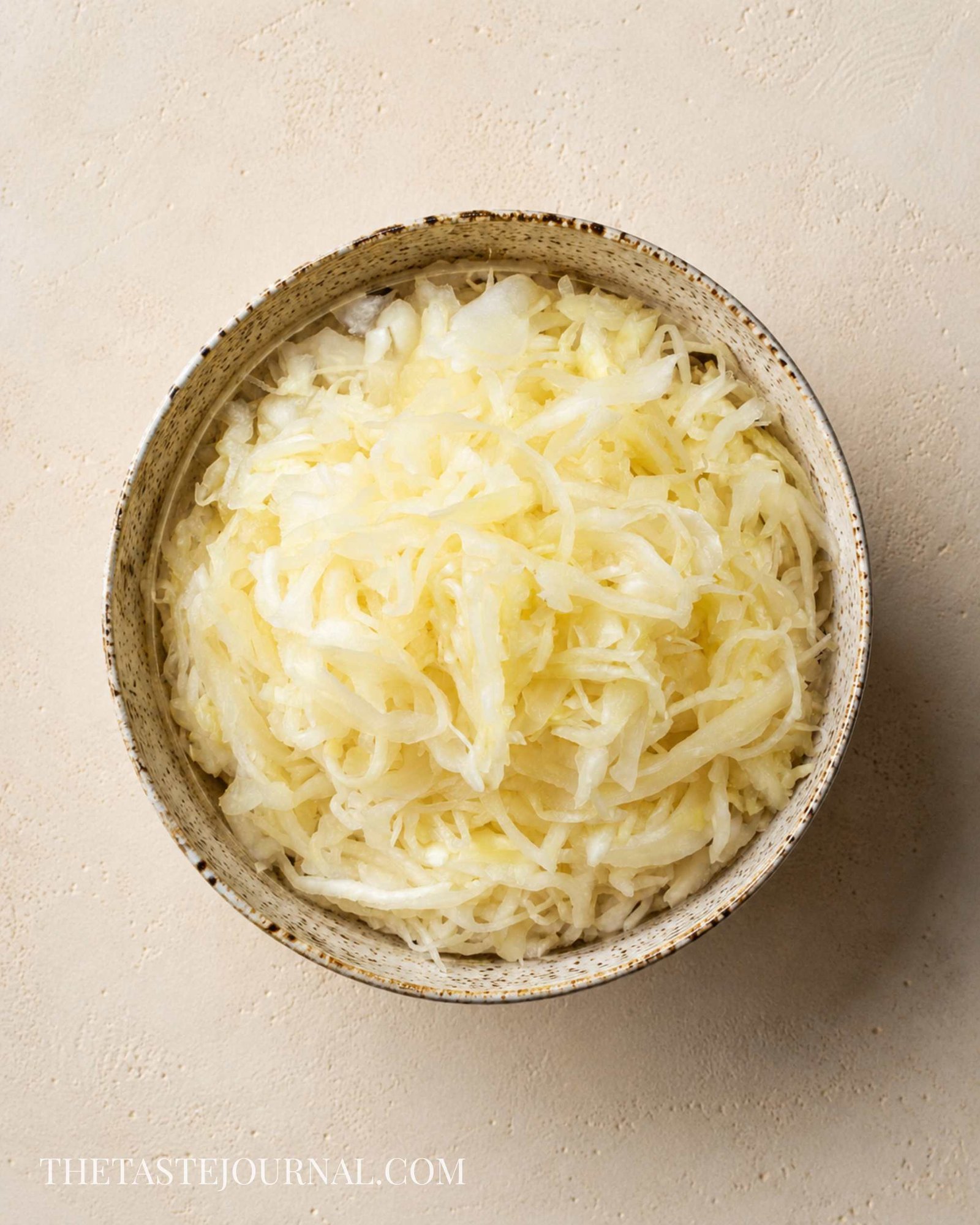
This easy homemade sauerkraut is made with just fresh cabbage and salt, using natural lacto-fermentation to create crisp, tangy and flavorful fermented cabbage.
Ingredients
- 500 grams Cabbage
- 1 tbsp Salt
Instructions
- Prepare the Vegetables: Remove outer leaves, cut into quarters, remove the core, and slice into thin shreds. Place shredded cabbage in a large bowl and sprinkle with sea salt. Massage salt into the cabbage and squeeze out excess juices (5-10 minutes) to create brine.
- Transfer to Container: Place salted cabbage and carrot in a clean glass container. Leave space at the top for bubbling. Cover with a clean cloth to allow gases to escape.
- Fermentation: Let the container sit on a countertop at 18-22°C (64-72°F) for 1-2 weeks, out of direct sunlight. If the temperature is high, ferment for 1-2 days at room temperature, then refrigerate.
- Taste and Store: After one week, taste the sauerkraut. Once it reaches the desired sourness, seal it with an airtight lid and enjoy!
Notes
If you want to have a low-sodium diet, it is important to be cognizant of the fact that salt is an important component to making sauerkraut; it affects the fermentation environment. It is crucial for the texture as well as the overall quality of the sauerkraut.
500 g cabbage → 10 g salt (about 1¾ teaspoons)
750 g cabbage → 15 g salt (about 2½ teaspoons)
1 kg cabbage → 20 g salt (about 3⅓ teaspoons)
1.5 kg cabbage → 30 g salt (about 5 teaspoons)
Nutrition
Calories: 168kcal | Carbohydrates: 29g | Protein: 16g | Fat: 1g | Saturated Fat: 0.2g | Polyunsaturated Fat: 0.2g | Monounsaturated Fat: 0.1g | Cholesterol: 22mg | Sodium: 1140mg | Potassium: 1066mg | Fiber: 14g | Sugar: 16g | Vitamin A: 511IU | Vitamin C: 184mg | Calcium: 224mg | Iron: 3mg
Did you make this recipe?Pin to Save this Recipe