Yachaejeon
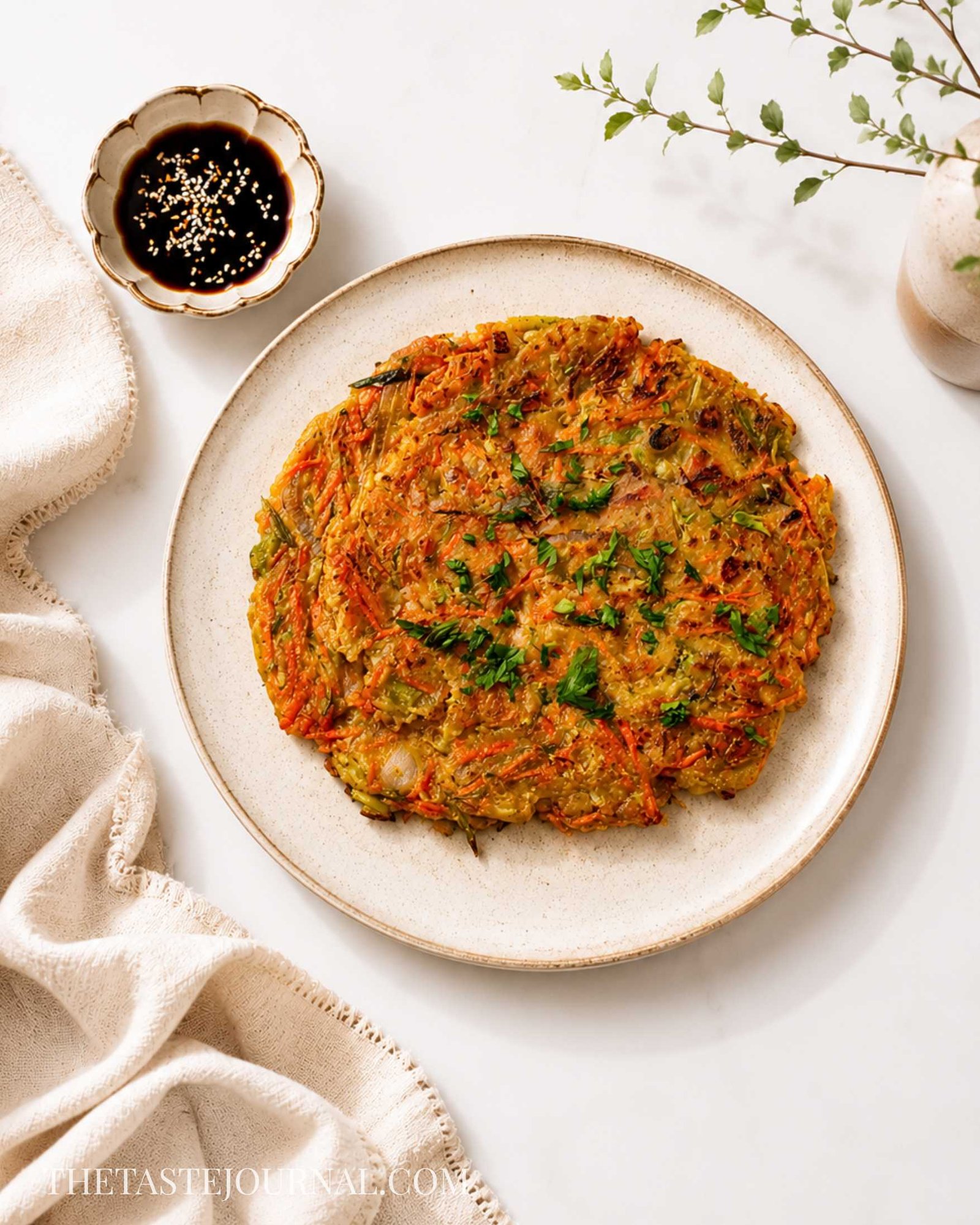
Today, we are making Yachaejeon, a savoury thin pancake that is crispy and delicious. This dish consists of vegetables coated in pancake batter, resulting in a crispy, delicious pancake that pairs perfectly with a soy-based dipping sauce.
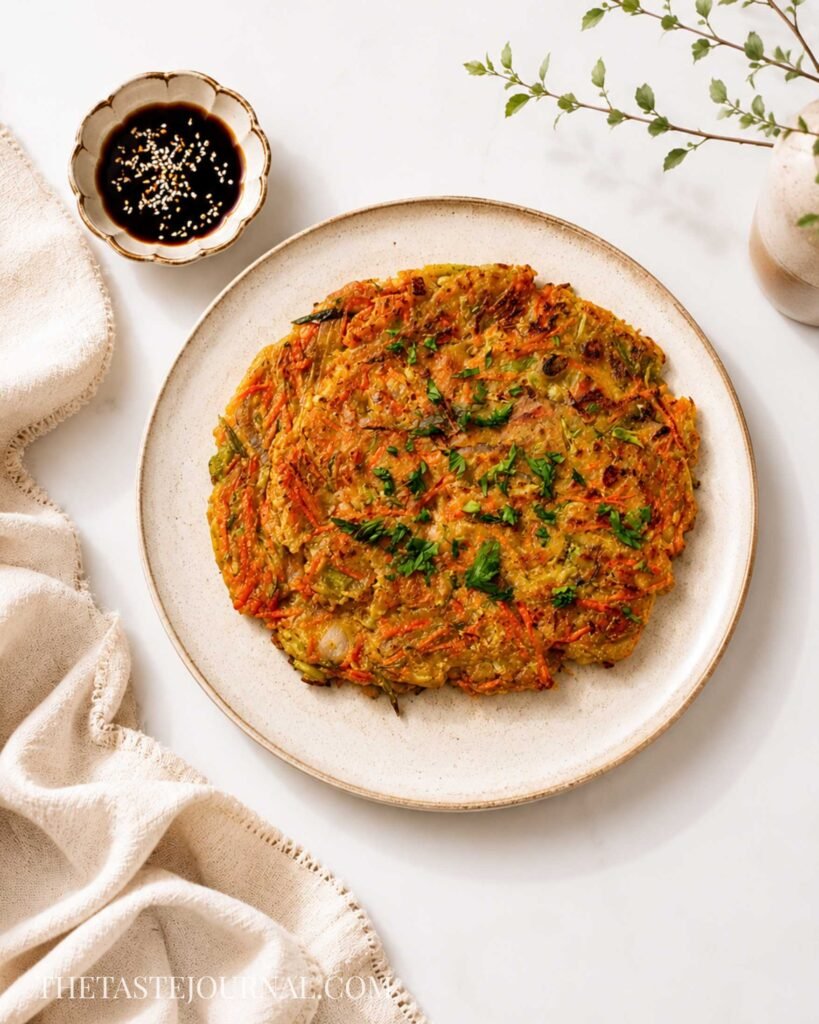
I’m sure you’re curious about the differences between Western pancakes and Korean pancakes. Let’s start with the term “Jeon,” which means pancake in Korean. While it resembles the Western pancake, there are notable differences. Western pancakes are typically sweet and often enjoyed as a quick, easy breakfast.
Korean pancakes, on the other hand, are savory and enjoyed as an appetizer or a side dish. They often use thinly cut vegetables and proteins, such as seafood or beef. These crispy pancakes are served with a dipping sauce made from soy sauce and sesame seed oil, which perfectly balances the overall flavor of the Korean pancake. Korean pancakes are cooked without leavening agents, resulting in a thin, crispy pancake.
Yachaejeon has an irresistible crunch. It is traditionally made in a well-oiled pan, with the spring onions laid parallel on it. This is followed by the batter being poured over the spring onions. Some Koreans layer the ingredients, then pour egg on top. This is a bit time-consuming; you can easily just mix the egg into the batter and the sautéed ingredients to get a similar result.
Ingredients
Spring Onion, Zucchini, Carrot, All-Purpose Flour, Cornstarch, Baking powder, Cold Water, and Cooking Oil.
The word “pa” means “green onions”. Some Koreans choose garlic chives instead; both herbs are interchangeable. The spring onions add a sweet onion flavor to the pancake. The pancake batter is a simple mix that consists of flour, cornstarch, baking powder and cold water. Koreans purchase pre-packaged pancake flour (Buchim-garu) that is pre-seasoned. You can find this Korean pancake mix online.
Carrots add a sweet flavor to the yachaejeon, zucchini offers creaminess, whilst spring onions add a savory flavor. You can add other vegetables, such as red bell peppers, non-spicy chilies, and caramelized onions, to the pancake batter to create different versions of Yachaejeon. Pajeon batter is usually thin, resulting in a sturdy yet slender pancake that ensures crispiness.
Instructions
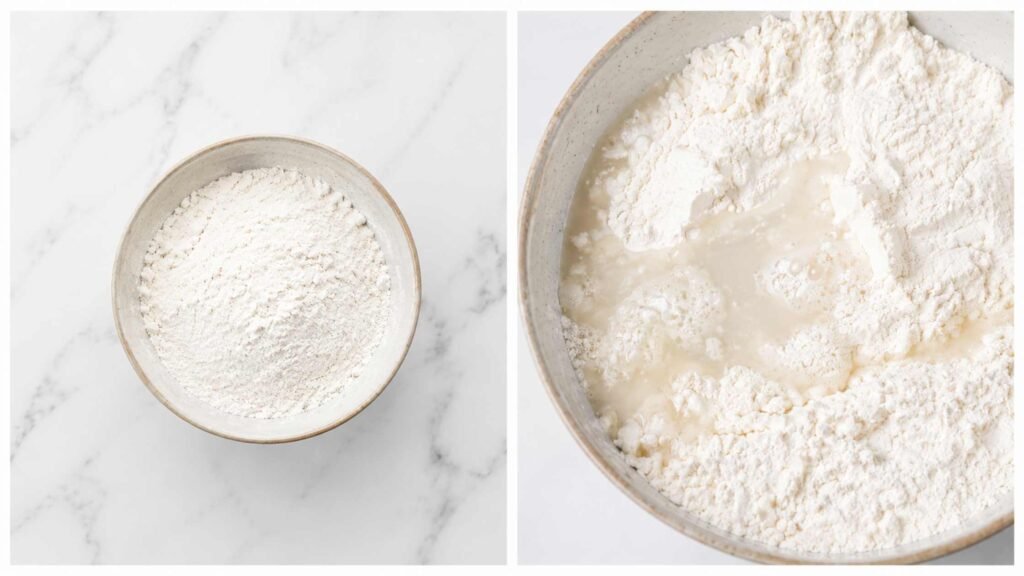
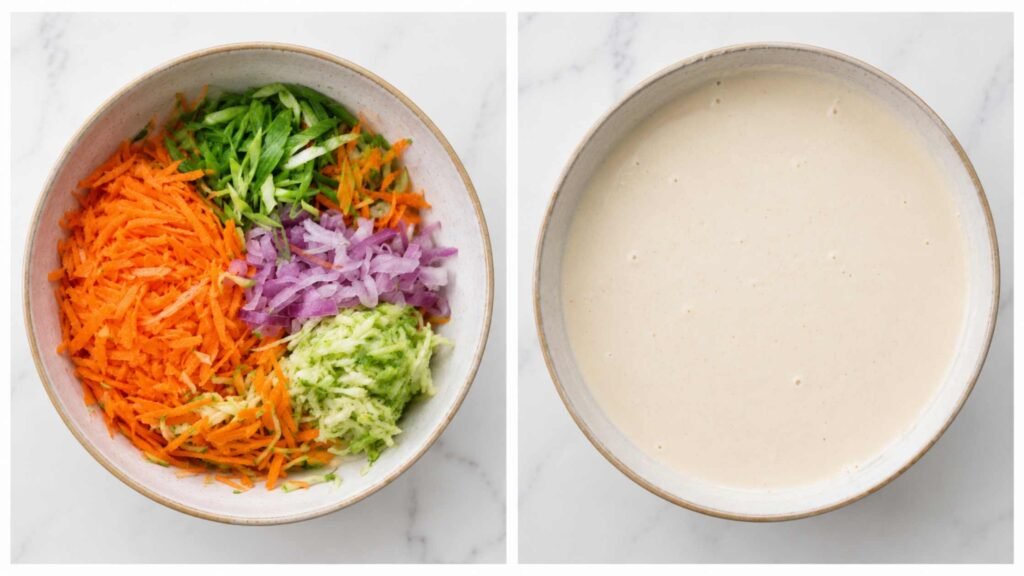
Wash the zucchini and carrots. Slice the spring onion into strips, and grate the carrots and zucchini on the large side of the box grater. Measure the flour, cornstarch, and baking powder and add them to a large bowl. Add cold water and mix until a thin batter forms.
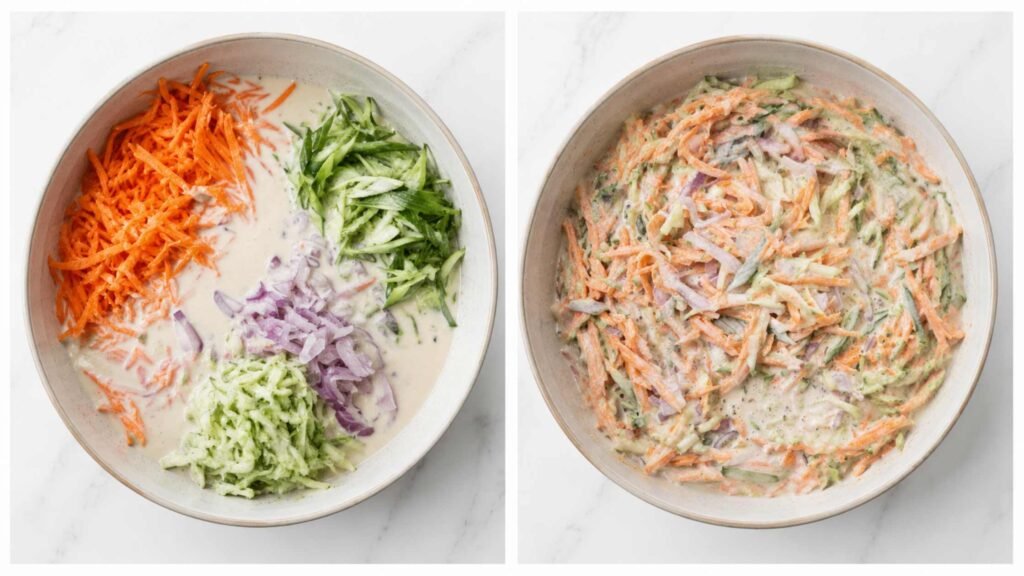
Set the batter aside, add cooking oil to a pan, and heat the pan over medium-high heat. Add the spring onions, zucchi and carrots to the bowl and mix.
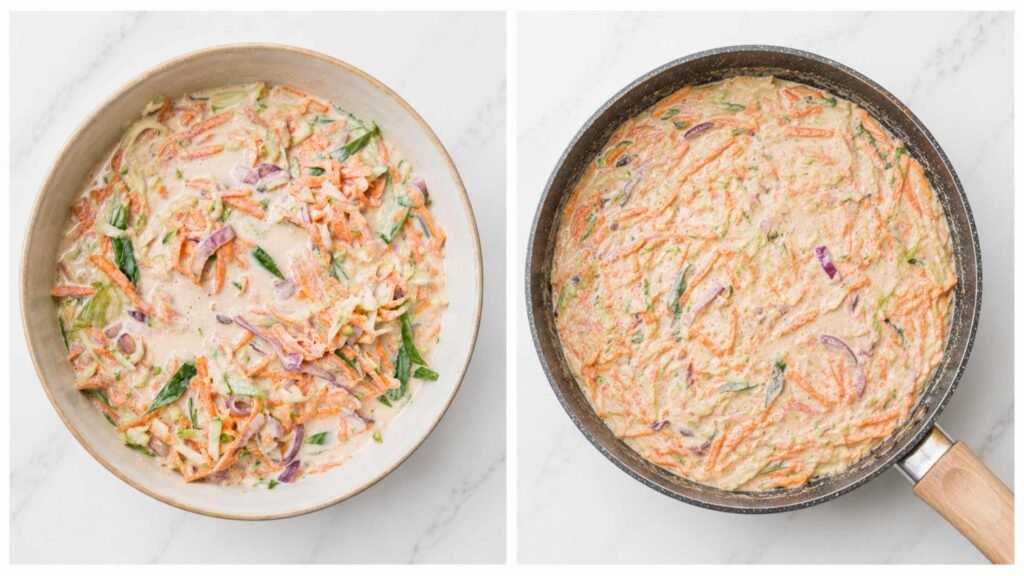
Add a thin layer of pancake batter. Cook the pajeon on each side for 3 to 5 minutes, starting with the first side. Once the pancake is cooked on one side, use a spatula to gently lift it from the edges of the pan. Then flip to the second side and brown for 2 minutes.
The second side tends to cook faster than the first, which explains the different cook times. Use a spatula to press down on the second side of the pancake to ensure it remains thin.
Prepare the dipping sauce by adding dark soy sauce, white vinegar, and sesame seed oil to a small bowl with a sprinkle of white pepper to add flavour. The Yachaejeon is ready to serve with the dipping sauce.
What can you serve with Yachaejeon?
Pajeon is a savory Korean pancake made with green onions or chives mixed into the batter. This dish is usually enjoyed as an appetizer or side dish, served with a dipping sauce of soy sauce, sesame seed oil, and vinegar. You can pair this dish with Kimchi-jjigae, Chuncheon Dakgalbi, or Korean Stir-fried calamari. It pairs perfectly with your favorite soda. If you want a seafood version, check out our Haemul Pajeon.
How to store and reheat Yachaejeon?
Allow the pancake to cool down and keep it in an airtight container; it can last for up to four days in the fridge and two months in the deep freezer. Reheating the yachaejeon is easy. Preheat a pan on medium-low heat and reheat the pancake for about two minutes on each side. It will be ready to eat. Frozen yachaejeon can be reheated the same way as mentioned above, but give it more time to reach the desired temperature.
Ingredients
- ½ cup All- Purpose Flour
- 120 ml Cold water – Ice water
- ¼ cup Corn Starch
Vegetables
- 40 grams Spring onions – Cut into 1 inch length
- ½ Carrot – Grated.
- 1 Zucchini – Grated, with water squeezed out.
Spices
- 1 tsp White Pepper powder
- 1 tsp Garlic powder
- ¼ tsp Salt
Dipping Sauce
- 2 tbsp Soy sauce
- 1 tsp Sesame seeds – Light sprinkle.
- 1 tbsp Sesame seed oil
- 1 tbsp White Vinegar
Instructions
- Preparation: Wash zucchini and carrots. Slice spring onion into strips. Grate zucchini and carrots.
- Batter Mixing: In a large bowl, mix flour, cornstarch, and baking powder. Add cold water to form a thin batter.
- Cook the Vegetables: Heat cooking oil in a pan over medium-high heat. Add spring onions, zucchini, and carrots to the batter and mix well.
- Cooking the Pajeon: Pour a thin layer of batter into the pan. Cook each side for 3-5 minutes, flipping gently with a spatula. Press down on the second side to ensure it stays thin (cooks faster).
- Dipping Sauce: Mix dark soy sauce, white vinegar, sesame oil, and a sprinkle of white pepper in a small bowl. Enjoy the Yachaejeon with the dipping sauce!
Nutrition
Calories: 150kcal | Carbohydrates: 24g | Protein: 4g | Fat: 5g | Saturated Fat: 1g | Polyunsaturated Fat: 2g | Monounsaturated Fat: 2g | Cholesterol: 0.5mg | Sodium: 537mg | Potassium: 235mg | Fiber: 2g | Sugar: 2g | Vitamin A: 1473IU | Vitamin C: 11mg | Calcium: 25mg | Iron: 1mg
Did you make this recipe?Pin to Save this Recipe