Kung Pao chicken
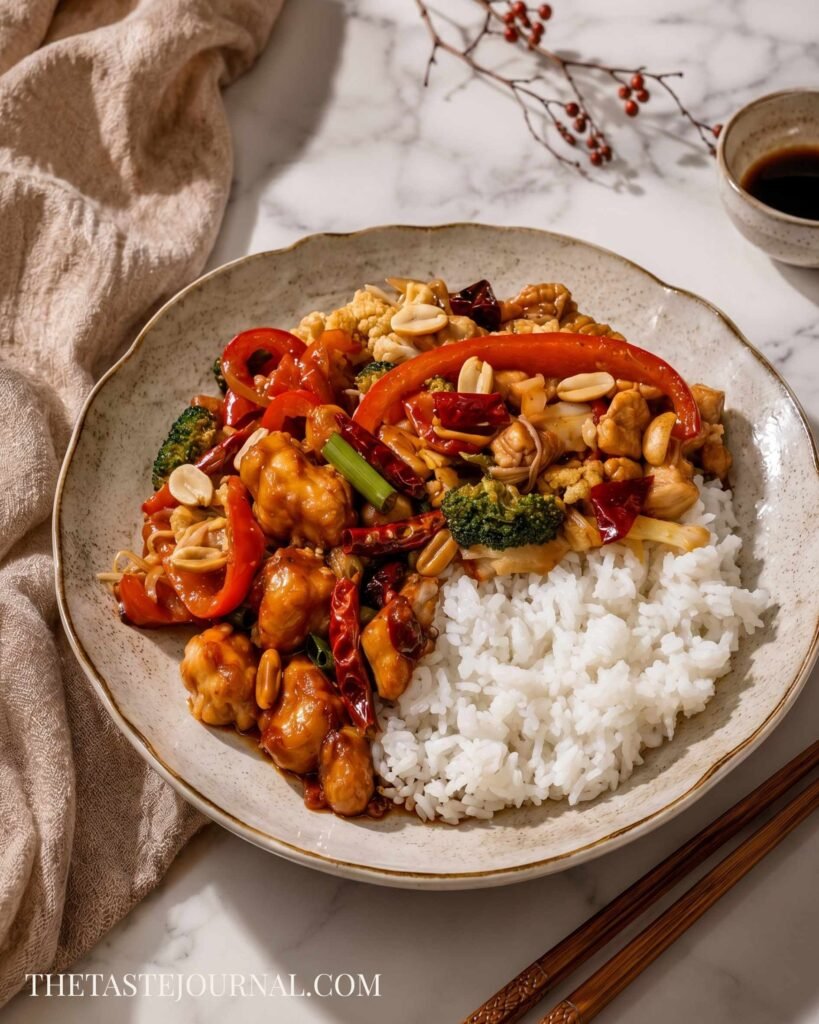
Kung Pao Chicken is a tasty Chinese dish made with stir-fried vegetables, tender chicken, crunchy peanuts, and Sichuan peppercorns. It is popular both in China and internationally. If you have tasted Kung Pao chicken, you will know its flavors are bold, spicy, and savory, with sweet elements.
The dish has a fascinating origin story linked to Ding Baozhen, a Chinese official in the Qing Dynasty during the 19th century, who served as the governor of Sichuan province. Ding Baozhen was bestowed with the respectful title “gōng bǎo,” meaning “palace guardian.” He enjoyed spicy, flavorful foods and often experimented with the ingredients in his cooking.
Kung Pao chicken was created by him and named after him. Despite its rapid rise in popularity, the name and recipe underwent changes over the years to distance them from associations with past regimes and nobility. Traditional Kung Pao chicken uses Sichuan peppercorns, which are known for causing a numbing sensation in and around the mouth. This unique sensation is a hallmark of Sichuan cuisine.
Ingredients
Chicken, Rice wine, Brown sugar, Flour, Dark soy sauce, Apple cider vinegar, Oyster sauce, Hoisin sauce, Water, Garlic cloves, Dried red chili, Red bell pepper, Broccoli, Cauliflower, Enoki mushrooms, Scallions, Fresh parsley, Peanuts.
In China, Kung Pao chicken is spicier than the Western versions. Sichuan peppercorns add a numbing sensation to the dish. Many Western adaptations include bell peppers, carrots, and other vegetables that are not part of the traditional recipe.
This dish is a combination of sweet, spicy, and sour flavours. Soy sauce adds a depth of saltiness, and oyster sauce adds an umami-rich base. Ginger and garlic enhance the dish’s aromatic profile, adding warmth and complexity. Peanuts add a crunchy texture to Kung Pao chicken, which is mainly made with soft ingredients. Dried chilies add a subtle spiciness to the Kung Pao chicken; in the dish itself, they are not actually eaten, but they add colour.
Instructions
Julienne the red bell pepper. Rinse and slice the broccoli, enoki mushrooms, and cauliflower. Cut off the roots of the enoki mushrooms. Rinse the chicken breasts, pat them dry with kitchen towels, and cut them into 1-inch cubes. Place the chicken in a bowl to marinate.
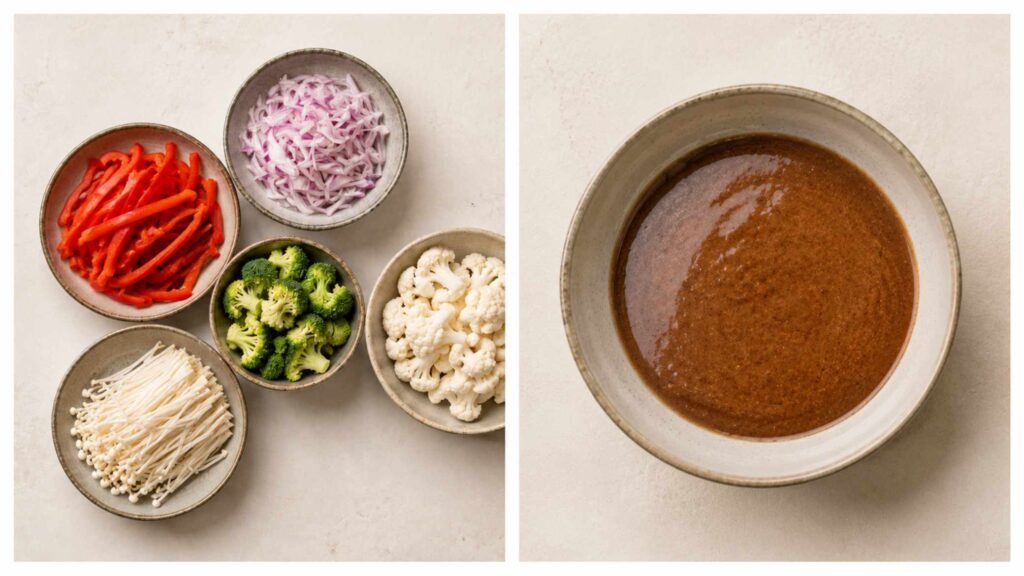
Prepare two woks, pots, or large pans: one for cooking vegetables and the other for cooking chicken. In a separate bowl, mix together the soy sauce, sugar, apple cider vinegar, sesame oil, hoisin sauce, rice wine, oyster sauce, and 1/4 cup of water. Stir to combine all the ingredients.
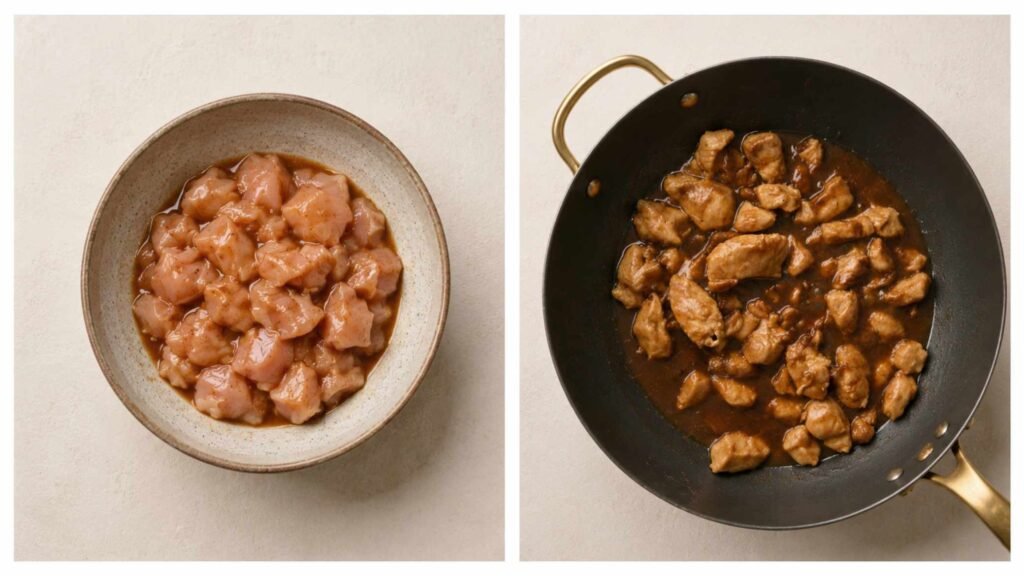
In a bowl containing cubed chicken, pour in the marinade sauce and thoroughly massage it into the meat. Cover the bowl with cling wrap and let it rest for a minimum of 15 minutes. The longer you marinate the chicken, the more tender it will become.
Begin by adding olive oil to a wok or pan. Next, add the chopped chili and garlic, cooking them over high heat for 1 minute to enhance the dish’s aroma. Then, incorporate the following vegetables: broccoli, cauliflower, enoki mushrooms, and red bell pepper. Sauté the vegetables over medium-high heat for 10 minutes, stirring occasionally. Once cooked, remove the vegetables from the wok and set them aside.
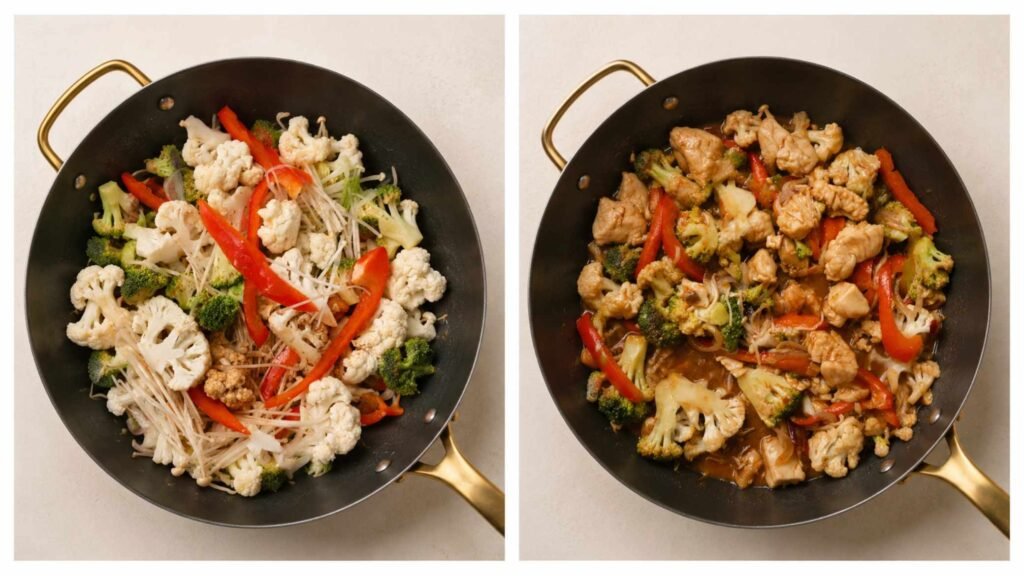
In a wok, stir-fry marinated chicken over high heat for 3 minutes until it turns white. Add 2 tablespoons of hoisin sauce and 1/4 cup of water. Then, mix in the vegetables and peanuts, stirring well. Cook on low heat for 3 minutes until the sauce thickens. Garnish with fresh parsley and serve immediately. This flavorful dish is a favorite in Chinese-American restaurants.
Expert tips
Use boneless, skinless chicken thighs for tenderness, and marinate the chicken for best results. Achieve a balance of sweetness, tanginess, spiciness, and a hint of saltiness in the sauce. Cashews can replace peanuts for a creamier texture. Consider using sesame seeds or chopped green onions for garnish.
How to Store Kung Pao Chicken
You can store Kung Pao Chicken in the fridge for two to three days. To reheat, use the stovetop. This dish can also be frozen for two to three months. When ready to eat, defrost and then cook it on the stovetop.
What to Serve with Kung Pao Chicken
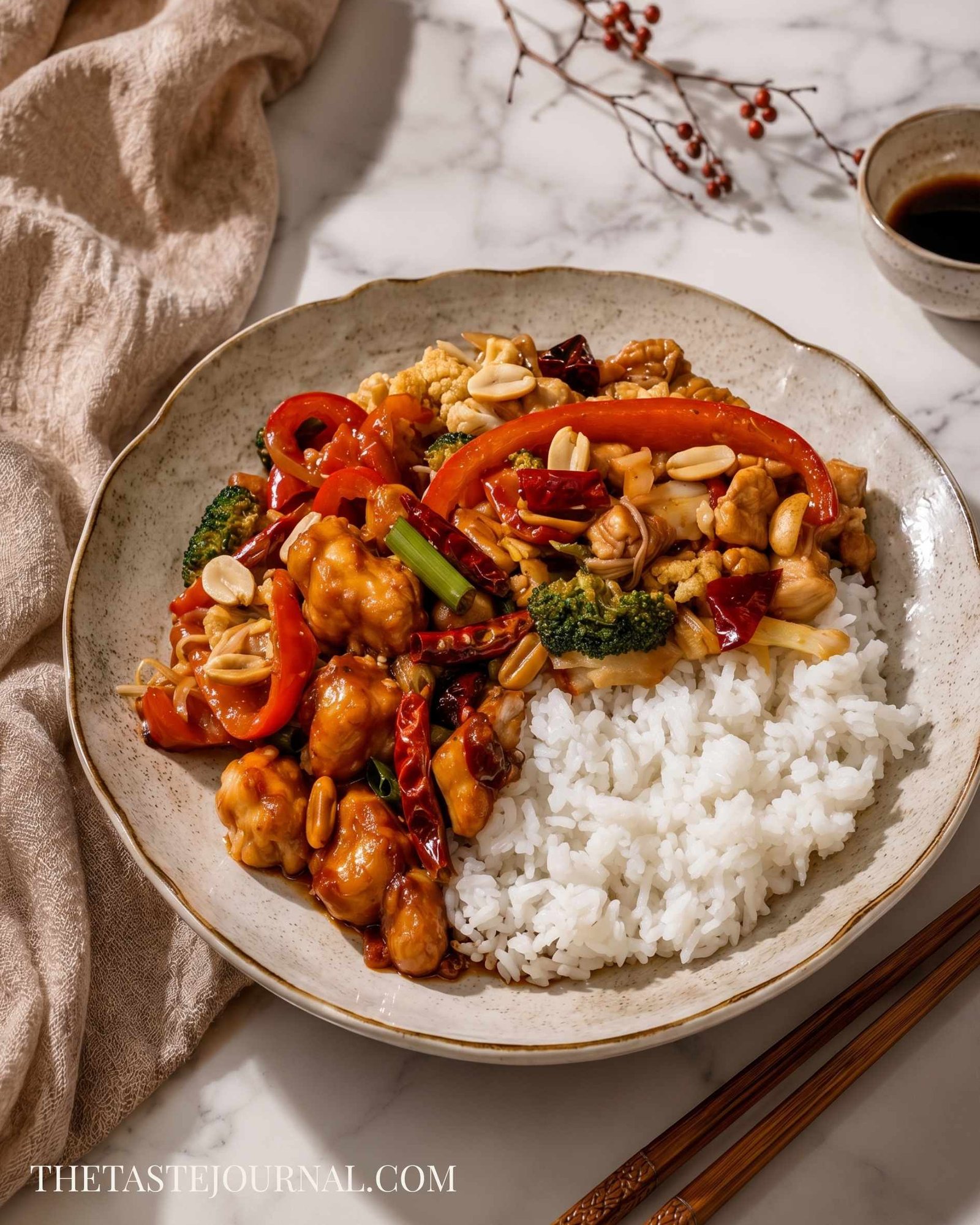
Kung Pao Chicken is incredibly delicious and versatile, making it a great pairing with several side dishes. It’s recommended to serve the stir-fry with white rice or jasmine rice. As an added vegetable, sautéed broccolini works well as a side dish. A cucumber salad can provide a refreshing contrast to the stir-fry. If you’re looking for something crunchy, consider serving spring rolls alongside it.
Ingredients
Protein
- 1 lb Chicken thighs – small cubes, boneless, skinless
For the Marinade
- 1 tsp Rice wine
- 2 Tbsp Brown sugar
- 1 Tbsp Flour
- 1 Tbsp Dark soy sauce
- 2 Tbsp Apple cider vinegar
- 1 Tbsp Oyster sauce
- 3 Tbsp Hoisin sauce
- 1/2 Cup Water
Vegetables
- 4 Garlic cloves – minced
- 1 Dried red chili
- 1 cup Broccoli 90 grams
- 2 cup Cauliflower 180 grams
- 100 gram Enoki mushrooms
Extras
- 1/2 Red bell pepper
- 2 Scallions
- 1/2 cup Fresh parsley
- 1/2 cup Peanuts
- 1 Tbsp Olive oil
Instructions
- Ingredients Preparation: Julienne the red bell pepper. Rinse and slice the broccoli, enoki mushrooms (cut off roots), and cauliflower. Rinse and cube chicken breasts into 1-inch pieces.
- Marinate the Chicken: In a bowl, whisk together soy sauce, sugar, apple cider vinegar, sesame oil, hoisin sauce, rice wine, oyster sauce, and 1/4 cup water. Pour the marinade over the chicken and massage it in. Cover and let rest for at least 15 minutes.
- Vegetable Cooking: Heat olive oil in a wok. Sauté chopped chili and garlic for 1 minute. Add broccoli, cauliflower, enoki mushrooms, and red bell pepper. Sauté for 10 minutes and set aside.
- Cook the Chicken: In the same wok, stir-fry marinated chicken over high heat for 3 minutes until white. Add 2 tablespoons of hoisin sauce and 1/4 cup of water.
- Combine and Serve: Add the cooked vegetables and peanuts to the chicken. Stir and cook on low for 3 minutes until the sauce thickens. Garnish with fresh parsley and serve immediately with rice.
Nutrition
Calories: 458kcal | Carbohydrates: 25g | Protein: 27g | Fat: 29g | Saturated Fat: 7g | Polyunsaturated Fat: 7g | Monounsaturated Fat: 12g | Trans Fat: 0.1g | Cholesterol: 111mg | Sodium: 473mg | Potassium: 810mg | Fiber: 5g | Sugar: 11g | Vitamin A: 1399IU | Vitamin C: 75mg | Calcium: 87mg | Iron: 3mg
Did you make this recipe?Pin to Save this Recipe