Tabbouleh
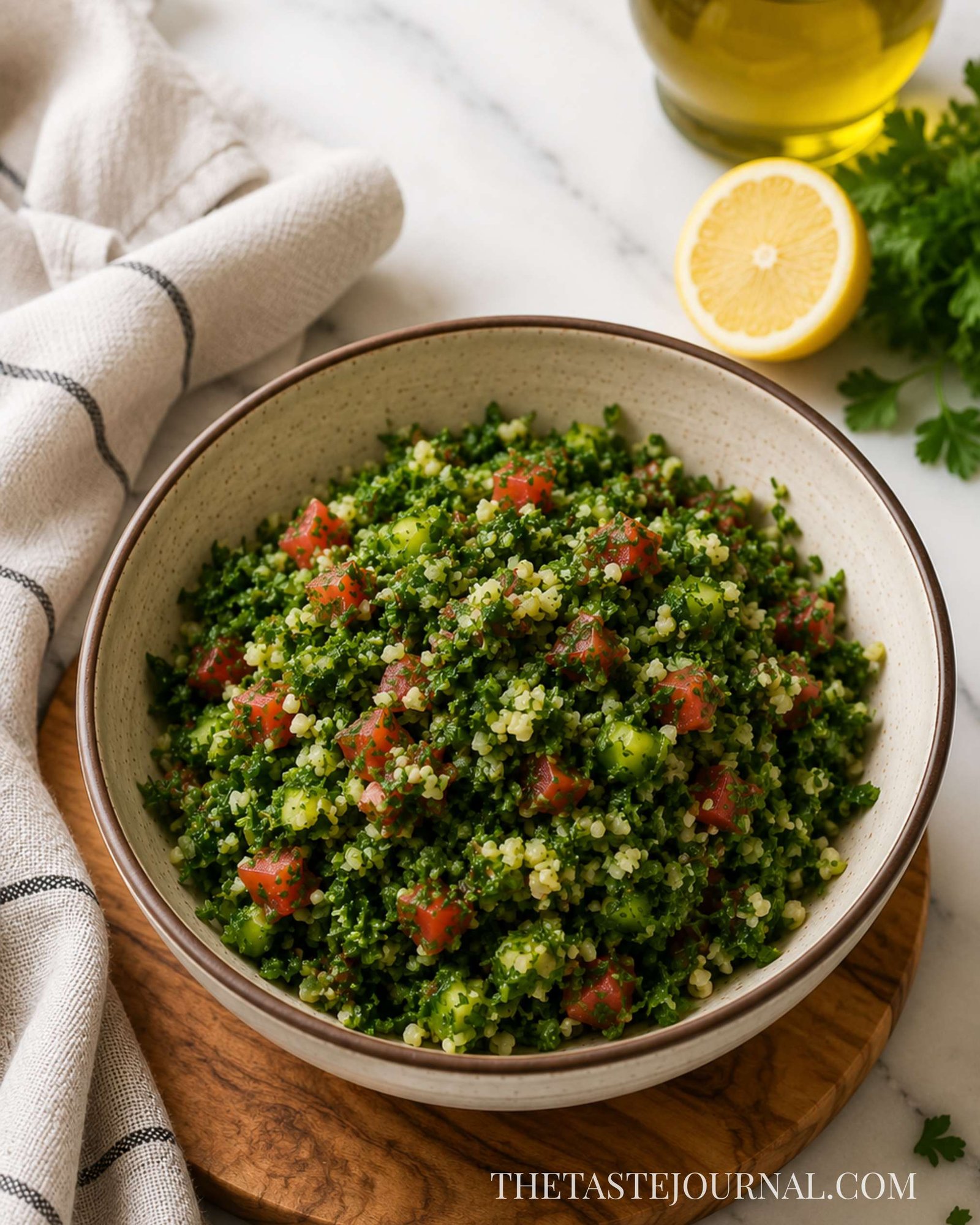
If you have tasted Tabbouleh, you understand it’s more than a Middle Eastern salad; it’s a celebration of fresh ingredients that come together harmoniously.
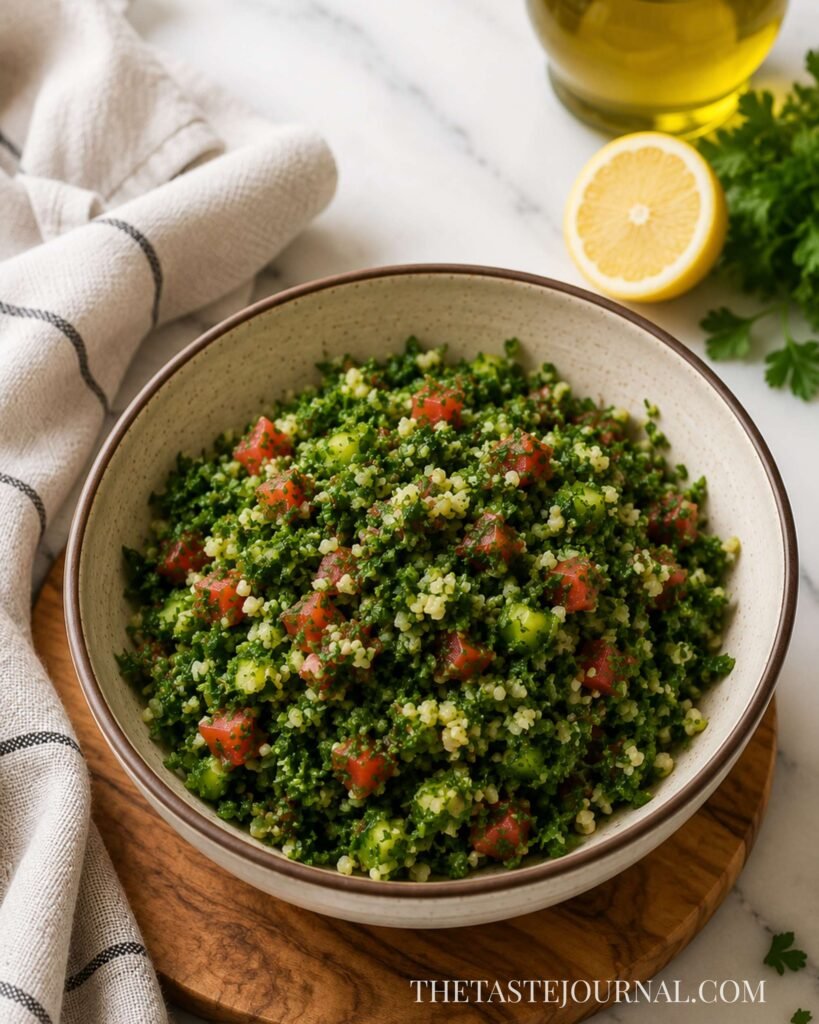
This dish highlights the use of chopped parsley, crisp onions, and ripe tomatoes. When combined with freshly squeezed lemon, these simple ingredients create a bright and flavorful dish. Tabbouleh originates from the Levant, a region that includes Syria, Jordan, Palestine, and Lebanon. The key to making perfect Tabbouleh is to finely chop the herbs and vegetables. The parsley should be chopped as finely as possible, though a semi-fine or rustic texture is also acceptable.
Crunchy cucumbers provide a refreshing twist to the recipe, while diced tomatoes add sweetness and acidity. Using more parsley compared to bulgur will create a fresher flavor, and adding lemon juice will enhance the overall taste. Mint can be included for extra flavor, but it is optional. For an additional touch, consider sprinkling some pomegranate seeds on top.
Ingredients
Parsley, Bulgur Wheat, Tomatoes, Onion, Cucumber, Lemon Juice, Olive Oil and Salt.
Parsley is the main ingredient in Tabbouleh, and it is recommended to use flat-leaf parsley because it has a stronger flavor and is easier to wash. Curly parsley can be less flavorful. Bulgur wheat, a type of cracked wheat, needs to be soaked or cooked before eating. Fresh, ripe red tomatoes are essential; avoid overripe tomatoes, as they can make your tabbouleh mushy. Fresh mint leaves add a cooling element to the salad, but if you don’t have them, you can omit them entirely.
For onions, both white and red onions work well in this recipe. Cucumbers provide a nice crunch, while lemon juice adds just the right amount of acidity and a tangy flavor. Extra-virgin olive oil contributes richness to the tabbouleh, and a pinch or two of celery salt is essential for taste.
Instructions
There are two ways to cook bulgur; the first method is to let your Bulgur soak in a bowl of boiling water and let it soak for 15 -20 minutes. Cover the bowl to keep the Bulgur wheat fluffy. Drain excess water with a fork. The second method of preparation for Bulgur wheat is on the stove-top. Use a small pot; add your water and bulgur wheat. Bring your water to a boil. Thereafter, lower the temperature and cover with a lid. Fluff up your Bulgur wheat with a spatula. Add a sprinkle of celery salt and a little bit of butter to season the bulgur wheat.
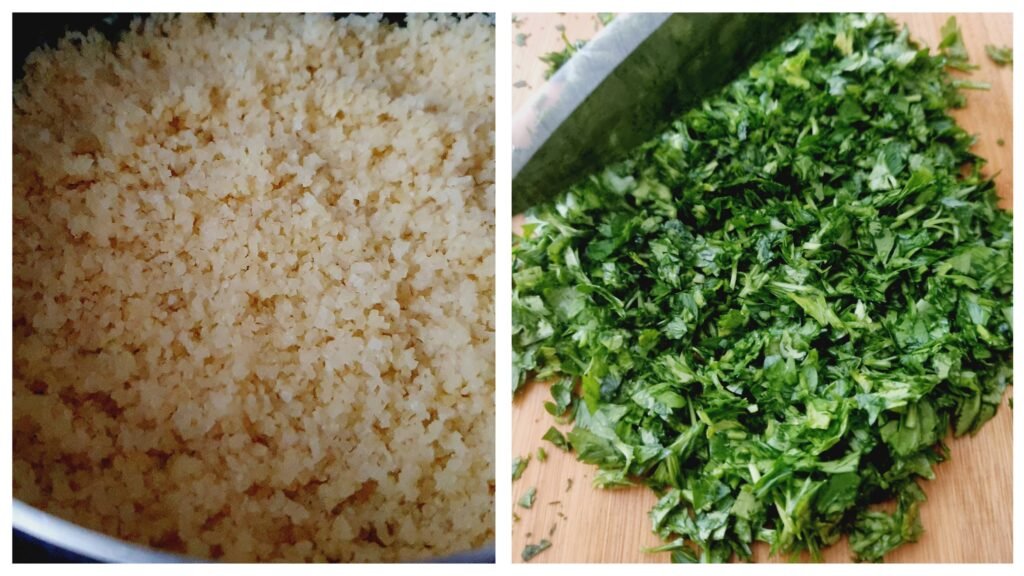
Wash the parsley. When preparing your parsley, remove the stems. Usually, the stem of the parsley is fibrous and stringy in nature. Next, finely chop your parsley. Chop up your cucumber, tomatoes, and onions. In a large bowl, combine all your ingredients. Add the lemon juice, olive oil, salt, and white pepper. Mix until everything is combined.
What to Serve with Tabbouleh?
There are so many recipes that will pair perfectly with Tabbouleh, consider Greek Style Lamb Chops and Grilled Chicken as options. Garlic Butter beef cubes, and Chicken Shawarma are also fantastic choices. Tabbouleh is a delicious salad, the harmonious blend of herbs, grains and fresh vegetables.
How to Store Tabbouleh?
Store in the fridge for two to four days. Tabbouleh can be made ahead of time. It is essential to store it seperately to the salad dressing, to maintain its freshness. As soon you add the lemon, it will start to soften the parsley leaves. Therefore, only mix tabbouleh just before serving to maintain its freshness. This will prevent the salad from becoming soggy.
Expert tips
Different regions in the Levant will feature variations of this dish; some will include pomegranate seeds, whilst others will contain mint. If you can’t find bulgur wheat, you can always substitute it with couscous or quinoa. Tabbouleh is more than just a salad; you can serve it as a filling for wraps or pita bread.
For best results, it is always recommended for you to use the freshest parsley and avoid dried herbs. Even though parsley adds a lot of vibrancy to this dish, the fine bulgur wheat is considered the main ingredient. If you don’t have time to cook the bulgur wheat, you can always soak it in warm water for 30 minutes. The finer the parsley, the better for flavour; however, you can always take a rustic approach to tabbouleh and combine finely diced with the rough-chopped to create a salad with various textures.
Ingredients
Herbs
- 3 cups Parsley
Vegetables
- 1/2 Onion
- 1 Cucumber
- 1 Garlic clove
- 1 Tomato
Tabbouleh Salad Dressing
- 3 tbsp olive oil
- Salt and pepper to taste
- 3 tbsp Lemon
Bulgur
- 3 tbsp Bulgur wheat
Instructions
- Vegetables: Wash all the vegetables. Finely dice the onion, cucumber, garlic clove, and tomato (remove seeds of tomato)
- Parsley: Remove the stalk just after it divides into 3 branches. The stalk can be stringy and tough to chew. After removing the stalk of the parsley, finely mince the parsley leaves.
- Bulgur Preparation: Start by adding bulgur to a pot. Pour in enough water to completely submerge the bulgur. Bring the water to a boil and cook the bulgur for 2 minutes. After that, reduce the heat to the lowest setting and cook for an additional 6 minutes. Once the bulgur is cooked, stir it gently to fluff it up and allow it to cool for 2 minutes.
- Mix ingredients: Add all the prepared ingredients in a bowl, including the vegetables and bulgur. Add olive oil, fresh lemon juice, salt and pepper. Thoroughly mix the ingredients and serve.
Nutrition
Calories: 147kcal | Carbohydrates: 26g | Protein: 5g | Fat: 3g | Saturated Fat: 0.4g | Polyunsaturated Fat: 0.3g | Monounsaturated Fat: 2g | Sodium: 247mg | Potassium: 916mg | Fiber: 6g | Sugar: 16g | Vitamin A: 8250IU | Vitamin C: 138mg | Calcium: 168mg | Iron: 6mg
Did you make this recipe?Pin to Save this Recipe