Easy Prawn Curry with Kokum and Tomato
If you love a curry with plenty of flavor but don’t want to spend hours at the stove, this easy prawn curry is one to keep in your back pocket.
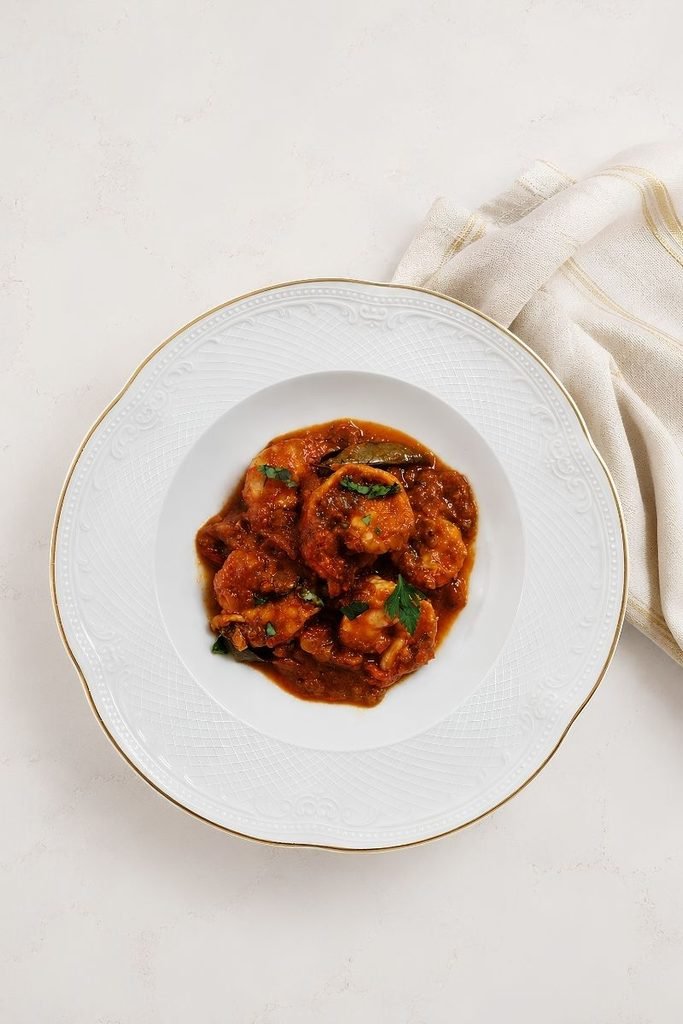
Juicy prawns simmer in a fragrant tomato-based curry with ginger, garlic, cumin, turmeric, curry leaves, and chili. The secret ingredient is kokum, which gives the curry a distinctive tangy flavor.
It works beautifully with seafood and adds a gentle sourness that balances the sweetness of the onions and tomatoes. This isn’t a heavy, coconut-based curry. Instead, it has a rich, spicy tomato gravy that coats every prawn. And because prawns cook so quickly, you can have this Indian-inspired prawn curry on the table in around 30 minutes.
Why You’ll Love This Prawn Curry
Many people think cooking prawn curry at home requires a long labor of love; however, this Indian-inspired recipe takes 30 minutes to cook, is full of flavor, and uses ingredients found in most supermarkets.
What is Kokum?
For tanginess, we used Kokum instead of traditional tamarind. Kokum is easier to use—no soaking or sieving required—and provides a similar tart flavor. It resembles a deep purple, red flower petal. Kokum is available online; it lasts a long time, and you only need a few pieces to infuse the Prawn curry with its tangy flavor.
Tamarind is a good substitute if you can’t find it. Cooking with prawns is convenient; they only need a few minutes to cook. The origins of prawn curry can be traced back to ancient coastal communities, where seafood was a staple of the diet.
History of Prawn Curry
This dish has a rich culinary heritage that transcends geographical boundaries, with different versions and cooking techniques creating different results.
The development of trade routes and the use of spices in curries created a wide array of dishes across the region. Prawn curries in Northern India will be different to the ones from Southern India. What makes prawns an exceptional choice for curry is their rapid cooking time. Prawns are ready to eat within minutes and can also absorb the sauce’s flavors quickly.
Ingredients
Prawns, Onion, Ginger, Garlic, Cumin seeds, Turmeric, Cumin powder, Black Pepper Powder, Kashmiri chili powder, Red chilies, Curry leaves, Mustard seeds, Tomato paste, Kokum, Tomato passata, Apple cider vinegar, Brown Sugar.
Use raw, peeled, and deveined prawns. Large or medium prawns both work well. These create the base of the curry. Give the onions enough time to soften and lightly caramelize. Using both adds layers of warm, earthy cumin flavor. Turmeric adds color, while Kashmiri chili provides beautiful color with moderate heat. Black pepper and fresh red chili add warmth and allow you to adjust the spice level.
Mustard seeds and curry leaves are especially important for the curry’s distinctive Indian character. Tomato paste provides concentrated savouriness, while passata creates the smooth curry gravy. Kokum gives the curry its characteristic tang. If you don’t have it, you can use tamarind instead. Apple cider vinegar adds acidity, while brown sugar balances the sharpness of the tomatoes and kokum.
Instructions
De-shell the prawns, remove the gut lining, and wash them before refrigerating. Chop the onions, garlic, and ginger. In a pot over medium-low heat, sauté the onions, ginger, and garlic in cooking oil for 6 to 8 minutes until caramelized. Add the spices and sauté for 1 to 2 minutes, then wash the kokum and add it to the pot.
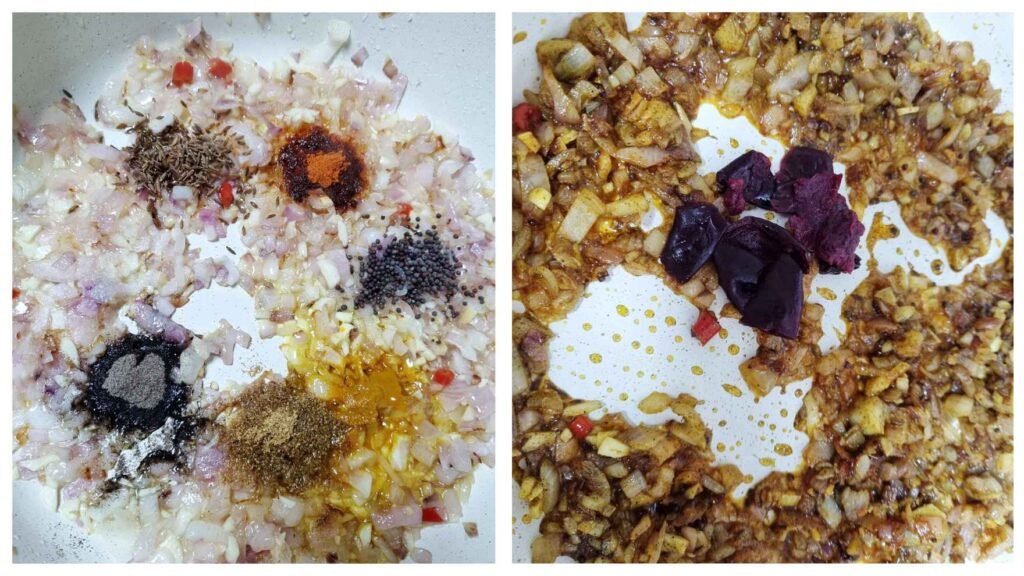
Mix and add the tomato paste and passata sauce. At this point, the fragrance of the ingredients will have a tangy aroma with hints of earthy cumin wafting through the air. Add the apple cider vinegar and brown sugar, then mix well until combined.
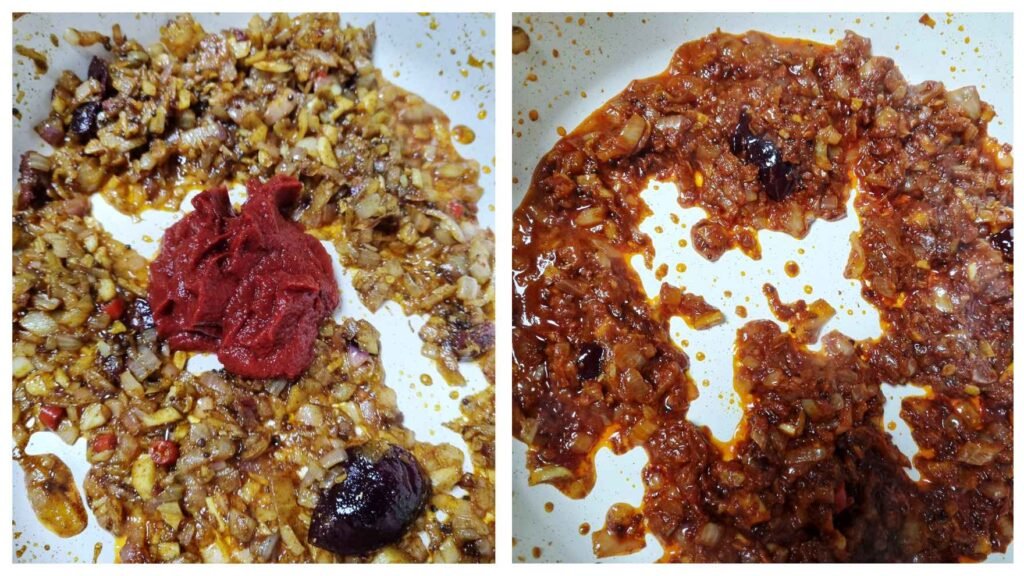
Add 1/4 cup of water and let the flavours meld. Thereafter, add the prawns to the pot. Coat the prawns with the spicy tomato-based gravy. Add a few curry leaves. You can add the curry leaves during the sautéing at the beginning, or add them at this step.
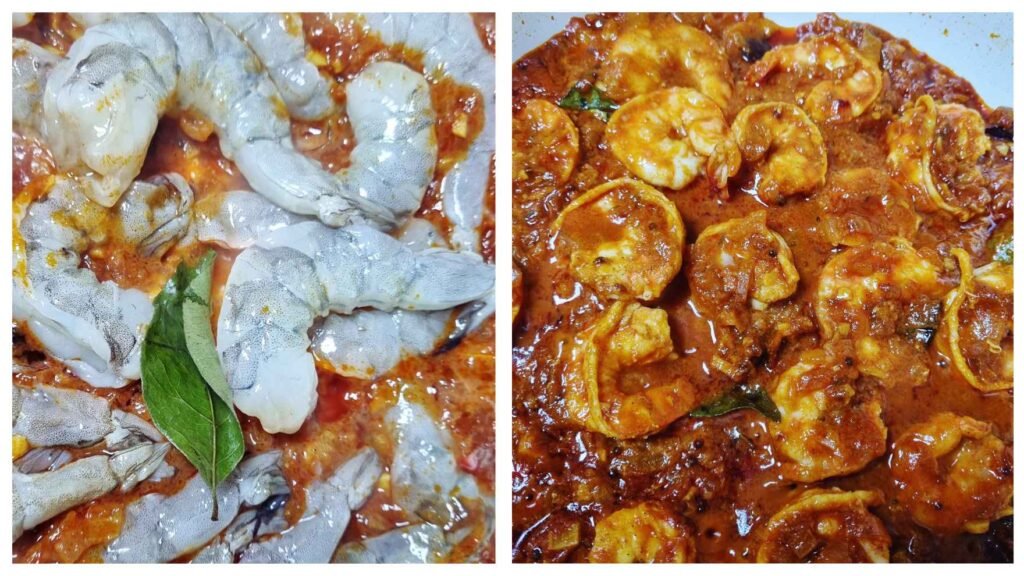
The prawns will change from grey to completely white in less than 4 minutes. It is recommended to stir the pot to ensure that the flavors are evenly incorporated into the prawns, and to turn them a few times to verify that they are cooked on both sides. Once cooked, turn off the heat. The prawn curry can be served immediately.
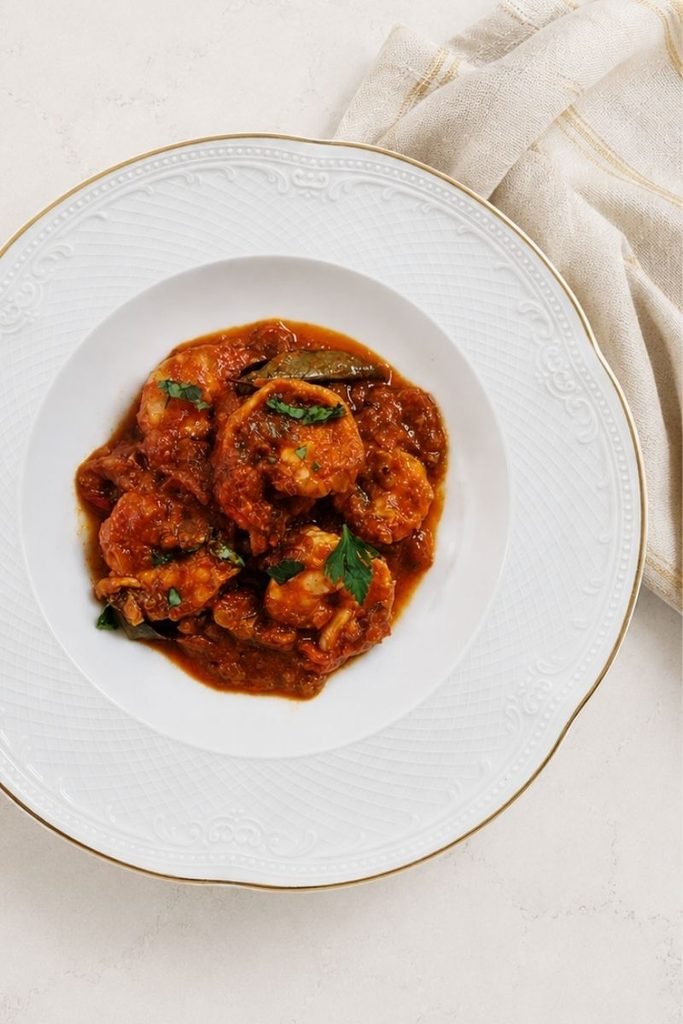
What to Serve with Prawn Curry?
Serve the prawn curry with white rice, basmati rice, or jasmine rice. You can also enjoy this dish with garlic naan. For salad options, consider a light and crunchy cucumber salad, a Balsamic red pepper salad, or alternatively a Red radish salad.
How to Store Prawn Curry?
Once cool, store in the fridge for two to four days. Reheat on the stove or in the microwave. You can freeze prawn curry for up to three months. Defrost on the countertop for 2 hours, then reheat on the stove.
How Spicy Is This Curry?
The heat is easy to adjust. Kashmiri chili powder is a good choice when you want vibrant color and gentle heat. For a hotter curry, add more fresh chili or replace some of the Kashmiri chili with a hotter chili powder. If you prefer a mild shrimp curry, reduce the fresh chili and chili powder rather than removing them completely. The spices still contribute plenty of flavor even when the heat is kept low.
Can I Use Shrimp Instead of Prawns?
Absolutely. Prawns and shrimp can be used interchangeably in this recipe. The important thing is to use raw seafood rather than pre-cooked shrimp. Raw prawns absorb the curry’s flavors as they cook and are much less likely to overcook during reheating.
Can I Make Prawn Curry Without Coconut Milk?
Yes. This recipe is already made without coconut milk. Instead of a creamy coconut sauce, the curry has a concentrated tomato gravy with kokum providing acidity. This makes it particularly good if you prefer a lighter seafood curry or simply don’t have coconut milk in the pantry. If you prefer a richer curry, you can add a small splash of coconut milk at the end, although it will change the character of the dish.
Expert Tips for the Best Prawn Curry
Don’t overcook the prawns. They only need a few minutes in the curry. Cook the onions properly. This gives the sauce a natural sweetness and deeper flavor. Don’t burn the spices. Keep the heat moderate when frying them. Use raw prawns. Pre-cooked prawns can become rubbery quickly.
Adjust the sourness gradually. Kokum and tamarind vary in intensity, so taste before adding more. If you cannot find kokum, substitute tamarind paste, starting with a small amount and adding more if needed.
This shrimp curry is not that spicy. For a less spicy flavor, reduce the fresh chili and Kashmiri chili powder; for a spicier flavor, increase them. Add fresh red chili or a hotter chili powder for more heat.
This easy Indian prawn curry is proof that a flavourful seafood dinner doesn’t need a complicated ingredient list or hours of cooking. Build a good aromatic base, let the spices do their work, and add the prawns right at the end. Serve it with rice, spoon over plenty of that tangy tomato gravy, and dinner is ready.
If you can’t find kokum, substitute it with three to six tablespoons of tamarind paste. You can buy tamarind in cube form at an Asian supermarket; soak it in warm water for 10 minutes and then sieve out the solids. Alternatively, you can use bottled tamarind paste, ensuring it’s low in sugar. If it contains sugar, adjust the recipe by omitting additional sugar to maintain a balanced flavor in your prawn curry.
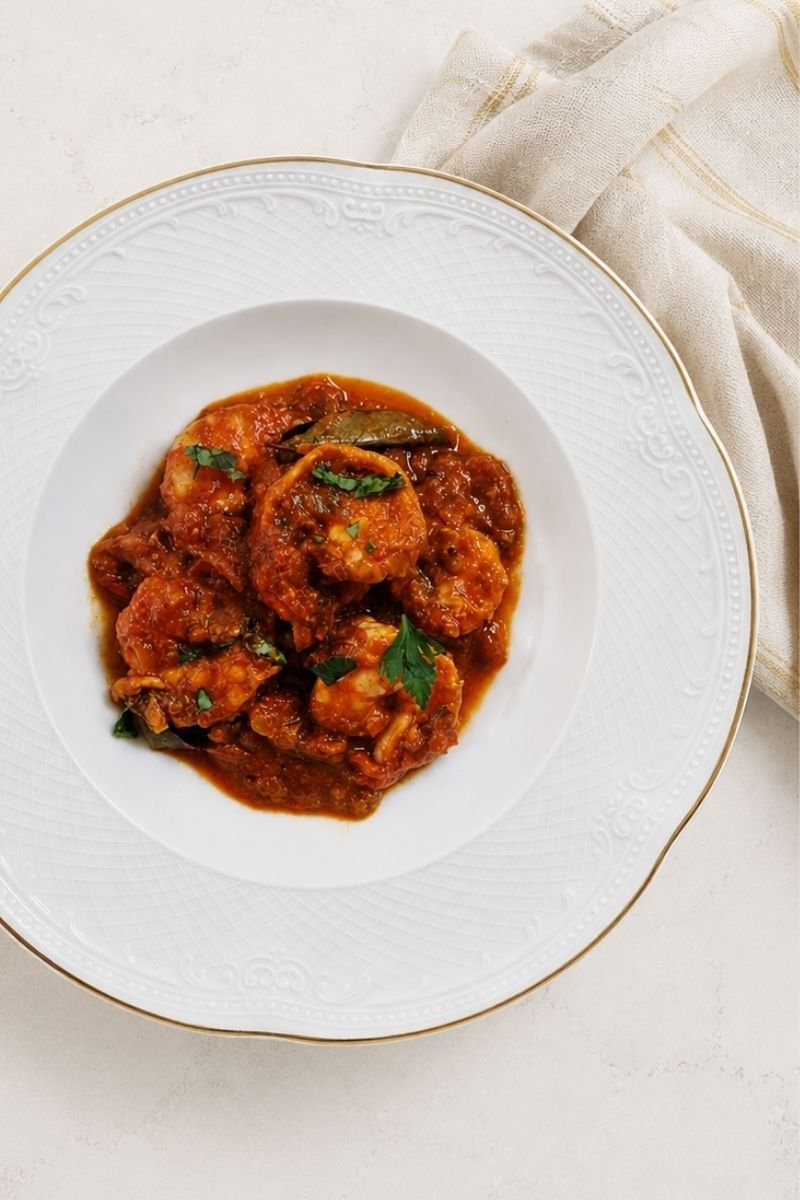
This easy prawn curry combines juicy prawns with a fragrant tomato-based sauce, cumin, turmeric, curry leaves, chilli and tangy kokum. Ready in about 30 minutes, it's a quick and flavourful Indian-inspired seafood dinner served perfectly with rice or naan.
Ingredients
- 500 grams Prawn
Spices
- 1 tsp Cumin Seeds
- ½ tsp Cumin Powder
- ½ tsp Turmeric
- ½ tsp Black Pepper
- ½ tsp Kashmiri Chili Powder
- ½ tsp Mustard Seeds
- ¼ tsp Salt – Adjust as needed.
Condiments & others
- 5 tbsp Tomato Paste
- 4 tbsp Tomato Passata – Or one small tomato, pureed.
- 1 tbsp Apple Cider Vinegar – White vinegar.
- 1½ tsp Brown Sugar
- ¼ cup Water
- 20 grams Kokum – Three to five pieces.
- 3 to 4 Curry leaves
Instructions
- Clean the prawns: De-shell prawns and remove the gut lining; wash and refrigerate.
- Sauté: Chop onions, garlic, and ginger. Sauté in oil over medium-low heat for 6-8 minutes until caramelized.
- Add the seasoning: Add spices to the pot and sauté for 1-2 minutes. Wash kokum and add to the pot.
- Add the condiments: Mix in tomato paste, passata sauce, apple cider vinegar, and brown sugar. Add 1/4 cup water and let flavors meld.
- Add the prawns and simmer: Add prawns and curry leaves, coating them in the sauce. Cook for less than 4 minutes, stirring occasionally, until prawns turn white.
- Serve: Once cooked, turn off the heat. Check for salt and adjust accordingly. Garnish with parsley leaves.
Nutrition
Calories: 136kcal | Carbohydrates: 6g | Protein: 26g | Fat: 1g | Saturated Fat: 0.2g | Polyunsaturated Fat: 0.3g | Monounsaturated Fat: 0.3g | Trans Fat: 0.01g | Cholesterol: 202mg | Sodium: 622mg | Potassium: 565mg | Fiber: 1g | Sugar: 4g | Vitamin A: 343IU | Vitamin C: 20mg | Calcium: 101mg | Iron: 2mg
Did you make this recipe?Pin to Save this Recipe