Samgyetang
Samgyetang (삼계탕) is a traditional Korean dish that translates to Ginseng Chicken Soup. It is a nourishing, hearty dish typically eaten during the peak of summer. The main flavour of the dish comes from Korean ginseng and whole young chicken.
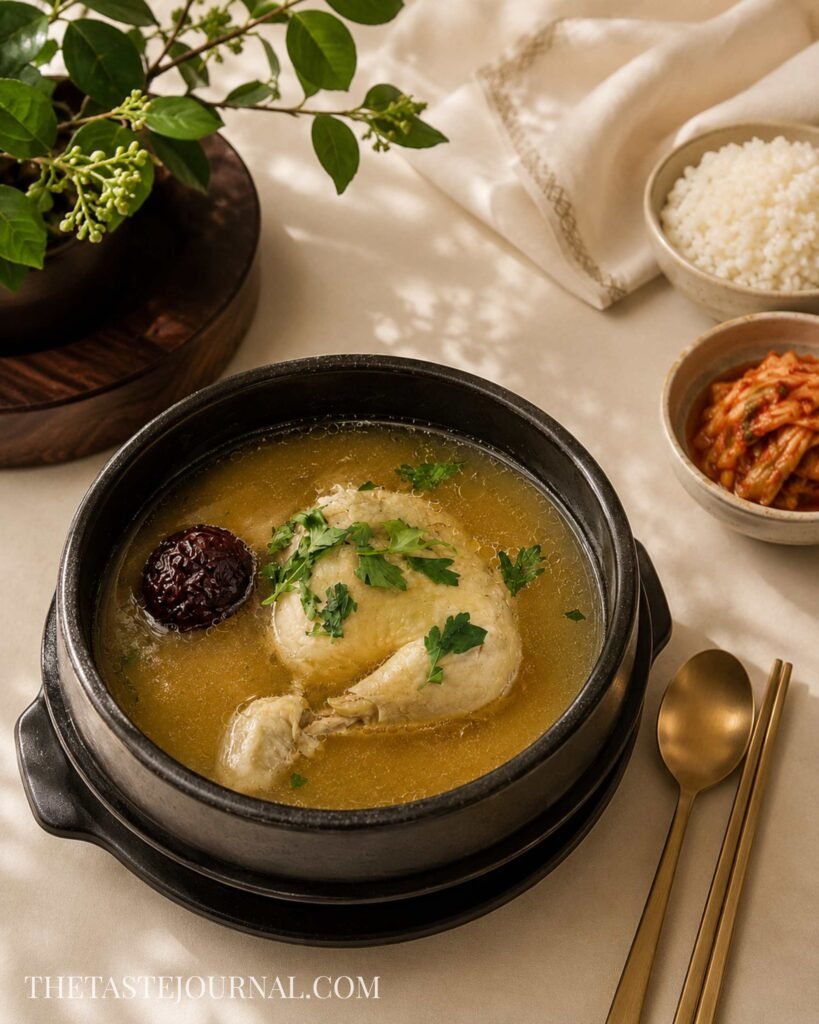
Traditionally, chicken is stuffed with rice and cooked in a broth. However, it can also be prepared without rice. The broth is made from water, ginseng, garlic, ginger, jujube dates, and other medicinal herbs, which contribute to its savory flavor. One of the key ingredients in samgyetang is ginseng root, a popular supplement that has a wide range of health benefits. Ginseng root offers numerous health benefits, such as boosting vitality, improving circulation, and enhancing immune function. For these reasons, samgyetang is considered a medicinal dish that rejuvenates the body and restores energy.
History of Samgyetang
Historically, samgyetang was considered a luxurious dish that was prepared for those in need of physical recovery. The soup was commonly served to soldiers, laborers, and individuals recovering from illnesses to help them regain their energy and stamina. In Korea, traditional medicine is known as Hanbang (한방), and the use of ginseng in Korean cuisine dates back over a thousand years. Interestingly, samgyetang was widely consumed during the Joseon Dynasty (1392-1897). The Korean royal family and the upper class enjoyed this dish, which was infused with ginseng for its numerous health benefits. By the 20th century, samgyetang had become a popular dish among all social classes and could be found in many restaurants.
Ingredients
Whole chicken, Ginseng, Jujube, Herbs, Roots, Ginger, and Garlic.
When preparing this dish, it is recommended to use young chickens, as their meat is more tender than that of older chickens. Use the entire chicken with the skin and bones intact. Be sure to keep the chicken fat for this dish, as the fat from the skin and bones significantly enhances the soup’s flavor. Jujube is a small, sweet fruit native to Korea. It is rich in vitamins, antioxidants, and minerals. This remarkable fruit improves sleep, strengthens immunity, aids digestion, and helps reduce stress levels.
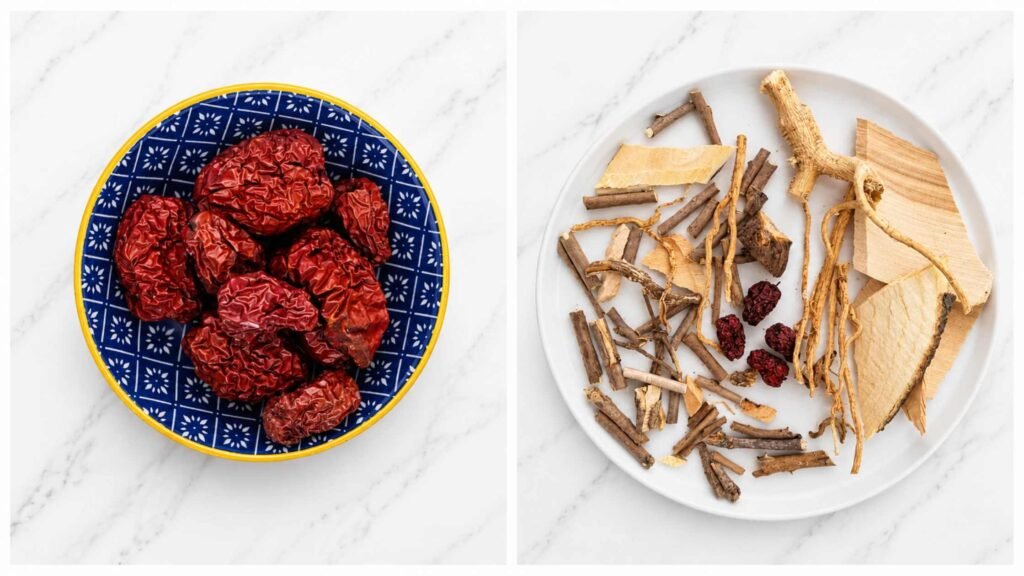
Samgyetang soup kits are available online and contain ginseng root, the herbs listed below, and jujube, making this meal incredibly convenient to prepare at home. The herbs used in Samgyetang include Milkvetch, Mulberry Bark, Korean Ginseng, Jujube, and Angelica Root. Ginger adds warmth to the dish with its spicy flavor and slight sweetness, accompanied by a citrus undertone. It also supports digestion, immunity, and overall health by stimulating saliva production and bile secretion, which promote digestion. Garlic contributes a delightful aroma to the dish. It enhances the flavor, making the dish more savoury.
Instructions
Rinse and clean the whole chicken. Open the packet of samgyetang soup kit. This packet will contain the roots, jujube. Peel the ginger and clean the garlic. These two ingredients will be used whole without chopping or slicing. Add two litres of water in a pot, add the whole chicken and bring the water to boil. Make sure that the chicken is completely submerged in the water. The water should not be more than 2 1/2 litres. Adding too much water will dilute the flavours.
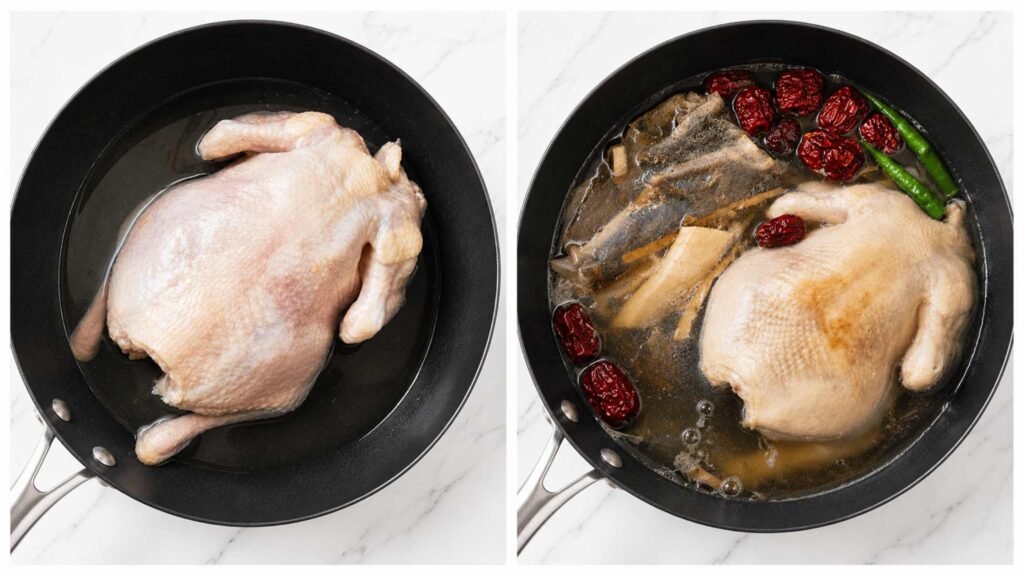
Add the bag of roots, ginger, garlic, and jujube to the pot. Cook the chicken for fifty minutes on high heat with the lid closed. The soup is done cooking when the chicken is tender, and the broth becomes opaque.
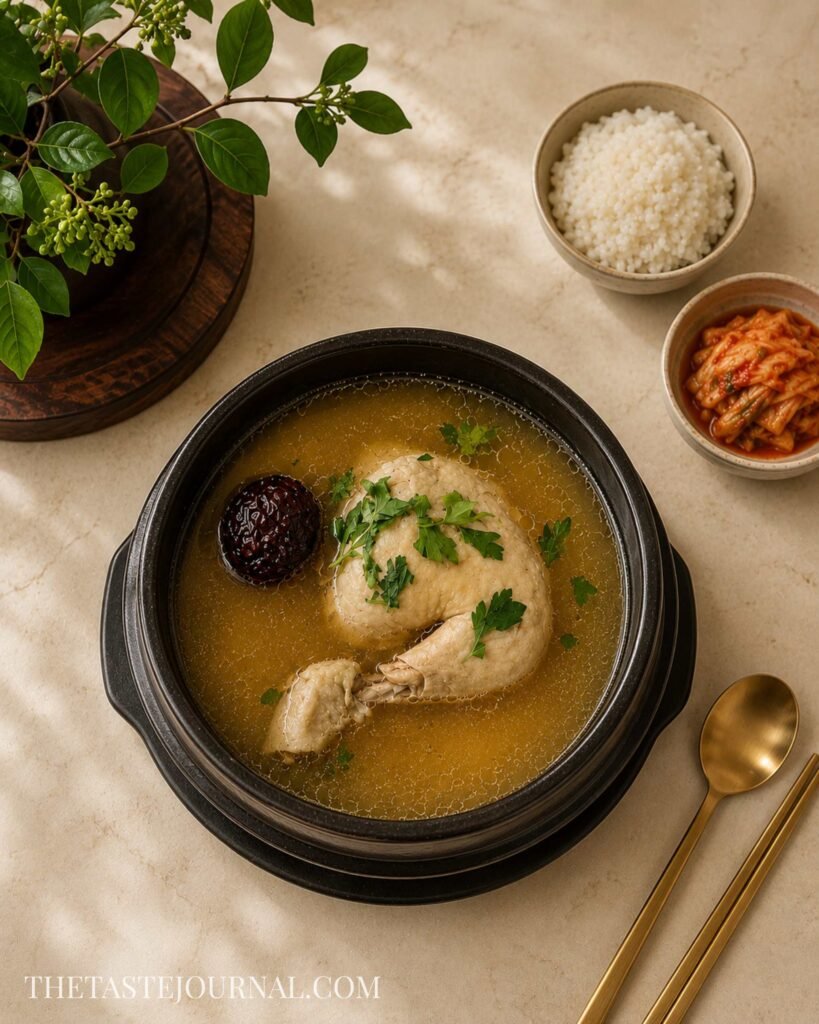
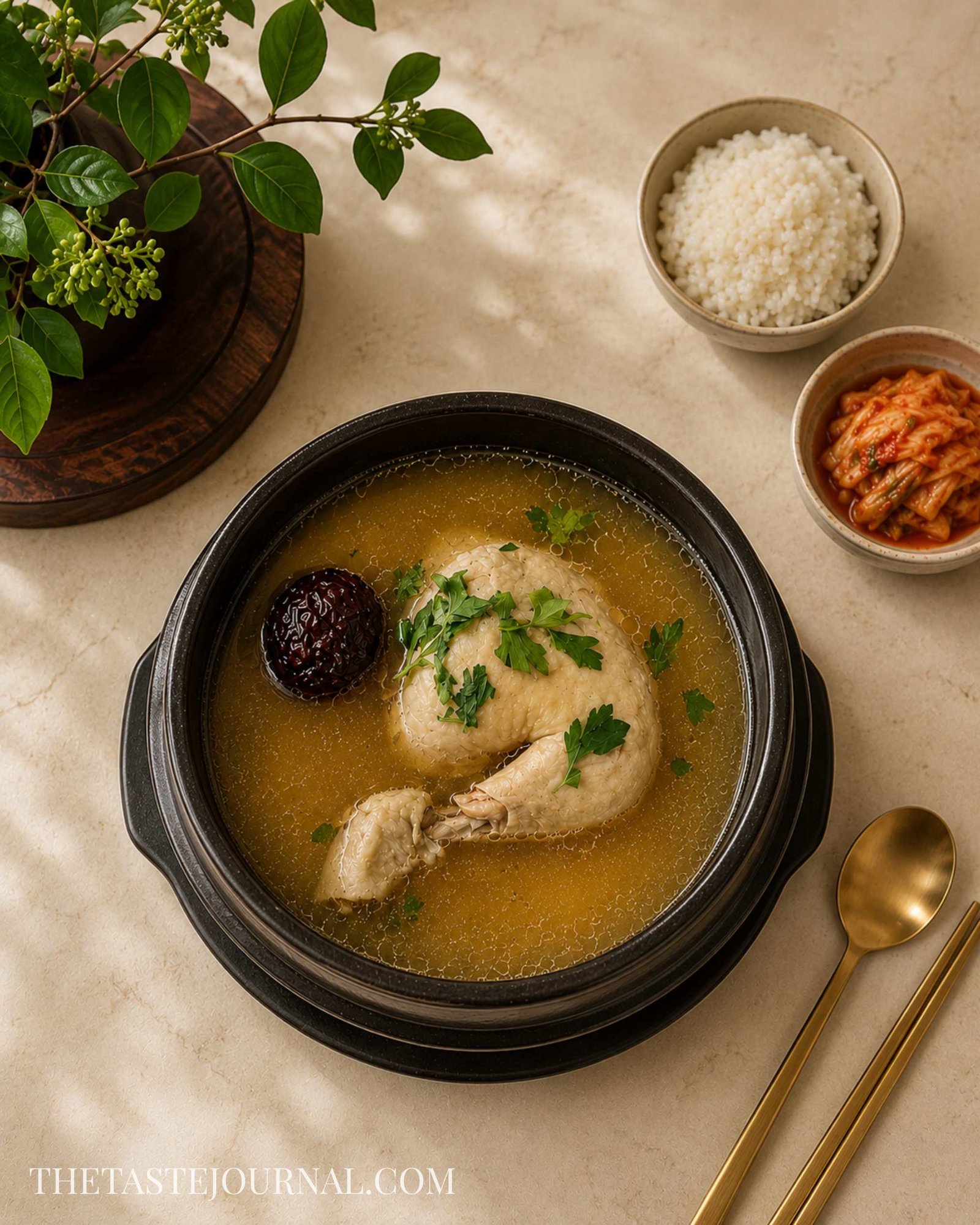
Once the soup is cooked, remove the bag of herbs and roots. This bag of medicinal herbs is ‘once use only’. Garnish the samgyetang with green onion slices or fresh herbs before serving. Most people do not consume the jujube once the soup is cooked, as the nutrients are infused into the soup. However, you should have a bite of it, it has an unusual taste that some people enjoy. Cooked jujube has a mild sweetness that is slightly caramel-like; it is almost like a cross between a date, adried plum, and an apple.
What Can you Serve with Samgyetang?
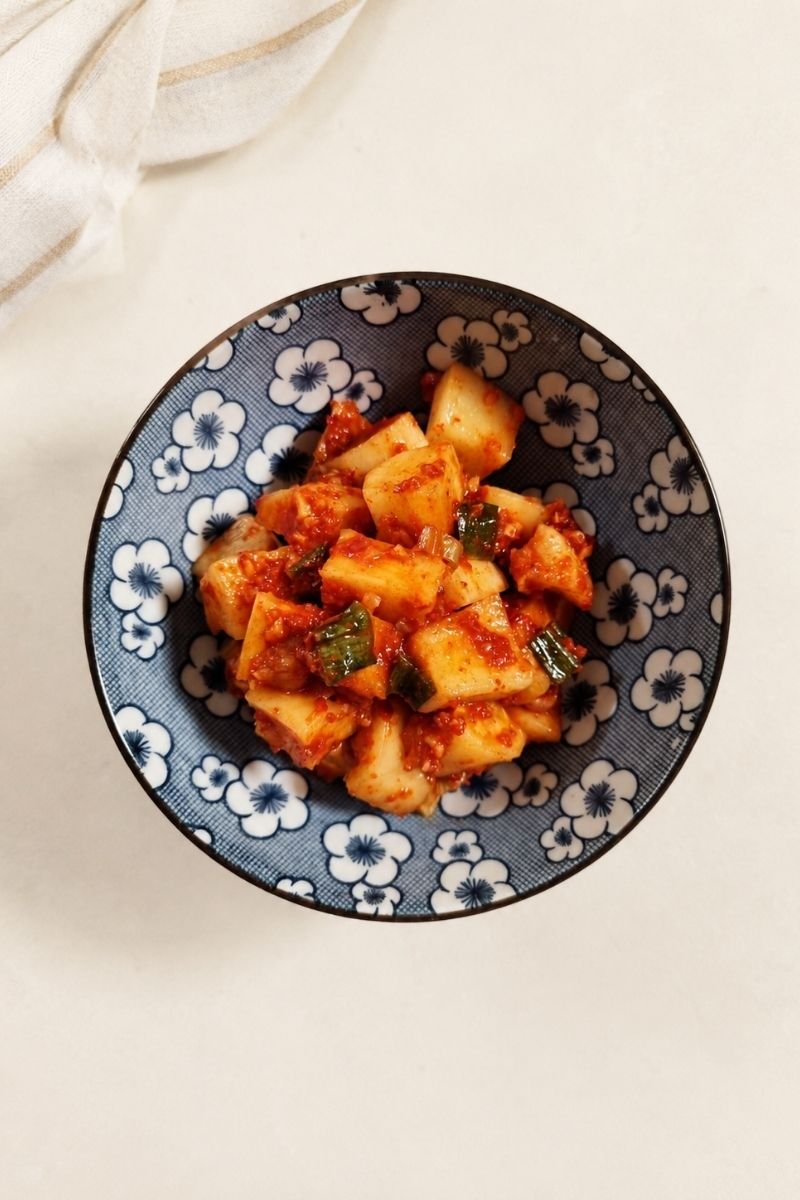
Kimchi is a classic addition to Samgyetang soup as it perfectly balances the rich flavour of the soup. Kimchi is a traditional Korean dish made from fermented napa cabbage, or any other vegetable, which has a tangy and spicy taste. The contrasting flavour profile of samgyetang and kimchi completes the flavour dynamic in one meal. The soup will be nourishing, whilst the kimchi provides the sharp taste with tang and spice. Spring onion kimchi and Buchu Kimchi will also complement the flavours of the Samgyetang.
How to Store the Samgyetang?
Allow the samgyetang to cool down. Transfer the soup and the chicken into an airtight container to put in the fridge, or aresealable bag to freeze the soup. Samgyetang in the fridge can last up to two to three days, and in the freezer can last up to two to three months. Reheating samgyetang can be done in two ways, stovetop or microwave. Pour the soup into a pot and reheat on medium low heat while stirring. Avoid boiling the soup, which could affect the texture and taste.
Ingredients
- 1 kg Whole chicken
- 1 Packet medicinal herbs and ginseng roots
- 4 Jujube dates
Spices
- ½ tsp Salt
- ½ tsp Ground Black Pepper powder
Aromatics
- 2 Small green chilis
- 10 grams Ginger – Peeled Whole
- 7 Garlic cloves – Whole
- 1 Spring onion – chopped for garnish
- Fresh parsley – chopped for garnish
Instructions
- Prepare the ingredients: Rinse and clean the whole chicken. Open the packet of samgyetang herb and root combinations and place the herbs and roots in the soup bag provided in the packet. Peel the ginger and clean the garlic.
- Pre-boil the chicken: Add water and chicken in a pot. Boil the chicken for three minutes and use a ladle to remove the floating grease.
- Cook the chicken: Add the bag of herb and root, ginger, garlic and jujube in the pot. Cook the chicken for fifty minutes on high heat with the lid closed. The soup is done cooking when the chicken is tender and the broth becomes opaque. Once the soup is cooked, remove the bag of herbs and roots.
- Garnish and serve: Garnish with sliced green onions or fresh parsley to serve.
Nutrition
Calories: 180kcal | Carbohydrates: 2g | Protein: 15g | Fat: 12g | Saturated Fat: 3g | Polyunsaturated Fat: 3g | Monounsaturated Fat: 5g | Trans Fat: 0.1g | Cholesterol: 61mg | Sodium: 86mg | Potassium: 184mg | Fiber: 0.2g | Sugar: 0.1g | Vitamin A: 133IU | Vitamin C: 3mg | Calcium: 17mg | Iron: 1mg
Did you make this recipe?Pin to Save this Recipe