
Mongolian Beef
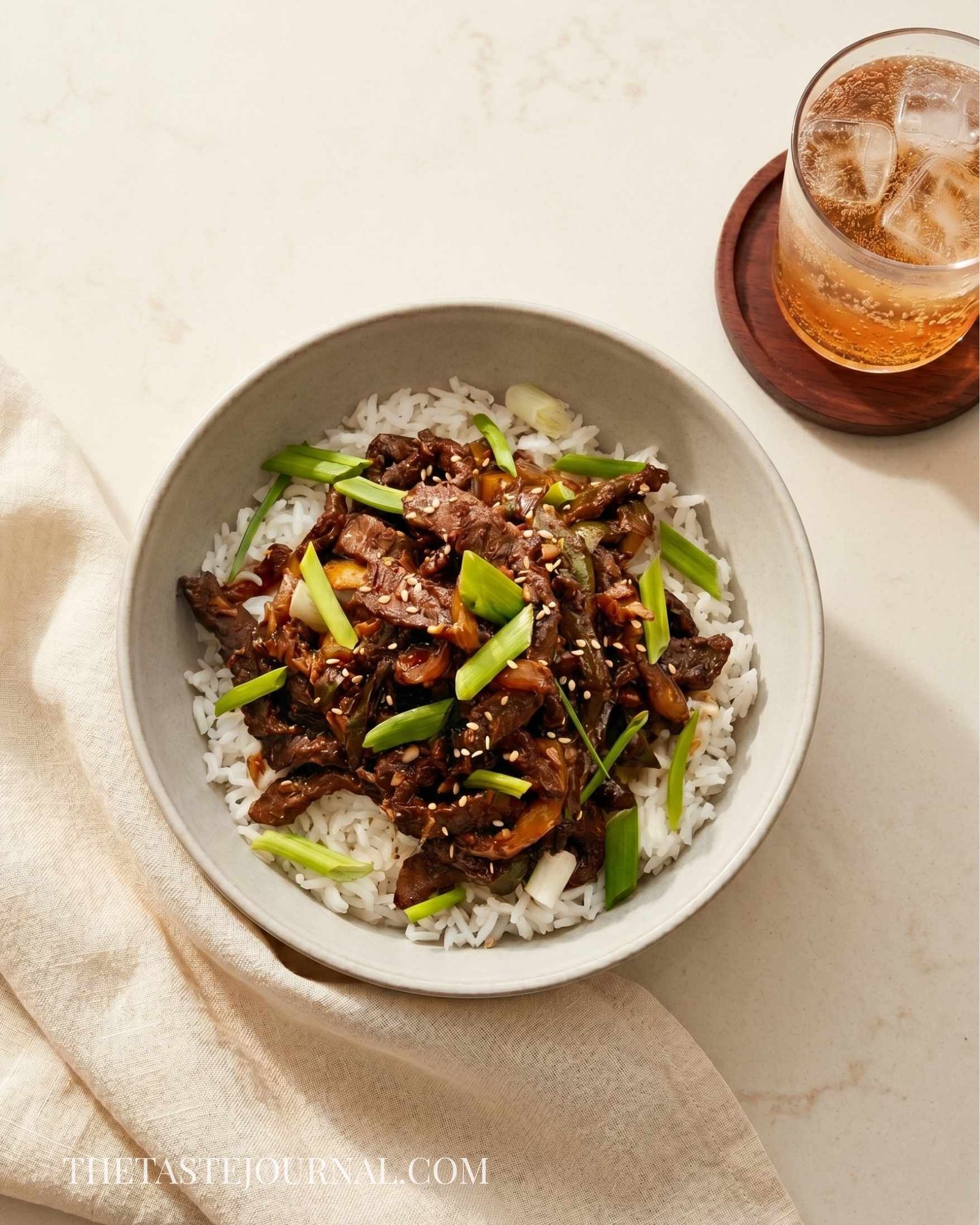
Today, we are making Mongolian Beef, a delicious stir-fry made with thinly sliced beef. This dish is prepared with flavorful ingredients such as garlic, ginger, brown sugar, and soy sauce.
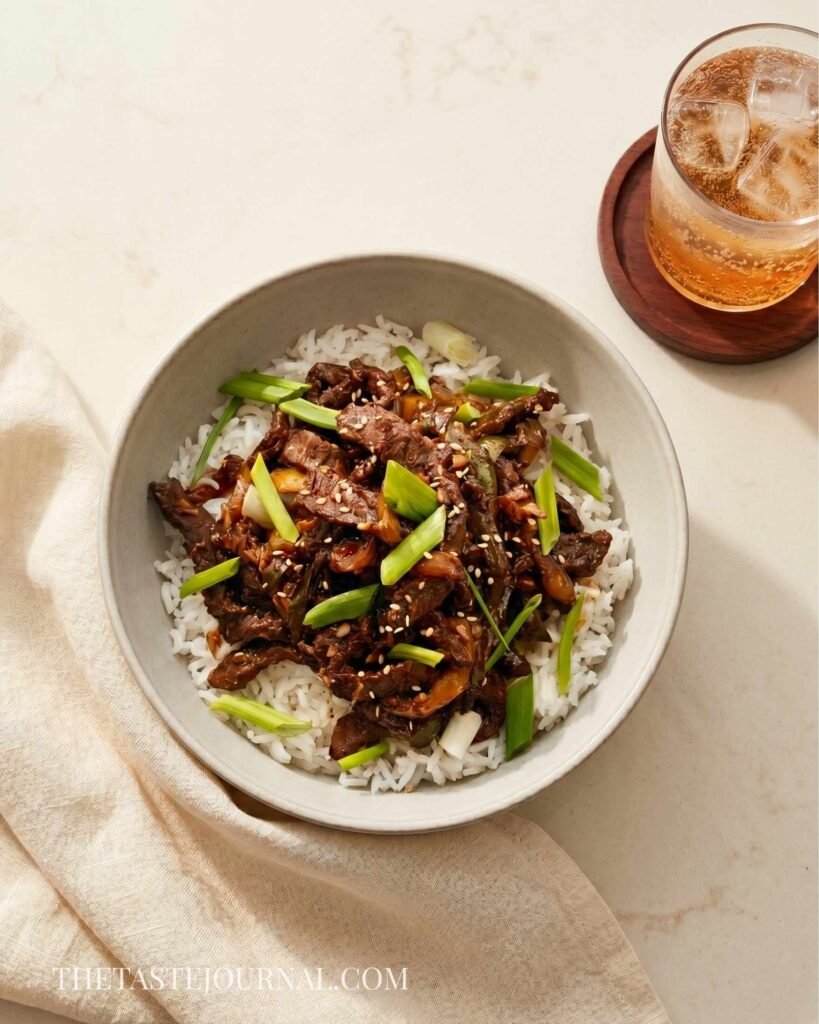
Mongolian Beef uses a generous amount of garlic, yet the final dish does not taste overwhelmingly garlicky. Once cooked in the wok, the garlic’s intensity diminishes. For the best results, choose cuts of meat that are easy to tenderize, such as sirloin, flank, rib-eye, or skirt steak. The tenderness of the meat is essential for a delicious dining experience.
This dish is versatile and easy to prepare, making it an ideal choice for a busy weeknight. It’s great for meal prepping and can be served alongside rice and vegetables, such as steamed broccoli or roasted cauliflower.
Ingredients
Topside beef, Garlic, Soy sauce, Hoisin sauce, Oyster sauce, Water, Bell peppers, Chives, White sugar, Salt & Pepper.
Topside Beef is lean and flavourful. This cut is thinly sliced, ensuring quick cooking while retaining the meat’s tenderness and juiciness. When marinated, the Beef has a robust, extra-flavored taste. The garlic adds a sharp, pungent flavor to the Beef and vegetables. It creates a rich, savory note that works beautifully with brown sugar.
Soy sauce has a salty, umami flavor that adds color and depth. Hoisin sauce has a sweet, tangy flavor that adds complexity and a smokiness to the Mongolian Beef. Oyster sauce adds richness to the overall marinade. Bell peppers provide a pleasant contrast to the sauces. Pepper adds subtle heat.
Instructions
Chop the garlic and place it in a bowl. Then, add 1/2 cup of water, hoisin sauce, sesame oil, soy sauce, white pepper, salt, and sugar. Next, slice the topside beef. After that, slice the green and yellow peppers horizontally. Finally, chop the chives.
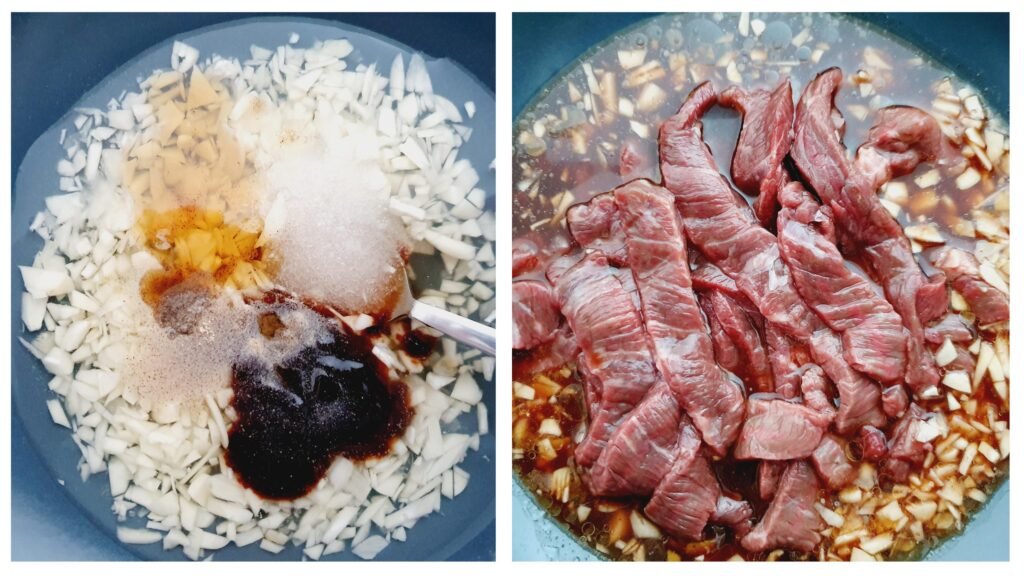
Add yellow and green peppers to the beef marinade and marinate the beef for 1 hour to allow the flavors to infuse. Marinating helps break down the meat’s protein and allows the marinade to blend into the dish, resulting in more flavorful beef. The tender, soft beef strips will pair beautifully with the freshly cooked rice. You can reduce the marination time by 30 minutes.
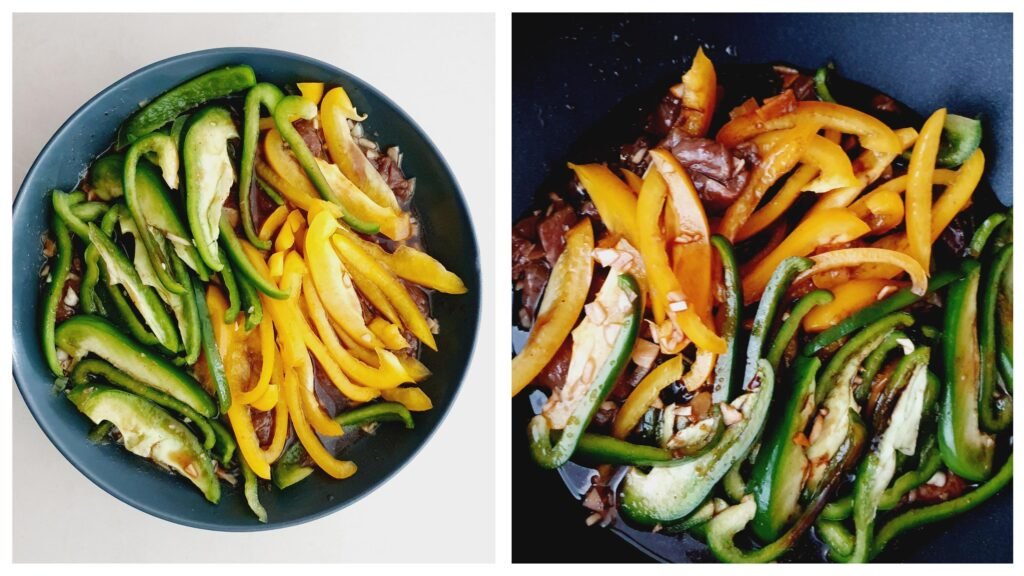
Add the oil to the wok, then add the peppers and beef with the marinade. Afterward, add the soy sauce. We recommend mixing it well, then stirring the meat for 5 minutes. Set the temperature to medium-high heat. Thereafter, reduce to medium-low heat for ten minutes. The Mongolian beef is ready to be served and enjoyed.
Expert Tips
Marination is a crucial step for tenderizing the meat. To prepare for stir-frying the beef, mix rice wine, soy sauce, and cornstarch. It is essential to sear the beef over high heat to keep it moist. After searing, you can reduce the heat. Allow the sauce to simmer until it thickens, which is important for enhancing the flavor. Let the sauce simmer and thicken slightly, ensuring it coats the beef evenly. Initially, turn the heat to medium-high, then reduce it to low for ten minutes.
What can you Serve with Mongolian beef?
Mongolian beef pairs well with white or jasmine rice; the neutral flavor of these grains provides a base for the beef’s rich flavors. Fried rice is also fantastic in this dish; consider an array of vibrant, colorful vegetables. Lo mein and rice noodles are also great additions to this dish.
How to Store Mongolian Beef?
Ensure the Mongolian beef cools before adding it to a Tupperware container. Once it has reached room temperature, place it in a BPA or glass container. Refrigerate for three to four days. If you want to keep it longer, it can last up to 3 months in the freezer. It is essential to use a freezer-safe container. When ready to eat, thaw in the refrigerator overnight, then reheat on the stovetop or in the microwave.
Ingredients
Base ingredients
- 250 grams Topside beef – thinly sliced
- 1 Bunch garlic – minced (adjust to your preference)
- 2 Bell peppers – thinly sliced
Condiments
- 2 tbsp Soy sauce
- 2 tsp Hoisin sauce
- 1 tsp Oyster sauce
- 1 tbsp Brown Sugar
- 1 tbsp Sesame oil
- 1 tbsp Vegetable oil
- 1/2 cup Water
Garnish
- 3 Chives – cut into 2-inch pieces
Instructions
- Preparation: Thinly slice the Beef into strips. Get a large bowl. Add Soy sauce, garlic, Hoisin sauce, Oyster sauce, sugar, and sesame seed oil. Slice up the Bell Peppers. Add the Beef. Mix the ingredients. Let it marinate for 60 minutes.
- Preheat the Pan: Heat oil in a wok on high heat. Sauté the marinated Beef, along with the marinade sauce and the bell pepper, until the Beef has browned and the bell pepper has softened. The Beef should take five minutes on high heat. Thereafter, reduce the heat to low and cook for ten minutes. Once cooked, remove from the heat. Drizzle with sesame seed oil and sesame seeds. Garnish with chives.
Nutrition
Calories: 98kcal | Carbohydrates: 8g | Protein: 2g | Fat: 7g | Saturated Fat: 1g | Polyunsaturated Fat: 4g | Monounsaturated Fat: 2g | Trans Fat: 0.02g | Cholesterol: 0.1mg | Sodium: 581mg | Potassium: 152mg | Fiber: 1g | Sugar: 6g | Vitamin A: 1863IU | Vitamin C: 76mg | Calcium: 10mg | Iron: 1mg
Did you make this recipe?Pin to Save this Recipe
This recipe is so good! Kinda similar to Korean Bulgogi 😀