Japchae
Japchae is a traditional Korean dish made with glass noodles, also known as dangmyeon. These noodles, made from sweet potato starch, are chewy and delicious. Anyone who has tried Japchae has likely become a lifelong fan of this remarkable dish. It offers a delightful combination of tangy flavors, and the rich dark soy sauce is sure to make you want to go back for seconds.
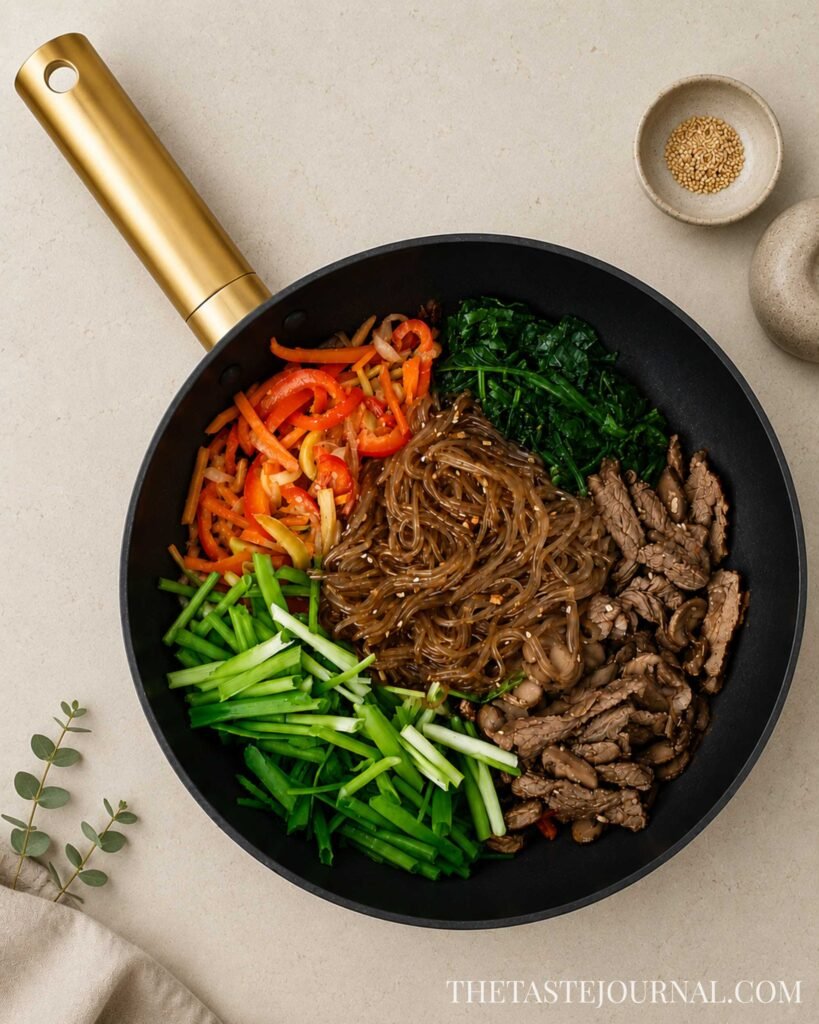
Making Japchae is much like creating a work of art; not everyone gets it right. There’s a good reason for this—it requires some insider knowledge to craft the perfect dish. Traditionally, each ingredient is stir-fried separately; this approach works well if you have several hours to spare and want to savor the individual flavors of each vegetable. However, if you’re short on time but still want to enjoy this incredible dish, this method will yield equally delicious results.
Koreans are often meticulous when preparing vegetables for Japchae. Each ingredient needs to be chopped to precise measurements and julienned perfectly.
Ingredients
Sweet potato noodle, Spinach, Mushroom, Carrot, Bell Pepper, Onion, Scallions, Beef Strips, Olive Oil, Soy Sauce, Sesame seed oil., Sugar, Salt & Pepper, Sesame seed.
Korean glass noodles are known as dangmyeon. These translucent noodles are made from sweet potatoes and are a staple in Korean cuisine. They have a delicious flavor and differ from wheat noodles. When cooked, dangmyeon absorbs the flavors of marinades and seasonings, and it is also gluten-free.
Various types of mushrooms work well; consider using white, cremini, or oyster mushrooms for added flavor. Spinach adds a tender, earthy note to the dish. Traditionally, spinach is blanched before being added, but in my recipe, we’re skipping that step.
Carrots and bell peppers add crunch and texture to the dish. Sliced onions contribute sweetness, while scallions serve as a garnish and provide a fresh, bright flavor. For the protein, thinly sliced beef from ribeye or sirloin is ideal; it cooks quickly and remains tender. Some people choose to marinate the beef in advance, but adding the marinade during high-heat cooking can have a similar effect.
The marinade is made up of condiments, spices, and liquids that create the dish’s sweet-and-savory profile. Soy sauce is the cornerstone, providing a rich, dark umami flavor. We recommend using dark soy sauce since it is lower in sodium and has a balanced saltiness that complements the sugar. For a deeper flavor, brown sugar is the preferred choice when possible.
Sesame oil, particularly from South Korea or Hong Kong, is the best option for this dish, and Lee Kum Kee produces excellent products. Oyster sauce is an unconventional addition that is not traditionally used in Japchae, but I like to include it for its incredible flavor and richness in the noodles. A small pinch of salt should be added at each step of the process—be sure to taste the salt as you go.
Instructions
Slice the green onion into 5 cm pieces. Slice the mushrooms into chunky bits. Peel the carrot and julienne it. Julienne the baby marrow, bell pepper, and onion. Place the sliced onions in the preheated pan on medium-low heat. Drizzle with olive oil and cook the onion for 3-5 minutes, until caramelized.
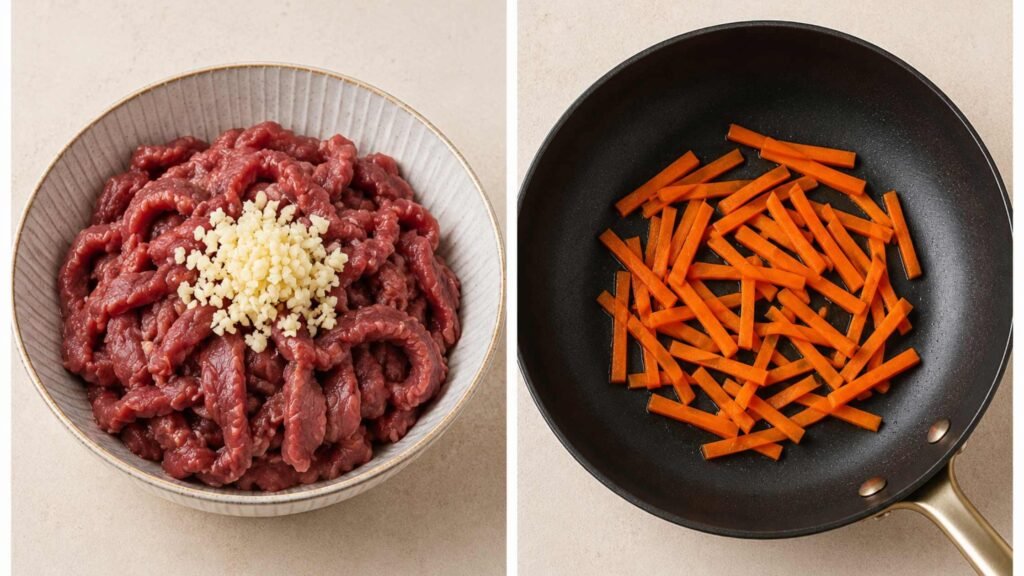
When the onion is cooked, add the julienned bell pepper and baby marrow to the pan. Add extra olive oil and cook until the baby marrow and bell pepper are tender, about 2-4 minutes over medium-low heat.
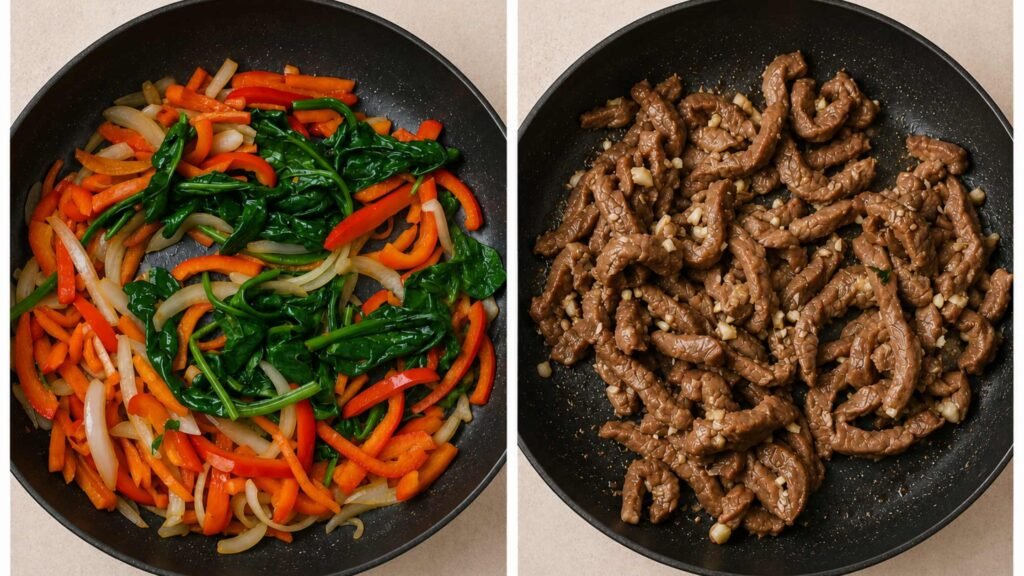
Place the sliced mushrooms and beef strips in a preheated pot at medium-low temperature. Drizzle olive oil and cook for 5-7 minutes. Sprinkle some salt and pepper over them while cooking. Thinly slice the beef steak into strips. Add soy sauce and sesame seeds, then stir-fry. Cook for five to seven minutes. Occasionally stir the food to ensure it is thoroughly mixed and cooked. When the mushrooms and steak are cooked, add them to the pot that contains cooked vegetables.
In a separate bowl, add soy sauce, water, sesame seed oil, a pinch of chili powder, and sesame seeds. Stir and mix well together.
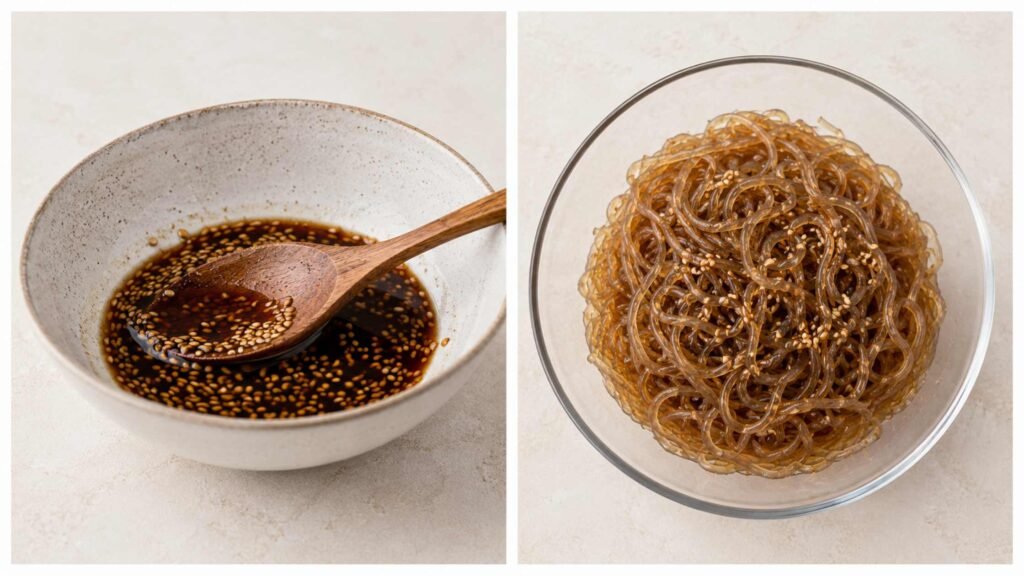
Add 1.5 liters of water to a separate pot and bring it to a boil. Add the glass noodles and cook for 8 minutes, covered. Initially, stir the noodles to prevent them from sticking together. Rinse the noodles in cold water once cooked. Place the cooked glass noodles in a bowl. Pour the soy sauce into the glass noodle bowl. Thoroughly mix them so that all the glass noodles have absorbed the soy sauce mix. Place the cooked vegetables on top of the soy sauce-mixed glass noodles, and mix everything well together. Sprinkle extra sesame seeds over the dish before serving.
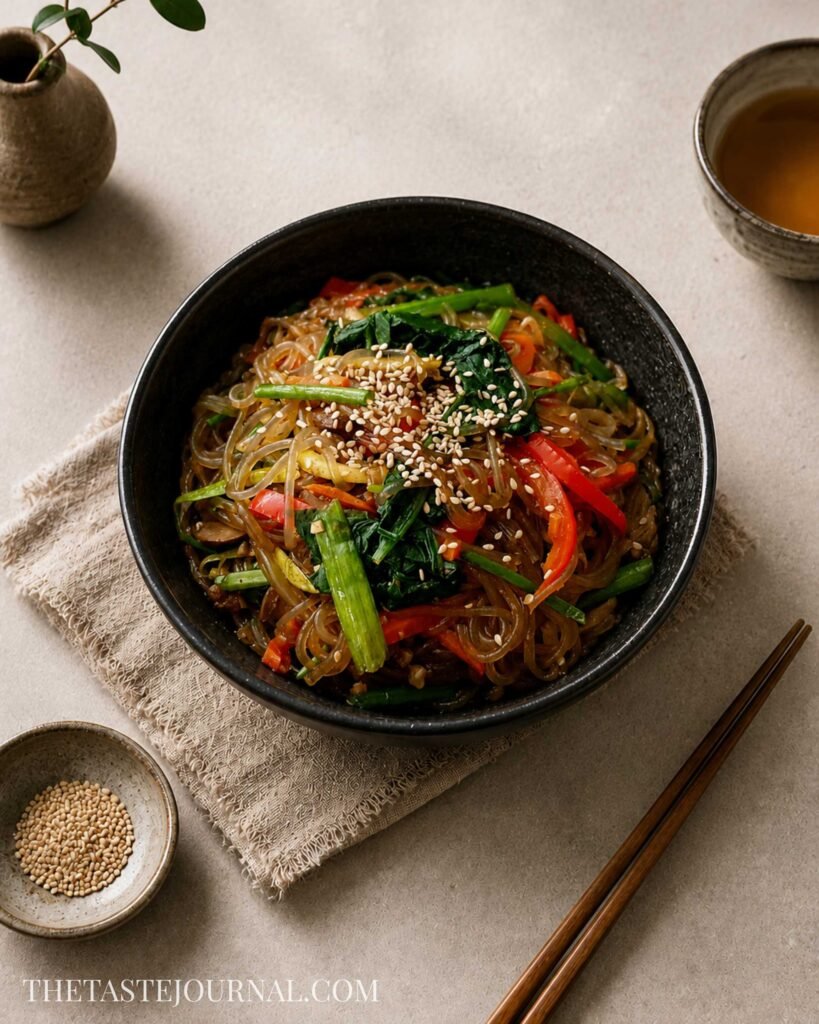
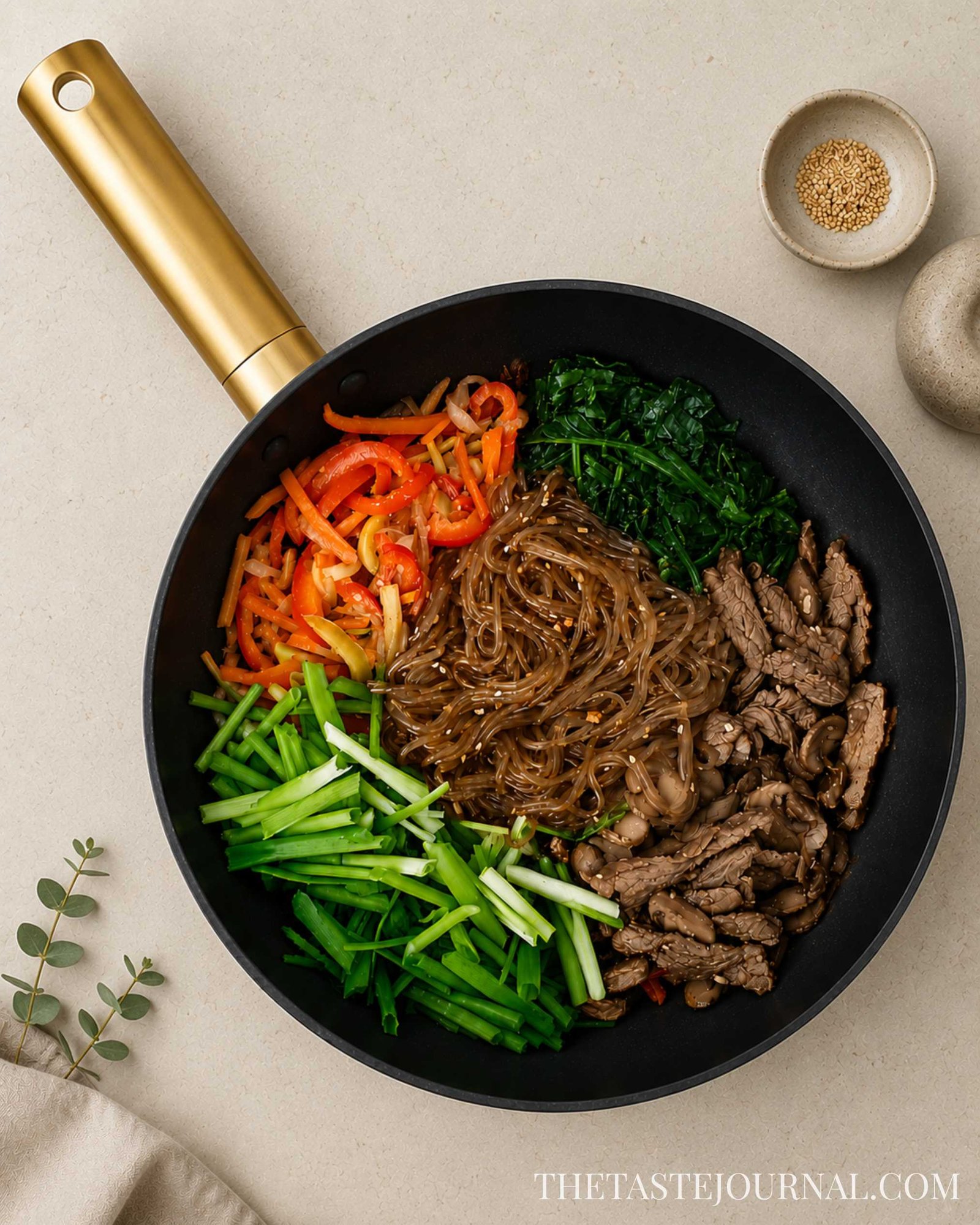
Arrange all the ingredients in your wok. Sprinkle more sesame seeds on top. Stir vigorously so that the ingredients are well mixed. Japchae has a balanced taste between sweet and savory. In this dish, sugar was omitted to let the vegetables’ natural flavor and sweetness shine. Salt and pepper should be added in small quantities as you cook the vegetables.
What to Serve with Japchae?
You can serve Japchae with Kimchi, Haemul Pajeon, Oi Kimchi (Cucumber salad), and Korean fried chicken. Avoid overcooking the noodles. The chewy texture of the glass noodles is fundamental for making Japchae. Rinsing cooked glass noodles in cold water makes them chewier and helps them absorb the liquid’s flavor more easily. Mixing the soy sauce marinade with cooked glass noodles separately will enhance the taste of Japchae.
How to Store the Japchae?
Cool the Japchae completely, then store it in an airtight container for 3 to 4 days. Reheat in the microwave. The texture of the vegetables will be different. Stir-frying the carrots, bell peppers, mushrooms, and beef with 1/3 of the recommended marinade for flavor, plus salt and pepper, is advisable. Let it cool and freeze that portion. Make the spinach and sweet potato noodles fresh.
Ingredients
- 300 grams Sweet potato noodles – (dangmyeon)
- Salt
Protein
- 220 grams Rib-eye steak
Vegetables
- 1 Onion
- 1 Carrot
- 1 Red bell pepper
- 8 Spring onion
- 6 Spinach leaves (Large)
- 220 grams White mushrooms
Marinade
- 1 1/2 cup Dark soy sauce – Low Sodium
- 3 tbsp Sugar
- 4 tbsp Sesame oil
- 3 tbsp Oyster Sauce
- 3 tbsp Rice wine vinegar
- 2 tbsp Minced garlic
- 1 tbsp Black pepper
Garnish
- Sesame seeds
Instructions
- Wash and chop the vegetables: Clean all the vegetables: Bell pepper, carrot, spinach, onion, mushroom and scallion. Julienne the carrot, and bell pepper. Chop the scallion 5 cm in length. Slice the mushrooms in chunky bits.
- Prepare the Marinade: Add the Dark Soy sauce, Rice wine vinegar, Oyster Sauce, Sugar, Black Pepper, Sesame seed oil and Salt to a bowl. Mix and stir well.
- Stir-fry the Vegetables: Add three tablespoons of the marinade to the wok. Place the sliced onion in a preheated pan on medium-low temperature. Place the carrots, onions, julienne bell pepper in a preheated pan on medium-low temperature. Drizzle the olive oil and cook for 2-3 minutes or until they are soft. Drizzle the olive oil and cook for 3-5 minutes or until caramelized. Add the spinach into the same pot and cook for two minutes.
- Cook the Beef: Add the sliced beef with minced garlic and mushroom into the same wok and cook for six minutes on medium high heat. Add two tablespoons of the marinade to the beef.
- Cook the glass noodles: Bring the water to boil in a separate pot. Add 300 grams of glass noodle, Cook for 8 minutes with the covered lid. Remove the noodles and rinse in cold water. Place the cooked noodles in a bowl.
- Final steps: Pour the balance of the soy sauce marinade into the bowl of glass noodles. Mix them thoroughly so that marinade is absorbed into all parts of the noodle. Place the freshly chopped scallion, cooked vegetables and the beef around the noodles. Thoroughly mix everything. Sprinkle sesame seeds to serve.
Nutrition
Calories: 585kcal | Carbohydrates: 84g | Protein: 14g | Fat: 22g | Saturated Fat: 6g | Polyunsaturated Fat: 6g | Monounsaturated Fat: 9g | Cholesterol: 34mg | Sodium: 2161mg | Potassium: 548mg | Fiber: 4g | Sugar: 14g | Vitamin A: 3727IU | Vitamin C: 47mg | Calcium: 57mg | Iron: 2mg
Did you make this recipe?Pin to Save this Recipe