Kkakdugi
If you love kimchi but want a gut-healthy recipe that uses crisp daikon radish and doesn’t require long fermentation, kkakdugi is worth trying. This dish is made by fermenting radish cubes briefly with gochugaru, garlic, ginger, fish sauce, and other seasonings.
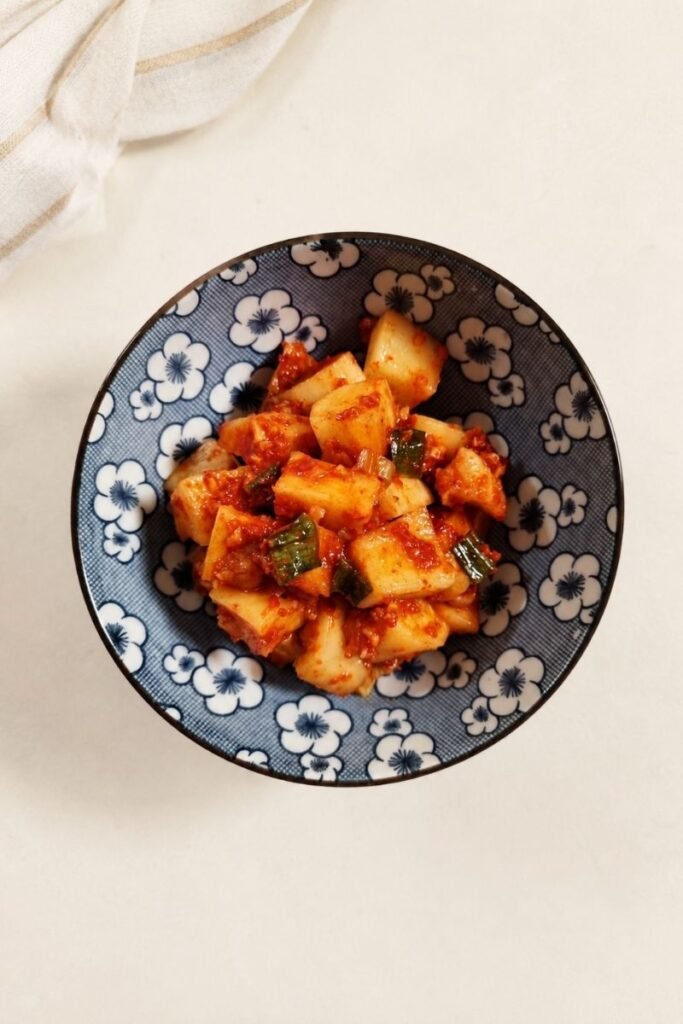
The name kkakdugi is associated with the Korean method of cutting food into cubes, known as kkakduk sseolgi. That distinctive cube shape sets kkakdugi apart from other types of radish kimchi. The result is a vibrant red, crunchy kimchi with a combination of heat, saltiness, sweetness, acidity, and umami.
The Story Behind Kkakdugi
A fascinating royal story surrounds kkakdugi’s origin. According to Joseon Yorihak, a Korean gastronomy book published in 1940, Princess Sukseon, the daughter of King Jeongjo, is credited with creating a diced-radish dish that was presented to the royal family.
The story says the dish was well received and eventually became known as kkakdugi. This is a later historical account, not a surviving royal record from the 18th century. The story remains one of the best-known explanations for kkakdugi’s origin.
What Is Kkakdugi Made Of?
A basic homemade kkakdugi recipe needs Korean radish or daikon, gochugaru, fish sauce, garlic, fresh ginger, green onions or spring onions, salt, and a small amount of sugar. Gochugaru gives kkakdugi a reddish color and a subtle heat. Fish sauce adds a savory flavor. For a vegetarian version, replace the fish sauce with a plant-based fermented seasoning.
The Origin of Kkakdugi
Kkakdugi originated during the Joseon dynasty in the late 18th century. According to royal records, the dish was invented by Princess Sukseon, the daughter of King Jeongjo, who was deeply impressed by the texture and flavour of the seasoned radish cubes. It eventually spread from the royal palace to the homes of the Yangban (aristocracy) and finally to the commoners.
Ingredients
Gochugaru, Fish sauce, Ginger and Garlic, Green Onions, Salt, Sugar.
Gochugaru is a Korean red chili powder. It is made with sun-dried red chili peppers. It has a distinct flavour that is mildly sweet to moderately spicy. Fish sauce is a fermented condiment made from salted fish and is a staple in many Southeast Asian cuisines. It has a rich aroma that elevates the taste of many dishes.
Ginger and garlic are essential ingredients in many dishes from cultures around the world. In this recipe, the ginger adds a warm, spicy flavour with a hint of sweetness. Whilst garlic is famous for its pungent flavour. Green onions offer a mild flavour to the radish kimchi.
Instructions
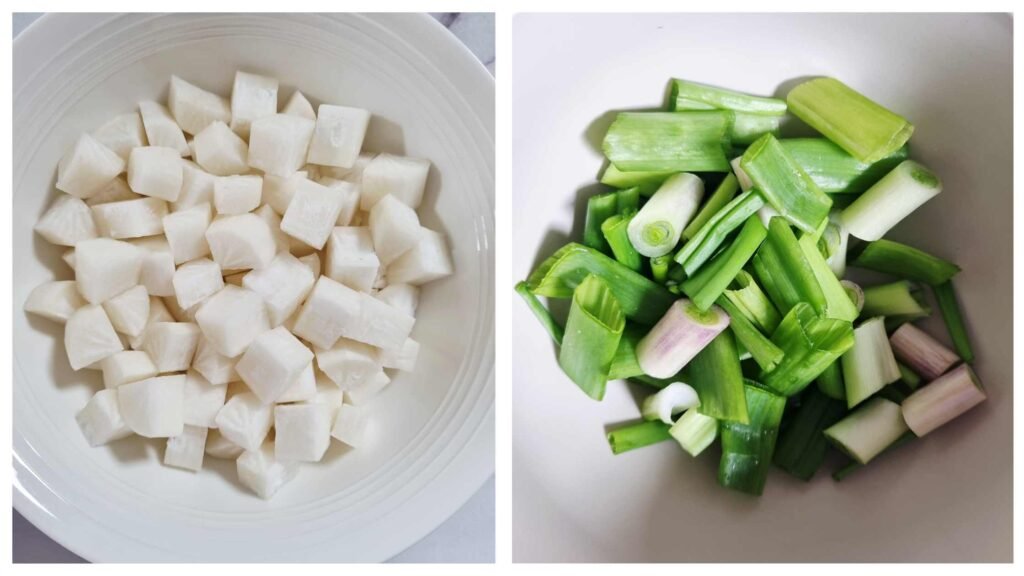
Wash the daikon radish and peel it with a potato peeler. Cut the radish into three sections: first, cut vertically; then cut each section into cubes. Wash the spring onion and slice it. Add the radishes to a bowl and sprinkle salt. Let it rest for 20 to 40 minutes to release moisture.
Reserve 2 tablespoons of the liquid, then drain the rest. The next step is to make the paste. Add the condiments to a bowl, such as gochugaru, ginger and garlic paste, soy sauce, and fish sauce. Mix with a spoon until the ingredients are well-combined.
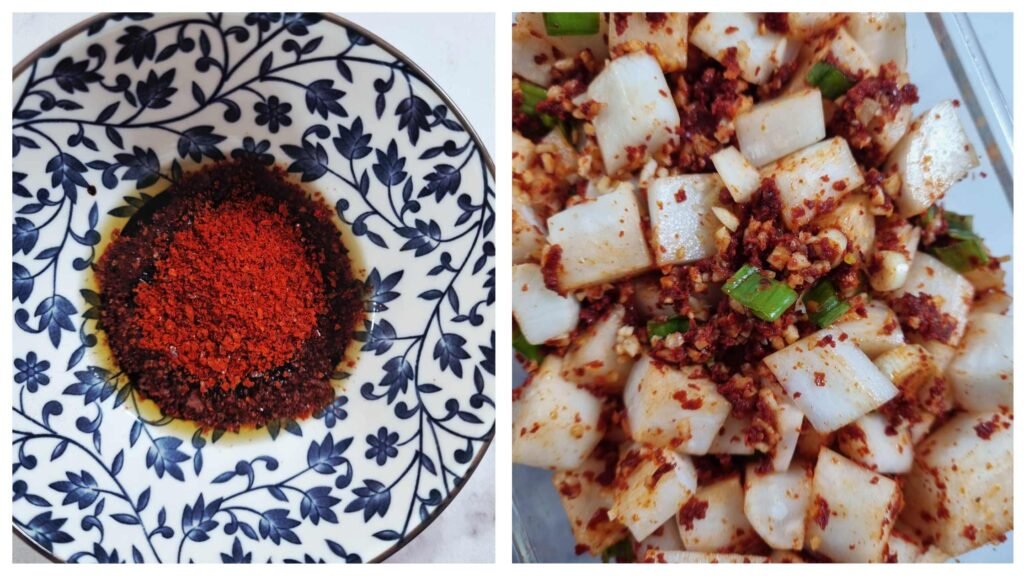
Add the paste to the bowl of radish and spring onions. Coat the cubes with the hot pepper paste until the radish is evenly coated. Store the radish cubes in a glass container on the countertop for 12-48 hours in a cool place. This will jumpstart the fermentation process. Thereafter, store the kimchi in the fridge.
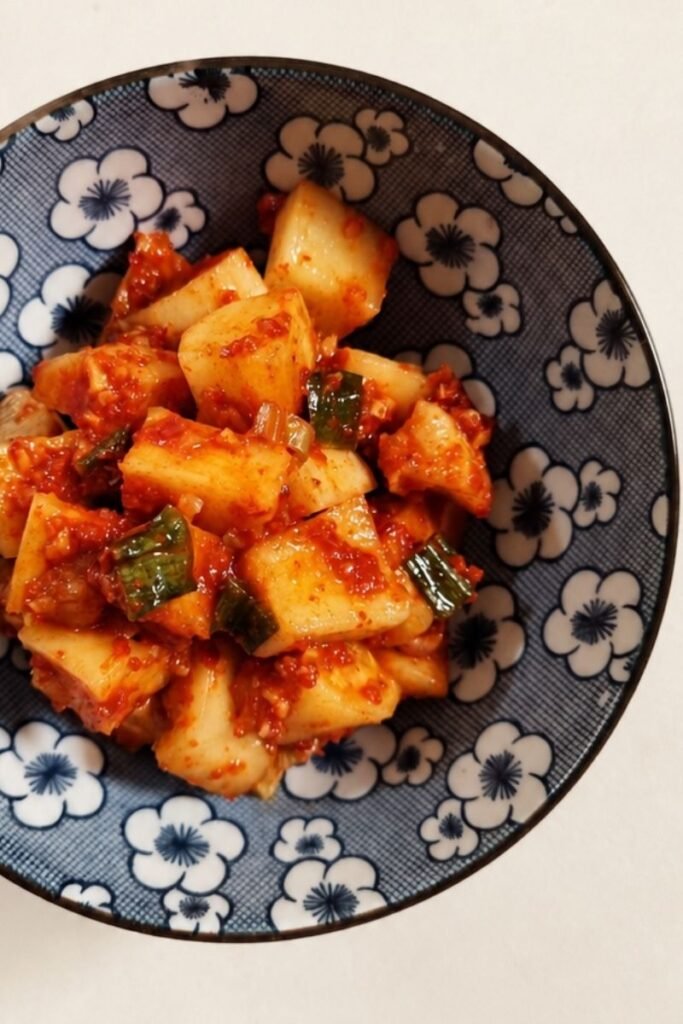
What to Serve Kkakdugi with?
In Korea, this side dish is served with Seolleongtang (Ox bone soup) and Galbitang (short rib soup). Radishes are high in diastase, an enzyme that aids in the digestion of proteins. It is considered a perfect side-dish for heavy, meat-based meals. Interestingly, radish kimchi releases a higher proportion of liquid than cabbage kimchi. This liquid is a savoury, tangy tonic that is poured directly into rich, hearty broths, adding depth to the flavour profile.
How to Store Kkakdugi?
The shelf life of Kkakdugi will depend on how sour you like the kimchi. If the fermented dish is left on the countertop for 1 to 3 days in a cool climate, it will accelerate fermentation. Even though this kimchi can be eaten right away, it will reach its peak flavour after two to four weeks in the fridge.
Kkakdugi can last for up to three months in a fridge set to a temperature below 4°C (40°F). When dealing with kimchi, it is important to dish it out with a clean, dry spoon and immediately place it back in the refrigerator. Rehydrate the top layers of the radish cubes with liquid from the bottom of the container. This will ensure that the kimchi lasts longer.
How Long Does Kkakdugi Take to Ferment?
No single fermentation time works for every batch. Temperature, salt level, radish freshness, and personal taste all influence fermentation. A warmer environment generally speeds up the process.
Look for signs of fermentation such as a pleasantly sour aroma, a developing tangy flavor, small bubbles or signs of activity, and a deeper, more rounded flavor. Kkakdugi can continue developing flavor in the refrigerator, so you can move it to cold storage when it reaches the level of sourness you enjoy.
How Do You Keep Kkakdugi Crunchy?
The best part of kkakdugi is its crunch. Start with a fresh, firm radish and avoid cutting the cubes too small. Salting the radish before seasoning also helps draw out excess moisture while preparing it for fermentation.
Korean radish is particularly well suited to kimchi because its firm texture holds up during fermentation. Kkakdugi can remain pleasantly crisp even as its flavor becomes increasingly sour and complex.
What to Eat With Kkakdugi
Kkakdugi is traditionally associated with hearty Korean soups and stews. It is particularly well known alongside seolleongtang, a rich ox bone soup called Gori Gomtang, and gal,bitang, a Korean beef short rib soup. The sharp, spicy radish contrasts with the savory broth and fatty meat. Explore more Korean Recipes such as Dakbokkeumtang, Galbi Gim, Cheesy Dakgalbi, Chuncheon Dakgalbi, Korean Spicy Fried Chicken and more.
You can also enjoy kkakdugi with steamed rice, grilled meat, Korean noodles, fried rice, simple rice bowls, and other Korean banchan. And don’t throw away the leftover kimchi liquid. Its salty, spicy, and tangy flavor can add depth to broths and other dishes.
Is Kkakdugi Good for You?
As a fermented vegetable, kkakdugi can contain live microorganisms associated with fermented foods, making it an interesting addition to a varied diet. Kimchi also provides nutrients and plant compounds from its vegetables and seasonings. However, it is better to think of kkakdugi as a nutritious fermented food rather than a cure-all.
It can also be relatively high in sodium, particularly because salt and fermented seafood are commonly used in the recipe. Kkakdugi continues to become more sour over time. Some people prefer it relatively fresh and crunchy, while others enjoy it after several weeks of fermentation. If you notice an unusual smell or other clear signs of spoilage, discard it rather than tasting it.
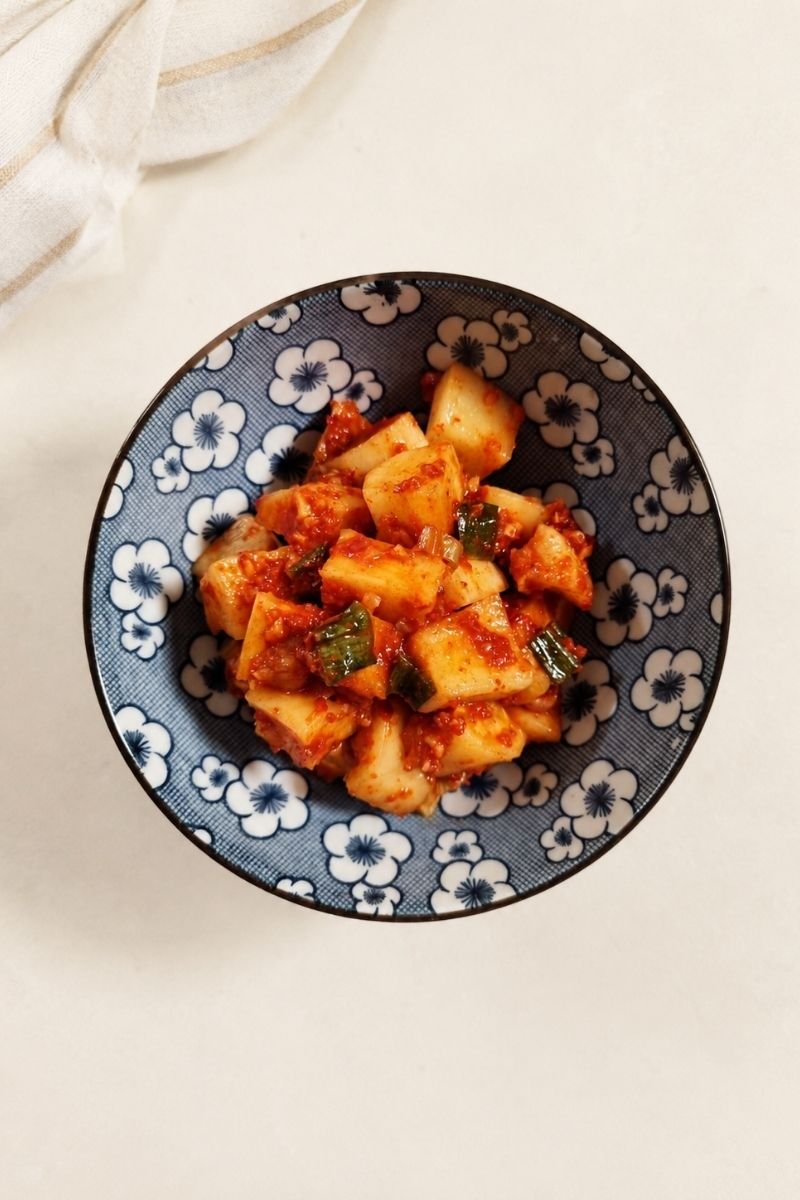
This easy kkakdugi recipe makes crunchy, refreshing Korean radish kimchi with daikon, gochugaru, garlic, ginger and a lightly sweet, savoury seasoning. It’s spicy, tangy and delicious alongside Korean soups, rice and grilled meats.
Ingredients
- 700 grams White Radish
- 3 tbsp Fish Sauce
- 2 tbsp Garlic
- ½ tsp Ginger
- 1 Spring Onion
Brine
- 2 tbsp Salt
Instructions
- Prepare the ingredients and brine: Wash and peel the daikon radish, then cut it into cubes. Wash and slice the spring onion. Combine radishes with salt in a bowl and let sit for 20-40 minutes to release moisture. Reserve 2 tablespoons of the liquid, then drain the rest.
- Make the paste: In a bowl, mix gochugaru, ginger and garlic paste, soy sauce, and fish sauce to make the paste. Add the paste to the radish and spring onions, mixing well to coat. Store in a glass container on the countertop for 12 hours to start fermentation, then refrigerate.
Nutrition
Calories: 17kcal | Carbohydrates: 1g | Protein: 3g | Fat: 0.1g | Saturated Fat: 0.02g | Polyunsaturated Fat: 0.04g | Monounsaturated Fat: 0.01g | Cholesterol: 6mg | Sodium: 790mg | Potassium: 86mg | Fiber: 0.1g | Sugar: 0.3g | Vitamin A: 21IU | Vitamin C: 1mg | Calcium: 14mg | Iron: 0.2mg
Did you make this recipe?Pin to Save this Recipe