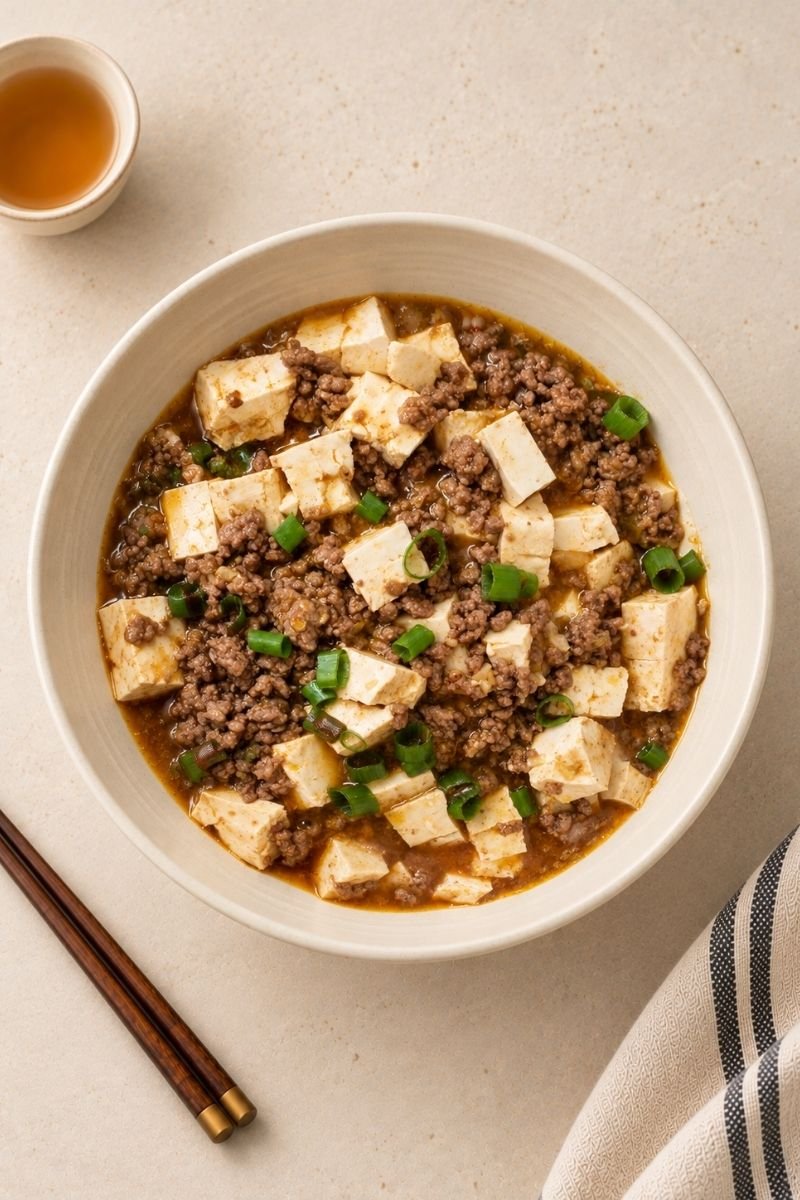
Haleem
This chicken Haleem recipe features chicken, barley, cracked wheat, and lentils, with warm, hearty flavors. You could almost call it a savory soup; its rich, porridge-like consistency lets the grains and pulses break down and take on the flavors of cumin, garam masala, chili powder, and turmeric.

This Indian-inspired chicken Haleem is served hot with freshly squeezed lemon juice, crispy fried onions, fresh parsley, and warm naan. It takes time to cook, but most of that time is spent simmering.
History of Haleem
Haleem, originally known as ‘Harisa’, has a rich history and is now called Harees in the Gulf countries. This dish first emerged around 1000 years ago when Arabs expanded into Persia, discovering wheat and barley.
Inspired by Persian agricultural practices, they created ‘Harees’, a labor-intensive porridge made with wheat and meat, served at family gatherings. The Persians adapted this recipe into ‘Halim’, using wheat, meat, cinnamon, and sugar, making it a popular breakfast dish.
Indians later learned of Halim through Persians and developed their own version, ‘Haleem’, incorporating lentils, spices, and chilies. In this recipe, we’ll focus on the Indian variation but will also include barley, unlike traditional Indian preparations. We’ll add recipes for ‘Arabian Harees’ and ‘Persian Halim’ in future entries. Stay tuned!
Ingredients
Chicken, Onion, Garlic, Water, Barley, Lentils, Cracked wheat, Mung split peas, Cumin, Garam masala, Chili powder, Salt, Turmeric powder, Lemon juice, Parsley, Fried onions.
The distinctive flavors of this soup come largely from the chicken; it gives haleem a hearty taste. Bone-in chicken thighs add depth, while boneless chicken breast adds convenience. You can also make haleem with lamb.
The barley, cracked wheat, and pulses make this dish substantial and filling. Cooking the onions until they are golden brown brings out their natural sweetness and adds depth.
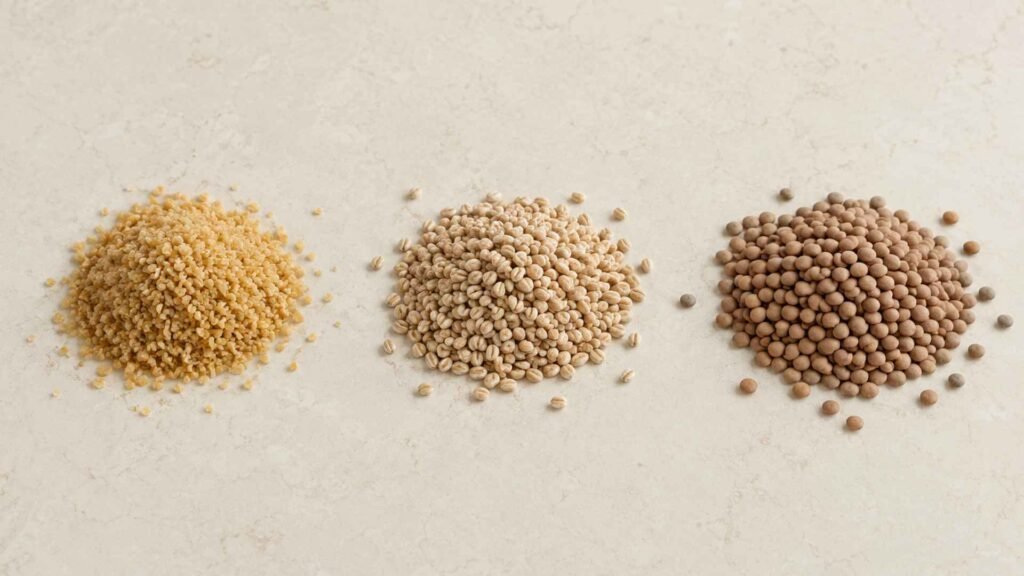
Barley and cracked wheat soften during simmering, giving haleem a thick consistency. Rinsing them is advisable. Lentils and mung peas add substance and help to thicken the soup.
Spices such as cumin, garam masala, and turmeric add aroma, flavor, and color. Chili powder adds heat and can be adjusted accordingly. Lemon juice, parsley, and fried onions add the finishing touch.
Instructions
Slice the onions and mince the garlic. Then, rinse the chicken in water, remove the skin, and cut the chicken breast into bite-sized cubes. Using bone-in chicken thighs add a lot depth to this soup. Chicken bones have a ton of collagen and when it is released into the soup, it adds a rich flavour to the dish.
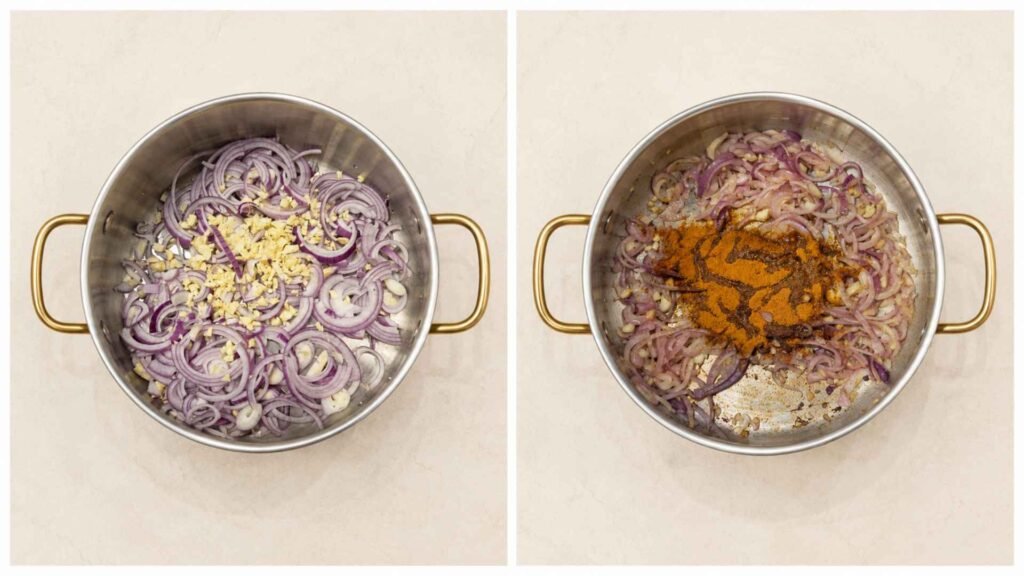
Peel the ginger and cut it into large pieces that are distinguishable from the chicken cubes. Thoroughly rinse the lentils and remove any impurities. Also, rinse the barley several times and remove the husks that float to the top of the water.
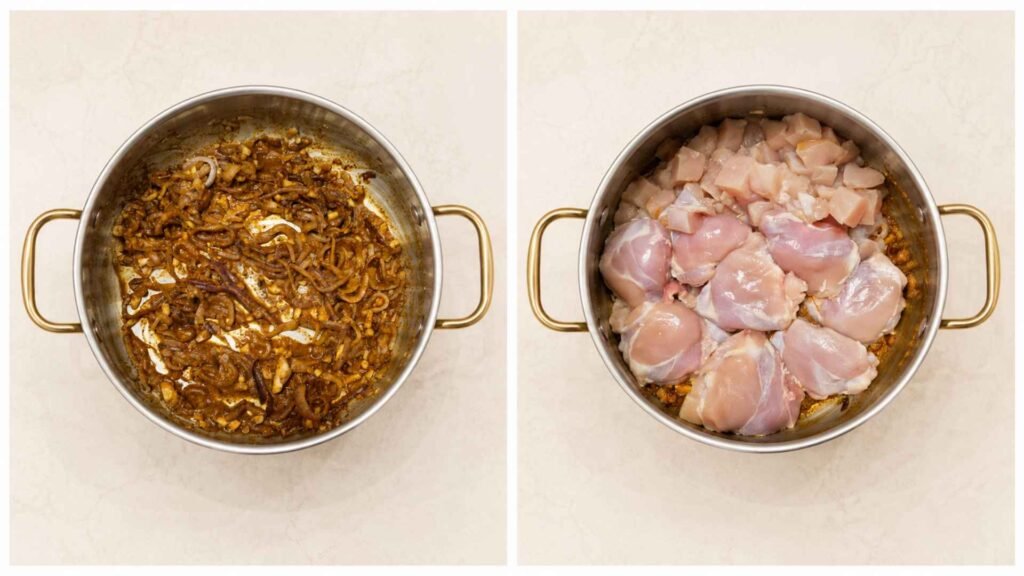
Preheat a pot to medium-high heat and add a generous amount of cooking oil. Sauté onions and garlic for 6 minutes, stirring every 20 to 30 seconds. Lower the temperature to low when the onions are caramelized.
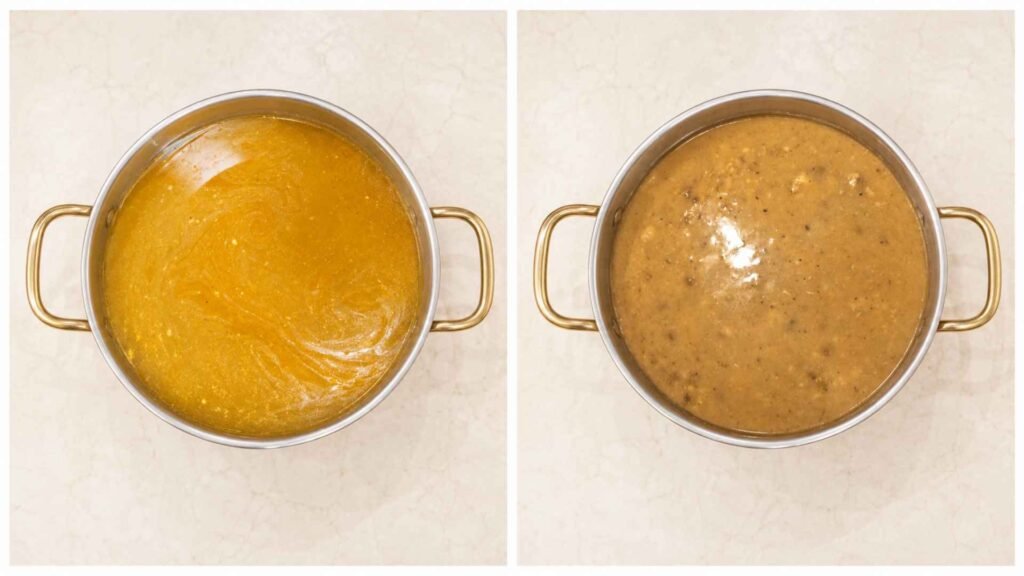
Add Haleem spices, two tablespoons of oil, and half a cup of water, stirring to distribute the spices evenly. As the water reduces, return to medium-high heat and add the prepared chicken, tossing for about three minutes until it’s coated and white. Next, add 3 liters of water and cover to speed up boiling. Once boiling, lower the temperature and add the lentils and barley, stirring gently.
Lower the temperature and simmer the soup for 1.5 hours with the lid on. Leave a slight space for hot air to escape if the water nears the top. Stir every 7-10 minutes to prevent the grains from sticking and burning. Haleem is hearty and creamy when it is fully cooked. Serve with freshly squeezed lemon, buttered bread, and herbs as garnish.

Expert tips
Use a heavy-bottomed pot; this helps distribute heat and reduces the chance of the grains burning. Stir consistently to keep the grains from settling at the bottom of the pot; this often happens toward the end of cooking. The grains take time to cook and soften; if they are still firm, add more water and simmer a little longer. Bone-in thighs will offer maximum flavor. Haleem thickens as it cools; add a little water when reheating. Lemon juice adds a fresh, tangy flavor that helps balance the spices.
What can you serve Haleem with?
Haleem is a wholesome, hearty, and nutritious meal. Adding lemon juice cuts through the rich flavour of Haleem and adds a tangy taste to the dish. The best sides to enjoy Haleem with are freshly made Naan, toasted bread with melted butter, a tomato, Red pepper, & Cucumber salad, and fresh herbs like parsley. Explore Indian, Arabic, and Persian Recipes.
What is chicken Haleem made of?
Chicken Haleem is made with chicken, grains, pulses, and spices. This version uses barley, cracked wheat, lentils, and split mung peas, along with onion, garlic, cumin, garam masala, chili powder, and turmeric.
Is Haleem the same as Harees?
Haleem and Harees are related dishes, but their ingredients and preparation methods vary. Harees is commonly made with wheat and meat, while many South Asian Haleem recipes include additional pulses and a more varied spice blend.
Can I use chicken breast instead of chicken thighs?
Yes. Boneless chicken breast is convenient and easy to shred, while chicken thighs generally provide a richer flavor. Bone-in thighs are also a good choice for a more flavourful cooking liquid.
Why is my Haleem too watery?
The grains may need more time to soften and thicken the liquid. If they are already fully cooked, simmer the mixture uncovered for a few minutes, stirring frequently, until it reaches your preferred consistency.
Why does Haleem stick to the bottom of the pot?
As the grains release starch, the mixture thickens and becomes more likely to stick. Keep the heat low and stir every 7 to 10 minutes, gently scraping the bottom.
Can I prepare chicken Haleem ahead of time?
Yes. You can prepare it in advance and refrigerate it in portions. When reheating, add a little water or stock to loosen the mixture and heat thoroughly before serving.
What meat can I use instead of chicken?
Lamb, beef, and goat are suitable alternatives. Choose cuts that become tender with slow cooking, and allow extra cooking time where needed.
How to store and reheat Haleem?
Haleem can be stored in the fridge for up to five days. Reheat one portion in the microwave, but for two to four portions, use a small pot on the stovetop at medium-low heat, adding a bit of water to prevent burning. For freezer storage, it lasts up to three months. To reheat from frozen, use a stovetop on medium-low with 3 tablespoons of water for 7 to 9 minutes, stirring occasionally.

Make this chicken Haleem recipe with barley, lentils, cracked wheat and warming spices. Slow-cooked until thick and creamy, it's delicious with naan and lemon.
Ingredients
Protein
- 900 grams Chicken thighs
- 400 grams Chicken breast
- 3.5 litres Water
Vegetables
- 2 Onions – Medium, sliced
- 8 Garlic cloves – Sliced
Grains
- 1 cup Barley
- 1 cup Lentils
- 1 cup Cracked wheat
- 3/4 cup Mung split peas – Ground
Spices
- 3 tsp Cumin
- 3 tsp Garam masala
- 1 tsp Chili powder
- 2 tsp Salt
- 1 tsp Turmeric powder
Garnish
- 1/4 cup Parsley – Chopped, optional
- 4 tbsp Fried onions – Optional
- 1 Lemon juice – Squeezed, adds flavour, optional
Instructions
- Prepare the ingredients: Slice the onions and mince the garlic. Rinse the chicken, remove the skin, and cut the chicken breast into bite-sized cubes. Peel the ginger and cut it into large pieces. Rinse the lentils and barley, discarding any impurities and floating husks.
- Sauté: Preheat a pot over medium-high heat. Add cooking oil, onions, and garlic, then sauté for 6 minutes, stirring frequently, until the onions are translucent.
- Add the spices: Lower the heat, then add two tablespoons of oil and half a cup of water, stirring to combine. Add the chicken and cook for three minutes until it turns white.
- Simmer: Pour in three litres of water, cover, and bring to a boil. Then add the lentils and barley, stirring gently. Reduce the heat to low and simmer with the lid closed for 1.5 hours, stirring every seven to ten minutes to prevent sticking. Once cooked, serve the hearty and creamy Haleem with lemon juice, buttered bread, and herbs as garnish.
Nutrition
Calories: 497kcal | Carbohydrates: 45g | Protein: 35g | Fat: 20g | Saturated Fat: 5g | Polyunsaturated Fat: 4g | Monounsaturated Fat: 7g | Trans Fat: 0.1g | Cholesterol: 122mg | Sodium: 656mg | Potassium: 819mg | Fiber: 13g | Sugar: 2g | Vitamin A: 312IU | Vitamin C: 7mg | Calcium: 65mg | Iron: 5mg
Did you make this recipe?Pin to Save this Recipe