Bolognese sauce
Today, we are making Bolognese sauce, which originated in Bologna, Italy. In the 18th century, the country was vibrant with culinary innovation and new recipes.
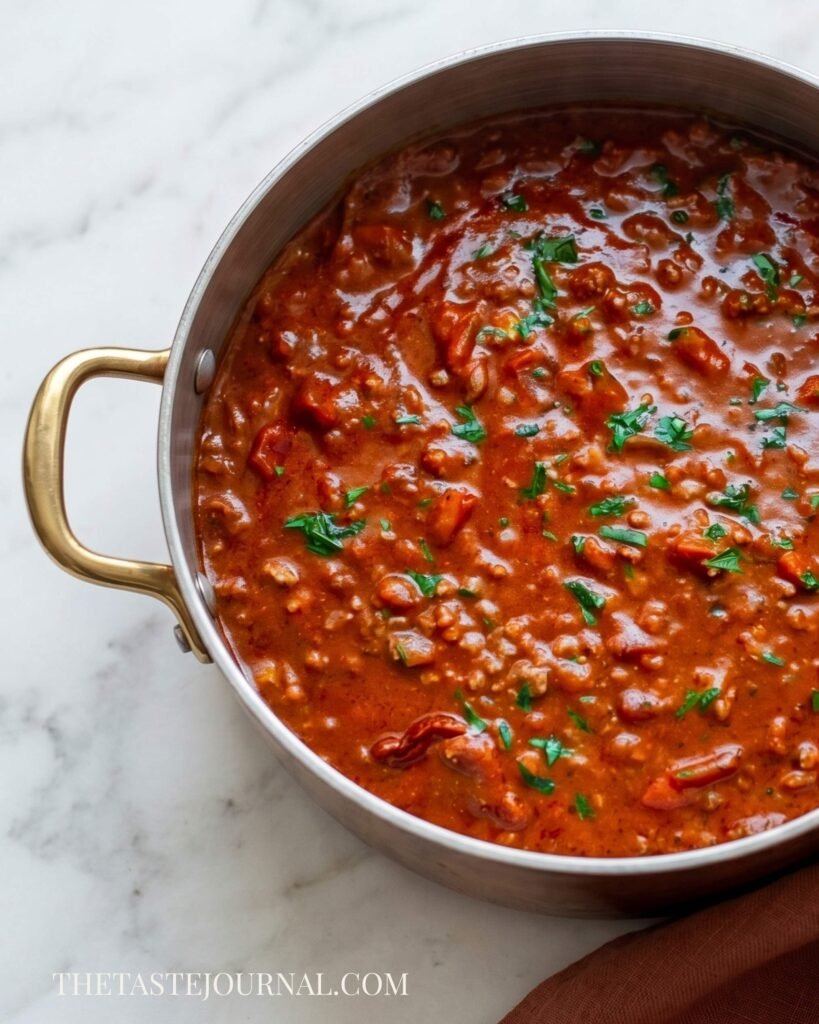
Italian cooks began experimenting with common ingredients like onions, celery, and carrots. This process of stewing various ingredients ultimately led to the creation of ‘ragù alla Bolognese.’
The word ‘ragu’ comes from medieval France. French aristocrats dined on a meat sauce called ‘ragout.’ This unique dish consisted of meat, vegetables, and wine-braised together. Ragu is very similar to ‘Bolognese sauce.’ The Italians innovated the recipe by serving the bolognese sauce on pasta. The dish grew in popularity, and nowadays you can purchase pre-made versions at the supermarket. A lot of people cook it at home, and if you’re searching for a flavourful bolognese recipe that embodies the cultural history and significance of this amazing sauce, you’ve come to the right place.
Ingredients
Olive oil, Oyster sauce, Tomatoes Tomato paste, Heavy cream or milk. Onions, Carrots Garlic cloves. Ground nutmeg, Dried oregano, Celery powder, Beef stock cube.
Bolognese sauce comes together effortlessly and creates layers of flavor that are both comforting and satisfying. Olive oil adds silky richness, and oyster sauce adds depth and umami. A splash of vinegar adds a tang. Some people choose to use white or red wine, but that is entirely up to your preferences. Tomatoes are the central star of this show; passata sauce will give you a smooth sauce, whilst freshly diced tomatoes will provide a chunkier sauce unless you choose to blend them, of course.
Tomato paste adds a concentrated taste, giving the bolognese sauce a full-bodied taste. The heavy cream adds smoothness to the rich tomato flavour. The aromatic trio comes with onions, carrots, and garlic. The spices such as ground nutmeg, beef stock cube, dried oregano, and celery provide powerful savoury notes. You can use marinara sauce or a store-bought version. If you’re making the tomato blend from scratch, add four large tomatoes to a blender and blend them finely with tomato paste.
Instructions
Peel the carrots and cut them into small cubes. Dice the onions into small pieces. Chop the celery into small sections. Finely mince the garlic cloves. Preheat a pot over medium-low heat. Add the onions, minced garlic, and carrots to the pot. Cook and stir occasionally until the vegetables are golden, which should take about three minutes.
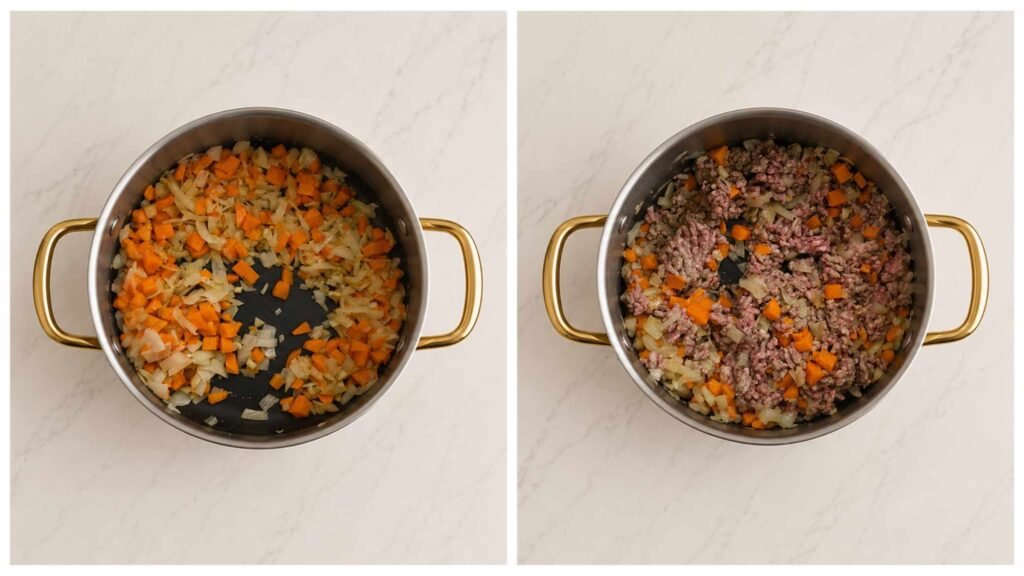
Add ground nutmeg, salt, dried oregano, dried basil, and celery powder (or substitute with fresh celery). Then, add the oyster sauce (or substitute with 1/4 cup red wine or 1 tablespoon white vinegar). Next, incorporate the beef mince, beef stock cube, and tomato passata. Cook the tomato-based sauce for ten minutes.
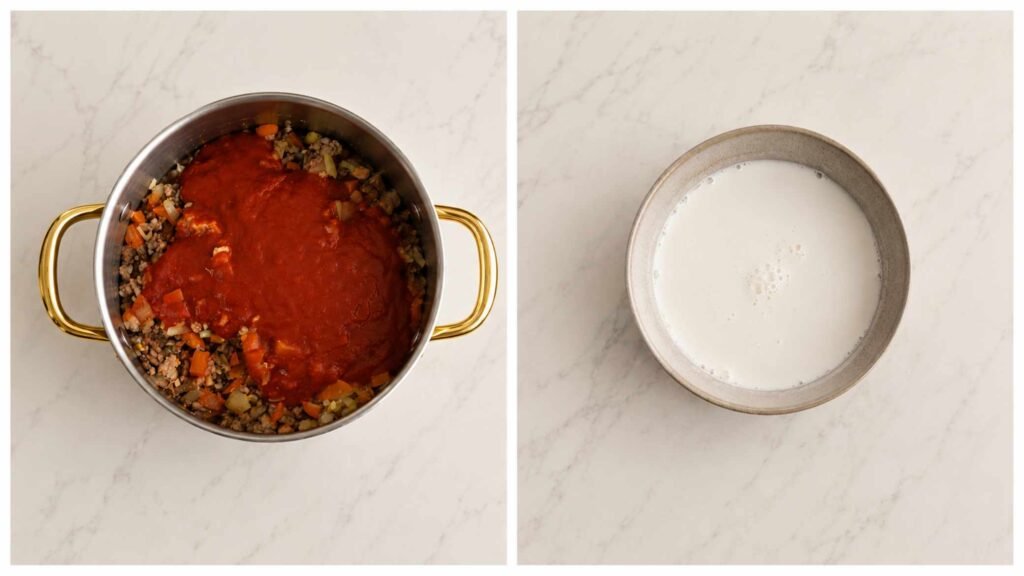
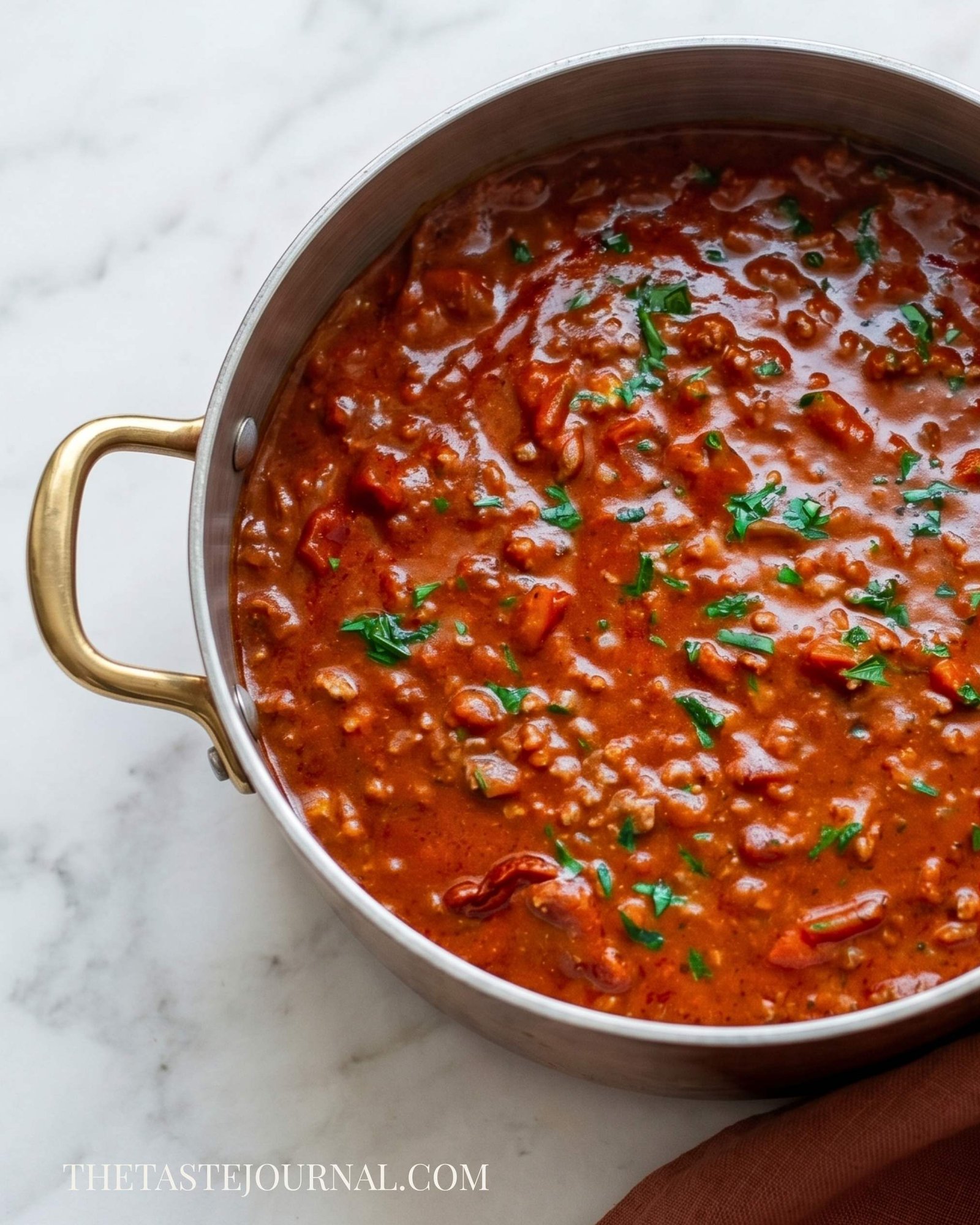
Add the passata sauce and reduce the heat. The Bolognese sauce should be simmered on low heat for 45 minutes. If the mixture is too thick, add 1/4 cup of water. Stir occasionally to prevent the sauce from sticking to the bottom of the pot. After the Bolognese sauce has simmered, pour in the heavy cream and stir to combine. Allow the heavy cream to simmer with the sauce for two to three minutes. This will help tenderize the beef mince once the sauce has thickened. Taste the sauce and adjust the seasonings as needed. The final result should have a deep maroon-brown color and a hearty flavor. Serve the Bolognese sauce with spaghetti or tagliatelle pasta.
What to Serve with Bolognese sauce?
Bolognese sauce serves as a versatile base for various recipes, including lasagna, pasta, moussaka, baked ziti, and more. Preparing Bolognese sauce is a slow yet rewarding process that requires patience and persistence. Unlike marinara sauce, Bolognese sauce develops its flavor gradually through multiple layers. Its versatility allows you to use it in various ways, such as incorporating it into a lasagna or serving it over spaghetti.
How to Store Bolognese sauce?
Store in an airtight container for five to seven days. Reheat on the stove. Bolognese sauce can also be frozen. To defrost, thaw on the countertop and reheat on the stovetop.
Ingredients
- 600 grams Beef mince
Vegetables
- 1 Cup Carrot – cubed
- 2 Tbsp Olive oil
- 1 Onion – chopped
- 5 Garlic cloves – minced
Spices
- 1 tsp Ground Nutmeg
- 1 tsp Dried Oregano
- 1 tsp Dried Basil
- 1 tsp Celery powder – Substitute with one stalk of celery
Condiments
- 2 tbsp Oyster sauce – or 4 tbsp Apple cider Vinegar
- 1 Beef stock cube
- 500 grams Passata sauce or Marinara sauce
- 1/2 Cup Heavy cream
- 2 tbsp Tomato paste
Instructions
- Preparation: Peel and cube carrots, dice onions, chop celery, and mince garlic. Preheat a pot over medium-low heat. Add onions, garlic, and carrots; cook until golden (about 3 minutes).
- Adding Seasonings and Meats: Stir in nutmeg, salt, oregano, basil, and celery powder. Add oyster sauce (or red wine/vinegar), beef mince, beef stock cube, and tomato passata. Simmer the sauce for 10 minutes
- Simmer: Reduce the heat and simmer for 45 minutes; add water if too thick. Stir occasionally. Mix in heavy cream and simmer for 2-3 minutes; taste and adjust seasonings.
Nutrition
Calories: 534kcal | Carbohydrates: 11g | Protein: 28g | Fat: 42g | Saturated Fat: 19g | Polyunsaturated Fat: 1g | Monounsaturated Fat: 16g | Trans Fat: 2g | Cholesterol: 140mg | Sodium: 744mg | Potassium: 691mg | Fiber: 2g | Sugar: 5g | Vitamin A: 5924IU | Vitamin C: 7mg | Calcium: 85mg | Iron: 4mg
Did you make this recipe?Pin to Save this Recipe